
Last updated November 18, 2026
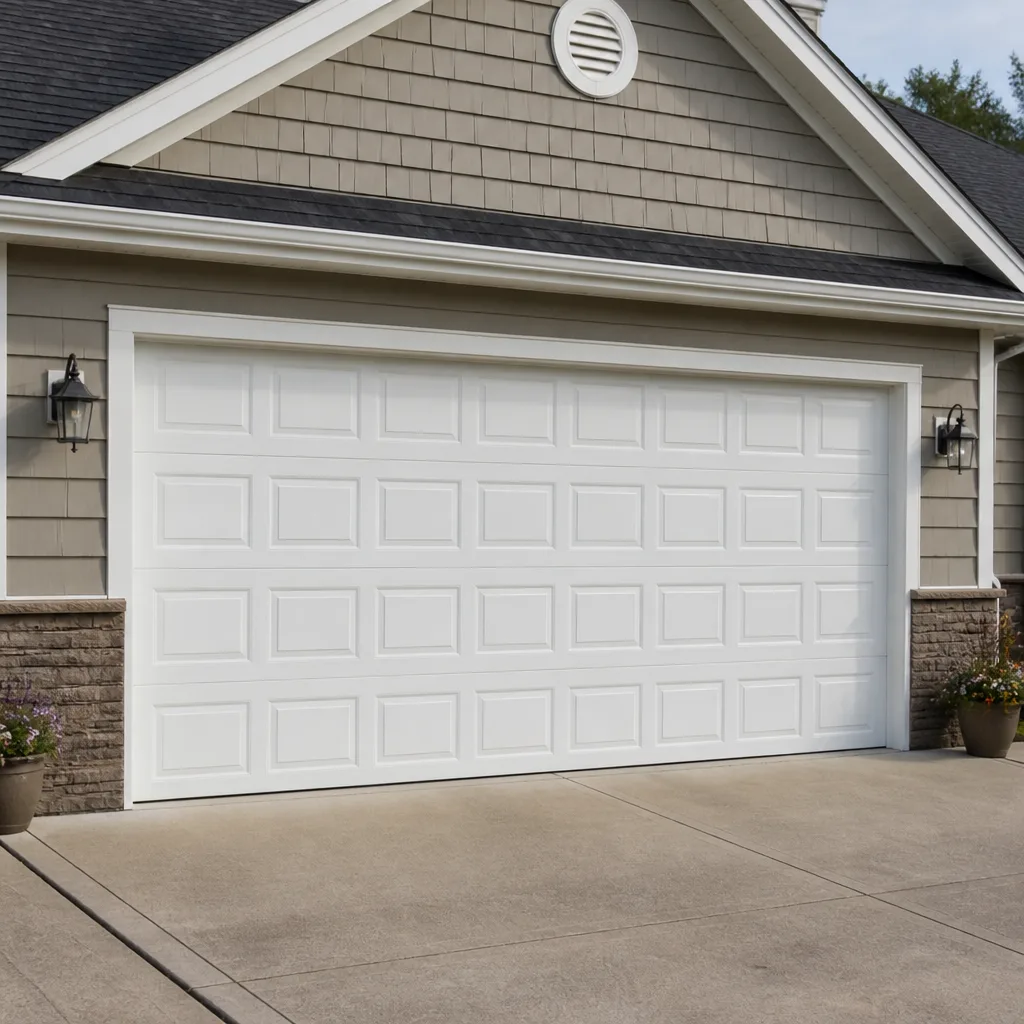 Raised-panel steel
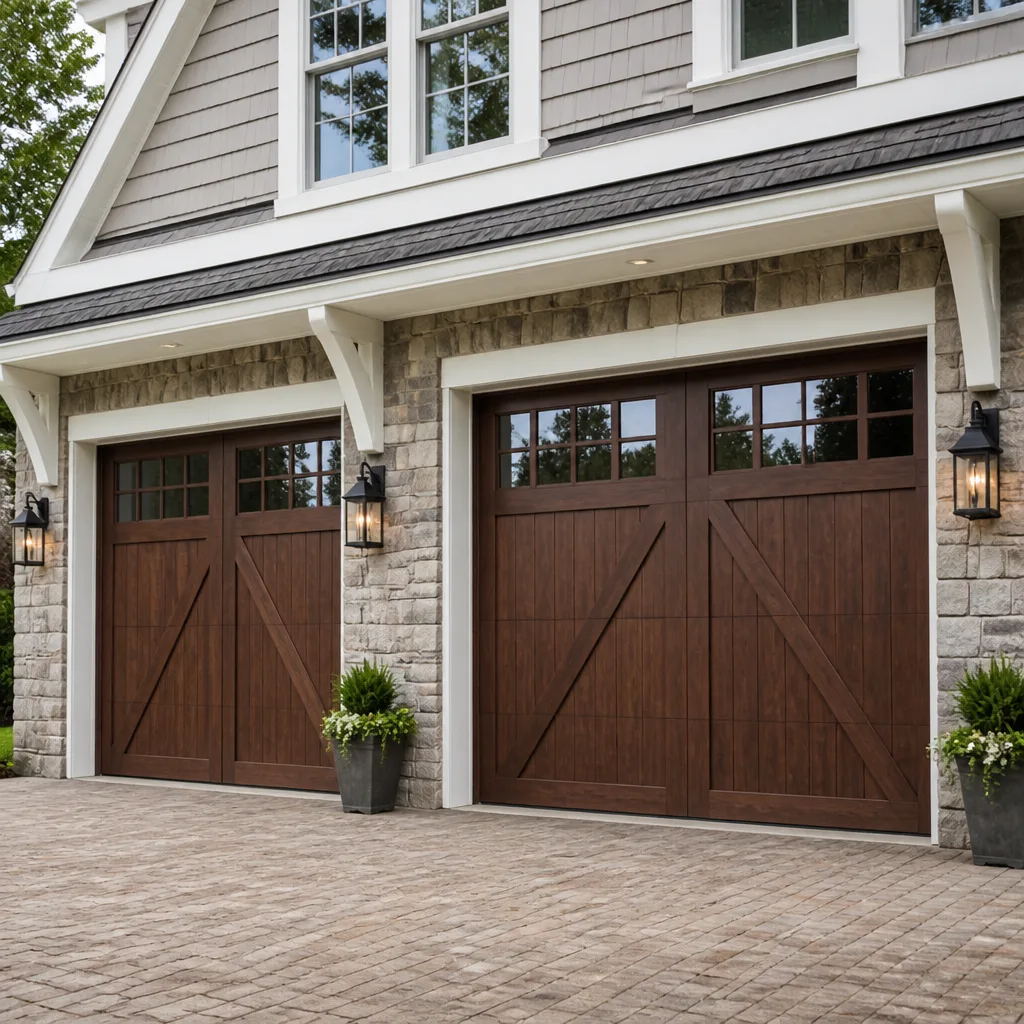 Carriage house
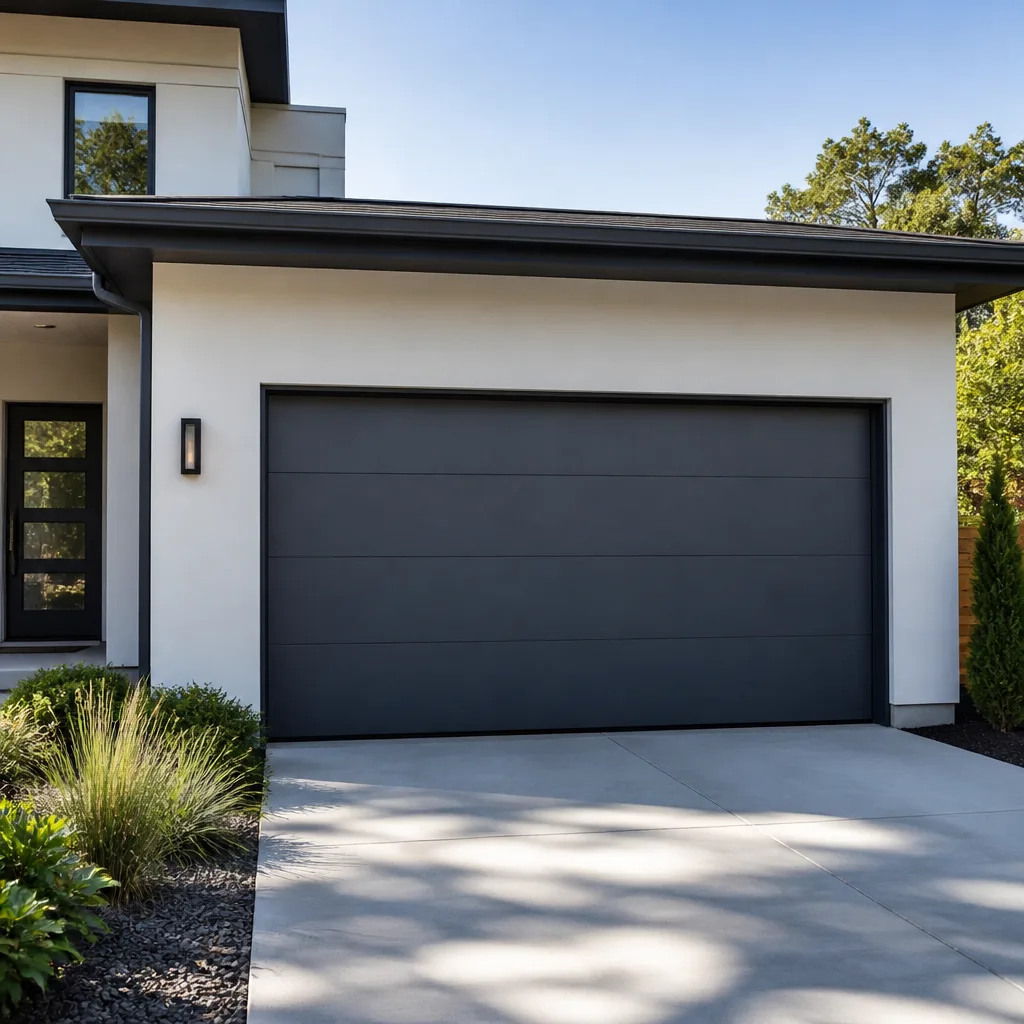 Modern flush
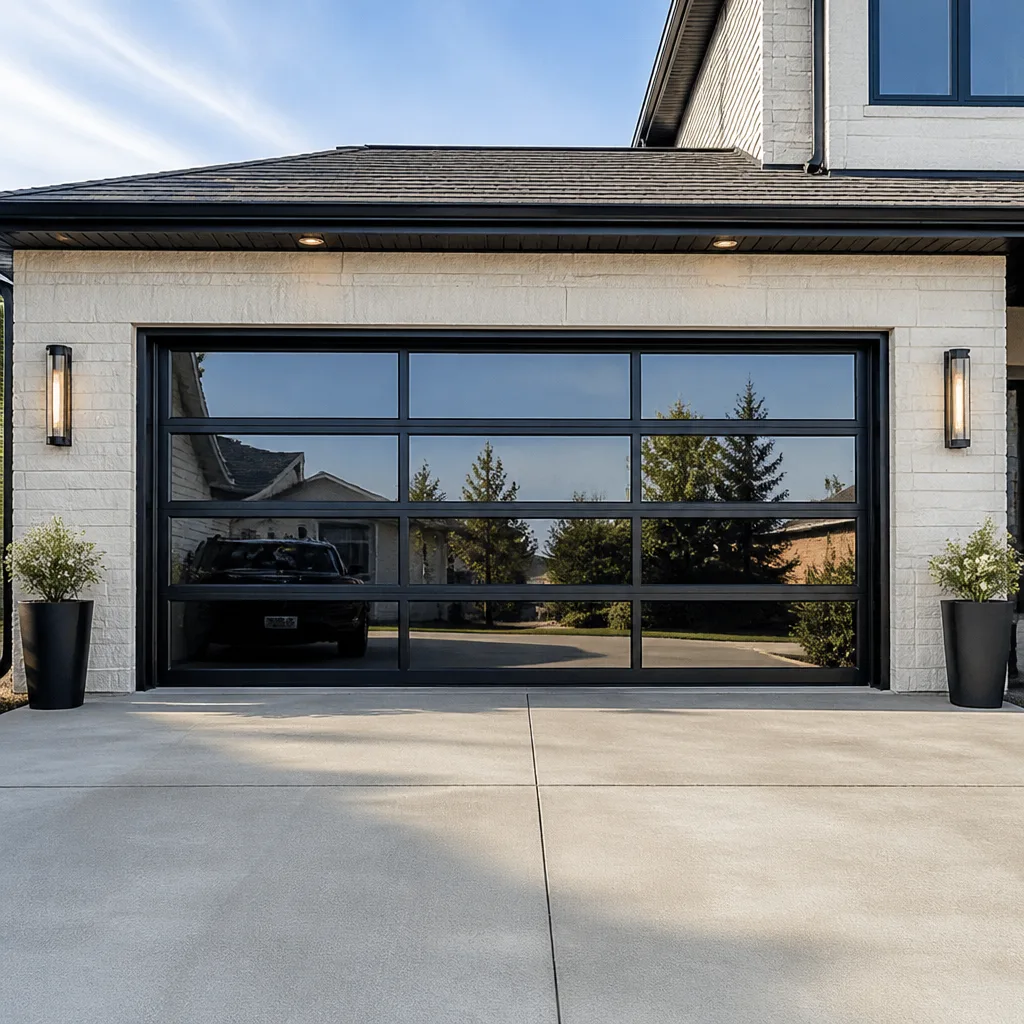 Full-view glass
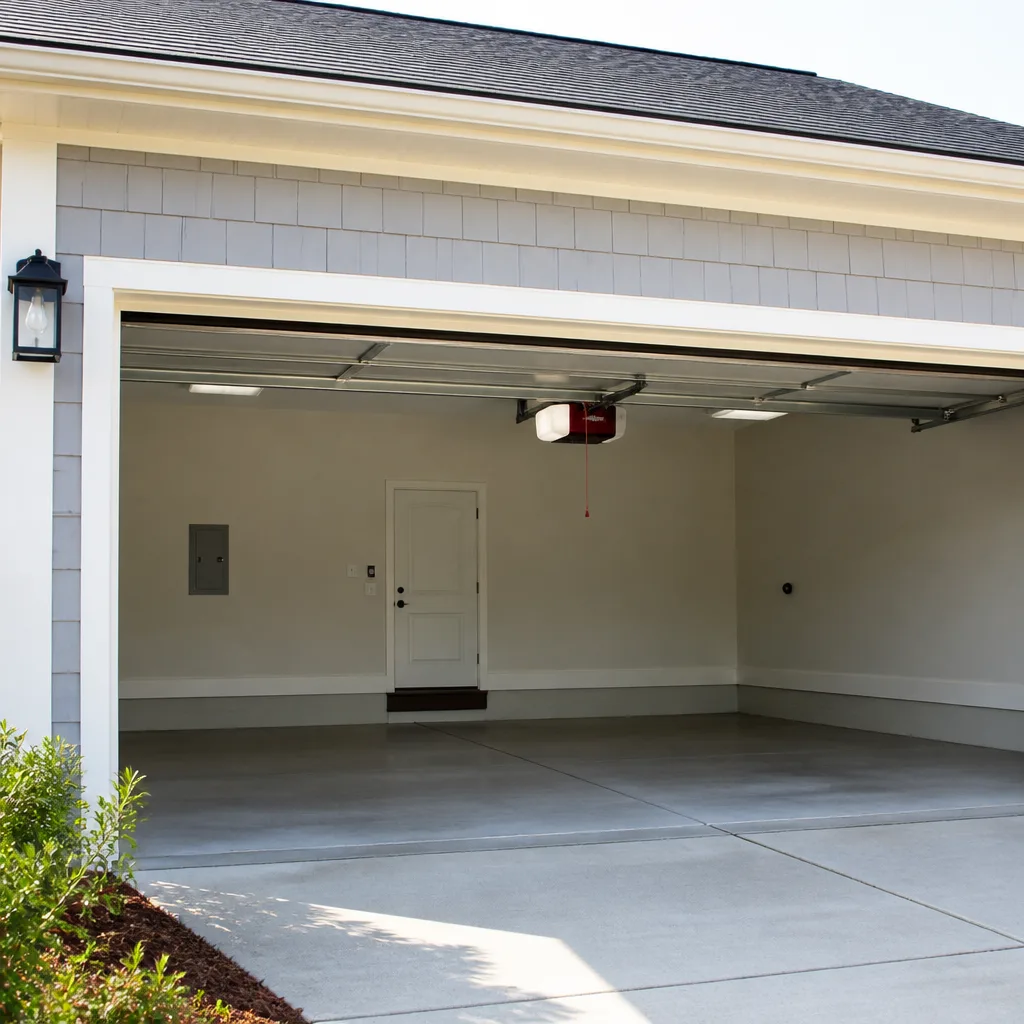 LiftMaster openers
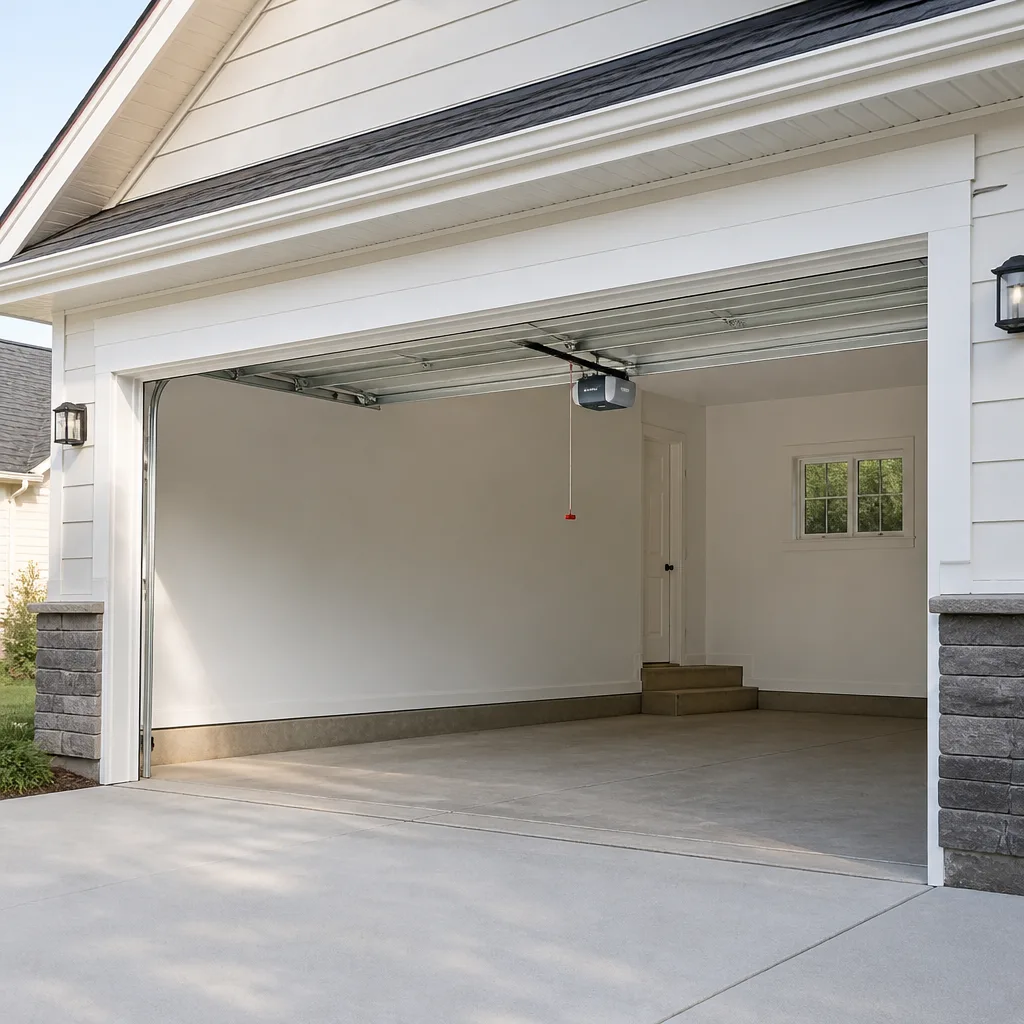 Chamberlain openers
Full 25-point door and opener safety check with every visit - springs, cables, rollers, tracks, and your LiftMaster or Chamberlain opener included
You get a price before we start. It does not change when the pro arrives.
Get your free estimateGarage Door Installation Troubleshooting: Common Problems and How to Fix Them
If your new door reverses, shudders, or takes more than 15 seconds to open the week after installation, the door itself is almost certainly fine. The opener programming wasn’t finished correctly. In our experience, that’s the pattern behind most post-installation complaints we see around Summerlin: not failed springs or cracked panels, but limit switches set by feel, travel distances left at factory defaults, and balance tests skipped so the crew could get to the next job. A correctly set-up door glides by hand with two fingers and stops on a dime the moment it touches an obstacle.
This guide walks through how that final half-hour goes wrong, and how to catch it before you sign the completion sheet. You’ll get a sign-off checklist you can run yourself, a way to tell installer error from product defect, and documentation tips that speed up any warranty claim.
Quick Answer
Most problems after a new garage door installation are calibration issues, not defective parts. A properly finished installation means the door balances by hand at three points in its travel, the opener’s travel limits stop it flush with the floor and header, and the safety reverse triggers with modest force. If any of those fail, you’re looking at an installer adjustment, not a new door.
Styles & brands we work with
- Raised-panel steel
- Carriage house
- Modern flush
- Full-view glass
- LiftMaster openers
- Chamberlain openers
Table of Contents
- The End-of-Install Checklist to Run Before You Sign Off
- Common Opener Calibration Errors and How to Spot Them
- Why New Doors Bind or Scrape in the First Two Weeks
- How to Document Installation Defects for a Warranty Claim
- Installer Error vs. Product Defect: Which Warranty Applies
- What Sounds Tell You About Your New Installation
The End-of-Install Checklist to Run Before You Sign Off
This is the single most useful thing you can read. The completion signature is your last moment of leverage before the crew rolls away, and ten minutes of your own checks will catch the errors that otherwise surface a week later.
Run these tests with the installer standing there. If one fails, ask them to correct it before signing. A crew that did the work properly will not mind one bit.
- Balance test. Disconnect the opener with the manual release cord, lift the door halfway by hand, and let go. A well-balanced door stays put. If it slams down or drifts up, the springs are set wrong.
- Manual release operation. Pull the red release handle and confirm the door moves freely. Re-engage the trolley. It should click back without force.
- Travel limit confirmation. Run the door closed. It should meet the floor evenly, with no gap across the threshold and no bottom seal crushed flat. Then run it open and watch where it stops relative to the header.
- Auto-reverse safety test. Place a 2×4 flat on the floor under the door and close it. The door should reverse on contact, not strain against it. Then test the photo eyes by waving an object in front of them while the door closes.
- Force setting check. Stand near the door while it closes and press lightly upward on the bottom edge. It should reverse readily, not fight you.
- Sound check. Listen for scraping, grinding, or a rhythmic thunk. A properly set-up LiftMaster, Chamberlain, or Genie opener runs quiet and steady.
In Summerlin, the desert heat raises the stakes on the balance test. That’s a separate point below, but it belongs in the same conversation.
Common Opener Calibration Errors and How to Spot Them
Here’s the part most homeowners don’t realize. Modern openers arrive with factory travel limits that assume a standard door height, and the installer is supposed to adjust those limits to your actual opening. When the final half-hour gets rushed, that adjustment gets fudged, and you get one of the following behaviors. You can identify all of these from the floor. None of them require opening the control panel.
- Door reverses right after touching the floor. This is the most common complaint. The close limit is set too high, so the opener thinks it hit an obstacle. It’s a two-minute adjustment, but it needs to happen.
- Overshooting the closed position. If the door slams into the concrete and then reverses, both the limit and force settings are wrong. This one puts stress on the panels and the opener gear, and it should be corrected same day.
- Stopping too far open. A gap at the header, especially with a wind seal, means heat and dust pour into the garage all summer. In Summerlin that’s more than a nuisance; it’s a warped seal waiting to happen.
- Remote button needing a second press. Signals weak programming, battery, or travel sensor issues. Worth a call to sort out.
- Rhythmic reverse without contact. The photo-eye safety sensors are misaligned or getting sun glare. A Southern-exposure garage in Summerlin sees this frequently.
If you find several of these together, don’t try to fix them one at a time. Hand it back to the company that installed it and make clear that these are calibration issues, not wear. For an independent view on how a properly operating door should behave, our garage door opener service in Summerlin page covers normal operation, safety settings, and what the openers we work with should feel like when everything’s dialed in.
Why New Doors Bind or Scrape in the First Two Weeks
Some settling is normal. A heavy wooden or wood-composite door will shift a bit in its first weeks, and a steel door expands and contracts with temperature swings. In Summerlin, where a south-facing garage can hit 130 degrees on the inside panel while the mornings sit near 70, that swing is significant. But there’s a difference between normal settling and a track alignment problem, and the difference is worth understanding.
Normal settling looks like: a faint creak at one point in the travel, a slight change in how the door feels by hand, tiny freckles of metal dust where rollers meet track. All of this is fine for a week or two, and it should diminish over time.
Track alignment problems look different. Watch for:
- Visible scraping along the sides, with paint or finish wear
- A consistent bind at the same point in the travel, especially with the door under power
- The weather seal peeling away from one side
- Rollers that have jumped the track or ride at an angle
- A wobble you can see from the driveway
Track misalignment usually comes from two sources. Either the horizontal tracks weren’t set perfectly level with the door’s travel line, or the vertical tracks weren’t plumbed to the opening. Both are installer corrections, both are covered under labor warranty, and neither fixes itself. Call promptly. A door that keeps grinding will wear rollers and hinges beyond the point where re-alignment helps.
How to Document Installation Defects for a Warranty Claim
Vague complaints get slow resolutions. Specific ones get fast ones. When you call about a problem, the person you reach will triage based on what you can show and describe. Here’s what moves the needle:
- Video the fault. A 15-second clip showing the door reversing, binding, or making the noise is worth a page of description.
- Note the point in the travel. “It reverses about one inch off the floor” gives more than “it doesn’t close.”
- Photograph any visible damage. Worn seals, scraped panels, damaged rollers. Take these in daylight from a consistent angle.
- Record the date and time of each occurrence. If it’s intermittent, this is essential.
- Note the outdoor temperature. Especially relevant in Summerlin, where a fault that shows at 4 pm in July may not show at 7 am.
- Include the door make, model, serial number, and the opener make and model. This is on the sticker on the hardware.
- Save the original installation paperwork. Warranty companies ask for it, and it’s easy to misplace.
A well-documented claim moves quickly. A vague one often circles through a phone queue for weeks.
Installer Error vs. Product Defect: Which Warranty Applies
This is where the runaround usually happens, and understanding it saves you a lot of aggravation. Two warranties cover your installation:
- Labor warranty covers the installer’s workmanship. Misaligned tracks, incorrect opener travel limits, never-balanced springs, improperly set force settings. This runs through the company that installed the door.
- Manufacturer warranty covers defects in the door, springs, opener, and hardware themselves. Failed metal, premature seal cracking, opener circuit board failure, broken springs within the manufacturer’s stated interval.
The tricky part is that closely related symptoms can come from either source. A door that reverses at the floor could be a bad safety sensor (manufacturer) or a mis-set travel limit (installer). Inspecting it usually determines which. In our experience at installations across Summerlin, the vast majority of early complaints are installer error, not product defect.
To determine which applies, ask yourself three questions:
- Did the door ever work correctly, and if so, for how long?
- Is the fault consistent, or does it appear only under certain conditions (temperature, time of day, specific position)?
- Does the fault show with the opener disconnected and the door operated by hand?
If the fault only shows with the opener connected, that points toward opener programming. If it shows with the door operated by hand, that points toward hardware or balance. Either way, get the installer out to look. A first-call resolution is normal when the cause is clear.
What Sounds Tell You About Your New Installation
Sound is underused information. A properly set-up door makes a low whirr and a soft thump at contact. Anything else is telling you something, and in Summerlin’s dry heat, the sounds come quicker than in milder climates.
- Sharp clunk at the end of travel – the opener force is set too high, or the door isn’t balanced.
- Rattling across the panels – loose fasteners, or hinges that weren’t snugged down.
- Grinding on close – roller or track issue.
- Squealing on open – spring tension or roller bearing strain.
- Rhythmic thudding – the door surface is flexing, usually from a bowed bottom or wrongly tensioned spring.
Don’t feel compelled to investigate the springs yourself. High-tension springs and cables carry tremendous stored force and can cause severe injury when they release unexpectedly. Point a camera at them if it helps you describe the fault, and let a trained technician handle the actual work. If the noise sounds mechanical and rising, treat it as a repair call, not a curiosity. Our garage door repair in Summerlin page covers which noises typically mean which fault, and it’s worth a scan if the sound pattern isn’t obvious.
Common Mistakes to Avoid
- Signing the completion sheet before running the balance test. Once you’ve signed, you’ve accepted the work and warranty service becomes reactive rather than proactive. Run the tests while the crew is still there.
- Adjusting travel limits on the opener yourself. The setting is easy to get wrong on the safe side. A small adjustment made by hand can flip the safety direction. Let the company correct it, especially the first time.
- Assuming every sound is normal settling. In Summerlin, dry heat masks some early faults. If a sound shows up at 3 pm and disappears by 8 pm, that’s an expansion issue; if it’s consistent, it’s an alignment issue. Know which you have.
- Ignoring a gap at the floor in winter. The same gap opens in summer. In Summerlin’s wind-driven sand season, that gap is an invitation for dust and insects.
- Hiring a low-bid installer without confirming they’ll come back. The work is the difference between a door that runs correctly for years and one that needs a repair call within the first month. Know the labor warranty terms before the crew arrives.
- Waiting too long on track misalignment. Rollers and hinges wear quickly once the track is off-line. A two-week window becomes a two-panel replacement without prompt correction.
- Not writing down the door’s serial number and installation date. Both are needed for any warranty claim and are easy to lose.
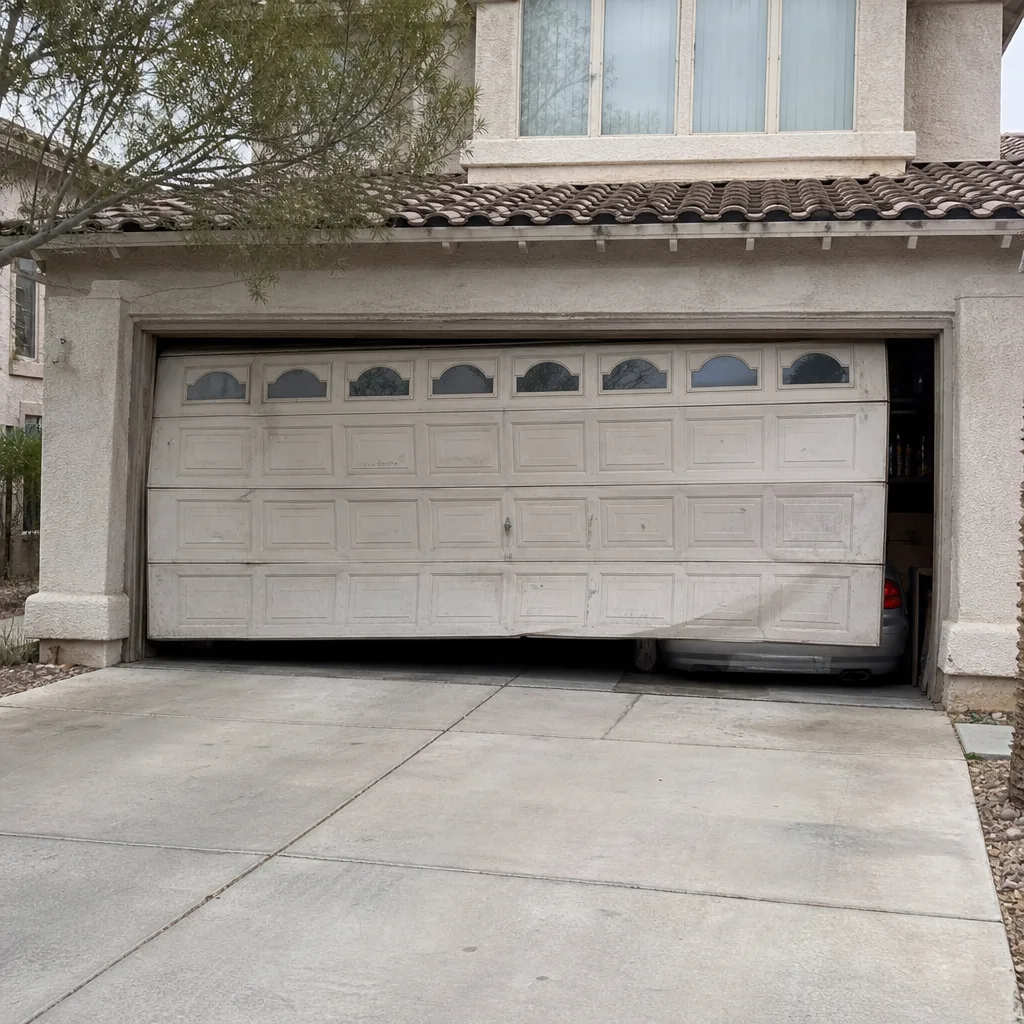
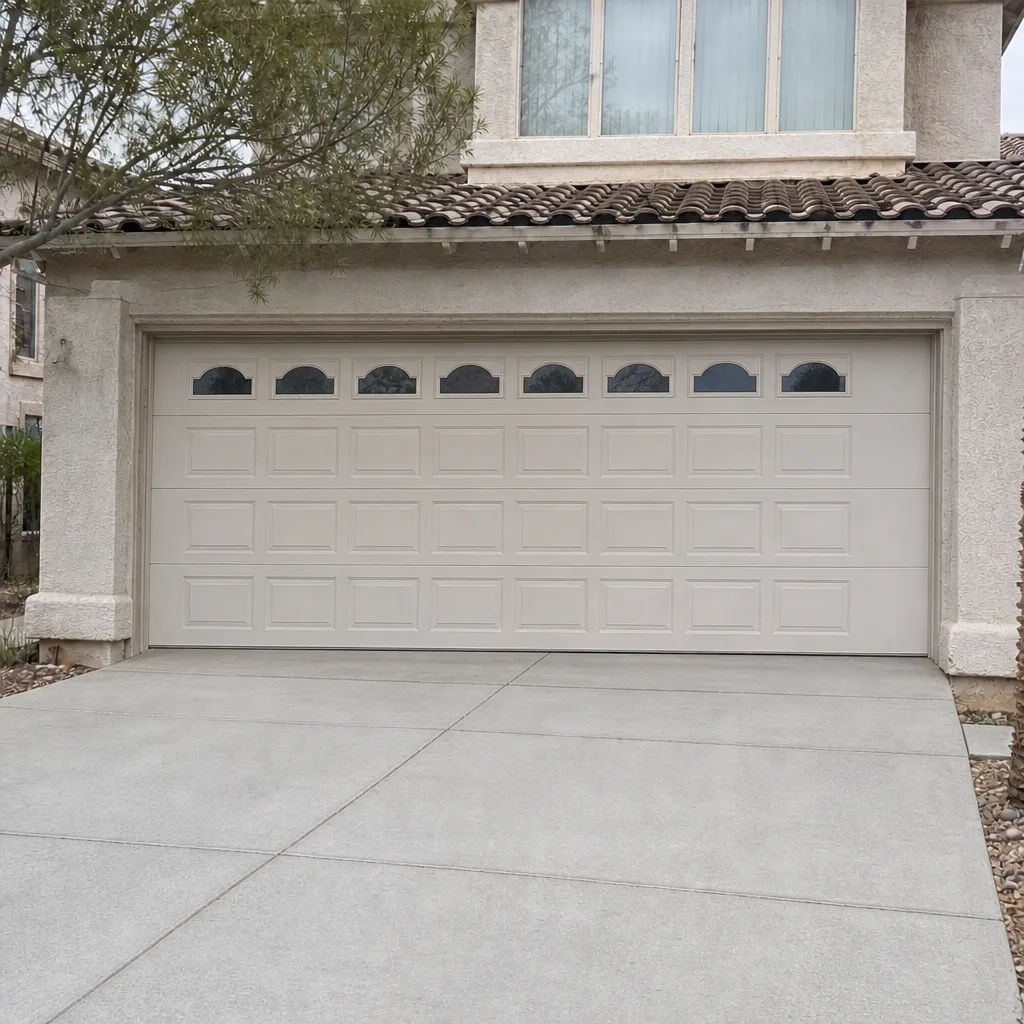
See the difference
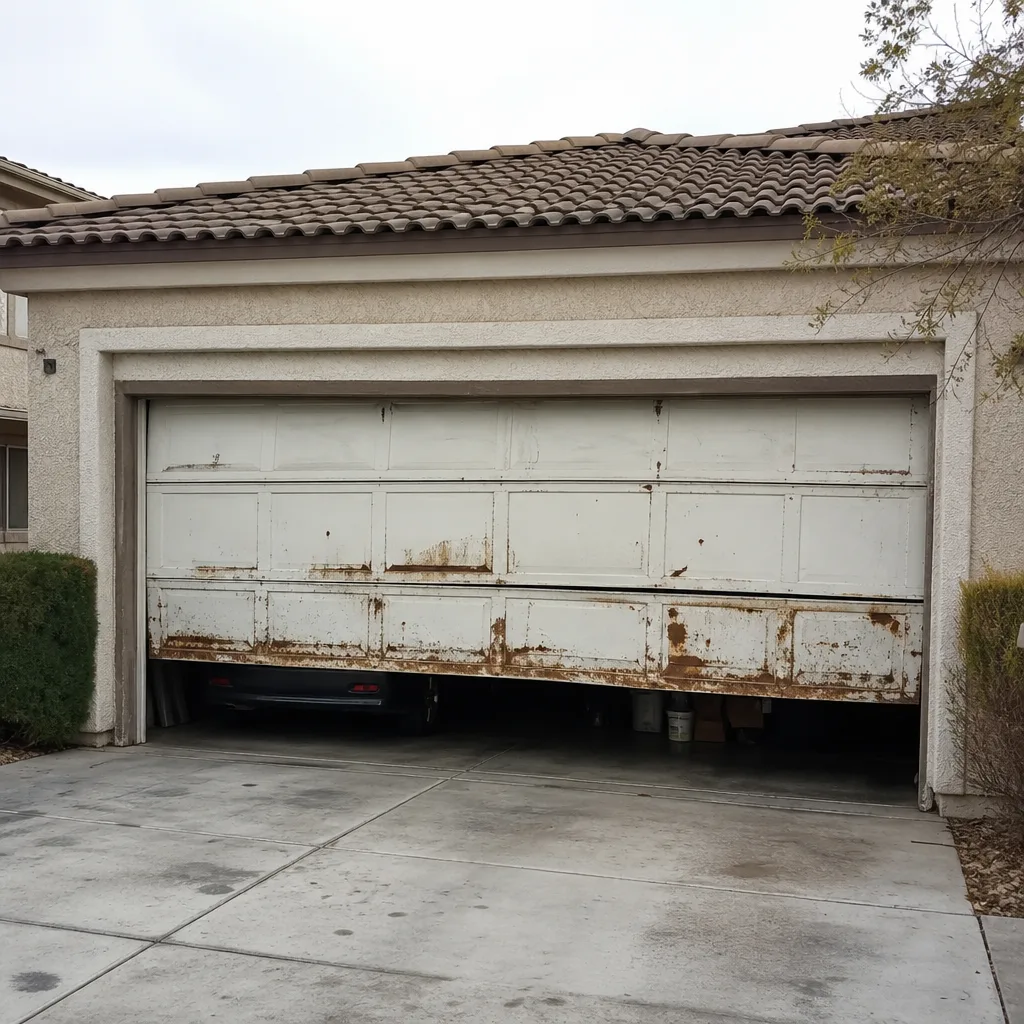 Before
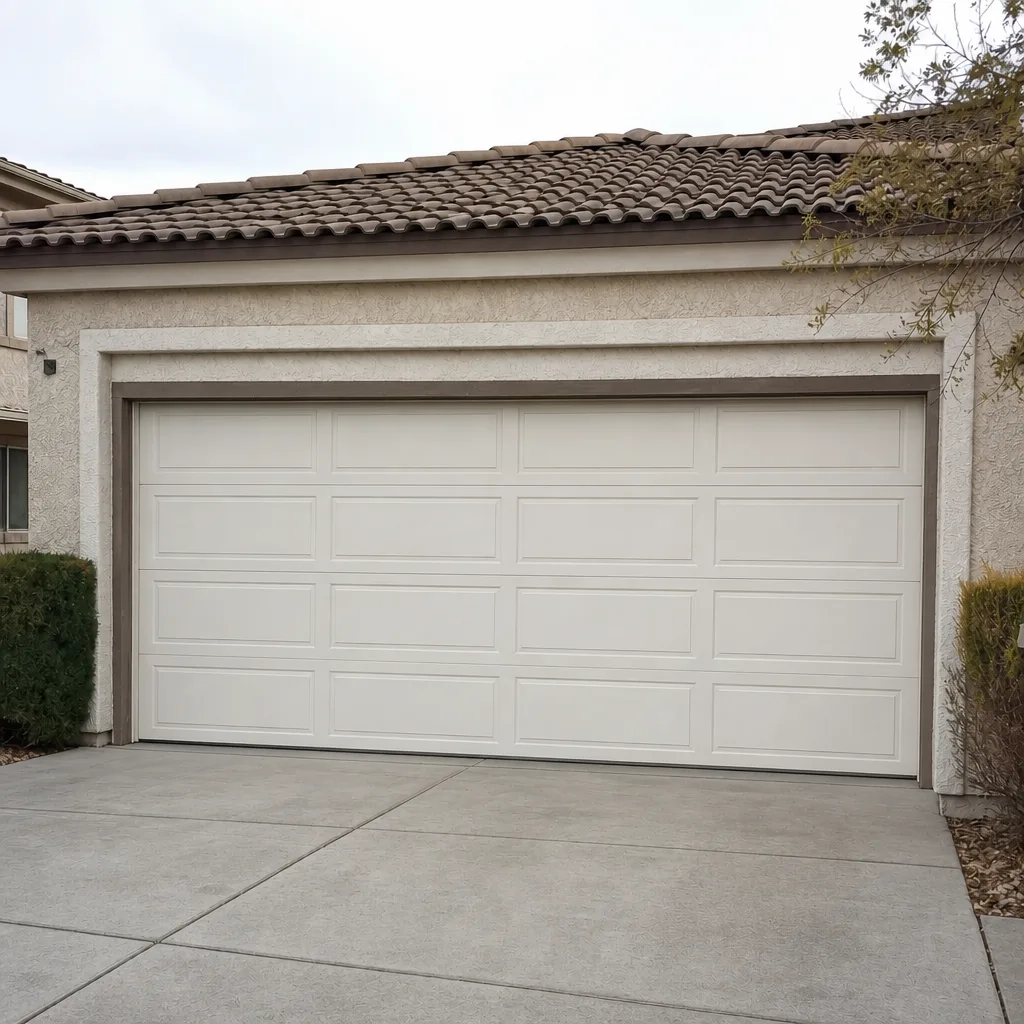 After
 Before
 After
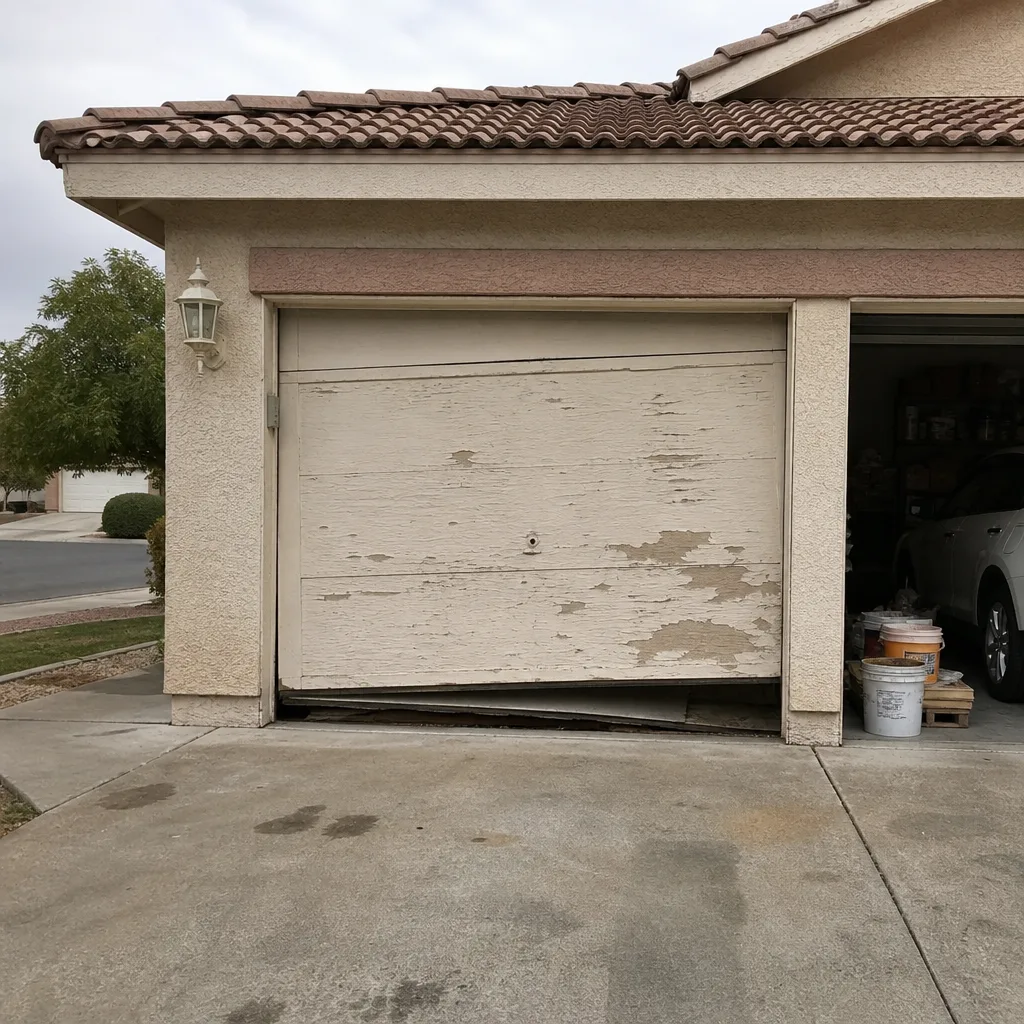 Before
 After
When to Call a Professional
Some issues are worth a phone call the moment they appear. Any sudden snap or loud bang followed by a door that won’t open under power means a spring has failed, and springs and cables are not a homeowner job. A door that reverses unpredictably, a door that binds consistently, visible track misalignment, or a photo-eye that won’t stay aligned through the day all warrant a professional visit.
When the trouble started within your installation warranty window, call the installing company first. When it’s outside that window or you want a second opinion, call us. We offer free estimates in Summerlin and can give you a written assessment of what’s wrong and what it will take to correct. When we do the work, you get a flat price quoted before any work begins, and our 90-Day Done Right Promise in writing. Our technicians have up to 10 years of experience, and we’re factory-familiar with the major brands – LiftMaster, Chamberlain, Genie, Clopay, Amarr, Wayne Dalton, Craftsman, Raynor. When we install or service a door, we stand behind it. Call (855) 608-8802.
For the broader picture of how a new door is done correctly from start to finish, see our garage door installation in Summerlin guide. If you’re trying to figure out whether your installation was the problem or is worth repairing, our Mainspring Garage Door Co. Summerlin home page is a useful starting point.
Frequently Asked Questions
A standard residential door should open in about 10 to 15 seconds and close in the same time, measured from the moment the opener engages to the door meeting the floor or the header. If yours runs faster or slower, the speed or travel settings need attention. Call (855) 608-8802 for an exact assessment.
No, it’s nearly always an opener travel-limit setting that was left too high, not a defective door or panel. The correction is a calibration change, not a part replacement. In Summerlin, we see this regularly after installations done in a hurry. Call us for a same-day adjustment if your installing company isn’t responsive.
Not if it’s consistent across the door’s width. A uniform gap means the door isn’t seating correctly at the close limit, and given Summerlin’s dust and monsoon-season winds, it should be corrected. A door that meets the floor evenly with the seal making contact is the correct result. Call for a free observation if you’re unsure.
Run the door by hand with the opener disconnected. If the fault persists, it’s likely hardware (manufacturer warranty territory). If it only shows with the opener engaged, it’s likely programming (installer warranty). In our experience, most post-install complaints are installer-related. Call us for a free second opinion on any written estimate.
We don’t recommend it for first-time adjustments. A small error in the force or limit setting can flip the safety response in the wrong direction. These are two-minute adjustments for a trained technician. Call (855) 608-8802 and we’ll schedule a visit.
It varies by installer and product line, so get the terms in writing before the crew arrives. Labor warranties typically run 30 to 90 days; manufacturer warranties on doors and openers run longer depending on the model. When we do the work, everything we install comes with our 90-Day Done Right Promise in writing. Call us for details.
The Bottom Line
If your new garage door is misbehaving in the first month, the fault is almost certainly a calibration error from the final half-hour of the install, not a defective product. Run the balance test, the auto-reverse check, the travel limit confirmation, and the manual release check before you sign off. Video any fault. Note the conditions. Push back while the installer is there. And if the calendar has moved past the installation window and the problem persists, get a second opinion. For free estimates in Summerlin and a same-week visit from a technician who knows these products, call Mainspring Garage Door Co. Summerlin at (855) 608-8802.
Written by the team at Mainspring Garage Door Co. Summerlin.