
Last updated November 18, 2026
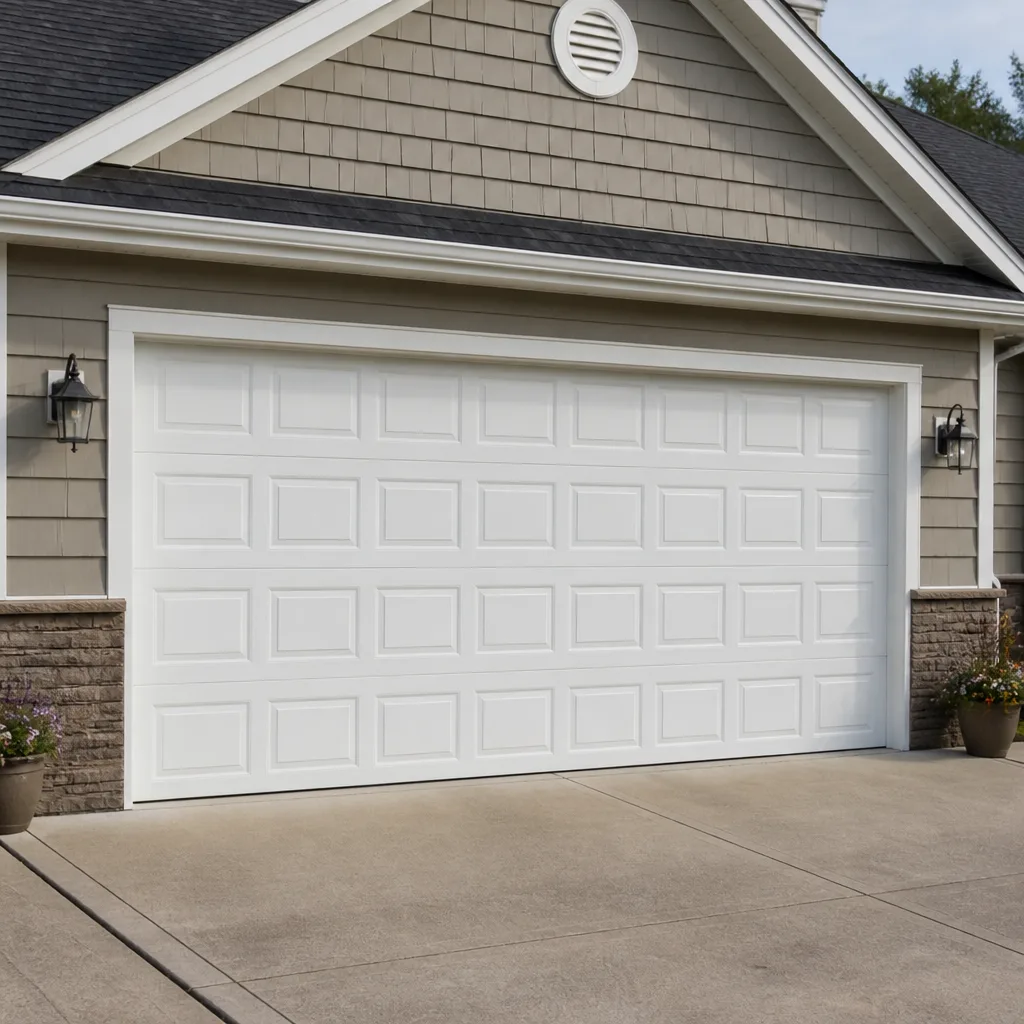 Raised-panel steel
 Carriage house
 Modern flush
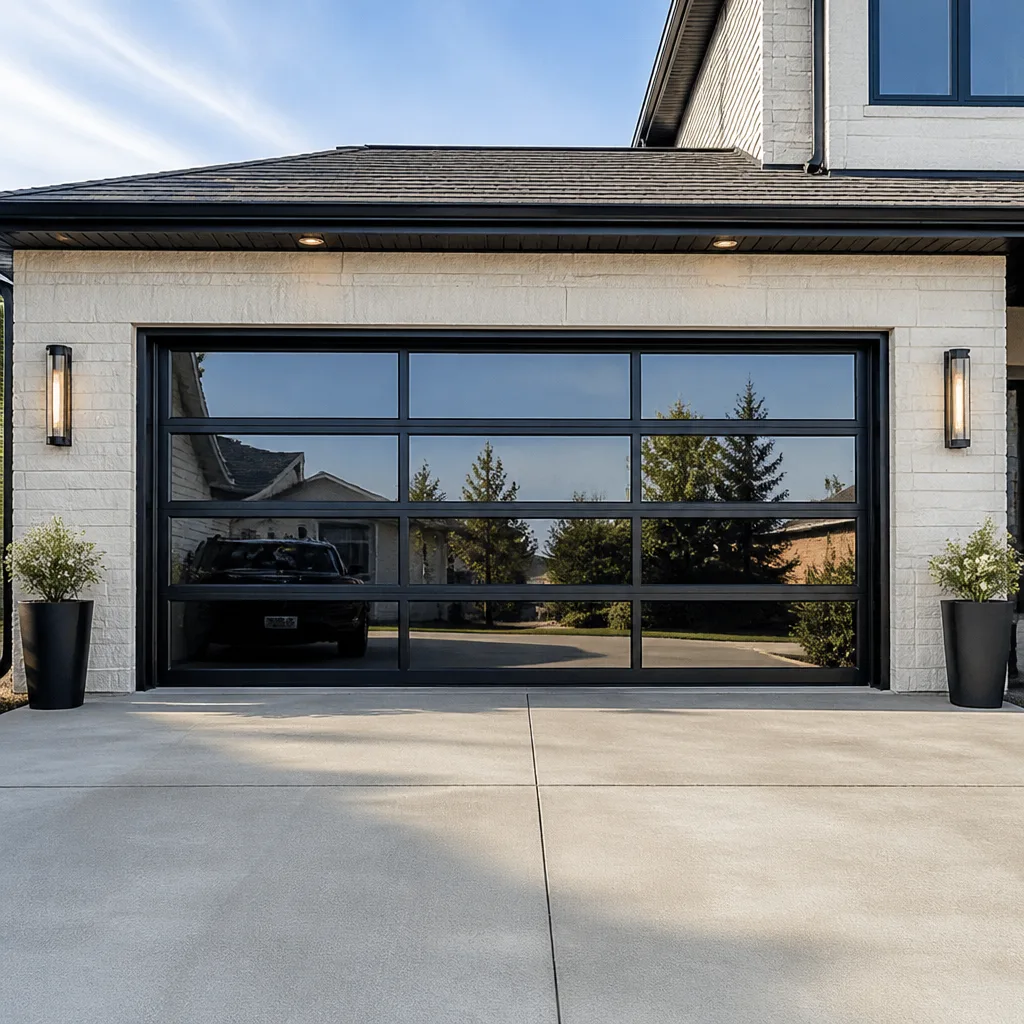 Full-view glass
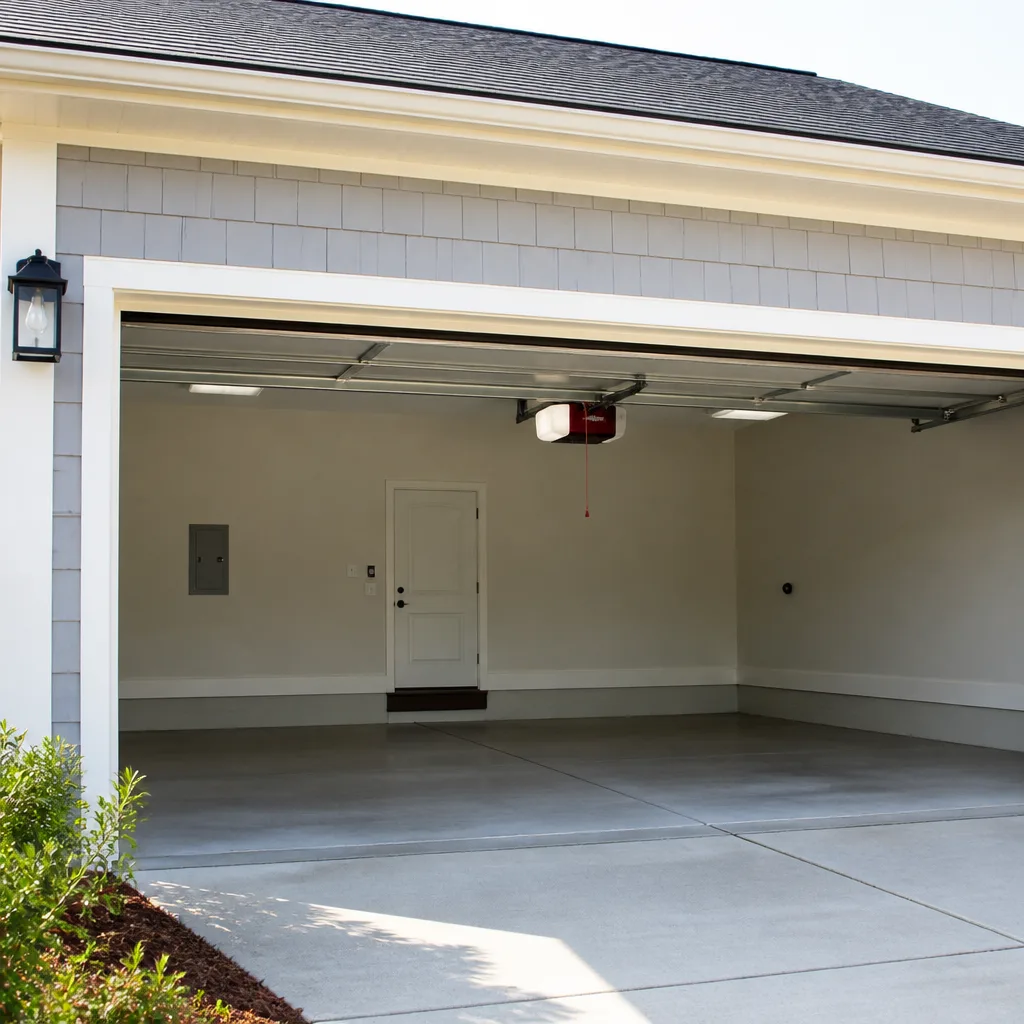 LiftMaster openers
 Chamberlain openers
Full 25-point door and opener safety check with every visit - springs, cables, rollers, tracks, and your LiftMaster or Chamberlain opener included
You get a price before we start. It does not change when the pro arrives.
Get your free estimateGarage Door Opener Maintenance Schedule: What to Do and When
The average garage door opener lasts 10 to 15 years. The ones that quit at year 7 almost always share two failures: no lubrication on the drive system, and a force setting that was never rechecked after the door settled. Most homeowners do none of it until the opener stops mid-cycle and strands the car inside. In Summerlin, where a garage faces full afternoon sun for half the year, that neglect costs more than it does in cooler places. This guide gives you a plain calendar: four actions a year, three of them under five minutes, with materials and time listed for each.
Quick Answer
A garage door opener needs four maintenance actions a year: a monthly visual and balance check, lubrication of the drive system and hardware in spring and again in mid-summer, a force and travel limit test every three months, and an annual battery backup test if your opener has one. Add a professional tune-up once a year. None of it requires a service contract.
Styles & brands we work with
- Raised-panel steel
- Carriage house
- Modern flush
- Full-view glass
- LiftMaster openers
- Chamberlain openers
Table of Contents
- The Four-Action Year: A Plain Calendar
- Why Summerlin Heat Demands a Mid-Summer Check
- The Force and Travel Limit Test, Step by Step
- Battery Backup: Testing and Replacement
- Lubrication: What to Use and Where
- The One Task That Voids Your Warranty
- Common Mistakes to Avoid
- When to Call a Professional
The Four-Action Year: A Plain Calendar
You don’t need a monthly routine. You need four checkpoints and a couple of five-minute look-overs in between. Here is the schedule we recommend, by month. All you need is a rag, a can of white lithium grease or a silicone-based garage door lubricant, a level, and a 2×4 block.
- January – Annual reset. Test the force and travel limits (10 minutes). Test the safety reverse with a 2×4 (2 minutes). Wipe down the tracks and check the opener’s LED indicators against the manual. Test battery backup. Materials: rag, 2×4, manual.
- March – Pre-summer lubrication. Lubricate the chain or belt, the torsion spring coils, the rollers, and the hinges (5 minutes). This is the one that matters most in Summerlin, because you’re greasing the parts before the heat arrives, not after.
- June – Mid-summer heat check. Inspect the drive system again for dryness or metal-on-metal sound. Re-grease if the chain looks dry. Check the door’s balance by hand (see below). Total time: 5 minutes.
- September – Post-summer inspection. The parts that endured a Summerlin summer get a second look. Test the safety reverse, listen for change in sound, check for fraying on the cables (a visual only, never a touch).
- November – Winter prep. Lubricate moving parts before the cooler months, test the force settings, and confirm the opener’s lights and remote controls work reliably.
Between checkpoints, a monthly glance is enough: open and close the door once and listen. Any grinding, squealing, or hesitation is a signal. If your opener or door is giving you trouble now, our Garage Door Opener in Summerlin service page explains how we diagnose the issue and what a repair involves.
Why Summerlin Heat Demands a Mid-Summer Check
Most maintenance schedules you find online were written for a climate that doesn’t hit 110 degrees. Summerlin does. A garage that faces west or south can reach 130 degrees inside on an August afternoon, and that changes what the opener’s mechanics go through.
Heat thins lubricants. A chain or screw drive that was greased in March is running nearly dry by July. When metal runs on dry metal, the drive motor works harder, the opener draws more current, and the windings on the motor heat up further. In our experience, the drive-gear failures we see in Summerlin cluster in August and September, not because the part was weak but because it spent three months unlubricated in a hot garage.
Heat also affects the door balance. Steel expands; the torsion spring’s tension can shift slightly with temperature cycles. A door that was balanced in January can be slightly heavy in July, and the opener’s motor absorbs that extra load every cycle. That’s why the mid-summer check is a five-minute job that saves the $250 – $400 you might otherwise spend on a motor or drive-gear replacement in the fall.
The same pattern shows up across the valley. If you live in a Summerlin neighborhood like The Ridges or Red Rock Country Club, with a west-facing garage, expect more wear than a shaded, north-facing door in another part of town. Not a sales pitch, just where the sun lands.
The Force and Travel Limit Test, Step by Step
The force setting is the opener’s answer to “how hard should I push?” Set too high and the opener won’t reverse when it meets an obstruction. Set too low and it reverses on its own. If your door doesn’t reverse on a 2×4, the force or travel limit is wrong, and it’s a safety issue. Here’s the actual procedure for most LiftMaster, Chamberlain, and Craftsman openers (the programming differs slightly on Genie and Wayne Dalton units; your manual has the exact button sequence).
- Clear the doorway. Close the door and pull the emergency release so the door is disconnected from the opener.
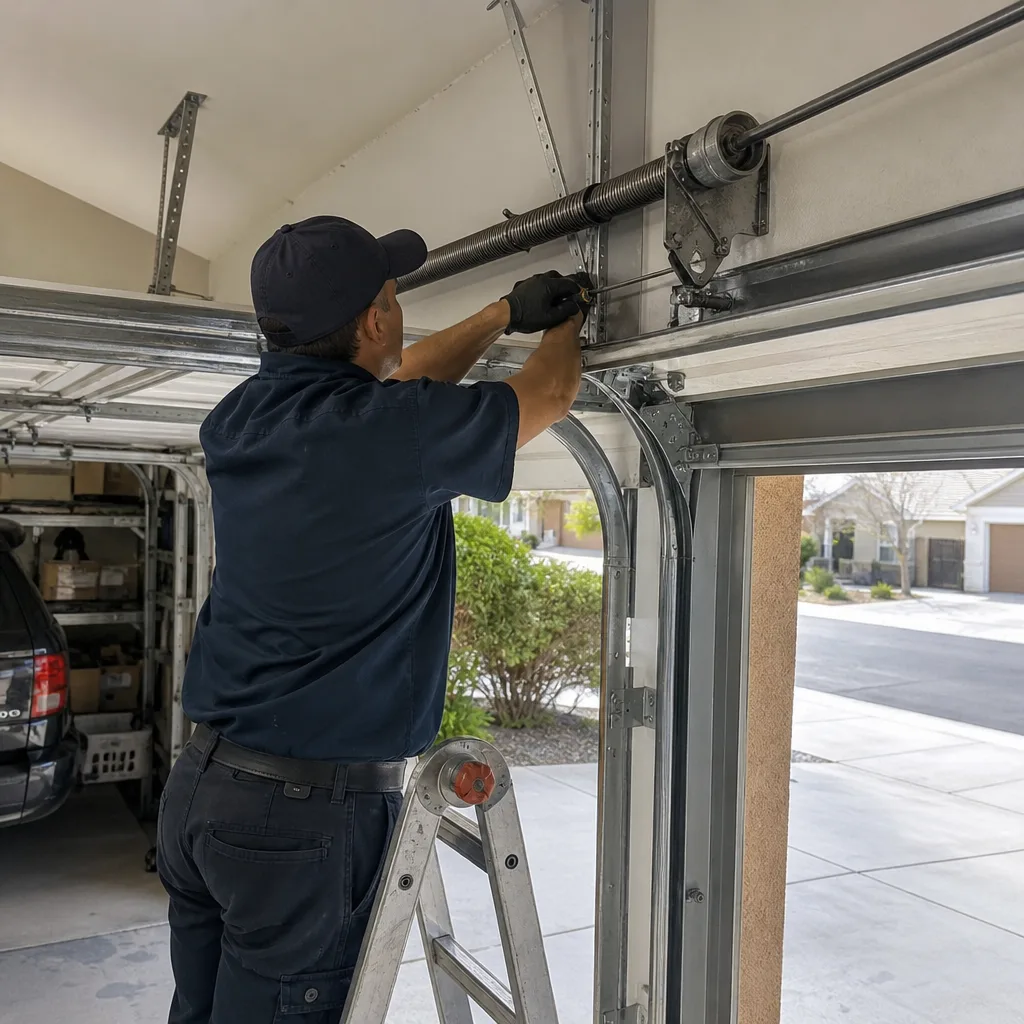
- Lift the door halfway by hand. It should stay put. If it drops or rises on its own, the spring is out of balance and needs a professional look before you touch the opener settings.
- Reconnect the door. Place a 2×4 flat on the floor across the center of the doorway.
- Press the wall button to close the door. The door should contact the 2×4 and immediately reverse to the open position. If it stops or pushes down, the force setting is too high.
- To adjust on most units: locate the force adjustment screws (usually labeled “Open Force” and “Close Force” on the back or side of the motor housing). Turn the close-force screw counterclockwise in small increments, no more than a quarter turn, and retest.
- Test the safety reverse sensors by waving an object in front of the photo-eye. The door should not close while the beam is broken.
If the door still won’t reverse after two quarter-turn adjustments, stop. The problem is usually a worn drive gear or a failing logic board, not a setting. Call us at (855) 608-8802 for a free estimate. A proper force test shouldn’t feel like a guessing game, and if it does, something mechanical is causing it. That diagnostic is part of what we do on every repair call, documented in plain language. You can see how we approach that work on our Garage Door Repair in Summerlin page.
Battery Backup: Testing and Replacement
Since 2019, most openers sold in the U.S. include a battery backup, and Summerlin homes built or updated since then likely have one. The backup runs the door a limited number of cycles when the power is out. It doesn’t last forever, and the failure is silent: you only learn it’s dead when the power fails.
Test it twice a year, at your January and July checkpoints. The procedure is simple: open the door fully, then unplug the opener from the wall outlet. Press the wall button. The door should close. Plug the opener back in. If it doesn’t move at all, the battery is dead or disconnected.
How to tell it’s degrading before it fails outright: the door moves more slowly on battery power than on mains power, and the backup will eventually only manage one or two cycles before the motor stalls. A battery that was good for a dozen cycles at year one may only manage two by year four. Most manufacturers specify replacement every three to five years. In Summerlin heat, expect the shorter end of that range; the battery sits in a hot garage and heat degrades the cells.
Replacement is a homeowner job on most units: unplug the opener, remove the battery cover, disconnect the leads, swap the battery, reconnect. If you’d rather not, our Mainspring Garage Door Co. Summerlin home page has a direct line to the team, and we can handle it during a tune-up visit.
Lubrication: What to Use and Where
Most lubrication mistakes are the wrong product. Do not use WD-40 as a lubricant; it’s a solvent and it will strip the grease you have. Use white lithium grease or a silicone-based garage door lubricant. The label should say “lubricant,” not “penetrant.”
Where to apply it:
- The chain or belt: a light coat along the length, not a drip. Too much grease attracts dust, and dust in a Summerlin garage is a real problem.
- The torsion spring coils: a small amount worked into the coils. Do not apply to the spring if you have any doubt about its condition; a worn spring is a professional job.
- The rollers and hinges: one drop per roller axle, one on each hinge pivot. This is the five-minute part.
- The tracks: not lubricated. Wipe them clean with a dry rag. Lubricant on the tracks collects grit and causes stuttering.
- The photo-eye lenses: wipe clean, no product.
If you have a belt-drive opener, the lubrication need is less frequent, but the belt itself should be inspected for cracking. On chain-drive units, the mid-summer check is not optional in Summerlin; it’s the check that keeps the opener alive.
The One Task That Voids Your Warranty
We have to be direct here: adjusting torsion spring tension as a do-it-yourself “tune-up” is the single task that voids most manufacturer warranties and, more importantly, is the one that puts homeowners in the emergency room. The torsion spring on a standard residential door is under hundreds of pounds of tension. A single wrong turn on the winding cone can release that energy instantly. We do not recommend it, we do not teach it, and neither does any manufacturer.
If your door feels heavy, or the opener is straining, the problem is likely the spring. That is a professional call, every time. In Summerlin, spring failures cluster in the spring and fall when temperature swings stress the metal; we see it on doors that are seven to ten years old, especially on the west-facing side of the house. A qualified technician can replace a torsion spring safely, and the cost is far less than an injury. That’s the one task on this page you should not do yourself.
Common Mistakes to Avoid
- Greasing the tracks. Lubricant collects grit, and grit makes the door stutter. Wipe them clean and leave them dry.
- Using WD-40 as a lubricant. It’s a solvent, and it will strip the grease off the chain. Use white lithium grease or a silicone lubricant.
- Adjusting the force setting too aggressively. Small increments, quarter turns, retest after each. Turning the screw a full rotation can leave the door unable to reverse.
- Skipping the mid-summer check. In Summerlin, the June check is the one that keeps the drive system alive. The other three seasons are gentler; the summer isn’t.
- Ignoring the battery backup until the power goes out. Test it twice a year. If the door is slow on battery, the battery is already degrading.
- Treating a heavy door as an opener problem. If the door is heavy by hand, the spring is the issue, and the opener is just doing extra work. Don’t replace the opener until the spring is checked.
- Letting the door run on a dry chain for months. A squealing chain is a warning, and the repair is five minutes of grease, not a new opener.
When to Call a Professional
Some tasks belong to a trained technician. Call us if the door is heavy to lift by hand, the opener reverses on its own, the door won’t reverse on a 2×4 after two small force adjustments, the chain is visibly slack or frayed, the springs look worn or show a gap, or the opener is more than ten years old and starting to hesitate. Those are the cases where a five-minute check becomes an hour of guessing, and the wrong adjustment costs more than the service call.
Mainspring Garage Door Co. Summerlin offers free estimates in Summerlin. Call (855) 608-8802. We answer the phone with a live person, day or night, and we’ll tell you plainly whether it’s a maintenance task or a repair. If it’s a repair, we quote the flat price before any work begins, so there are no surprises on the bill.
See the difference
 Before
 After
 Before
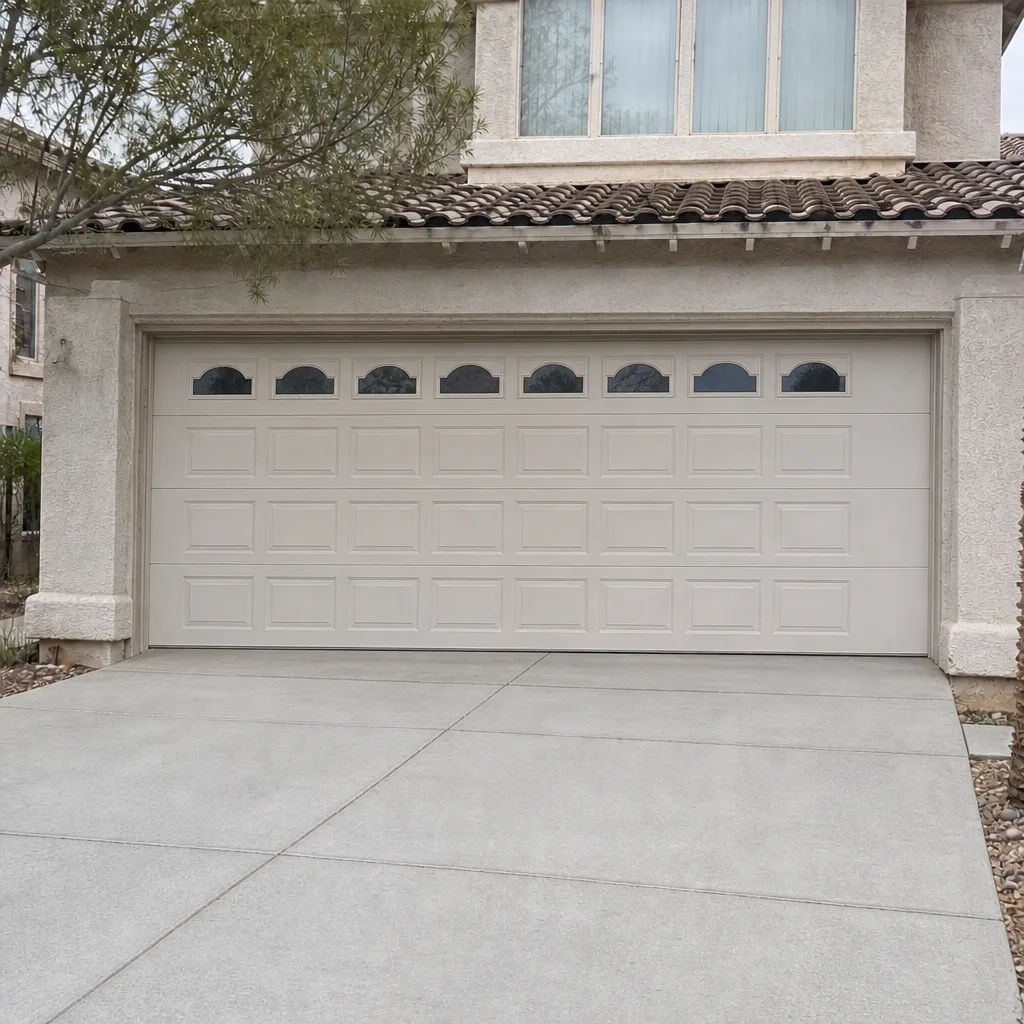 After
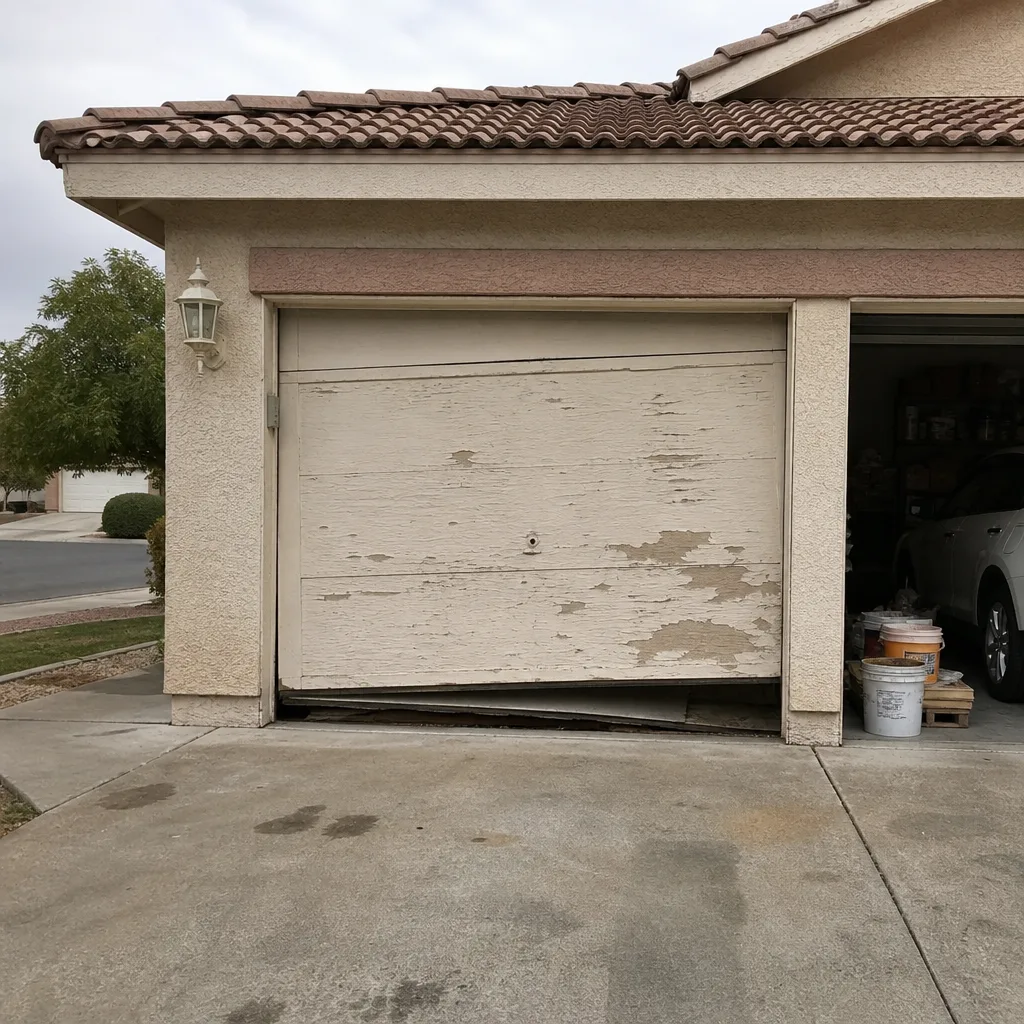 Before
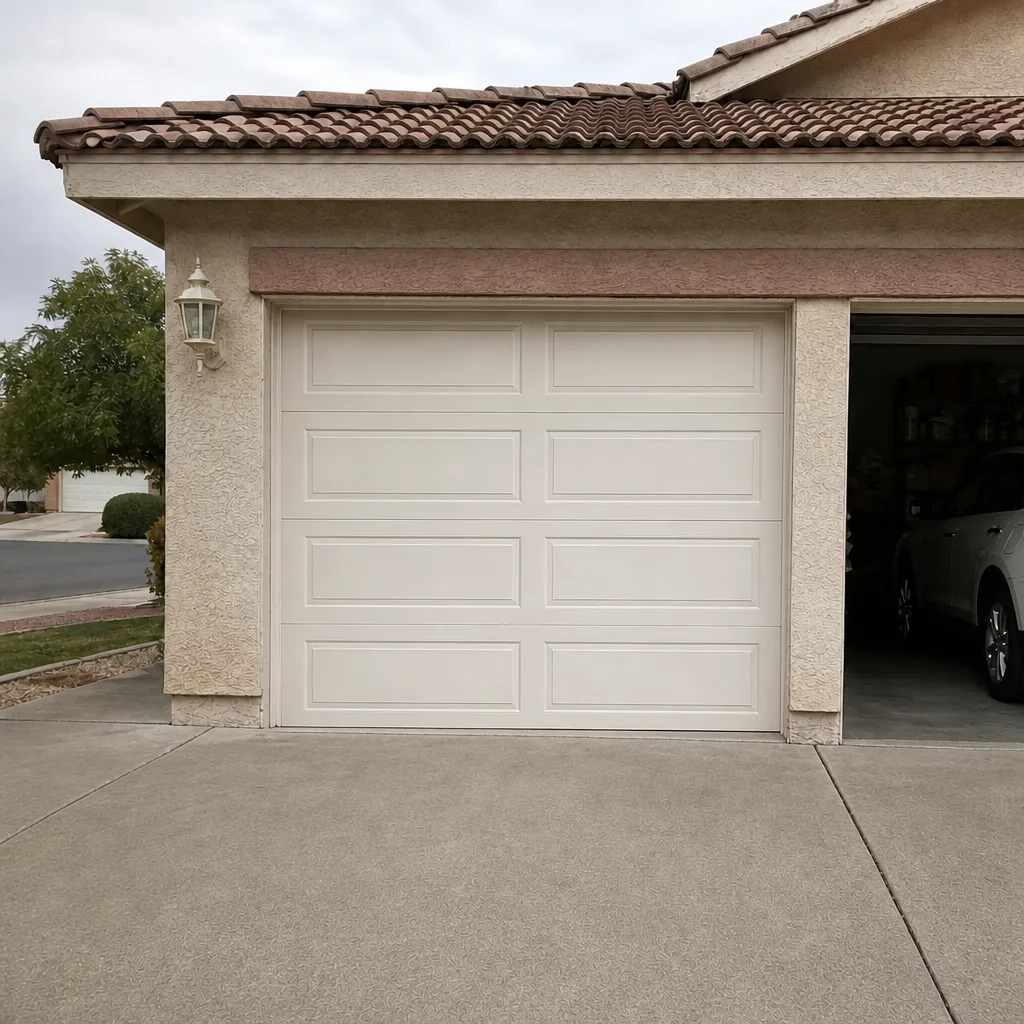 After
Frequently Asked Questions
Twice a year in Summerlin – once in March before the heat arrives, and again in June or July. In cooler climates, once a year is often enough. The heat here dries out the lubricant faster, and a dry chain or drive gear is the most common cause of opener failure we see. Call (855) 608-8802 if you’d like a free estimate on a tune-up.
The door hesitates, reverses on its own, or the opener strains audibly on the way up. In Summerlin, the first sign is often a grinding sound in August after a summer of dry running. If you catch it at the sound stage, it’s usually a lubrication or force-setting fix. If you wait, it’s a motor or drive-gear replacement.
Yes. Garage temperatures above 120 degrees dry out lubricants and stress the motor windings. A west-facing Summerlin garage is the hardest case. Expect three to five years off the opener’s service life if the drive system goes unlubricated through the summer months. That’s the reason for the mid-summer check this guide keeps returning to.
Test it by unplugging the opener and pressing the wall button. If the door doesn’t move, the battery is dead. If it moves slowly or only once before stalling, it’s degrading and should be replaced. Most manufacturers recommend replacement every three to five years, and in Summerlin heat, expect the shorter end of that range.
No. Torsion spring adjustment is the one task on this list that voids most warranties and causes serious injury when done wrong. The spring is under hundreds of pounds of tension, and a single wrong turn can release it. Call (855) 608-8802 for a free estimate on a spring inspection instead.
Our seasonal tune-up is $89. That covers lubrication of the drive system and hardware, the force and travel limit test, the safety reverse test, balance inspection, and a written report. If your door needs a repair, we quote the flat price before any work begins. Call (855) 608-8802 to schedule. For new door or opener installation, we measure and schedule a written price rather than promising same-day service, since that work requires ordering and fitting to your door.
The Bottom Line
Four actions a year, three of them under five minutes, and one you should never do yourself. Lubricate in March and again in mid-summer, test the force and travel limits quarterly, test the battery backup twice a year, and leave the springs to a trained technician. In Summerlin, the mid-summer check is the one that pays for itself, because heat is the thing that kills openers early. A professional tune-up once a year, and honest attention in between, is what keeps the opener running the ten to fifteen years it’s built for. If you’d like us to handle the check, we’ll quote the price before we lift a wrench.
Written by the team at Mainspring Garage Door Co. Summerlin.