
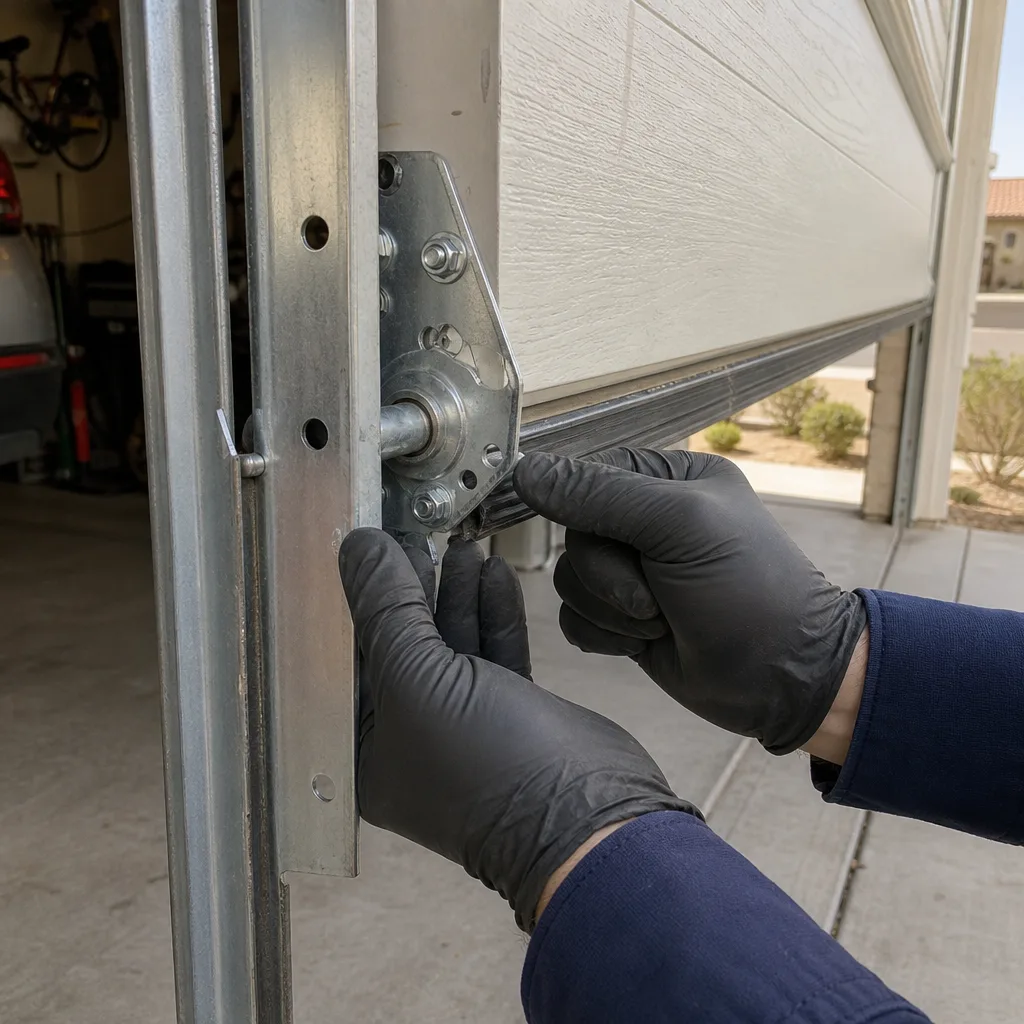
Last updated November 18, 2026
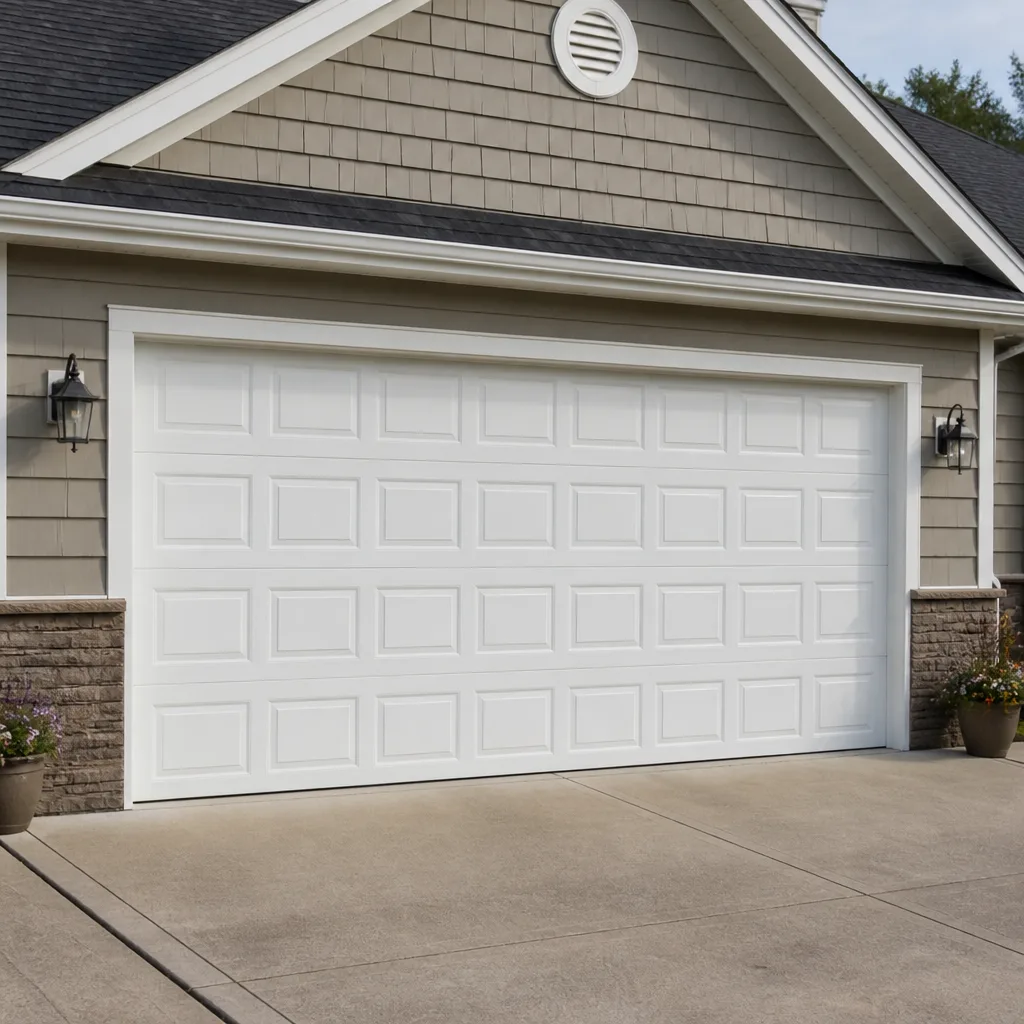 Raised-panel steel
 Carriage house
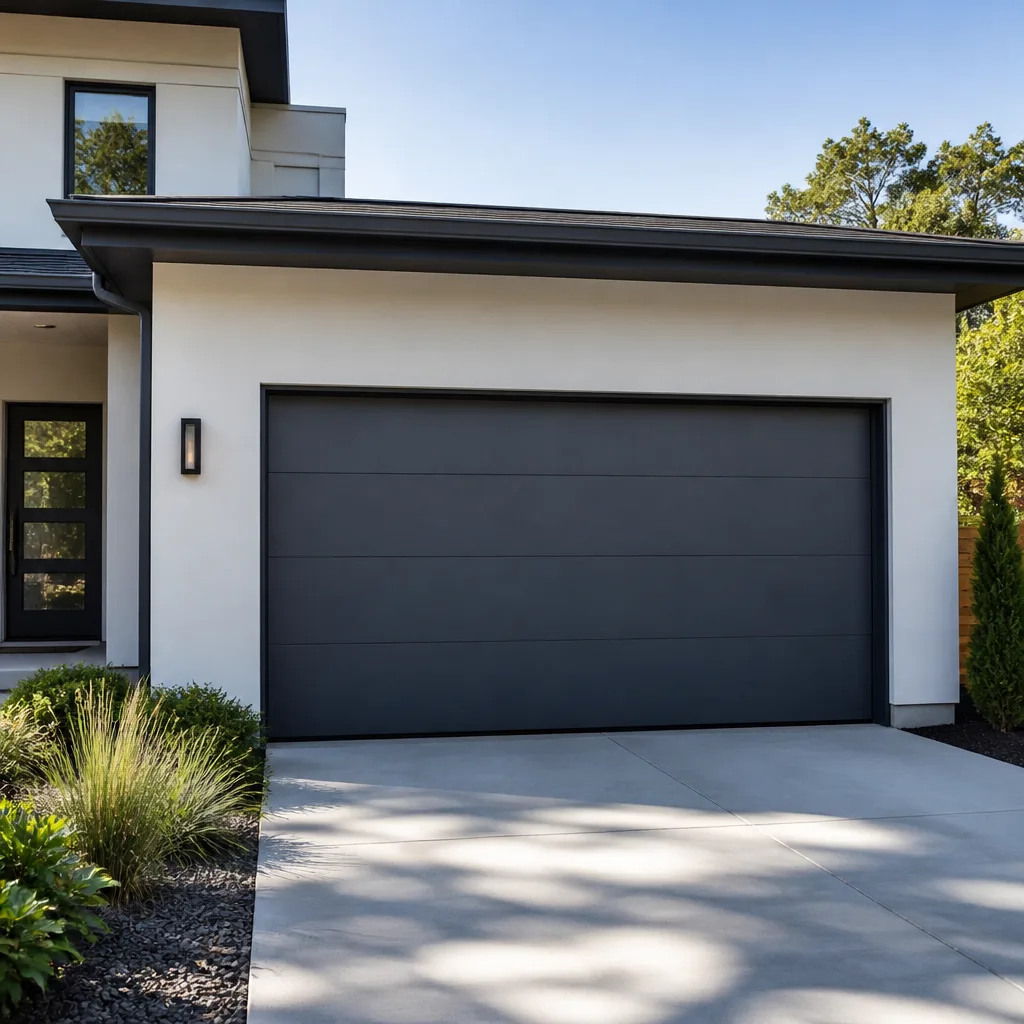 Modern flush
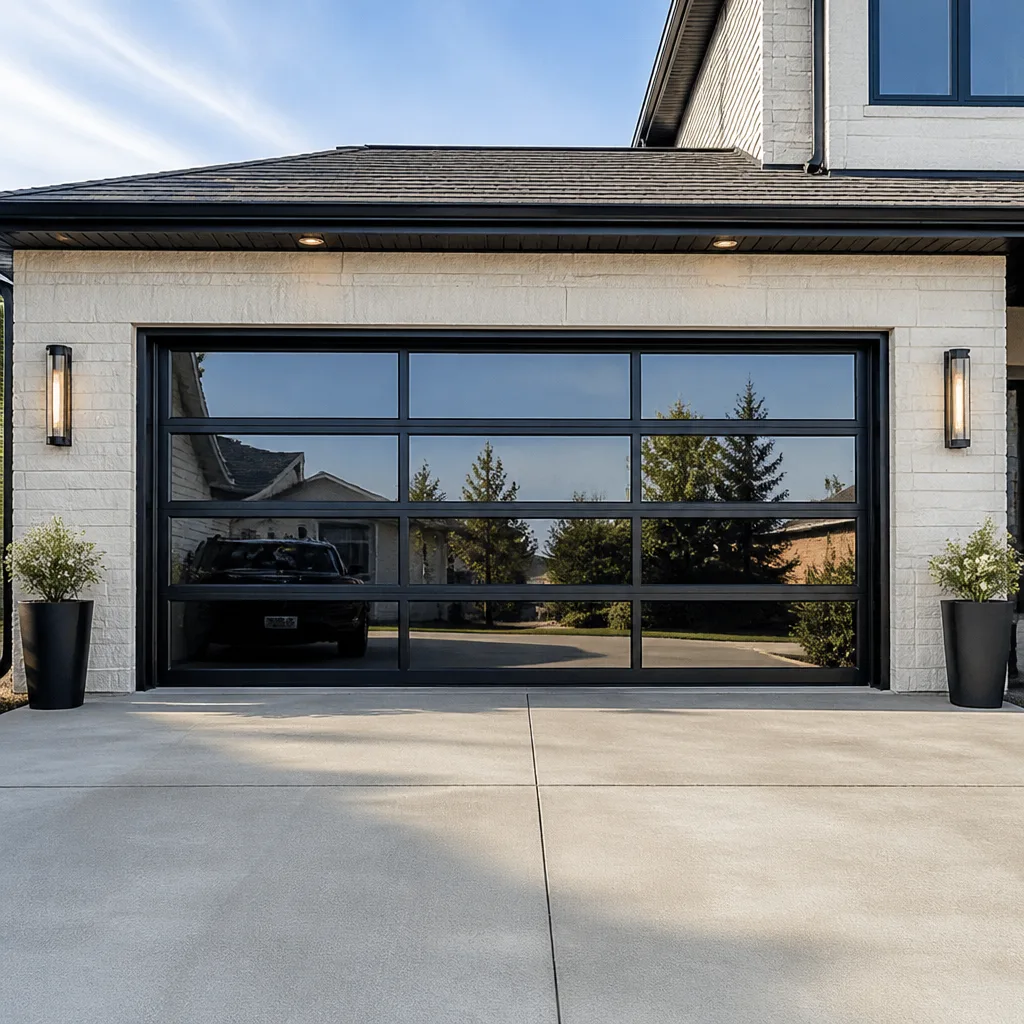 Full-view glass
 LiftMaster openers
 Chamberlain openers
Full 25-point door and opener safety check with every visit - springs, cables, rollers, tracks, and your LiftMaster or Chamberlain opener included
You get a price before we start. It does not change when the pro arrives.
Get your free estimateGarage Door Parts Warning Signs Every Homeowner Should Know
A garage door that hesitates for half a second before it moves is not “stiff from the cold.” That pause is usually a cable tension imbalance, and in our experience it precedes a cable snap by days to weeks – not months. Most homeowners miss it because nothing has broken yet. The door still goes up. The door still comes down. Then one morning it stops halfway and the car does not leave the driveway. We wrote this guide so that does not happen to you. You will learn the sounds, the behaviors and the visual clues that point to a specific failing part, including the signs that show up long before rust appears – and what to do about each one in Summerlin.
Quick Answer
Garage door parts announce their failure through specific symptoms: hesitation before movement means cable tension imbalance, a popping noise means a worn torsion spring or loose drum, and grinding means bearing or roller failure. A door that runs slow on one side, sits uneven, or shakes on the way down is telling you which part is going before it breaks outright. Catching these signs early usually turns a roadside emergency into a routine repair completed in a single visit.
Styles & brands we work with
- Raised-panel steel
- Carriage house
- Modern flush
- Full-view glass
- LiftMaster openers
- Chamberlain openers
Table of Contents
- The Symptom-to-Part Diagnostic Table
- Why a Door That Hesitates Is Telling You Something
- Grinding, Popping and Squealing: What Each Sound Points To
- Why Rust on a Spring Is a Lagging Indicator
- The Manual Lift Test: Finding Imbalance Before Failure
- Weatherstripping and Seal Warning Signs in Summerlin’s Climate
- How to Photograph Warning Signs So the Right Parts Arrive
The Symptom-to-Part Diagnostic Table
Start here. Nearly every garage door failure we see in Summerlin maps to one of a handful of parts, and the symptom points at it cleanly. Use this table as a reference the next time your door does something it did not do last month. You do not need tools to run any of these checks – you need observation and a memory of how the door normally behaved.
- Grinding on the way up or down – worn rollers or a dry bearing; occasionally a failing opener gear.
- A single loud pop, then the door works normally – a broken or cracked torsion spring. This can precede full failure; stop operating the door.
- Runs slow or lags on one side – cable tension imbalance, or a cable fraying inside the drum.
- Door shakes or rattles on descent – a worn hinge, a lose track or a bent roller shaft.
- Gap visible at the floor after closing – seal compression failure, warped bottom panel, or a door that is out of square.
- Door opens a few inches and stops – more often than not, a saftey sensor is misaligned or the opener’s travel limit is off; occasionally low spring tension.
- Half-second pause before the door moves – the earliest warning of all. Cable, spring or opener pulling unevenly.
If you can name the symptom, you can name the likely part. That shortens the diagnosis and – more important – tells a technician which parts to load before they leave. Our technicians have up to 10 years of experience and arrive with springs, cables and openers already on hand, so most jobs finish in a single visit rather than a second trip after a parts order.
Why a Door That Hesitates Is Telling You Something
A pause before the door moves is the sound of an opener pulling against the wrong resistance. On a healthy door, the torsion spring – which is what carries the entire weight of the door – is doing most of the lifting. The opener is supposed to be the assistant, not the muscle. When the spring weakens or a cable loses tension, the opener has to work harder than it was designed to. That half-second delay is the motor taking up the slack.
Here is why this matters before anything breaks:
- The spring is losing its lift. Torsion springs weaken as they cycle. The pause gets longer over weeks as the spring’s stored energy drops.
- A cable is loose or fraying. Cables work in pairs. If one side has lost tension, the door pulls at an angle, and the opener corrects for it each cycle.
- The opener’s gear or limit is drifting. On a LiftMaster or Chamberlain unit, a worn internal gear or a limit switch slightly out of adjustment shows up as exactly this pause.
In our experience this is the single most overdue warning sign we find in Summerlin. A homeowner calls weeks later after the cable snaps, and when we ask, the pause was there all along. Anyone who has lived through a cable snap will tell you catching it at the pause stage is a far cheaper day. We quote the flat price before any work begins, so you know what the repair costs before there is an emergency attached to it.
Grinding, Popping and Squealing: What Each Sound Points To
Sound is the most useful diagnostic tool you own, and it is free. Listen to the door through one full cycle with the opener running – up, then down – and match what you hear to the list below. Each sound points at a different set of parts, and each one has a different urgency.
- Grinding. Usually dry bearings or worn rollers, sometimes a failing opener gear. Not an emergency, but grinding accelerates wear on the track and should be addressed at a seasonal tune-up.
- Popping or a sharp crack. This is the one to take seriously. A single pop followed by the door not lifting on its own is a broken spring. A pop while the door still works can mean a cracked spring is still holding – for now. Stop using the door until a technician sees it.
- Squealing on one side. A dry or worn hinge or a bearing at one bracket, often tied to a slightly misaligned track.
- Rattle as the door reaches the floor. A worn bottom bracket or rubber seal that has hardened and is no longer absorbing the stop. In a Genie or Raynor opener setup, a harsh stop can also mean the travel limit needs adjustment.
We have seen doors running on grinding bearings for a year. The homeowner got used to the noise, wrote it off as age, and then the door eventually stopped mid-cycle one July afternoon. A $89 seasonal tune-up – one of our standing offers – catches most of these sounds before they become a breakdown. Do not wait for the pop.
Why Rust on a Spring Is a Lagging Indicator
Homeowners often tell us they will replace the spring when they see rust. That reasoning is backwards. By the time rust is visible on the coil, the spring has usually been cycling under stress for a long while – and the more reliable warning signs came and went weeks earlier. Rust is what shows up after the fact, on the surface of a spring that has already told you something was wrong in other ways.
What to look for earlier, before rust:
- Coil gaps. Look at the spring above the door. The coils should be tight and even. Gaps between coils mean the spring is stretching and losing tension.
- A darker, stained area on the coil. Friction burn shows up as a discolored band long before orange rust.
- Heavier door feel. If you lift the door by hand (test below) and it feels heavier than it did a season ago, the spring is the reason why.
- The pause. The hesitation returns to point one: the spring is losing its lift, and the opener is compensating.
Break a spring on a Summerlin door during a summer heat wave and the corrective repair often comes with a bent track or a pulled bracket. We stock springs for Craftsman, LiftMaster, Chamberlain and Raynor doors, so the fix usually finishes the same visit. But the reason the spring failed was visible weeks before the rust – which is the sign that mattered.
The Manual Lift Test: Finding Imbalance Before Failure
This is the most useful check a homeowner can safely perform. It takes one minute and reveals cable or spring imbalance that a visual inspection alone will miss. We walk every Summerlin homeowner through it after a service call, because it is the single habit that prevents surprise failures.
Before you start: only perform this test with the door fully closed, and use your hand to lift – never stand under the door or put yourself in its path. If the door feels very heavy or does not move smoothly, stop and do not force it.
- With the door fully down, pull the red release handle on the opener’s carriage. You will hear it click. The door is now disconnected from the opener.
- Stand beside the door, not under it. Grip the bottom section at the center and lift slowly.
- A balanced, healthy door lifts with about one hand’s effort. It should feel light – the spring is doing most of the work.
- Let go about halfway up. A sound door stays put or drifts a little. A door with weak springs falls back down; a door with cable imbalance drifts noticeably to one side.
- Reconnect the door by lifting until the carriage click locks, if you feel comfortable doing so, and let the opener run one cycle to confirm it re-engaged.
If the door is heavy, drops fast, or drifts sideways, you have found a real warning sign – cable or spring imbalance – before it turned into a broken door. Two words of warning, both from experience. Do not attempt to adjust the spring or cable yourself; the torsion spring holds enough force to seriously hurt you, and only a trained technician should touch it. And if the door will not reconnect cleanly, call us. Get an exact diagnosis before a small imbalance becomes a bent panel or a broken bracket.
Weatherstripping and Seal Warning Signs in Summerlin’s Climate
Summerlin’s climate is hard on seals. The summer heat and dry air bake rubber, and the very low humidity keeps hardening it further, so the weatherstripping along the door’s bottom edge and the perimeter trim fail in ways homeowners in milder climates never see. This matters beyond keeping the dust out. A failed seal lets in heat, lets in rodents and lets in the summer dust that coats every driveway in this valley.
Two kinds of failure, and they look different:
- UV cracking. The rubber hardens, then cracks in a fine web pattern across the bottom seal. It looks and feels like old windshield wiper rubber. UV cracking is a slow failure and usually shows up after two or three summers, sooner on a south-facing door.
- Compression failure. The seal keeps its shape but has flattened and no longer springs back. You will see daylight under the door and can slide a piece of paper under the bottom edge. Compression failure is often caused by a door that sits slightly out of alignment and presses harder on one side.
The perimeter weatherstripping – the trim around the door frame – fails differently again. On a Summerlin door it usually pulls away from the frame at the top corners, where the heat swing is greatest, leaving a gap you can see light through. We recommend checking the bottom seal each spring before the heat sets in, and the perimeter trim after the first cooler week in October. Summerlin’s wind-blown dust will find even a small gap.
How to Photograph Warning Signs So the Right Parts Arrive
Here is where a homeowner can save real time. When you call, a technician is already thinking about which parts to bring. A photograph of the specific warning sign lets that technician confirm the parts before arriving, which usually means the job is finished on the first visit rather than scheduled for a return trip.
What to photograph, and how:
- The spring above the door, straight on, with the garage lights on. Capture the full length of the coil so the technician can see coil gaps or discoloration.
- The bottom seal, shot low and close, one end to the other. This shows both UV cracking and any daylight gap at the floor.
- The tracks on both sides, from the floor to the curve, one photo per side. This reveals bends, misalignment and any cable fraying at the drum.
- The hinges and rollers along one section, in focus. Worn rollers show up clearly here.
- The opener unit, including any label showing the brand and model – LiftMaster, Chamberlain, Genie, Raynor and others. It tells the technician which opener parts or accessories are compatible.
Text or email these photos when you call. Even the pause behavior helps: a short video of the door’s first two seconds of movement – the hesitation moment – is often the single most useful thing a technician can see before arriving. We ask for it on most calls because it cuts the guesswork. The result is that our technicians have up to 10 years of experience and the right parts already loaded, so most repairs finish the same visit with no second trip and the price quoted before any work starts.
Common Mistakes to Avoid
- Ignoring the pause because the door still works. A hesitation is a warning, not a quirk. In our experience it precedes a cable or spring failure within weeks.
- Running a door after you hear a single pop. That pop is often a spring crack. Keep the door closed and call before operating it again – a broken spring on a Summerlin door can drop the door or bend a track.
- Adjusting a spring or cable yourself. The torsion spring carries the entire weight of the door and is under extreme tension. Only a trained technician should touch it.
- Waiting for rust before replacing a spring. Rust is a lagging sign. Coil gaps and discoloration show up first, and by the time rust is visible the spring is usually far along.
- Ignoring a sun-facing bottom seal through the summer. Summerlin’s UV and dry air crack a seal fast. A failing seal lets dust and heat in and can let a rodent through.
- Lubricating everything you can reach. The wrong lubricant on a track or spring can attract dust and make grinding worse. Stick to the manufacturer’s advice.
- Calling without a photo or a video. The right photo of a warning sign tells a technician which parts to bring. Without it, the job may stretch to a second visit.
See the difference
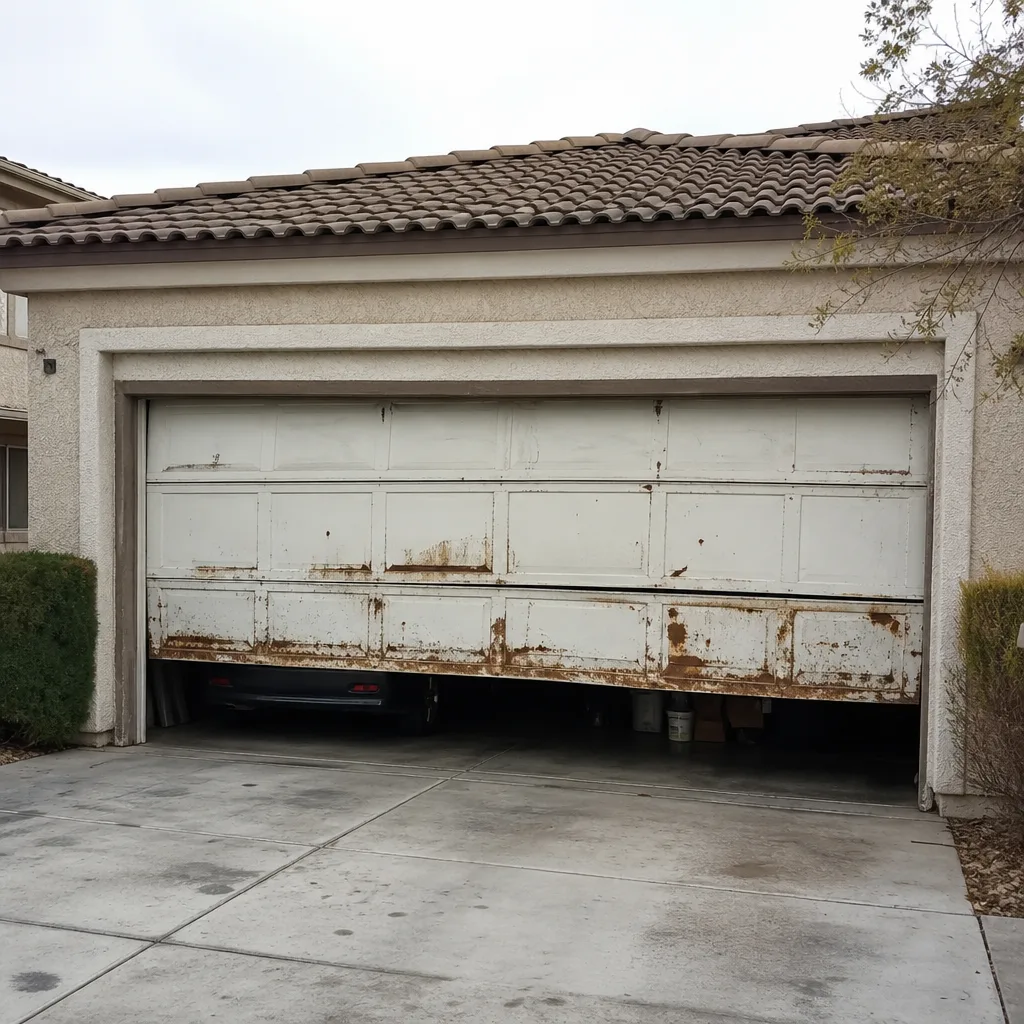 Before
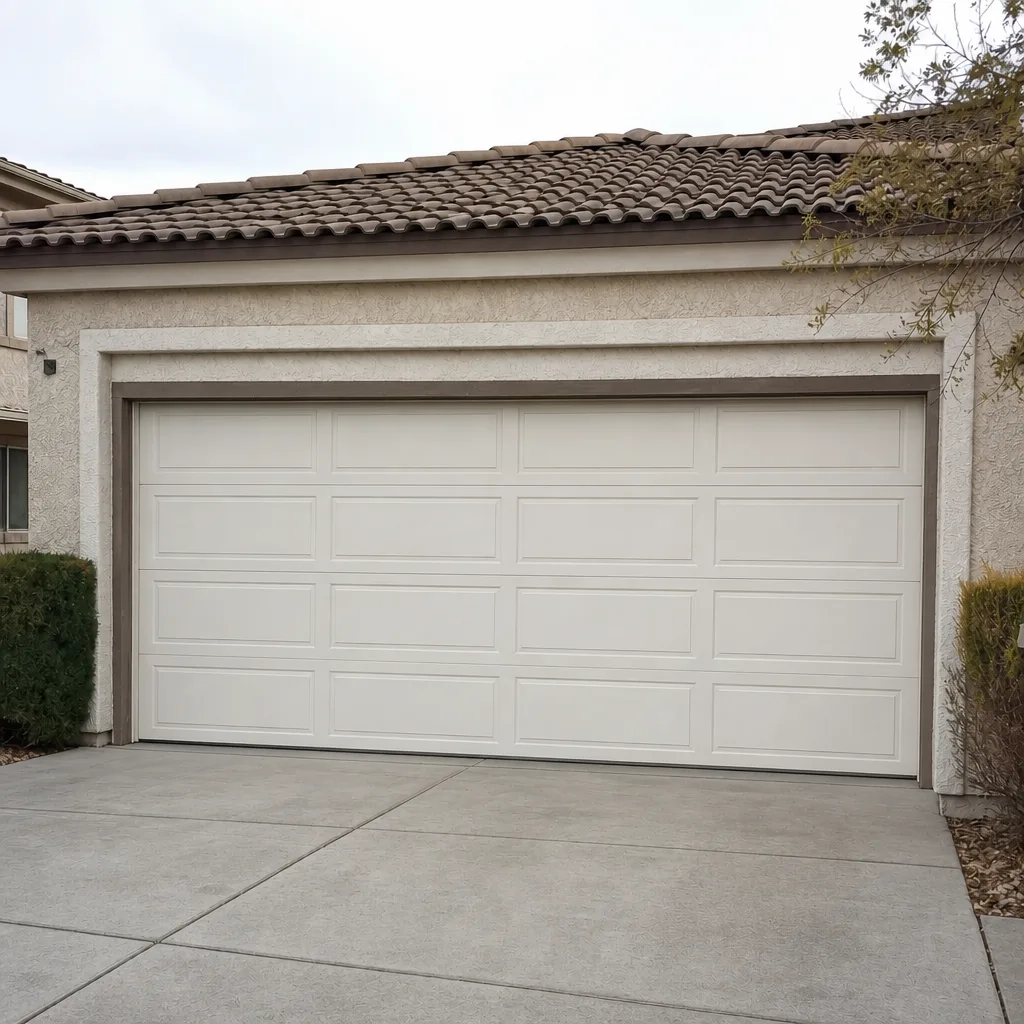 After
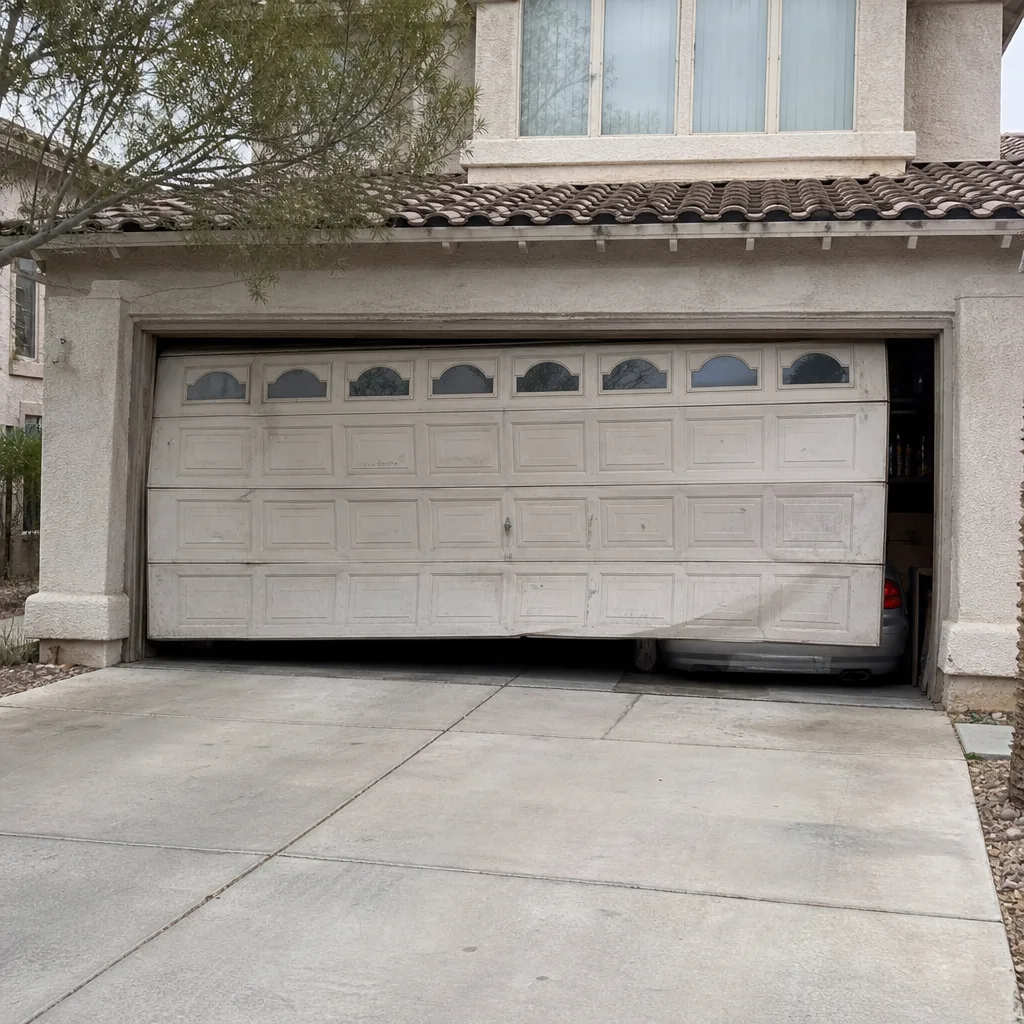 Before
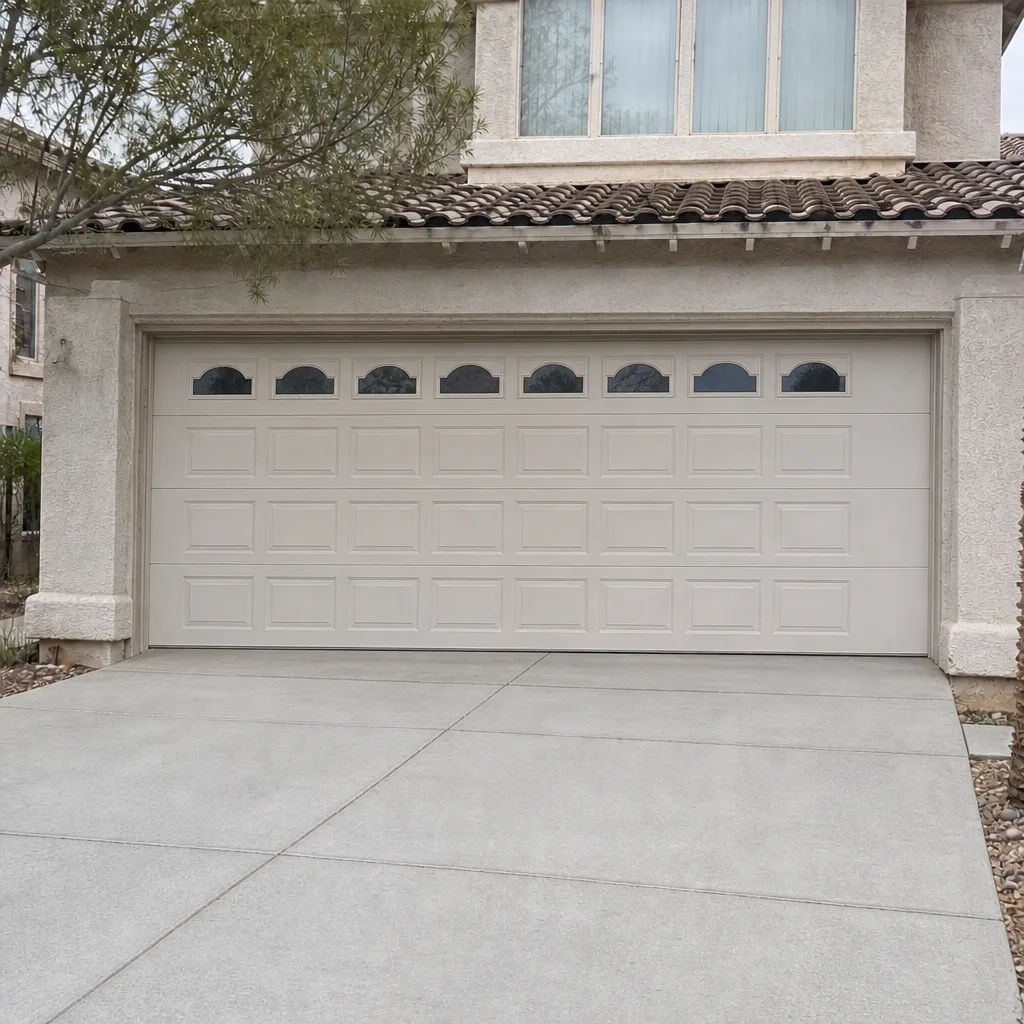 After
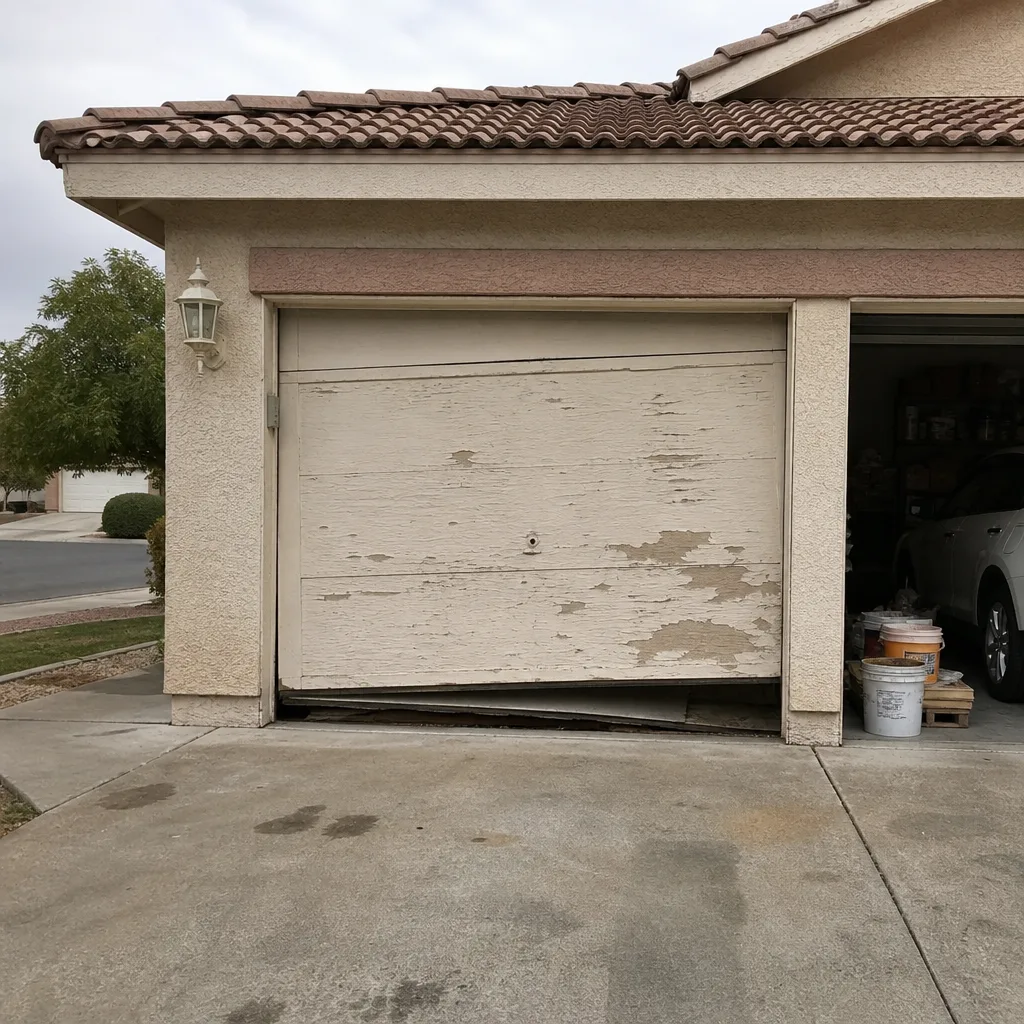 Before
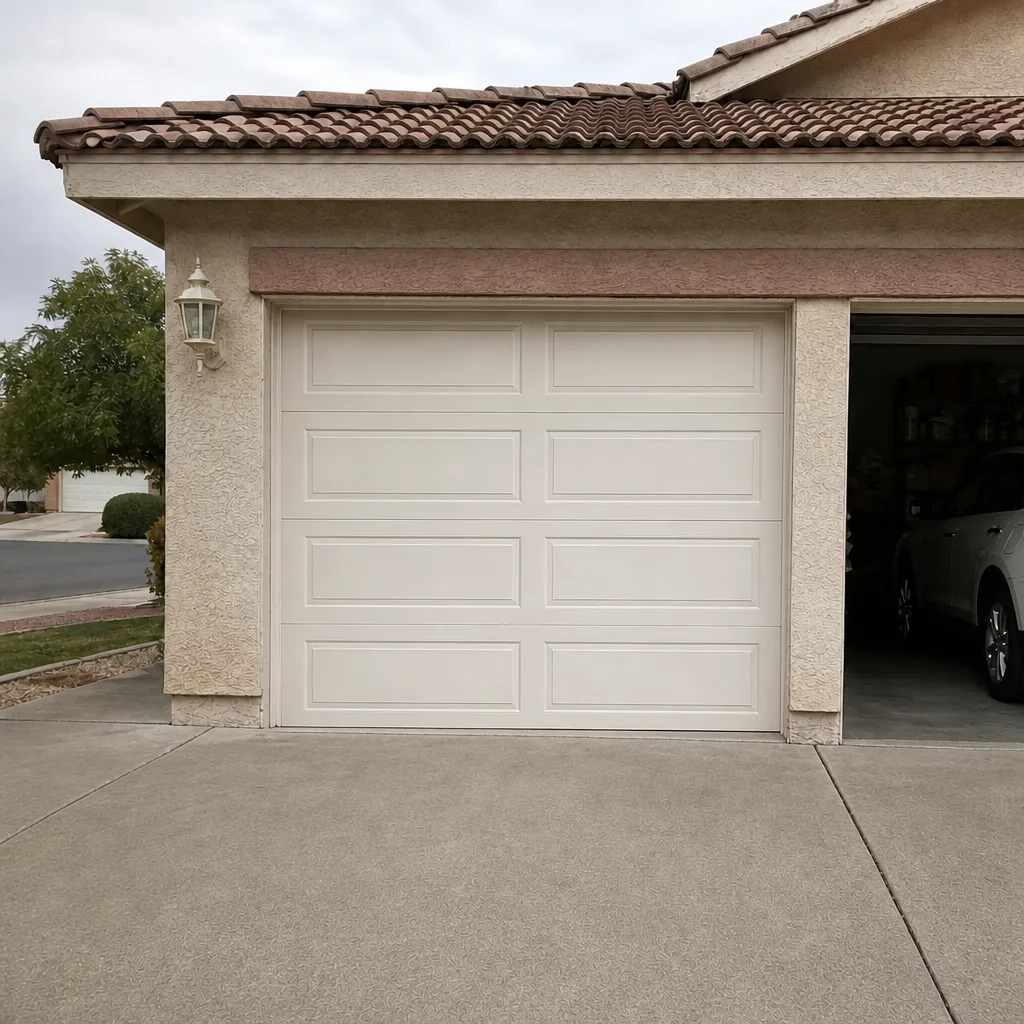 After
When to Call a Professional
Some checks are yours to run – the manual lift test, the photo and video call, the visual scan of the spring and seal. Some signals mean stop and call. Call a professional if you hear a pop or crack from the spring, if the door is noticeably heavy to lift or falls fast, if a cable looks frayed or has come off the drum, if the door runs visibly uneven on one side, or if the opener hesitates, grinds or stops mid-cycle repeatedly. Mainspring Garage Door Co. Summerlin offers free estimates in Summerlin and picks up the phone with a live person around the clock. Call (855) 608-8802.
Frequently Asked Questions
The earliest sign is a half-second pause before the door starts moving. That pause is almost always cable tension imbalance or a weakening spring, and it usually comes weeks before the part fails. If you notice it, run the manual lift test and call for a free estimate – call (855) 608-8802.
A spring repair in Summerlin typically runs from roughly $220 to $340 depending on the spring type and whether it is a single or double-spring setup. We quote the flat price before any work begins, so there are no surprises on the bill. Call (855) 608-8802 for an exact quote – estimates are free.
No – the torsion spring carries the entire weight of the door under extreme tension, and a cable snap or spring release can cause serious injury. Only a trained technician should touch those parts. Our technicians have up to 10 years of experience and are background-checked. Call (855) 608-8802 to schedule service.
Shaking on descent usually means a worn hinge, a loose or bent track, or a roller with a bent shaft. It can also point to an out-of-balance door pressing on one side. A quick inspection confirms which part is at fault – call (855) 608-8802 and our technician can often bring the right parts on the first visit.
Check it each spring before the heat sets in, and again after the first cool week in October. Summerlin’s UV and dry air crack a rubber seal quickly, and a failing seal lets dust and heat in. If you see cracking or daylight under the door, call (855) 608-8802 – estimates are free.
No. The flat price is stated before any work begins and agreed with you, so there are no surprises on the bill. On larger work such as new door installation, we do a free measure and provide a written price before scheduling. Call (855) 608-8802 for an exact quote.
The Bottom Line
A garage door gives you weeks of warning before it fails – if you know what you are listening for. The pause means cable or spring imbalance. Grinding means bearings or rollers. A pop means a cracked spring. Rust on the coil is late news; the coil gaps and discoloration that come first are the real sign. And in Summerlin, the UV and dry air crack a seal faster than most homeowners expect, so a spring check on the rubber and a lift test before the heat arrives pay for themselves. Catch the warning signs early and a routine repair stays routine. Mainspring Garage Door Co. Summerlin is ready with a live phone answer, upfront pricing and the right parts on hand – call (855) 608-8802 for a free estimate.
Written by the team at Mainspring Garage Door Co. Summerlin.