
Last updated November 18, 2026
 Raised-panel steel
 Carriage house
 Modern flush
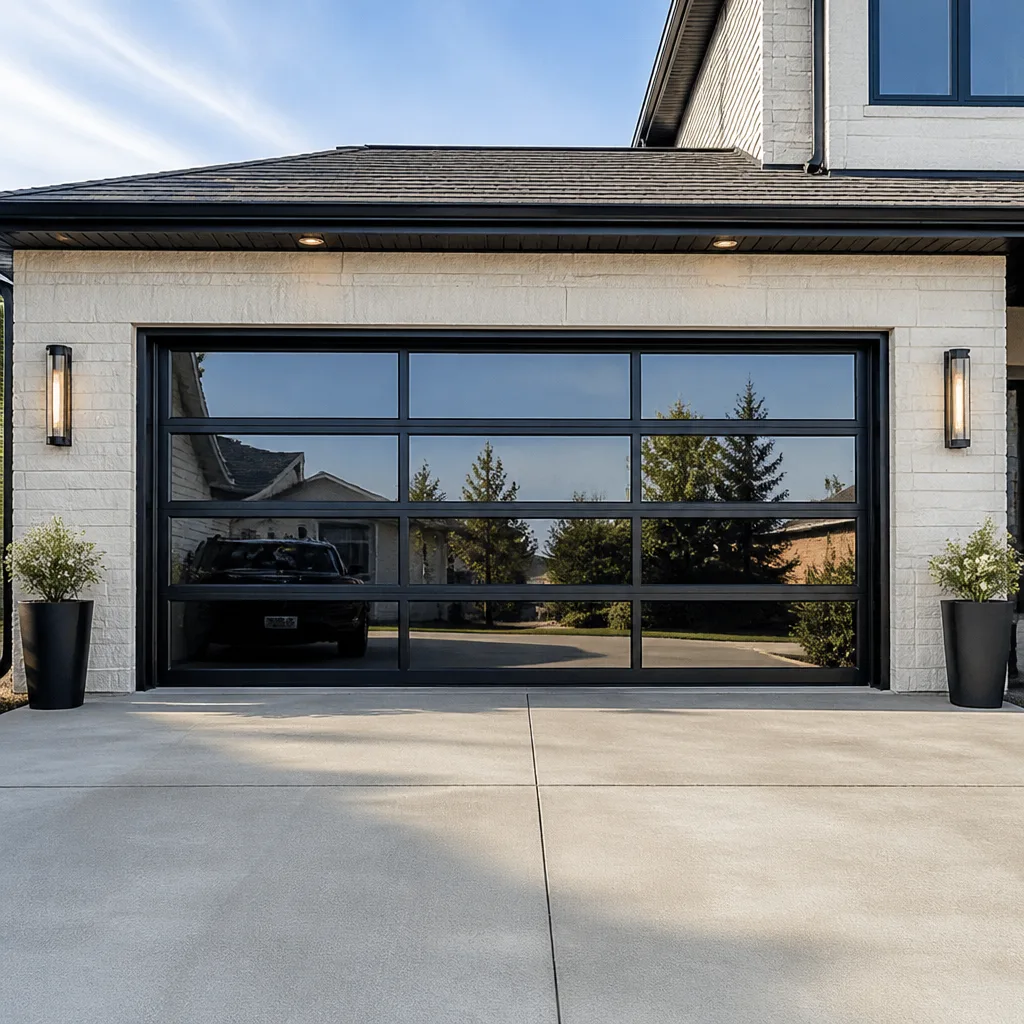 Full-view glass
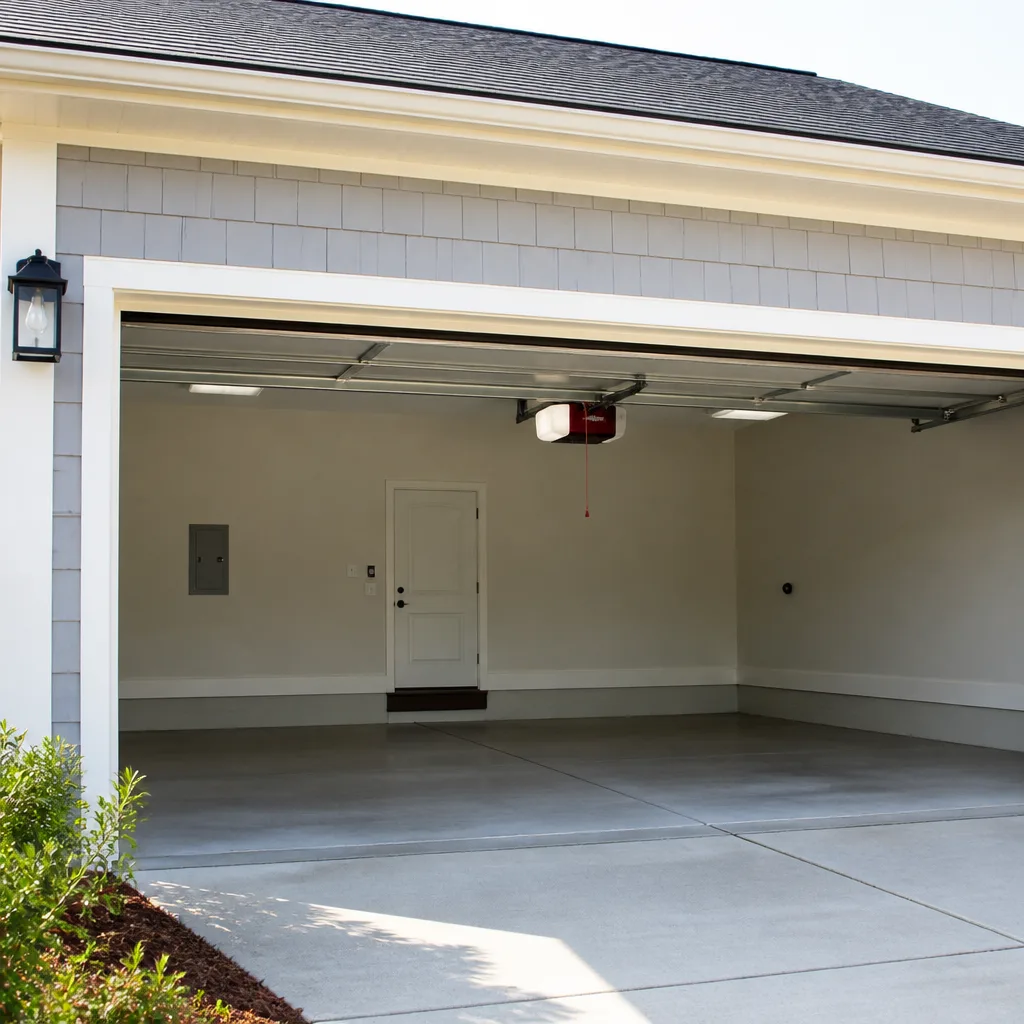 LiftMaster openers
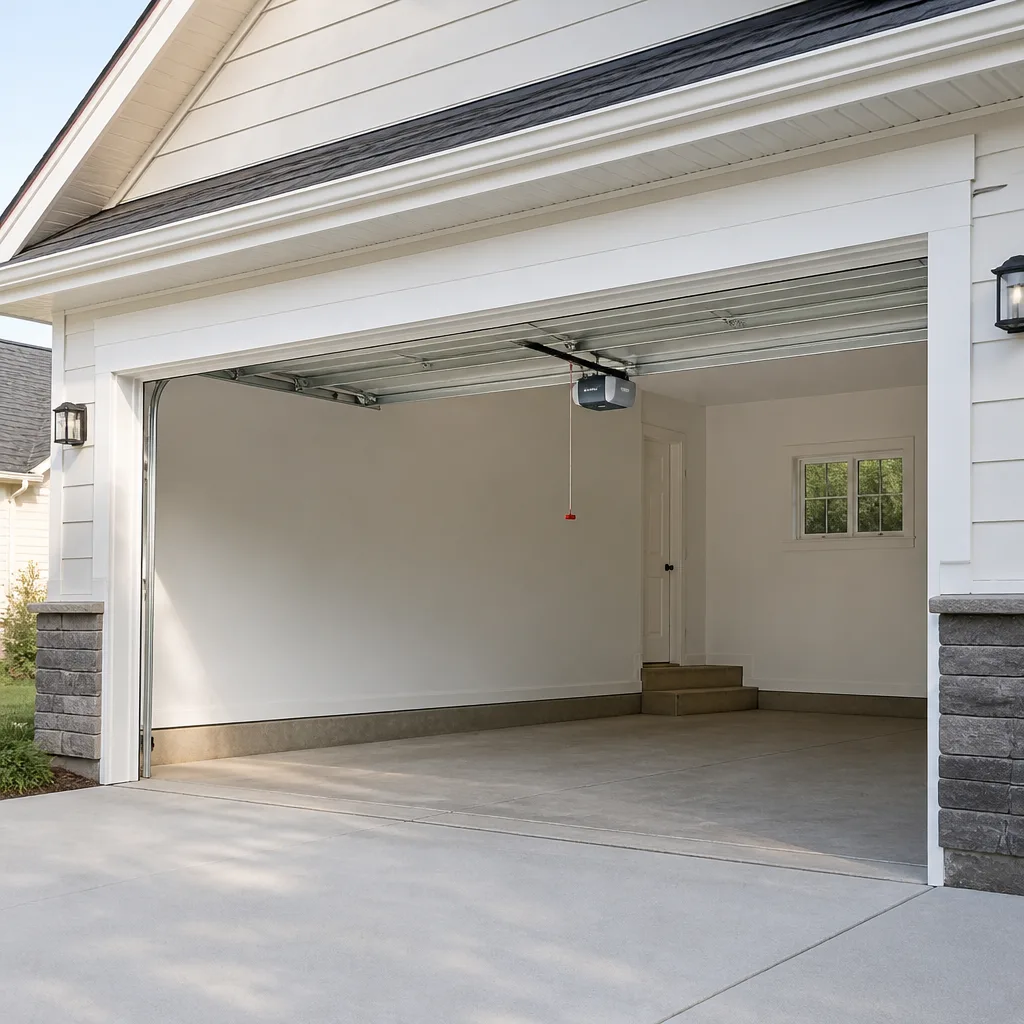 Chamberlain openers
Full 25-point door and opener safety check with every visit - springs, cables, rollers, tracks, and your LiftMaster or Chamberlain opener included
You get a price before we start. It does not change when the pro arrives.
Get your free estimateGarage Door Opener Warning Signs Every Homeowner Should Know
The opener that fails on a 107°F August afternoon didn’t break that day. It told you something was wrong in June. Most garage door openers give several weeks of notice before they quit entirely – grinding under load, hesitating at the top of travel, requiring a second or third push on the remote. Homeowners in Summerlin tend to file those signals under “the door being quirky” until the car is trapped inside and the house has one working exit. This guide names the specific signs, explains which component each one points to, and separates the problems worth repairing from the ones that mean the unit is finished. We work on openers every day, and the pattern is almost always the same: the failure was predictable, and nobody was listening.
Quick Answer
Garage door openers warn you before they fail through four main channels: sound (grinding, clicking, or straining motor noise), behavior (reversing without obstruction, stopping mid-travel, needing multiple button presses), remote performance (range shrinking over weeks rather than months), and heat-related dropout, where the unit quits on hot afternoons and works again at night. Any single sign is worth a service call. Two or more signs together usually mean the opener is past its useful life and replacement makes more financial sense than repair.
Styles & brands we work with
- Raised-panel steel
- Carriage house
- Modern flush
- Full-view glass
- LiftMaster openers
- Chamberlain openers
Table of Contents
- What your opener is telling you: the four categories of warning signs
- Auditory signals: what grinding, clicking, and straining actually mean
- Behavioral signals: reversing, stalling, and the multi-press problem
- Remote and wall-button problems: battery, antenna, or logic board
- The Summerlin heat failure: thermal cutout trips that look like electrical faults
- Repair or replace? A plain framework for the decision
- The maintenance that prevents most of this
What Your Opener Is Telling You: The Four Categories of Warning Signs
We tell homeowners in Summerlin to think of opener symptoms in four groups, because each group points at a different part of the machine. Sound problems usually come from the drivetrain – the gears, chain, belt, or trolley. Behavioral problems usually come from the safety sensors or the travel limits. Remote problems usually come from the logic board, the battery, or the antenna wire. Heat problems come from the motor’s thermal protection. Sorting the symptom into the right group saves you from paying to replace a part that was never the issue.
The reason this matters is that openers fail in stages, not all at once. A gear wearing down makes noise for weeks before it strips. A logic board losing its memory declines gradually. A motor whose thermal cutoff is tripping more often will eventually trip and stay tripped. None of these failures are instant, and nearly all of them show up first as something the homeowner notices but doesn’t act on.
Here is the framework we use in the field:
- Sound signals – grinding, clicking, straining, or a change in the normal operating note.
- Behavioral signals – reversing without an obstruction, stopping mid-travel, needing multiple presses.
- Signal and control signals – remote range shrinking, wall button working when the remote doesn’t.
- Heat and power signals – afternoon dropout, working again after dark, breaker trips.
If you can name which group your symptom belongs to, you’re already ahead of most homeowners. For a full look at the repair side, our Garage Door Repair in Summerlin page covers what we handle on a typical visit.
Auditory Signals: What Grinding, Clicking, and Straining Actually Mean
Sound is the earliest and most reliable warning your opener gives. It’s also the one homeowners most often write off, because the change happens gradually. A door that ran quietly for fifteen years doesn’t suddenly get loud – it gets a little louder each month, and the ear adjusts. The trick is to notice when the sound has changed at all.
Grinding
Grinding under the motor cover usually means the drive gear is wearing. On chain-drive and belt-drive units, the plastic or nylon gear inside the opener head is a wear item. When it starts to go, you hear a low, rough grind that gets worse under load – louder when the door is going up than coming down. Left alone, the gear eventually strips, the motor spins freely, and the door doesn’t move at all. That’s a repair, not a replacement, on most units, and it’s cheaper the earlier it’s caught.
Clicking
A sharp click at the start or end of travel is often the trolley or the travel limit switch. It can also be a relay inside the opener housing. Clicking alone isn’t urgent, but clicking combined with a door that stops short of full open or full close means the travel limits need adjusting before something binds.
Straining motor
A motor that sounds like it’s working harder than it used to – a labored hum, a longer run time, a groan at the top of travel – usually points to increased resistance in the door itself, not the opener. Worn rollers, a dry or failing torsion spring, or a track that’s out of alignment all make the door heavier, and the opener pays the price. This is the single most important sign to act on, because a motor straining against a failing spring will burn itself out, and then you’re replacing both.
If you hear any of these in Summerlin, it’s worth having it looked at before the sound gets worse. Our Garage Door Opener in Summerlin service covers diagnosis and repair on LiftMaster, Chamberlain, Genie, Craftsman, and Raynor units.
Behavioral Signals: Reversing, Stalling, and the Multi-Press Problem
Behavioral signs are the ones that feel like the door has a personality. It doesn’t. Each behavior has a specific cause, and they’re rarely related to each other.
The door reverses without an obstruction
The safety reverse system is doing its job, but something is telling it there’s an obstacle. The usual suspects are misaligned photo-eye sensors, a sensor lens clouded with desert dust, or sunlight hitting the receiving eye at a low angle. In Summerlin, the sun angle through a west-facing garage door in late afternoon is enough to blind the sensor, and the door reverses every time. That’s a sensor placement or sun-shade issue, not a mechanical failure. If your door reverses only in the late afternoon, look at the sun before you look at the opener.
The door stops mid-travel
Stopping partway usually means the travel limits have drifted, the trolley is binding on the rail, or the motor is hitting its thermal limit under load. On older units with plastic gears, a partial strip can let the door move a few feet before the gear slips. This one is worth a professional look, because a door that stops halfway can also be a sign of a spring losing tension, and a spring failure under load is a genuine safety hazard. Don’t try to adjust or test a torsion spring yourself – those springs carry the door’s entire weight under extreme tension and can cause serious injury.
Multiple button presses
If you have to press the remote two or three times before the door responds, the problem is usually signal strength, not the motor. Weak remote battery, a failing logic board receiver, or interference from LED bulbs or nearby electronics all cause this. Start with the battery and the wall button. If the wall button works on the first press and the remote takes several, your opener’s receiver is the likely culprit.
Remote and Wall-Button Problems: Battery, Antenna, or Logic Board
The most useful diagnostic trick with remote problems is to test the wall button and the remote side by side. The wall button is wired directly to the opener; the remote goes through the radio receiver. If the wall button works perfectly and the remote is weak, the problem lives in the radio side of the system. If both are weak, the problem is upstream.
Remote range degradation follows a recognizable pattern:
- Weeks 1-3: The remote works from the driveway but not from the street. Most people don’t notice.
- Weeks 4-6: The remote works from fifteen feet but not twenty-five. Homeowners start pressing twice.
- Weeks 7-10: The remote works only when you’re directly in front of the door, sometimes only after a second or third press.
- After that: The remote stops working entirely, and the wall button is the only way in.
A dying battery declines in days, not weeks. A dying logic board declines over one to two months in exactly this pattern. If you’ve replaced the battery and the range keeps shrinking, the receiver on the logic board is failing, and on most openers that means replacing the board or the unit. On a LiftMaster or Chamberlain unit under about twelve years old, a board replacement is often worth it. On an older unit, replacement usually makes more sense. Our team at Mainspring Garage Door Co. Summerlin home can tell you which side of that line your opener sits on.
The Summerlin Heat Failure: Thermal Cutout Trips That Look Like Electrical Faults
This is the one homeowners in Summerlin most often misdiagnose as an electrical problem, and it’s worth its own section. When the garage interior hits 110 to 120°F on a July or August afternoon, an aging opener motor can trip its internal thermal protection and shut down. The door stops responding. The homeowner checks the breaker, finds it hasn’t tripped, and concludes the opener is “going bad.” By evening, when the garage cools, the door works again. The pattern repeats the next hot afternoon.
What’s actually happening: the motor’s thermal cutoff is doing its job, but it’s tripping at a lower temperature than it used to because the motor is worn, the lubrication has dried out, or the unit is working harder than it should against a heavy door. On a newer opener in good condition, the same heat doesn’t trip the cutoff at all. The thermal cutout is a symptom, not the disease.
What to check before assuming the worst:
- Does the failure happen only on hot afternoons and resolve by evening? That’s thermal, not electrical.
- Does the opener housing feel unusually hot to the touch when it fails?
- Has the door gotten heavier or noisier in the weeks leading up to the dropout?
- Is the garage vented, or does it trap heat all day?
If the answers point to thermal cutout, the fix is usually a motor service, lubrication, or a replacement unit rated for the load and the heat. This is a real pattern in Summerlin, and it’s one of the reasons we recommend a seasonal tune-up before summer rather than after. If your door is dropping out on hot afternoons, call us before it fails for good.
Repair or Replace? A Plain Framework for the Decision
Homeowners ask us this question constantly, and the honest answer depends on the age of the unit, the cost of the specific repair, and how many signs are showing at once. Here’s the framework we use.
Signs that repair is worth doing
- A single, specific symptom – one noise, one behavior, one failed part.
- The opener is under about ten years old and a major brand (LiftMaster, Chamberlain, Genie, Craftsman, Raynor, Wayne Dalton).
- The repair is a wear item: drive gear, capacitor, battery, safety sensor, travel limit switch, or remote.
- The door itself runs smoothly and quietly by hand.
Signs that replacement is the better investment
- The opener is over twelve to fifteen years old and showing two or more of the signals in this guide at once.
- The logic board has failed on an older unit – board replacement plus labor usually approaches the cost of a new opener.
- The motor has been thermally tripping repeatedly for more than one summer.
- Parts for the unit are discontinued or hard to source.
- The opener lacks modern safety features like photo-eye sensors or a battery backup.
One useful rule of thumb: if the repair cost is more than half the price of a new opener and the unit is over ten years old, replacement is usually the smarter call. When replacement is the right answer, our Garage Door Installation in Summerlin page covers how we handle the measure and install. Installation is measured and scheduled, not a same-day call, so you’ll get a written price before anything is ordered.
The Maintenance That Prevents Most of This
Nearly every warning sign in this guide is preventable with a small amount of routine care. We see the same pattern in Summerlin again and again: openers that get a tune-up every year last well past fifteen years, and openers that never get touched start showing symptoms at eight or nine.
- Lubricate the moving parts once a year. Rollers, hinges, and the opener rail. Not the tracks – grease in the tracks attracts desert dust and makes things worse.
- Test the safety reverse monthly. Put a two-by-four flat on the floor under the door and close it. The door should reverse on contact. If it doesn’t, the sensors or the force limits need attention.
- Balance the door by hand. Disconnect the opener and lift the door halfway. It should stay there on its own. If it drops or rises, the springs need service – and that’s a job for a trained technician, not a homeowner.
- Replace the remote battery before it fails. Once a year is enough, and it prevents the range-decline confusion that sends people looking for a logic board problem that isn’t there.
- Book a tune-up before summer. In Summerlin, the thermal cutout season runs June through September. A spring tune-up catches the load problems before the heat does.
Our $89 seasonal tune-up covers the checks above, and it’s the least expensive way to keep an opener out of the warning-sign stage entirely.
Common Mistakes to Avoid
- Treating every noise as normal. A door that’s gotten louder over a year isn’t “just how it sounds now.” The change is the signal, and waiting until it fails costs more than the repair would have.
- Replacing the remote when the board is failing. If you’ve replaced the battery and the range keeps shrinking, a new remote won’t fix it. The receiver on the logic board is the problem.
- Adjusting the force limits to compensate for a heavy door. Cranking up the force setting pushes the opener through resistance it shouldn’t have to fight. It hides the real problem and burns out the motor faster.
- Misdiagnosing Summerlin heat dropouts as electrical faults. If the door works in the evening and fails in the afternoon, it’s thermal, not the breaker. Check the pattern before you call an electrician.
- Testing or adjusting torsion springs yourself. The springs carry the entire weight of the door under extreme tension. This is the most dangerous part of the system, and it’s not a homeowner repair.
- Ignoring the safety reverse test. A door that fails to reverse on contact is a genuine hazard, especially in a household with kids or pets. Test it monthly.
- Choosing the cheapest bid on a replacement. The lowest quote often skips the safety sensor alignment or the balance check. Ask what’s included before you compare prices.
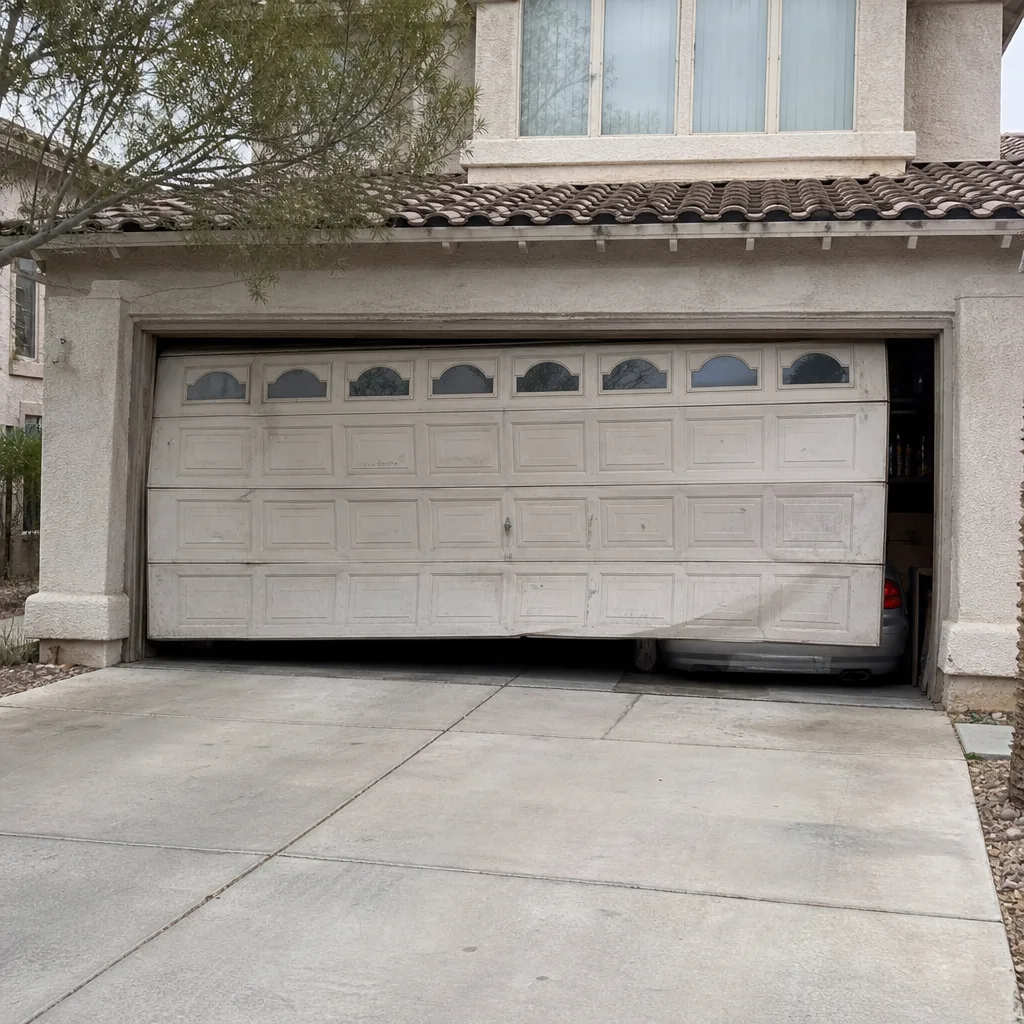
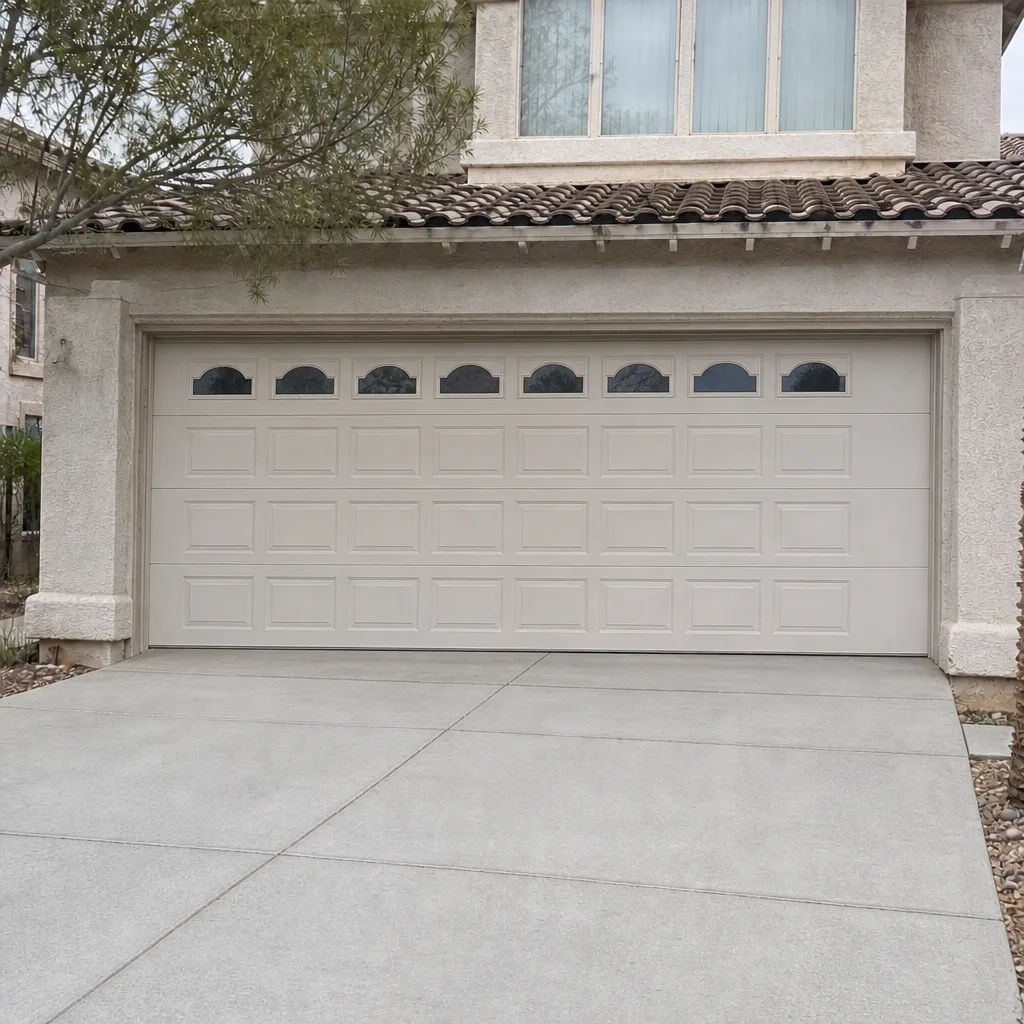
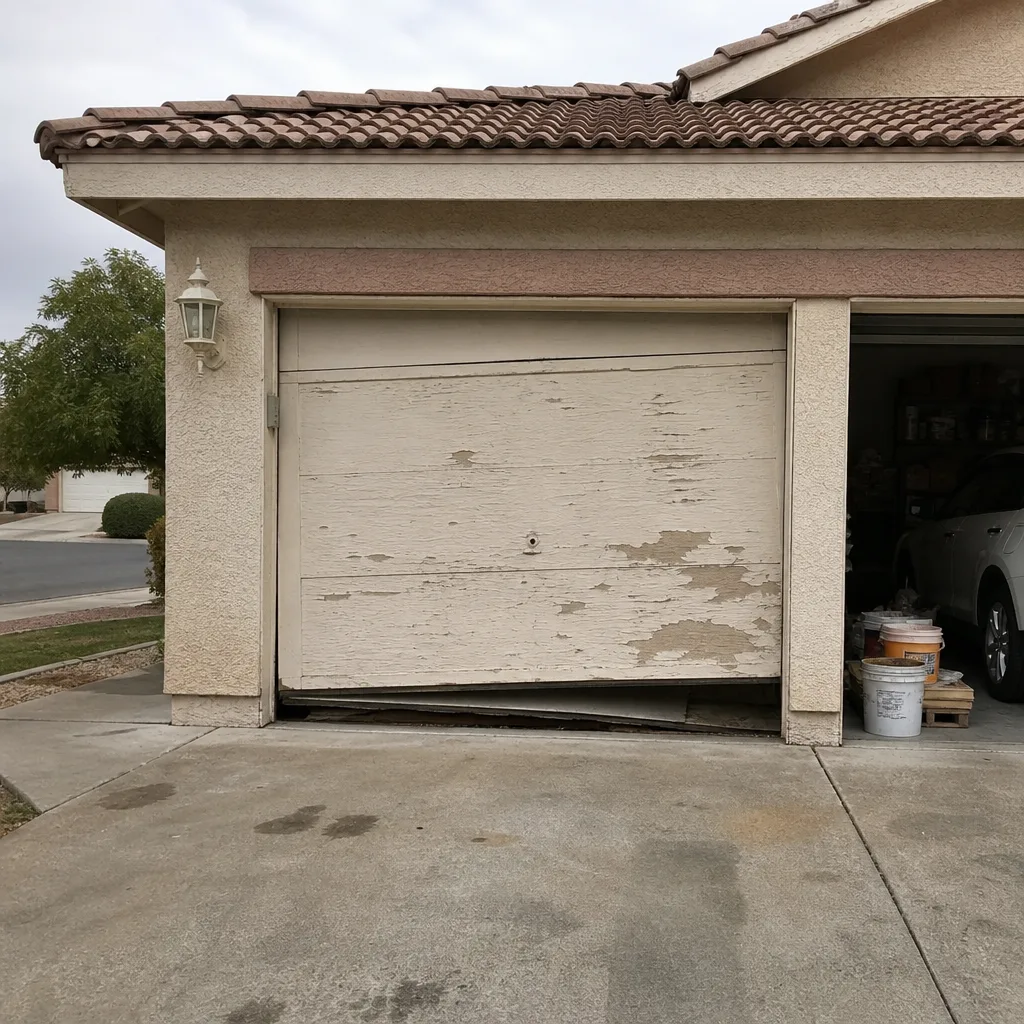
See the difference
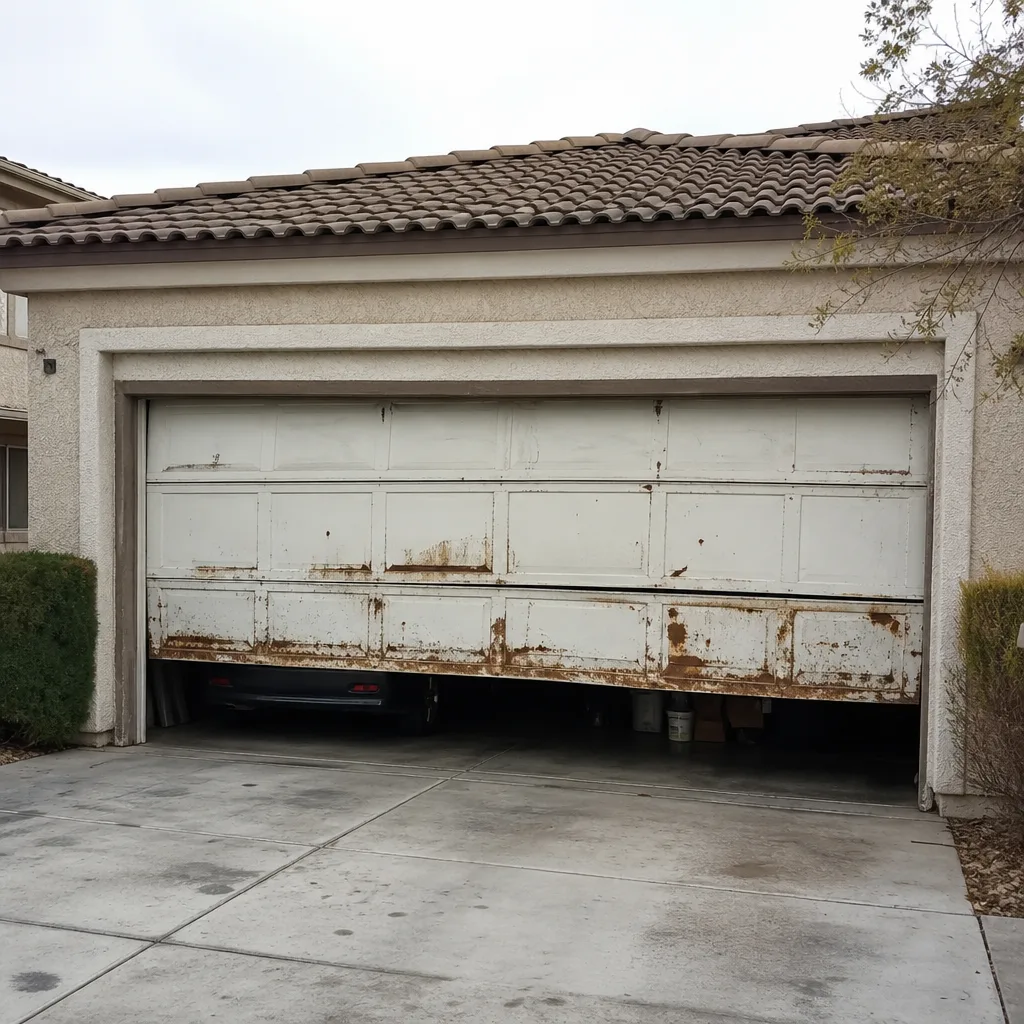 Before
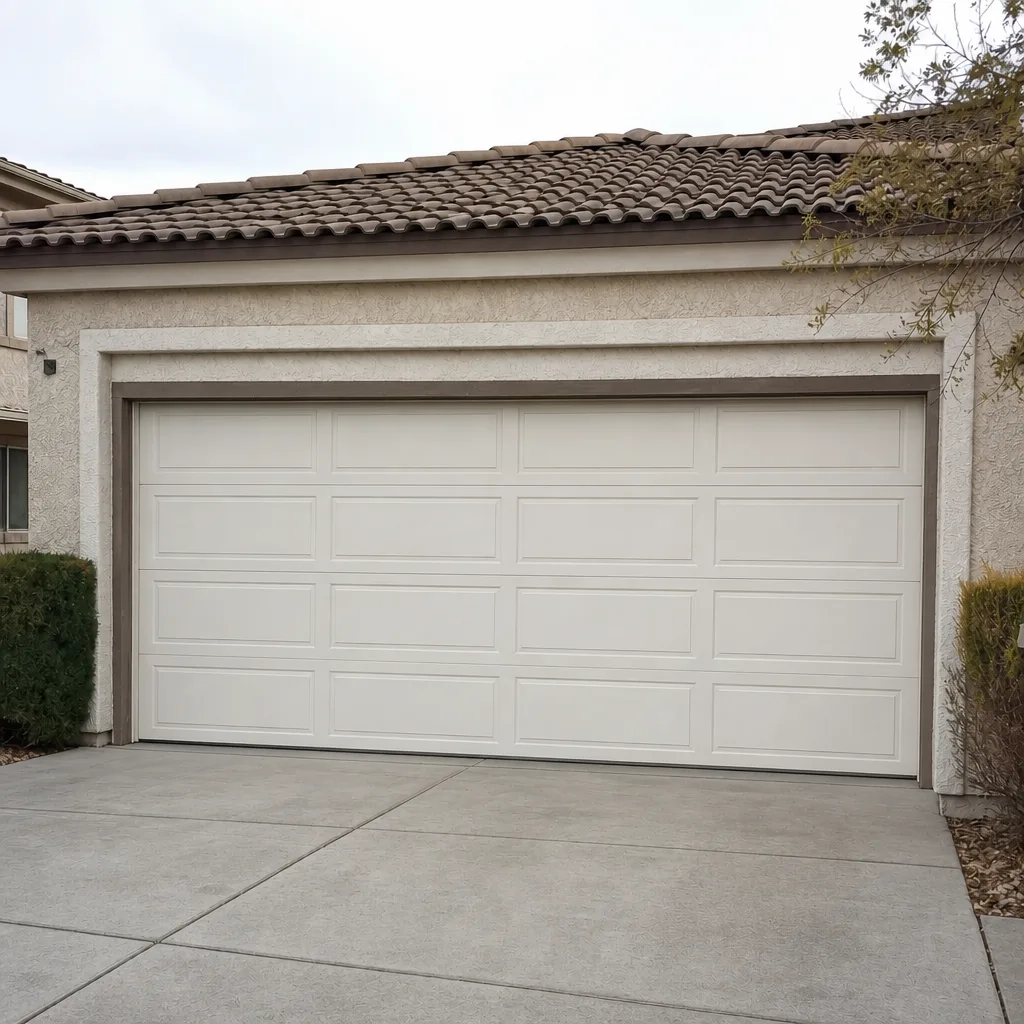 After
 Before
 After
 Before
 After
When to Call a Professional
Call a professional if you hear grinding under the motor cover, if the door reverses without an obstruction and the sensors look clean, if the door stops mid-travel, if your remote range is shrinking week by week, or if your opener drops out on hot afternoons and works again at night. Call immediately if the door is stuck open, if a spring has visibly broken, or if the door has come off its track – those are safety issues, not maintenance items. Mainspring Garage Door Co. Summerlin offers free estimates in Summerlin – call (855) 608-8802. We answer the phone with a live person around the clock, and we’ll tell you plainly whether the fix is a repair or a replacement before any work begins.
Frequently Asked Questions
The four most common are grinding or straining motor noise, the door reversing without an obstruction, remote range shrinking over several weeks, and the opener quitting on hot afternoons and working again at night. Any single sign is worth a service call, and two or more together usually point toward replacement rather than repair.
That pattern is almost always a thermal cutout trip. The motor’s internal protection shuts it down when the garage gets too hot, then resets once it cools. It’s common in Summerlin during July and August, and it usually means the motor is worn or the door is running heavier than it should. Call (855) 608-8802 for a free estimate on what’s causing it.
Most openers last twelve to fifteen years with annual maintenance, and eight to ten years without it. Heat, heavy doors, and skipped tune-ups all shorten that lifespan. If your opener is over twelve years old and showing more than one warning sign, replacement is usually the better investment.
Sometimes. On a LiftMaster or Chamberlain unit under about twelve years old, a board replacement is often worth it. On an older unit, the cost of the board plus labor usually approaches the price of a new opener, and replacement makes more sense. We’ll give you both numbers before you decide.
If the battery is fresh and the range is still shrinking, the receiver on the logic board is failing. Test the wall button against the remote to confirm – if the wall button works perfectly and the remote is weak, the problem is in the radio receiver, not the motor.
No. We quote the full price before any work begins, and the bill matches the quote. If we find something we didn’t expect, we’ll stop and tell you before we proceed. Estimates are free, and our 90-Day Done Right Promise covers every completed job in writing – call (855) 608-8802 to book one.
The Bottom Line
Your opener warns you for weeks before it fails. Grinding means a worn gear. Straining means the door has gotten heavy, and a failing spring is usually the reason. Reversing without an obstruction is almost always the sensors or the sun. A shrinking remote range that survives a battery change points at the logic board. And in Summerlin, an opener that quits on hot afternoons and works again at night is tripping its thermal cutoff, not its breaker. One sign means repair. Two or more on an older unit means replacement is the better spend. Catch it early, and you’ll never come home to a car trapped in the garage. Call (855) 608-8802 for a free estimate.
Written by the team at Mainspring Garage Door Co. Summerlin.