
Last updated November 18, 2026
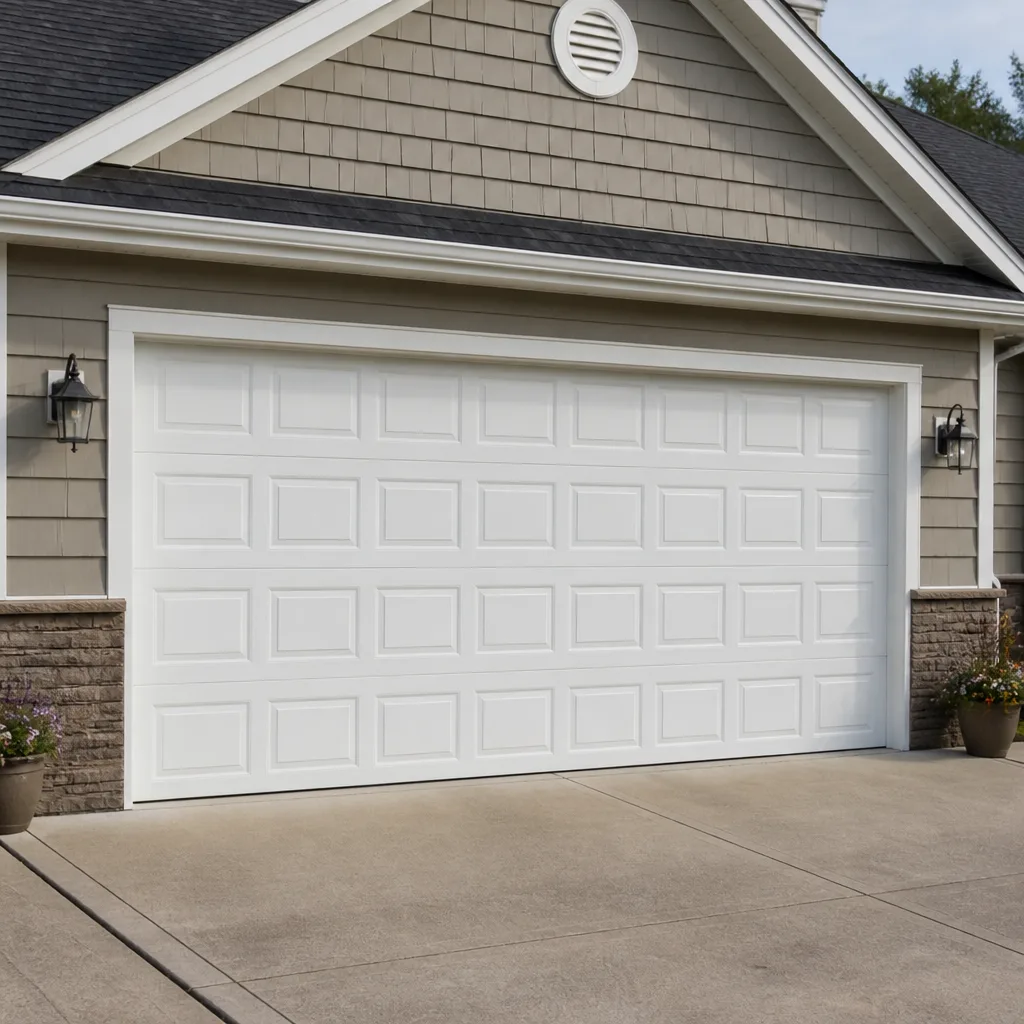 Raised-panel steel
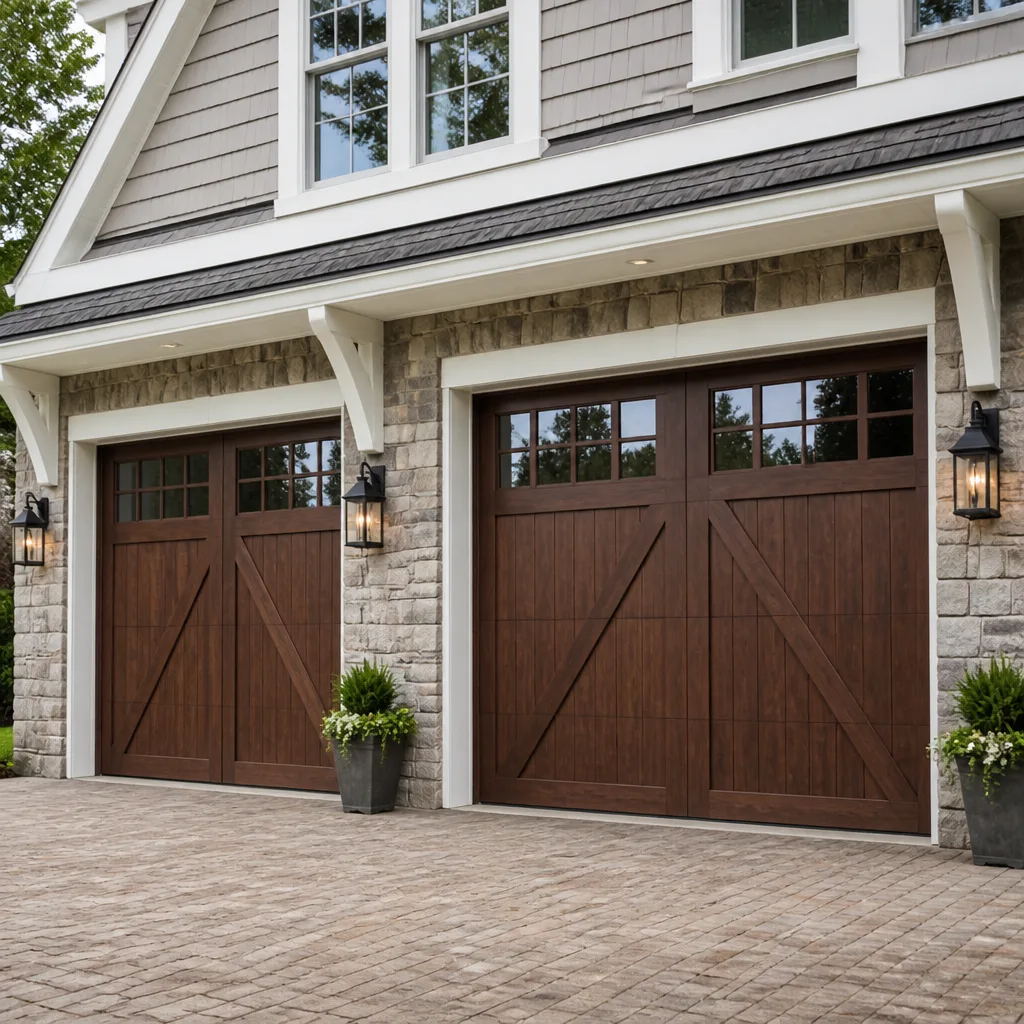 Carriage house
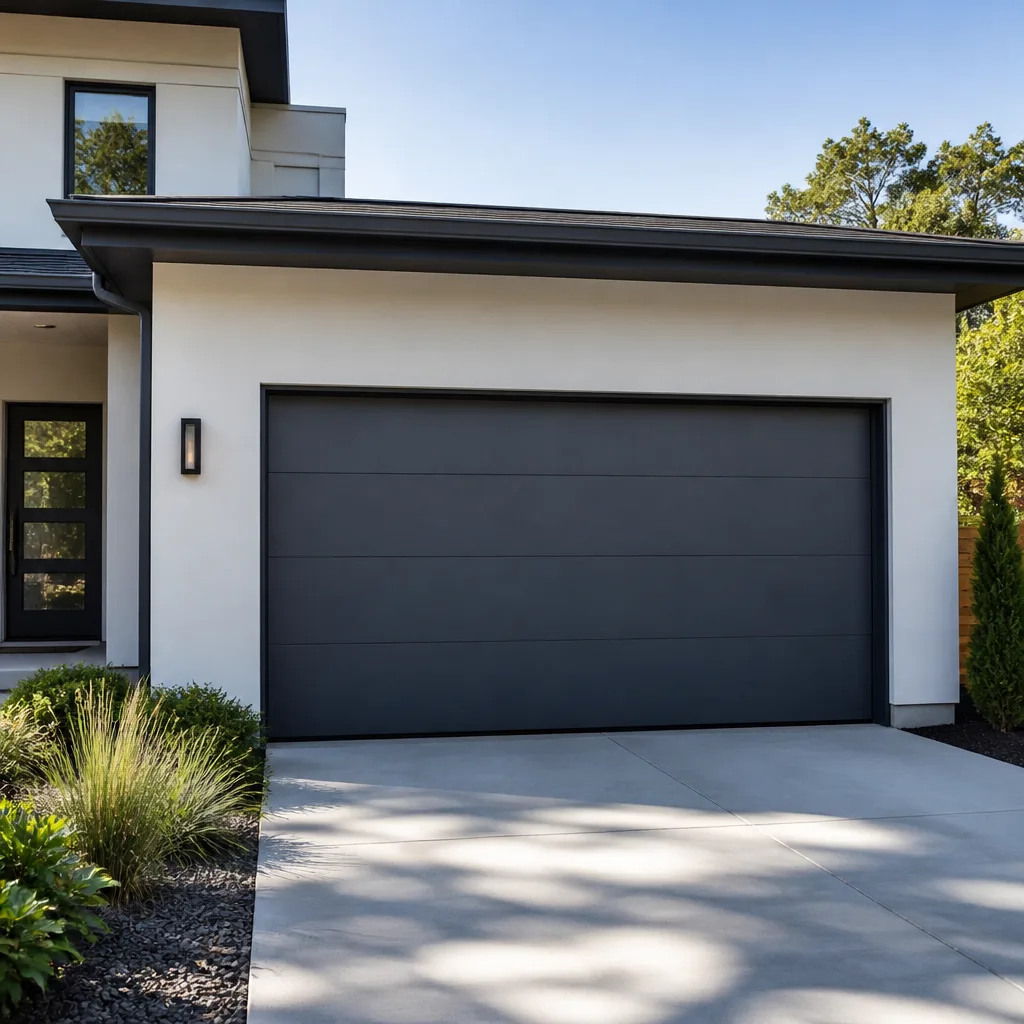 Modern flush
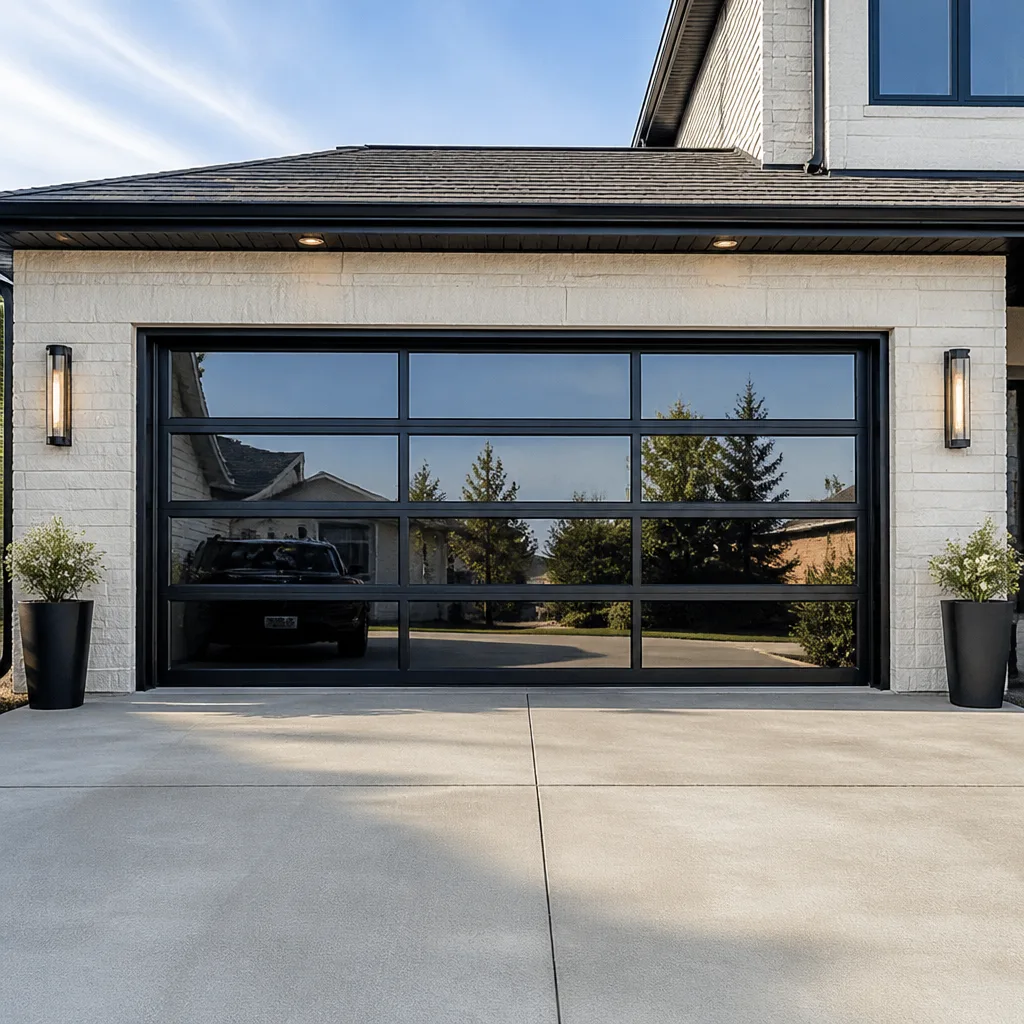 Full-view glass
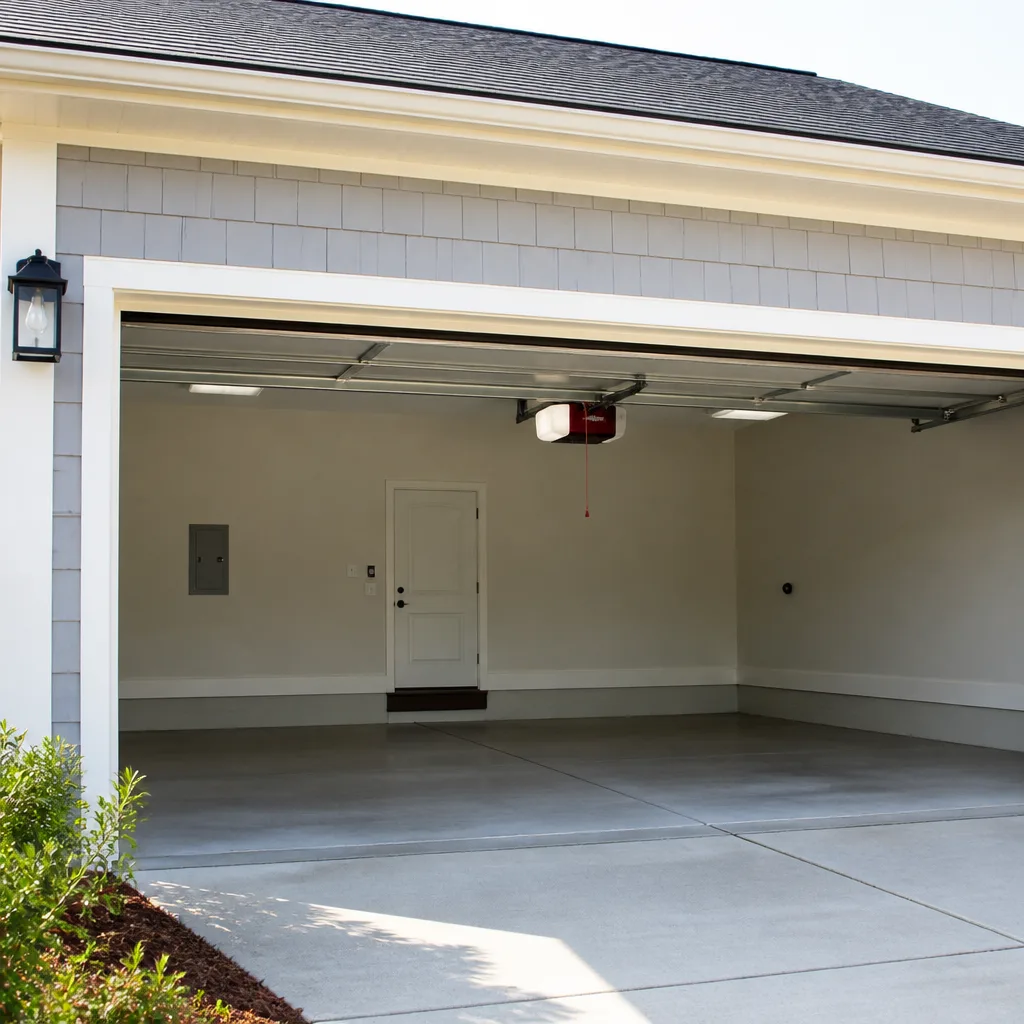 LiftMaster openers
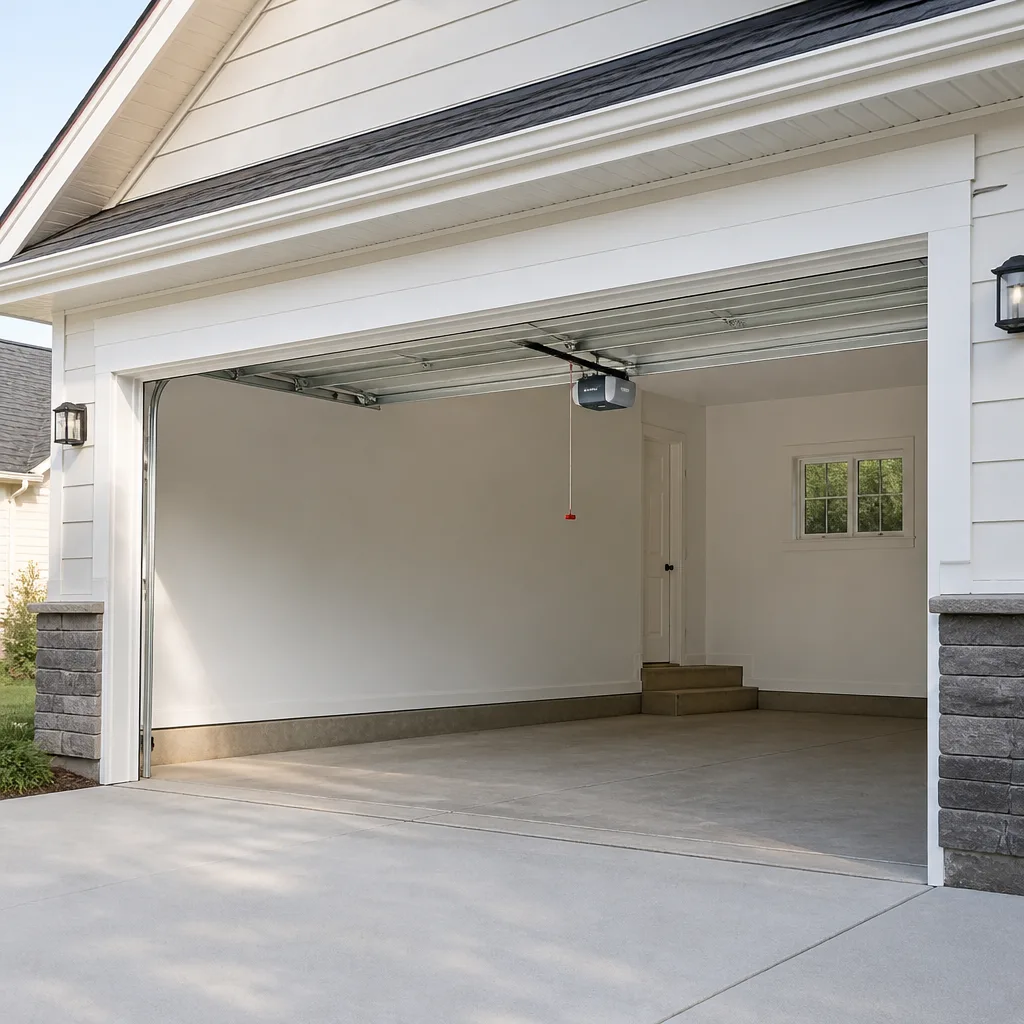 Chamberlain openers
Full 25-point door and opener safety check with every visit - springs, cables, rollers, tracks, and your LiftMaster or Chamberlain opener included
You get a price before we start. It does not change when the pro arrives.
Get your free estimateDIY vs Professional Garage Door Parts: What’s Safe to Do Yourself
A torsion spring under full tension stores roughly the same energy as a car traveling at highway speed. That’s not a reason to avoid your garage door. It’s a reason to know which three square feet of it you should never touch without training. Here in Summerlin, where the desert heat works springs and cables hard, we see more of these parts fail than in cooler climates, and we see the injuries homeowners suffer when they guess wrong about which repairs are safe. This guide separates garage door parts by stored energy: the ones that hold none, the ones that hold some, and the ones that can hurt you. You’ll learn what to handle yourself, what to leave alone, and why the difference matters to your hands, your warranty, and your homeowner’s policy.
Quick Answer
Weatherstripping, bottom seals, photo-eye alignment, and rollers on a fully disconnected door are safe for a careful homeowner to replace. Torsion springs, extension springs, cables, and drum brackets store dangerous energy and should always be handled by a trained technician. If a part is under tension, stop and call a professional.
Styles & brands we work with
- Raised-panel steel
- Carriage house
- Modern flush
- Full-view glass
- LiftMaster openers
- Chamberlain openers
Table of Contents
- The Real Divide: Stored Energy, Not Cost
- Parts You Can Safely Replace Yourself
- Parts That Require a Professional
- Why Extension Springs Fool Homeowners
- The Tools You Actually Need for Safe DIY Work
- How to Disconnect and Lock Out Your Opener First
- The Hidden Cost of DIY on the Wrong Part
- Summerlin Climate and Your Garage Door Parts
The Real Divide: Stored Energy, Not Cost
Most articles frame this as a money question: when is it worth paying someone? That framing misses the actual risk. A garage door is a balance machine. The springs lift the door’s weight, which on a standard single-car door runs 130 to 175 pounds. The opener mostly just guides it. When you work on a part that carries that counterbalance, you’re handling stored energy that wants to release all at once.
In our experience across Summerlin, the parts sort neatly into three groups:
- No stored energy: Weatherstripping, bottom seals, photo-eye lenses, and the exterior trim around your door frame. These are the safe zone.
- Low stored energy (with the door down and the opener disconnected): Rollers, hinges, and the track bolts that hold them. Manageable with the right tools and care.
- High stored energy: Torsion springs, extension springs, cables, and drum brackets. These can cause serious injury and belong to trained hands.
One Summerlin detail matters here. Our summer heat cycles the springs thousands of times a year in ways cooler markets don’t see, so a spring that’s been weakened can look fine and still fail without warning. Never assume a tired-looking part is safe just because it hasn’t snapped yet.
Parts You Can Safely Replace Yourself
These are the jobs a reasonably handy homeowner with a few basic tools can finish on a Saturday morning without putting themselves at risk. We say that with confidence because these tasks never involve touching a spring, cable, or anything under tension.
- Weatherstripping and bottom seal. The rubber lip at the bottom of the door keeps rain and desert dust out and takes the most wear in Summerlin. A worn seal lets in grit and drives up your cooling bill. Measure the door width, buy the right profile, and slide or fasten the new seal in place with the door fully open.
- Photo-eye alignment. If your opener won’t close, the safety sensors near the floor are usually the reason. Wipe the lenses, check that both LEDs are lit, and nudge the brackets until the beam lines up. It’s a two-minute fix.
- Rollers on a disconnected door. With the door down and the opener disconnected, worn nylon rollers can be swapped one at a time. Keep the door from moving, work slowly, and don’t remove more than one bracket at a time.
- Exterior trim and paint touch-ups. Wood trim around a Summerlin garage facing the afternoon sun dries out fast. Sand, prime, and repaint before it cracks.
What all four share: none of them require lifting the door’s weight or coming near a spring. Our garage door repair in Summerlin team handles plenty of these small jobs too, and there’s no shame in calling when a task gets fiddly. But these are genuinely safe to try.
Parts That Require a Professional
The torsion spring, cable, and drum bracket assembly is where we stop every homeowner. This isn’t caution for its own sake. A torsion spring under load is holding the entire counterweight of your door. If it releases while you’re winding it, or a cable whips free, the energy arrives faster than you can react.
Why these four parts stay off-limits:
- Torsion springs require winding bars and a precise number of turns. There is no safe way to do this without training and the right bars.
- Cables run under hundreds of pounds of tension. A snapped cable can whip at head height in a fraction of a second.
- Drum brackets anchor the cables and springs to the wall above the door. Removing one releases stored energy from the whole system.
- Extension springs (covered next) look easier than torsion springs but carry their own kind of risk.
When a homeowner in Summerlin tells us they “just need to tighten” a spring, we ask them to stop moving. A trained technician trained under proper supervision can usually finish the job in a single visit with parts already on hand. That’s a short appointment compared to a hand injury or a door that came down off its tracks. If you’re not sure whether a part is under tension, assume it is and call.
Why Extension Springs Fool Homeowners
Extension springs run along the ceiling above the horizontal track on each side, stretching as the door lowers. Because they’re visible and attached with simple-looking hooks, they feel more approachable than the wrapped torsion spring on the shaft. That impression is a trap.
An extension spring is a stretched coil, and it fails by stretching further and then letting go. When one breaks, the loose end whips toward the wall, and anything along its path gets hit. Old doors in Summerlin, especially those built in the 1970s and 1980s in neighborhoods like The Lakes and Sun City Summerlin, often still have extension springs without the safety cables that later code calls for. Those cables are there specifically to contain a broken spring, and if they’re missing or rusty, the risk goes up.
The safe move with any extension spring is the same as with torsion: don’t. Ask a professional whether your springs are original, whether safety cables are in place, and whether the age of the springs suggests replacement is coming. That’s a short conversation that can head off a real hazard.
The Tools You Actually Need for Safe DIY Work
The right tool matters more than your mechanical skill. A garage door is a precision-balanced assembly, and forcing fasteners with the wrong size driver is how brackets bend and tracks get bent out of alignment. For the safe jobs, here’s a short list we’d hand a homeowner ourselves.
- Nut drivers in standard garage-door sizes (typically 1/4″, 5/16″, and 3/8″). Most door hardware uses these three.
- A 6-in-1 screwdriver for photo-eye brackets and trim.
- An adjustable wrench or a small socket set for track bolts, if you’re adjusting the small alignment bolts.
- A torpedo level to confirm the track stays plumb.
- Work gloves to protect against sharp metal edges on the door panels.
- A stepladder rated for your weight, not a chair, not a bucket.
What’s not on the list: winding bars. Those are the tools used for torsion springs, and they’re a signal the job belongs to a technician. If you find yourself needing one, stop. For more routine upkeep work, our guide to garage door openers in Summerlin and our seasonal tune-up options cover the maintenance tasks worth doing before something breaks.
How to Disconnect and Lock Out Your Opener First
No parts work should start until the opener is out of the picture. A door that gets triggered mid-repair, or a photo-eye that fires while you’re near it, is one of the most common causes of injury we hear about. This is a short routine, and it applies to every job, even the “safe” ones.
- Press the wall button to fully open the door and leave it open. You want the door clear of the working area.
- Pull the emergency release cord. This decouples the opener from the door, so the motor can’t move it. On the trolley, you’ll see a lever hanging from a rope: pull it.
- Kill the power at the wall switch. On most openers, there’s a small on/off switch on the wall console. Turn it off. On some models, you’ll need to unplug the opener from the ceiling outlet.
- Tag the switch. Tape a note over the wall button that says “do not touch, repairs in progress.” It sounds fussy. It prevents accidents.
- Close the door only if your task requires it. If you need the door down, do it by hand, slowly, and keep your fingers clear of the pinch points at the panel hinges.
Chamberlain and Genie openers both use the same pull-cord release, though the trolley shape differs slightly. If you’re not sure which model you have, take a photo of the ceiling unit and the wall console before you start. That photo makes any later call to us faster. If at any point the door feels heavier than it should, stop. That’s a spring problem, and it’s a professional’s job.
The Hidden Cost of DIY on the Wrong Part
We’ve had homeowners in Summerlin tell us they tried a cable or spring themselves, and the story usually has a second half. Sometimes it’s a hand injury. Often it’s a door that won’t stay on its tracks, a bent panel, or a cable that took out a photo-eye on the way down. That’s when the repair bill grows.
The less obvious cost is on paper. A botched repair on a component under tension can affect your door’s warranty, especially on newer doors from Clopay or Amarr, where the manufacturer’s coverage assumes the door was installed and serviced by a trained technician. If a claim arises later, an undocumented repair made by someone other than a trained professional can complicate it.
Then there’s homeowner’s insurance. Most policies cover sudden accidental damage, but if the cause traces back to an improper repair, the claim gets harder. The claim isn’t guaranteed, but the ambiguity is the problem: you may end up arguing about coverage while your door sits open. A documented repair from a professional, with a written guarantee, gives you a cleaner trail if you ever need it.
This is where the 90-Day Done Right Promise matters to us. Every job we finish comes with a written commitment: if the work isn’t right, we come back and make it right, no arguing. That’s the part of the job you can’t get from a DIY attempt or an unattached handyman.
Summerlin Climate and Your Garage Door Parts
Summerlin’s climate is hard on garage door parts in ways worth knowing. Our summer heat cycles metal springs and cables through hundreds of expansions and contractions each year, and our dry desert air dries out rubber seals and wooden trim faster than humid climates do. We see this driven around neighborhoods like Red Rock, The Ridges, and Summerlin West, where doors face the afternoon sun directly.
The maintenance tasks worth doing yourself in Summerlin come down to a short seasonal list:
- Check your bottom seal every spring and fall. Dry air cracks the rubber fast, and a split seal lets grit into the track.
- Wipe and lube the tracks and rollers with a silicone-based lubricant, not grease. Dust sticks to grease.
- Test the photo-eye alignment after any wind storm that kicks up dust.
- Listen for new sounds. A grinding or popping noise usually means a roller or hinge is failing, not a spring, and it’s worth a look.
Your seasonal tune-up is the best insurance against the wrong part failing at the wrong time. Ours is $89, and it’s a chance for a technician to check the parts under tension so you don’t have to. For a broader look at what we do across the valley, see our Mainspring Garage Door Co. Summerlin home page.
Common Mistakes to Avoid
- Trying to “test” a spring by hand. If a spring looks loose or sounds odd, don’t prod it. A quick call to a professional is safer than a quick experiment.
- Working on the door with the opener still connected. Even routine tasks carry risk when the motor can fire. Disconnect and lock out every time.
- Using a screwdriver in place of a winding bar. We’ve seen homeowners try this on torsion springs. It can end in a serious injury.
- Using the wrong size driver on hinges and brackets. A stripped bolt in a Summerlin door means a longer job and often a bent bracket.
- Replacing one spring and leaving the other. Springs are paired. A mismatched pair will wear unevenly and usually fails within months. If one has gone, plan for both.
- Ignoring missing safety cables on older extension springs. In Summerlin homes from the 1970s and 1980s, this is more common than people expect.
- Assuming a silent opener means the door is fine. A worn roller can fail quietly. A twice-a-year check catches it.
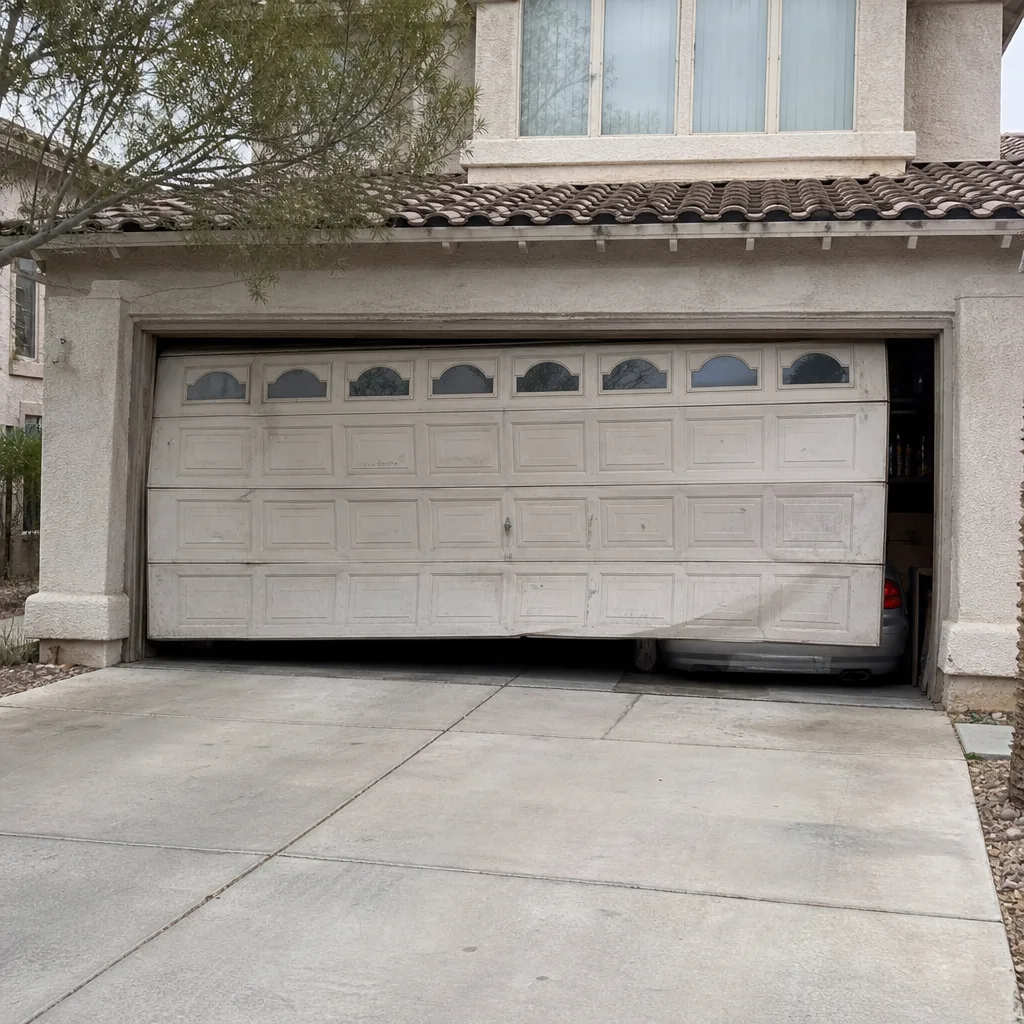
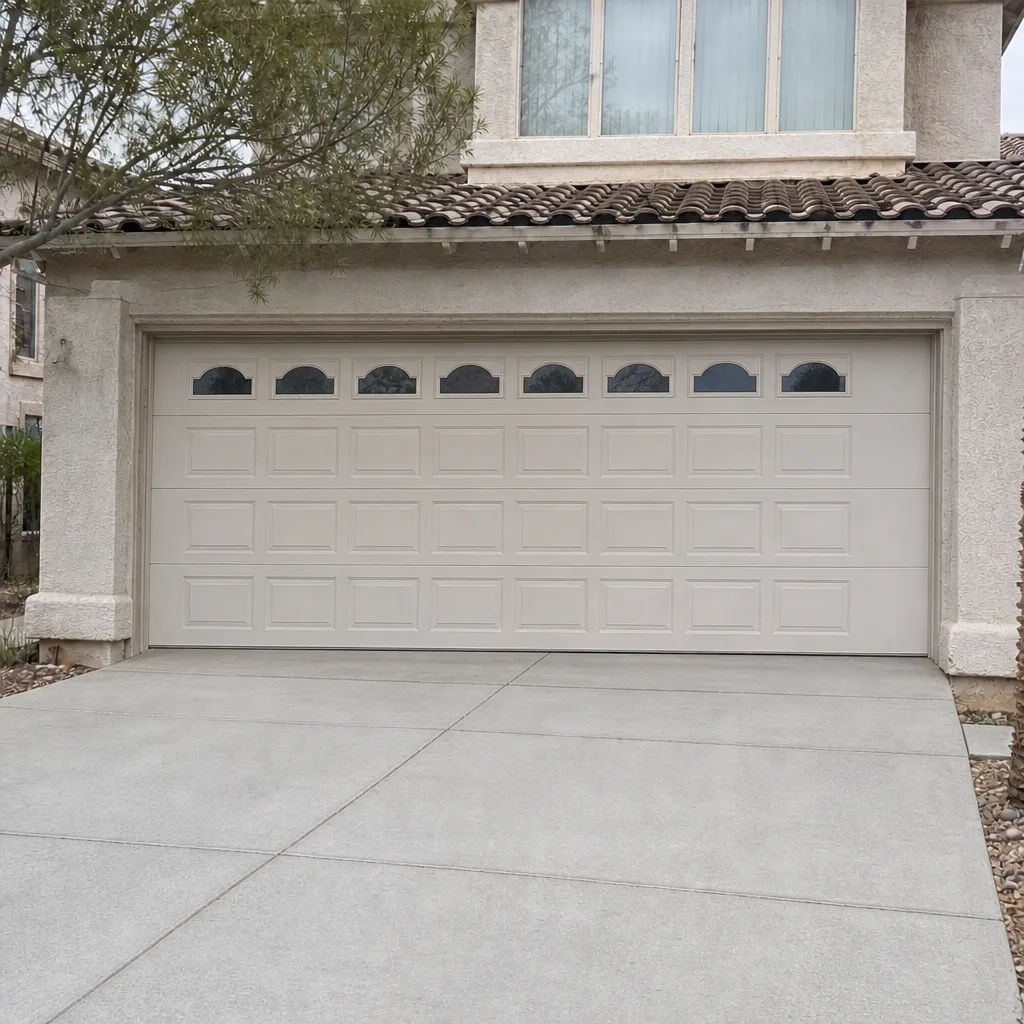
See the difference
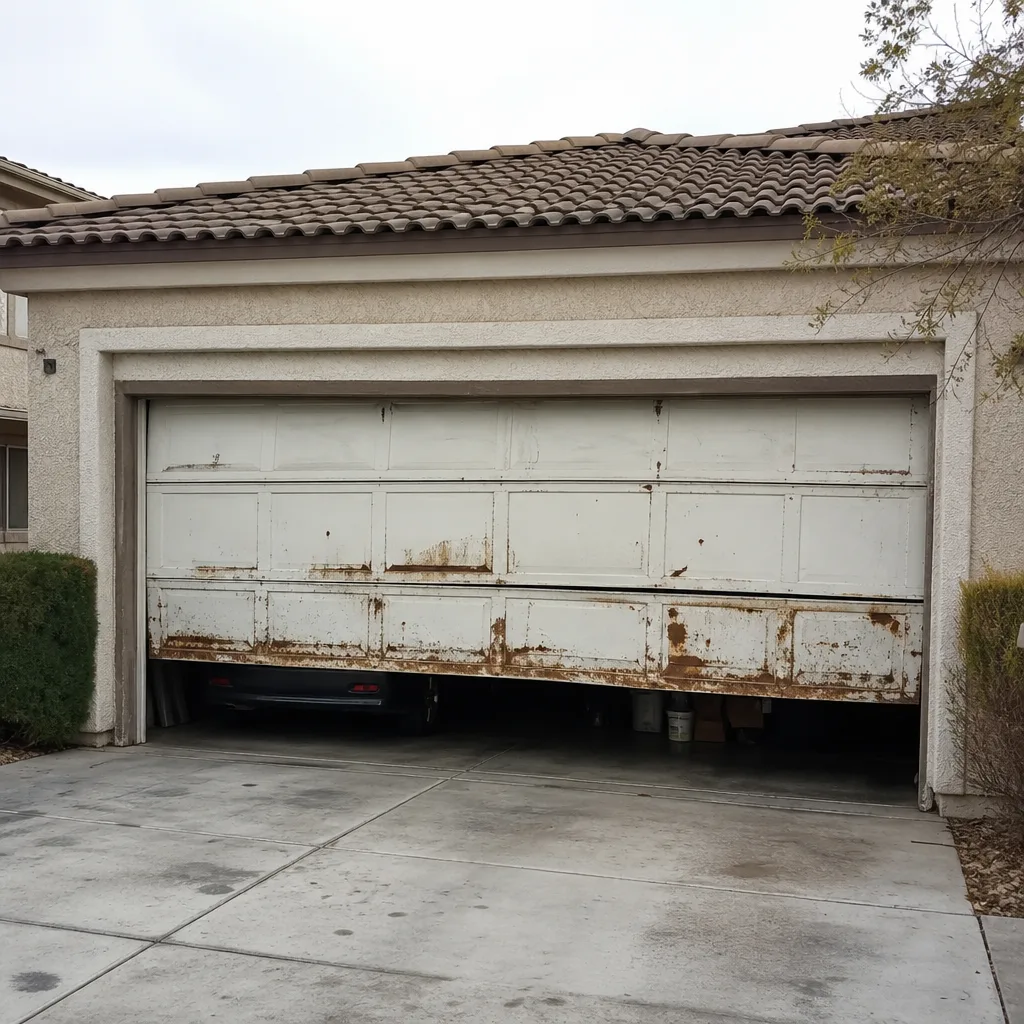 Before
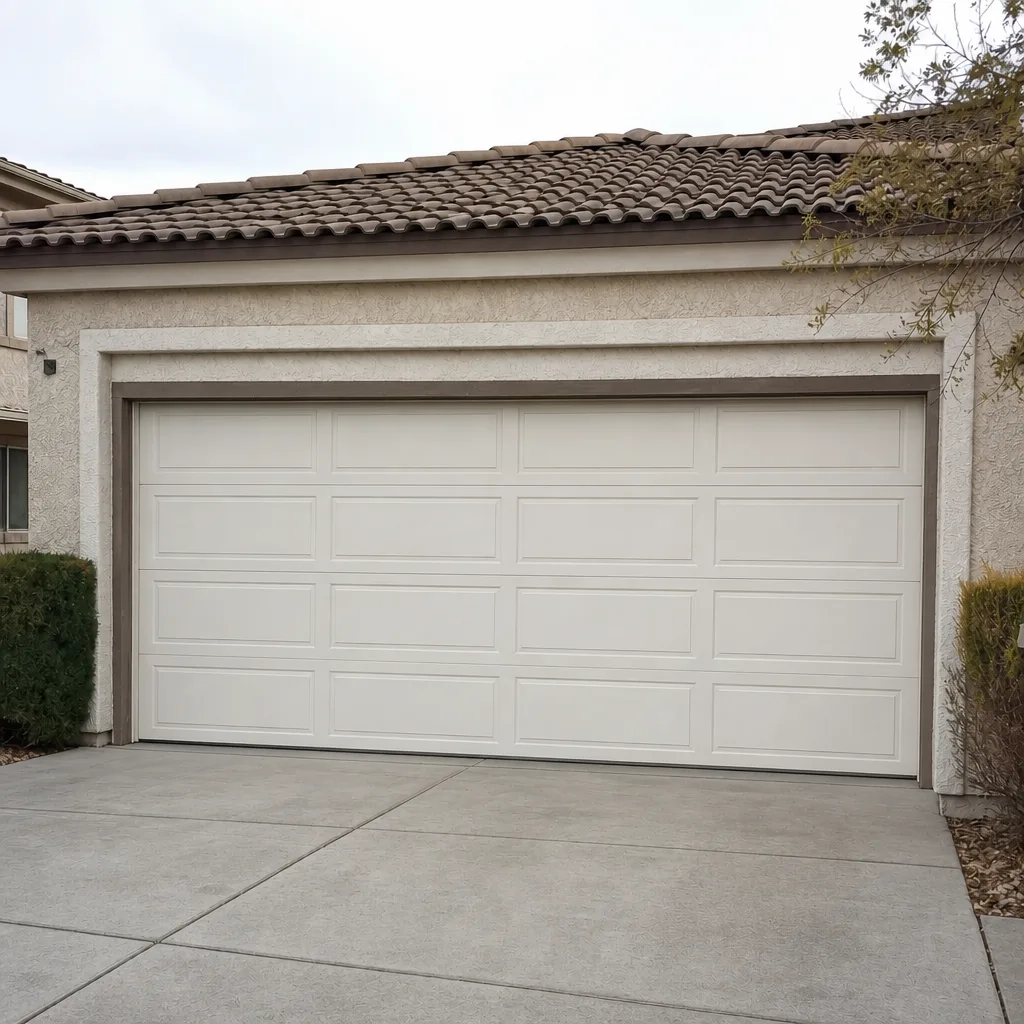 After
 Before
 After
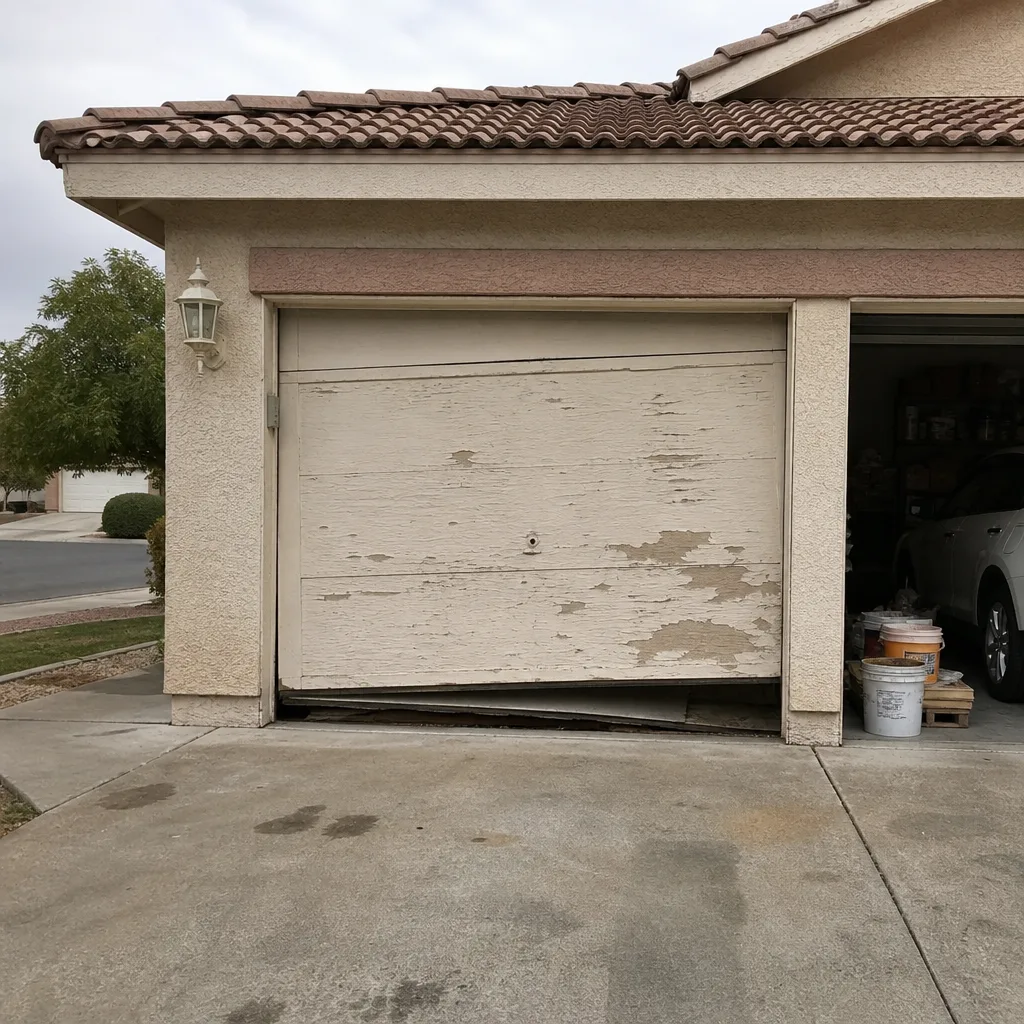 Before
 After
When to Call a Professional
Call a professional the moment a repair involves a spring, cable, drum bracket, or anything under tension. Also call if the door has come off its tracks, if it feels heavier than usual, or if a panel is bent. And call if you’re simply not sure which part you’re looking at. Our garage door installation in Summerlin and repair technicians have up to 10 years of experience, arrive with parts on the vehicle, and finish most jobs in a single visit. A trained eye costs far less than a repair that grows into a replacement. Mainspring Garage Door Co. Summerlin offers free estimates in Summerlin. Call (855) 608-8802, and we’ll walk through the parts with you.
Frequently Asked Questions
No. A torsion spring is under enough tension to cause serious injury, so it should always be handled by a trained technician with the right winding bars and safety gear. It’s one of the few garage door parts we firmly say should never be a DIY task, and replacing a pair of springs costs less than a hand injury.
Yes, provided the door is fully down and disconnected from the opener. Rollers are safe to replace one at a time with a nut driver, and swapping worn nylon rollers for new ones quiets a noisy door. In Summerlin, dust buildup makes worn rollers a common complaint, and this is a job we’re happy to guide you through.
Spring replacement in Summerlin typically runs $180 to $340 for a standard single-car door, including the pair. The price is quoted and agreed before work starts, so there are no surprises on the bill. Call (855) 608-8802 for an exact quote. Estimates are free.
It can, if a claim later traces back to an improper repair. Sudden accidental damage is usually covered, but an undocumented repair made without proper tools or training can complicate a claim. A professional, documented repair gives you a cleaner trail if you ever need to file.
Try the simple steps first: wipe the lenses, check the LEDs on both sensors, and nudge the brackets until the beam aligns. If it still won’t close, the fault is usually in the wiring or the opener logic, and that’s a quick call to a technician.
Yes. We take on everything from a single seal replacement to a full spring and cable job, and most visits are finished in one trip. Our technicians are background-checked and factory-familiar with Chamberlain, Genie, Clopay, Amarr, and other major brands. Call (855) 608-8802 for a free estimate.
The Bottom Line
Sort your garage door parts by stored energy, not cost. Weatherstripping, bottom seals, photo-eye alignment, and rollers on a disconnected door are safe for careful homeowners, and doing them yourself saves real money. Torsion springs, extension springs, cables, and drum brackets carry stored energy that can cause serious injury in an instant, and a trained professional is the right call every time. In Summerlin, where heat cycles springs hard and dust wears rollers, the twice-a-year tune-up is the smartest money you’ll spend. When a repair crosses into the dangerous zone, or when you’re not sure, call us and we’ll tell you straight.
Mainspring Garage Door Co. home in Summerlin. We answer the phone with a live person, any hour. Our truck is stocked with springs, cables, and openers, and most jobs finish in a single visit with the flat price agreed before we start. Every job is backed in writing by our 90-Day Done Right Promise. Current offers include $50 off any repair over $250, a free second opinion on any written estimate, an $89 seasonal tune-up, and a 5% discount for seniors and veterans. Call (855) 608-8802 for a free estimate.
Written by the team at Mainspring Garage Door Co. Summerlin.