
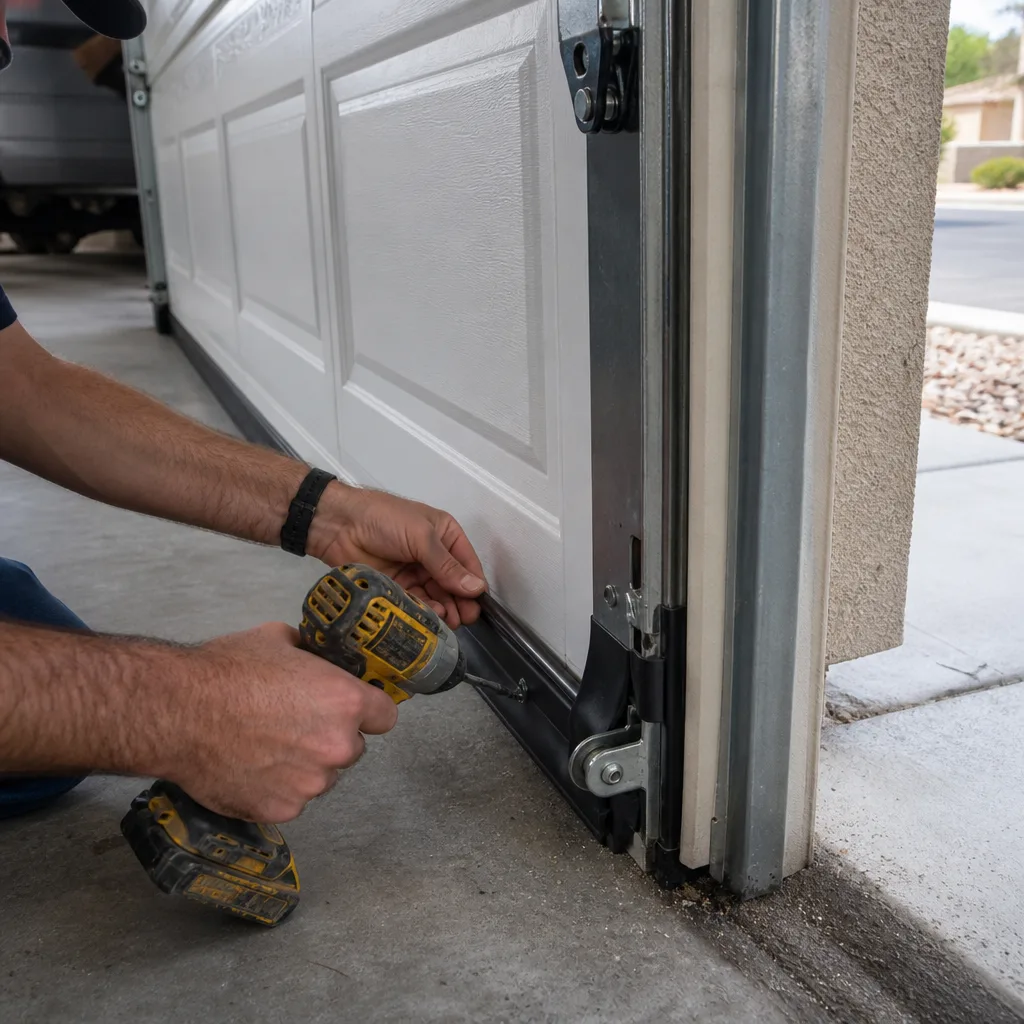
Last updated November 18, 2026
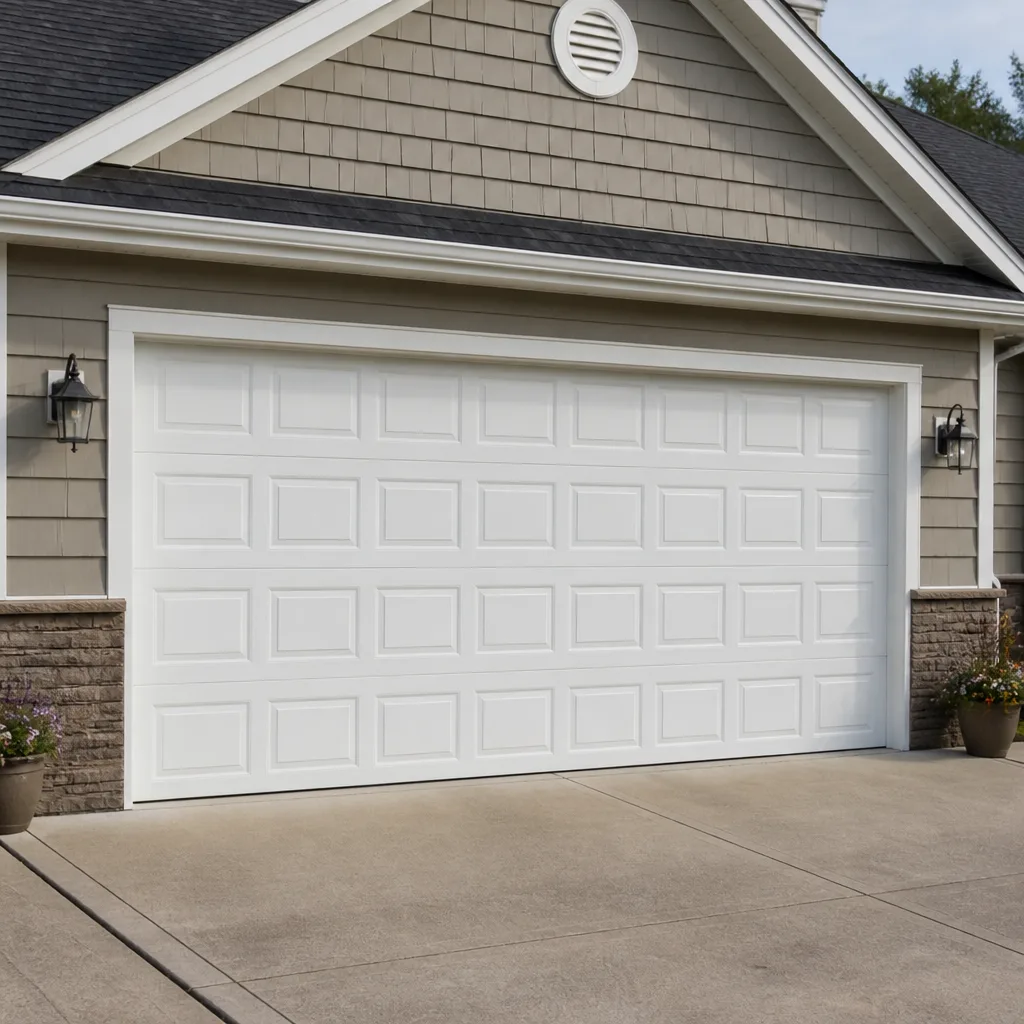 Raised-panel steel
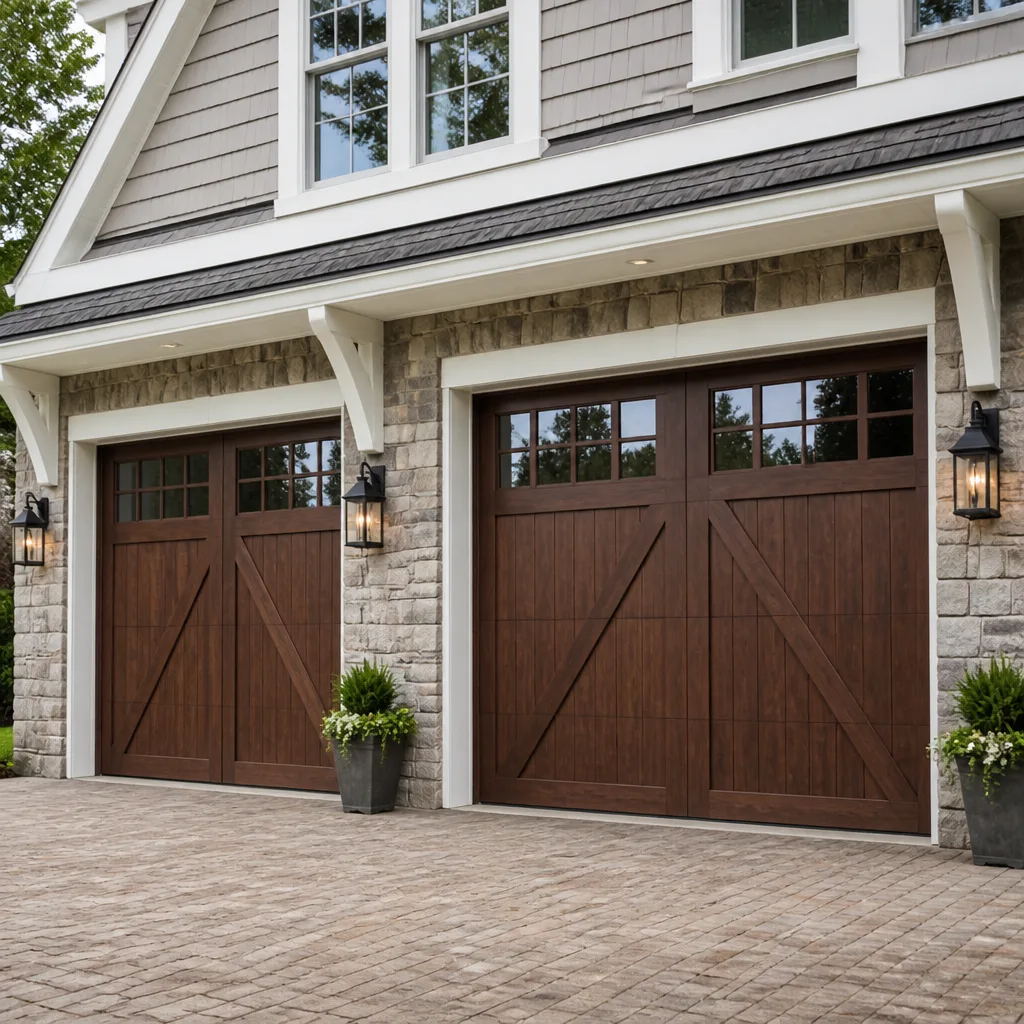 Carriage house
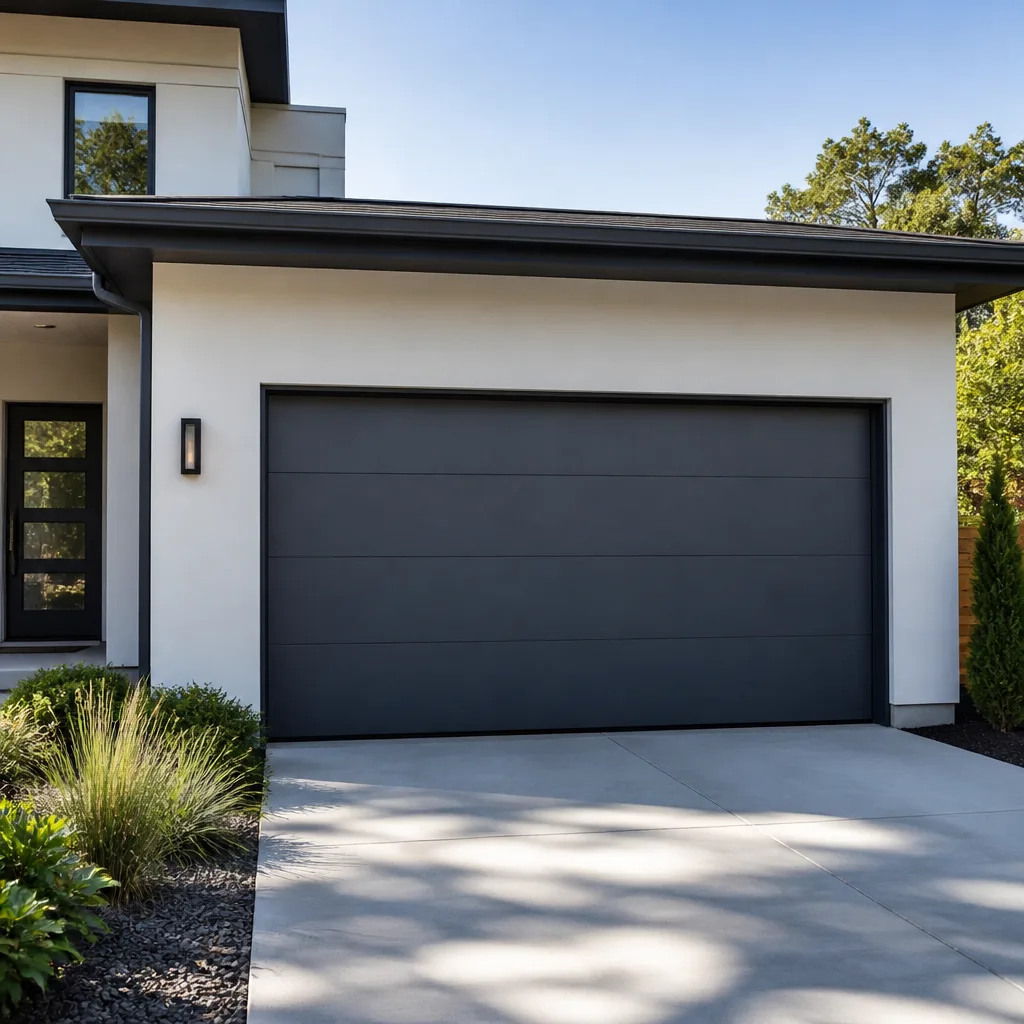 Modern flush
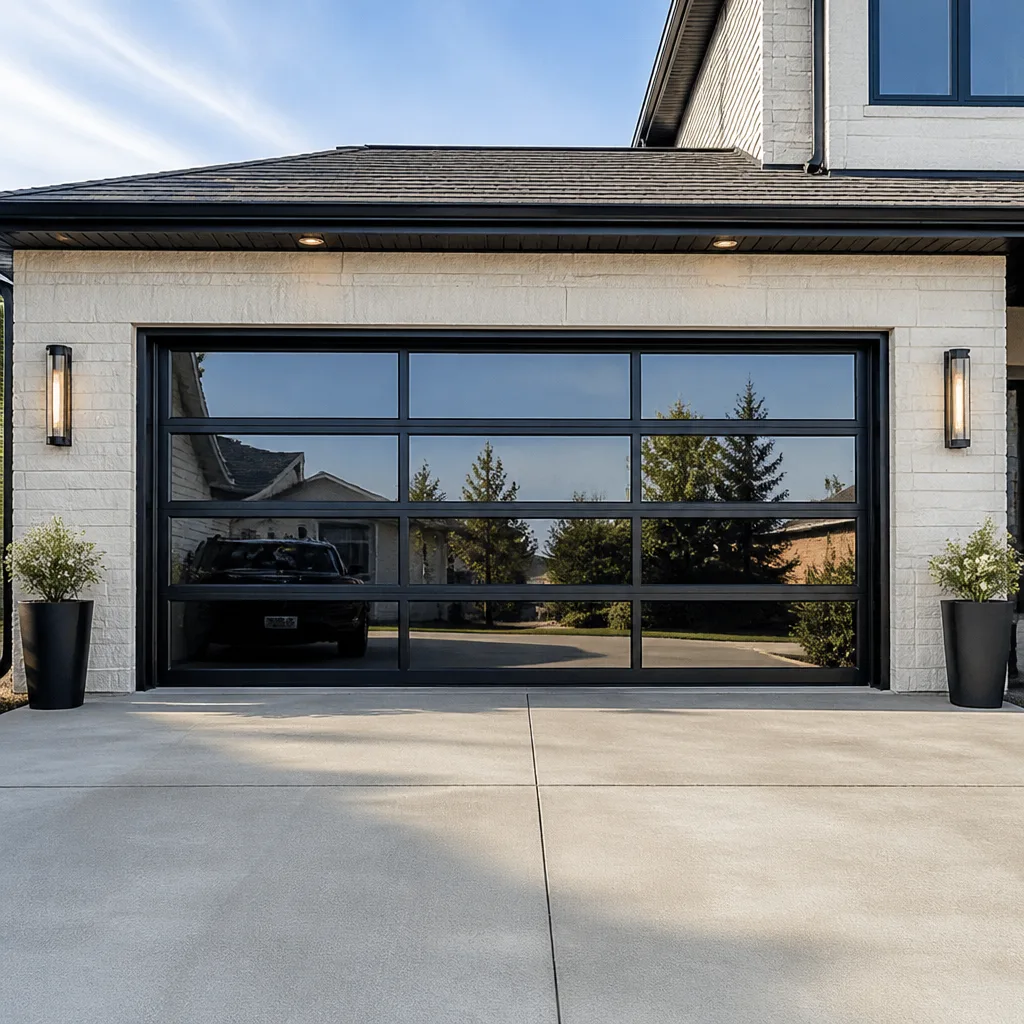 Full-view glass
 LiftMaster openers
 Chamberlain openers
Full 25-point door and opener safety check with every visit - springs, cables, rollers, tracks, and your LiftMaster or Chamberlain opener included
You get a price before we start. It does not change when the pro arrives.
Get your free estimateGarage Door Parts Maintenance Schedule: What to Do and When
A torsion spring rated for 10,000 cycles on a two-car household hits its limit in roughly seven years. Most homeowners have no idea what the cycle count is on their spring, so they maintain a door that’s near the end of its life the same way they’d treat a brand-new one – and they get surprised the same way, usually on a cold morning when the door comes down hard. Garage door parts don’t share a calendar. Springs, cables, rollers, hinges, and weatherstripping each fail on their own clock, driven by cycles, dust, heat, and load. This guide breaks the maintenance schedule down part by part, explains how to estimate where your spring sits in its cycle life, and covers what Summerlin’s dry heat does to lubrication schedules. By the end you’ll have a working schedule you can actually keep.
Quick Answer
Lubricate springs, hinges, and rollers every 6 months (every 3-4 months in Summerlin’s dusty, low-humidity climate). Inspect cables, rollers, and hinges monthly with a visual check. Replace nylon rollers every 5-7 years, weatherstripping and bottom seals every 3-5 years, and torsion springs based on cycle count – typically 7-10 years on a two-car household. Test the auto-reverse safety feature monthly. Schedule a professional tune-up annually, ideally in spring before the summer heat load.
Styles & brands we work with
- Raised-panel steel
- Carriage house
- Modern flush
- Full-view glass
- LiftMaster openers
- Chamberlain openers
Table of Contents
- Part-by-Part Maintenance Intervals
- How to Calculate Where Your Spring Is in Its Cycle Life
- Why Summerlin’s Climate Changes the Schedule
- The Right Lubricant for Each Part (and What Not to Use)
- The Monthly Walk-Around: Five Minutes, Five Checks
- A Simple Paper Log That Technicians Can Read
- Common Mistakes to Avoid
- When to Call a Professional
Part-by-Part Maintenance Intervals
The single calendar approach falls apart because these parts have wildly different life expectancies under normal use. Here’s the schedule we work from, based on what we see across Summerlin doors.
- Torsion springs: Replace by cycle count, not by date. Visual inspection monthly. A 10,000-cycle spring on a two-car household typically lasts 7-10 years. A high-cycle spring (25,000 cycles) lasts 2-3 times longer.
- Extension springs: Same cycle logic, but shorter lifespan – usually 6-8 years. Inspect safety cables monthly.
- Cables: Visual inspection monthly for fraying, kinks, or slack. Replace as a pair every 8-12 years or at the first sign of wear.
- Nylon rollers: Lubricate every 6 months. Replace every 5-7 years. Steel rollers last longer but run louder.
- Hinges: Lubricate every 6 months. Replace individual hinges every 5-8 years or when they show visible wear or squeaking that doesn’t resolve with lubrication.
- Weatherstripping (perimeter): Replace every 3-5 years, sooner in Sun-facing Summerlin exposures where UV breaks down the vinyl.
- Bottom seal (astragal): Replace every 3-5 years, or immediately at any crack or tear. It’s the part most exposed to the driveway surface.
- Opener drive (chain, belt, or screw): Lubricate chain drives every 6-12 months. Belt drives require no lubrication. Replace drive components every 8-10 years or at the first sign of tension loss.
- Photo-eye safety sensors: Test monthly. Clean lenses every 3 months.
If your door is a Clopay, Amarr, or Wayne Dalton model and you don’t know which parts are original, a professional inspection is the fastest way to get a starting point. That’s one of the reasons we recommend a seasonal tune-up for any door that hasn’t been serviced in the last two years. If it’s been longer than that, you may be looking at Garage Door Repair in Summerlin rather than maintenance.
How to Calculate Where Your Spring Is in Its Cycle Life
Door age tells you almost nothing. Cycles do. One cycle is one open and one close. Most two-car households running two cars in and out run 4-6 cycles a day. Here’s how to estimate where you sit.
- Count your daily cycles. Track a normal week. Two commuters, two comings and goings, plus a trash run and a delivery: that’s usually 5-6 cycles a day. Add a cycle for anyone working from home.
- Multiply by 365. Five cycles a day is 1,825 cycles a year. Six is 2,190.
- Divide your spring’s rated cycles by your annual count. A 10,000-cycle spring at 1,825 cycles a year lasts about 5.5 years. At 2,190, it drops to about 4.5 years. A 25,000-cycle spring stretches to 11-13 years.
- Check for a sticker or stamp on the spring. Most springs carry a cycle rating. If yours doesn’t, assume 10,000 for a standard spring and 25,000 for a high-cycle one.
- Subtract door age. A 12-year-old door with a standard spring is past its expected life even if it’s still working. Cycle-failure is not gradual – the spring breaks suddenly.
We see doors in Summerlin fail on this math every week. A family that bought a house with a 10-year-old door and never serviced it is usually one cycle away from a loud snap and a car trapped inside. Springs are under extreme tension and are genuinely dangerous to touch. Do not attempt to adjust, wind, or replace one yourself. Call a trained technician. The rest of this schedule you can handle. That part, you cannot. Understanding the schedule is still worth it – it means you know when to ask about spring replacement before the failure happens. Mainspring Garage Door Co. Summerlin home can quote a replacement so you aren’t caught off guard.
Why Summerlin’s Climate Changes the Schedule
The manufacturer’s recommended lubrication interval assumes moderate humidity and stable temperatures. Summerlin doesn’t deliver either. Our summer heat pushes surface temperatures on a west-facing metal door past 140°F, and the drop from a 105°F afternoon to a 68°F night is enough to work any grease out of a hinge pin over time. Combine that with fine desert dust – which behaves like a sanding compound once it mixes into old lubricant – and the standard “every 6 months” recommendation is optimistic here.
What we see in practice:
- Lubrication breaks down roughly twice as fast. A schedule that would hold a year in a coastal climate needs attention every 3-4 months here.
- Weatherstripping on south- and west-facing doors fails a full season earlier. UV in the high desert is unforgiving. A vinyl seal that would last 4 years in a milder climate dries and cracks in 2-3.
- Driveway grit accelerates bottom-seal wear. The fine aggregate dust Summerlin’s exposed driveways produce collects on the seal and grinds it down. If you park on an unpaved or freshly finished driveway, add a season to the replacement schedule.
- Springs genuinely do fail on cold snaps. The single most common time we get calls is the first cold morning after a hot stretch. Metal contracts and a spring already at 98% of its cycle life gives out.
If you check your door only twice a year, do it around the shoulder seasons – early spring and early fall – so it lines up with the two stretches that stress the hardware hardest. That said, tune-ups are also a good excuse to look at the opener itself. We see a lot of Garage Door Opener in Summerlin calls that turn out to be lubrication problems, not opener problems.
The Right Lubricant for Each Part (and What Not to Use)
Using the wrong lubricant is worse than using none. Here’s the correct one for each part.
- Torsion springs and extension springs: A dedicated garage door spring lubricant, or a lithium soap-based grease. Not WD-40. Standard WD-40 is a solvent-based penetrant, not a lubricant – it strips whatever grease remains and leaves the spring dry. That dries the coil faster and shortens its life.
- Hinges: White lithium grease, sprayed into the pivot points. A small amount goes a long way. Excess grease traps dust.
- Rollers: A light silicone spray on nylon rollers. Never oil the roller stem – it accumulates grit. Steel rollers take white lithium grease but sparingly.
- Track surfaces: Do not lubricate. Tracks are meant to run dry. A greased track collects dust and causes the door to bind. Clean only, with a dry cloth or a light brush.
- Chain drive on the opener: A specific chain and cable lubricant designed for garage openers. Not motor oil. Not WD-40. Belt drives and screw drives get no lubrication at all.
- Weatherstripping and bottom seal: A silicone-based protectant twice a year. This slows UV drying and keeps the vinyl supple. Do not use petroleum-based products – they break down the rubber faster.
Most hardware stores near Summerlin carry silicone spray and white lithium grease. The spring-specific lubricant is the one that’s harder to find off the shelf. If you can’t locate it, don’t substitute WD-40. Order the right product or have a technician apply it during a tune-up. Keep a single labeled can for each job so you don’t accidentally swap products between visits.
The Monthly Walk-Around: Five Minutes, Five Checks
This doesn’t replace the lubrication schedule. It catches failures early, which is the whole point of maintenance. Five checks, done in the order below, take about five minutes.
- Look at the springs. A healthy torsion spring is smooth and even. Look for rust, gaps, or a visible separation in the coil. An extension spring with a stretched or damaged coil is done. Do not touch either.
- Look at the cables. Run your eyes along each side. A single broken strand on a cable is a replace-now signal. Fraying like a tiny brush end means the same. Coiled or slack cable is a call-us-now signal – stop using the door.
- Test the auto-reverse. Place a 2×4 flat on the driveway under the closing door. Lower the door. It should reverse on contact with the wood. If it doesn’t, the opener’s force setting or the safety mechanism is out of spec – that’s a safety hazard and needs a professional.
- Wave an object in front of the photo eyes. The door should not close while something blocks the beam. Clean the lenses if the indicator light flickers.
- Listen and feel. Stand inside the garage while the door cycles. A door that rattles, shudders, or squeals at one particular point in its travel is telling you something is out of alignment or worn. Note where in the travel it happens.
Anything you flag in steps 1-4 is worth a call. Step 5 is worth a note in your log. If you’re not comfortable performing any of these checks, that’s a good reason to book the professional one instead – especially if you’re in the market for a new door, since the same inspection that catches a safety issue also tells you whether Garage Door Installation in Summerlin is the smarter call than more repairs.
A Simple Paper Log That Technicians Can Read
A log is more useful than it sounds. It’s the fastest way for a technician to spot what’s been neglected. Any notebook works. Compose it like this:
- Column 1: Date. One line per event, oldest first.
- Column 2: Part. Write “springs,” “hinges,” “rollers,” “cables,” “seal,” “opener.” One line per part touched.
- Column 3: Action. “Lubed,” “inspected,” “replaced,” “adjusted.”
- Column 4: Note. “Squeak at 18 inches, hinge 3,” “cable frayed left side, replaced,” “seal cracked along east end.” Short.
- Column 5: By. “Self” or the company name. If a professional did it, note the company.
Tape a small envelope inside the garage door opener housing – not on it – and keep the log there. When a technician arrives, hand them the log. In our experience, seeing three years of “lubed springs” with no “rollers replaced” is enough to tell them the rollers are due regardless of how they look. It’s also how we spot patterns – a Summerlin door with two bottom-seal replacements in four years is telling us the driveway drainage is pushing dirt onto the seal, which is a different fix.
The log is also your own defense. If you ever sell the house, a maintenance log on a Wayne Dalton or Craftsman door is a real selling point – buyers ask for it more often than you’d think. Even two years of entries is worth more than a verbal “we kept it serviced.”
Common Mistakes to Avoid
- Lubricating the tracks. A greased track collects dust and starts the door binding. Tracks run dry. Clean only. This is the most common mistake we see in Summerlin garages.
- Using WD-40 on springs. It’s a solvent, not a lubricant. It strips the grease and leaves the coil drier than before. Use a spring-specific product or lithium grease.
- Replacing one extension spring instead of both. The springs are under matched tension. Replace one and the other fails within a year, usually. Pay for the pair.
- Ignoring weatherstripping because the door still closes. A worn seal lets in Summerlin’s dust and summer heat. Your cooling bill shows it long before the door stops working.
- Testing the auto-reverse with your hand. Never. Use a 2×4. Hands don’t survive a failure.
- Letting the door run with a rattling sound. A rattle at one point in the travel is a loose hinge or a worn roller. Ignore it for six months and it becomes a bent track and a bigger repair.
- Skipping the annual tune-up because “it’s working fine.” The whole point of a schedule is catching failure before it becomes an emergency repair. A $89 tune-up is cheaper than a broken spring and a trapped car on a Monday morning.
When to Call a Professional
Call a professional for anything involving torsion or extension springs, cables, the opener’s force adjustment, or a door that’s come off its track. These are the parts where a mistake can injure or worse. We also want to hear about a door that moves unevenly, a photo-eye that won’t hold alignment, a spring that’s visibly rusted or nicked, and any single-cable or single-spring failure. In Summerlin we see these constantly on doors between 6 and 10 years old that have never been professionally serviced. If you’re not sure where your door stands, book an inspection. Mainspring Garage Door Co. Summerlin offers free estimates in Summerlin – call (855) 608-8802. Our trucks are stocked with springs, cables, and openers, so most tune-ups and repairs are finished in one visit. Every job is priced upfront before the work begins, and covered by our 90-Day Done Right Promise.
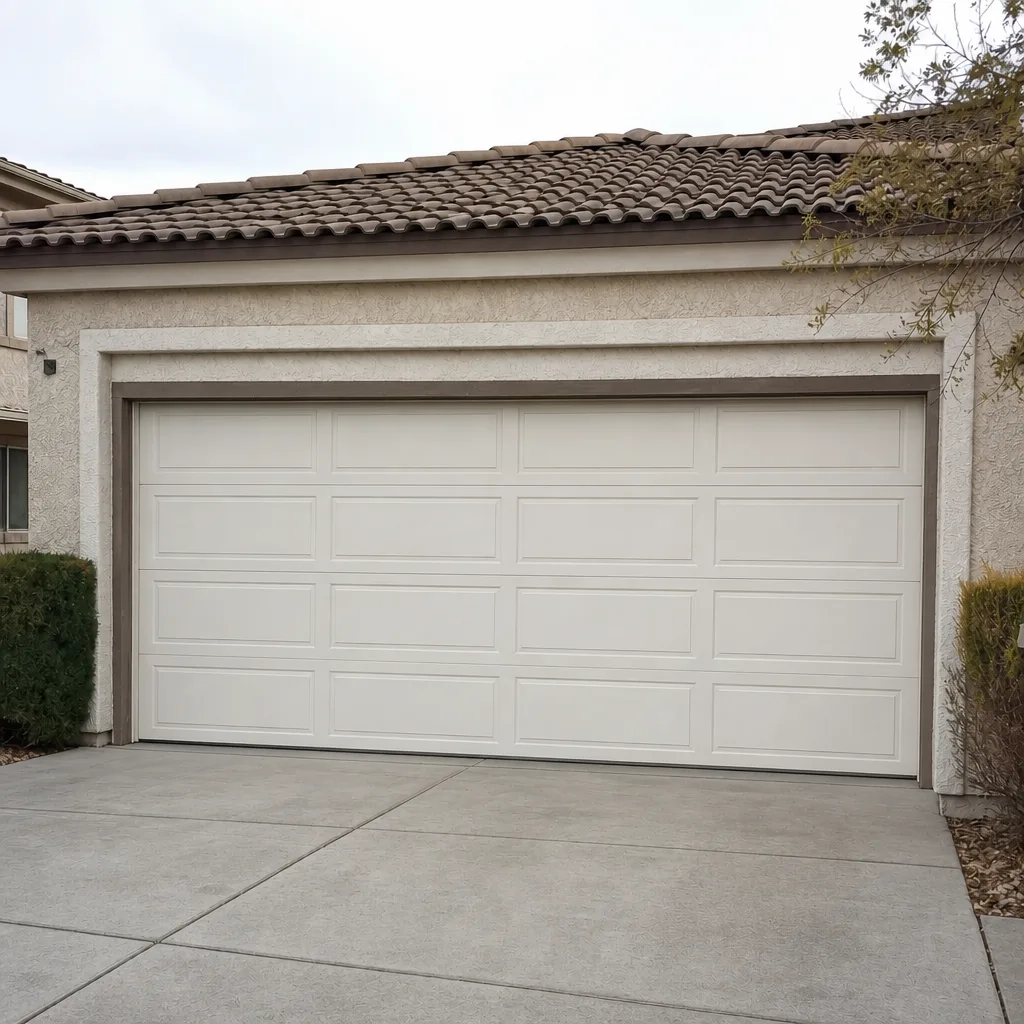
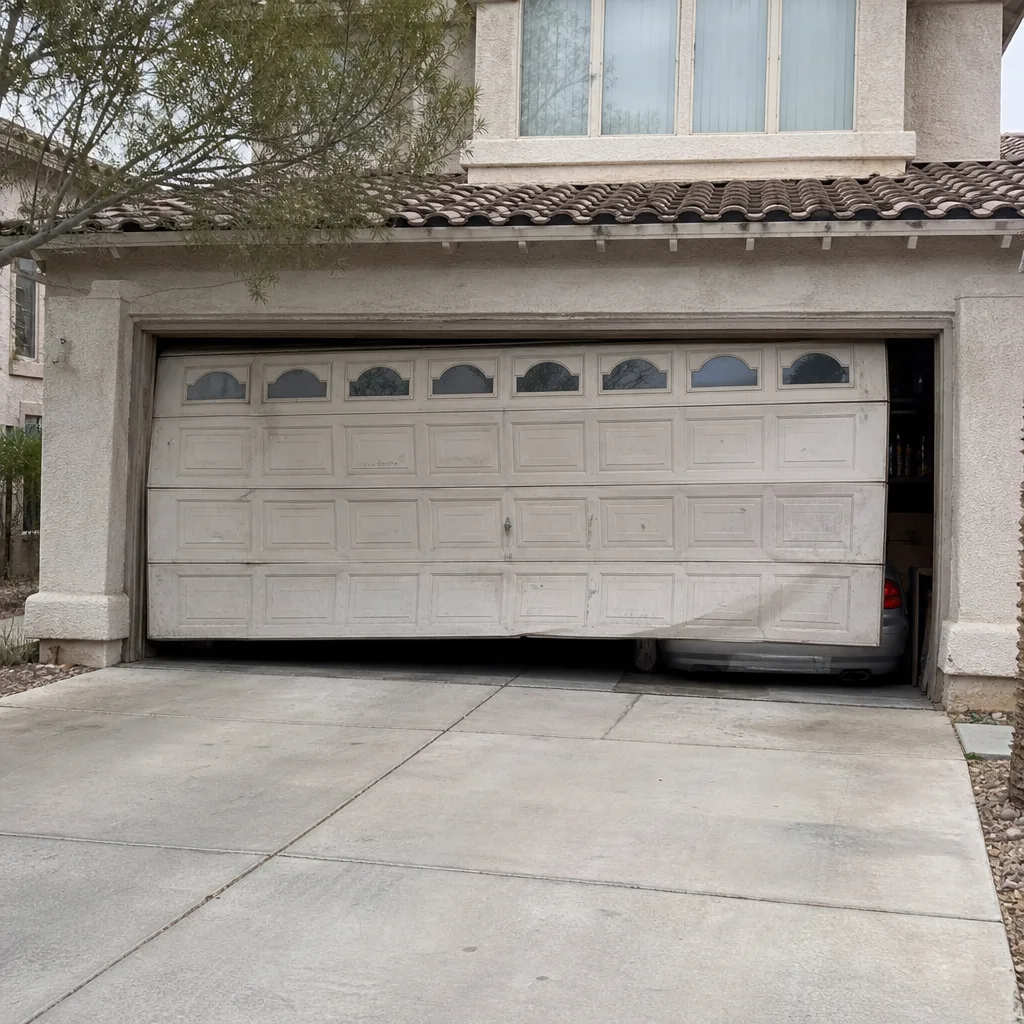
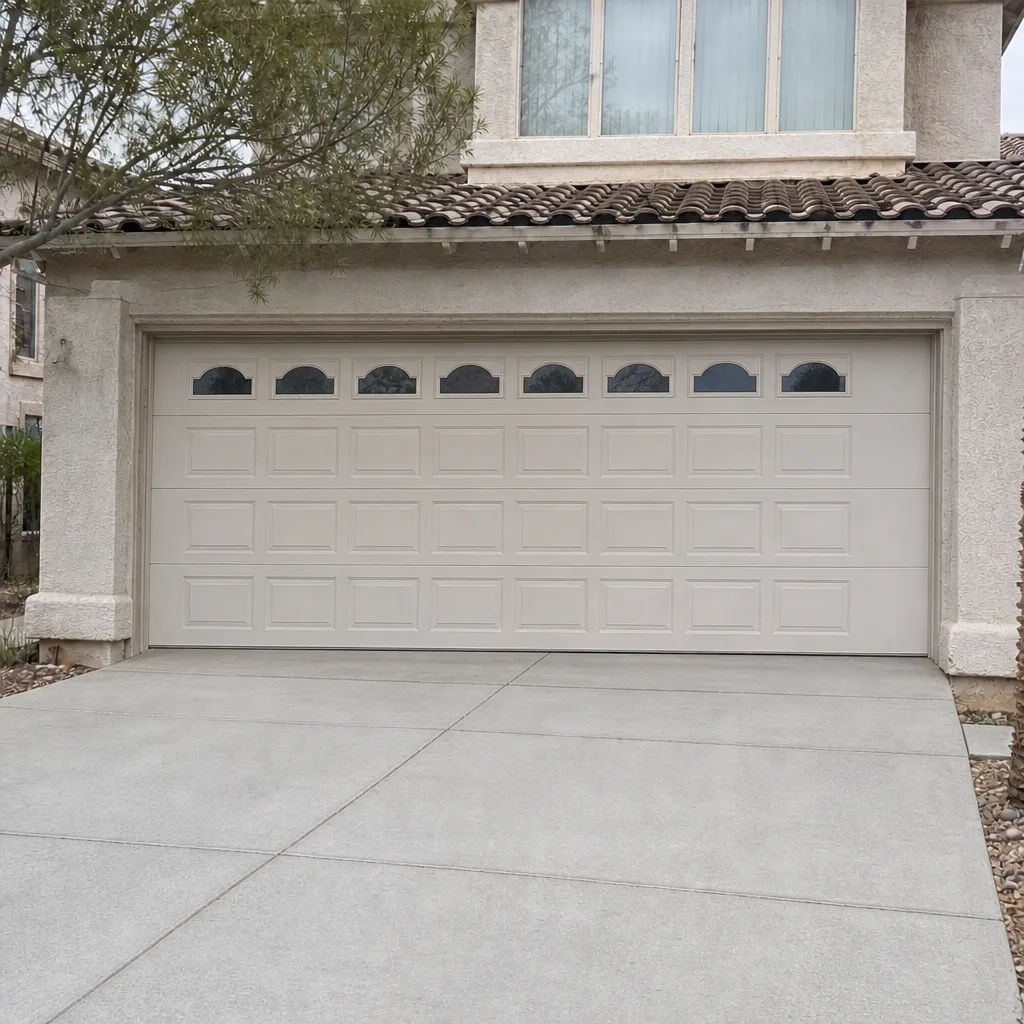
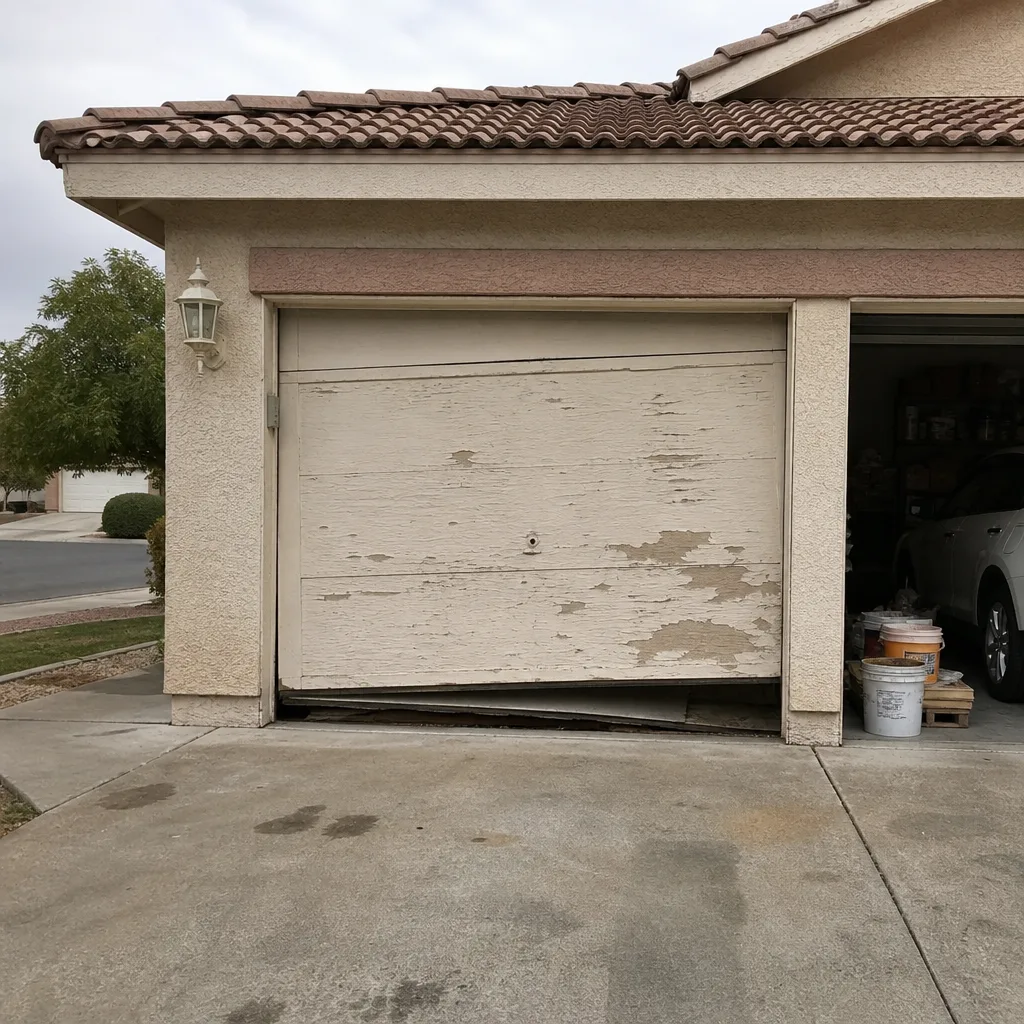
See the difference
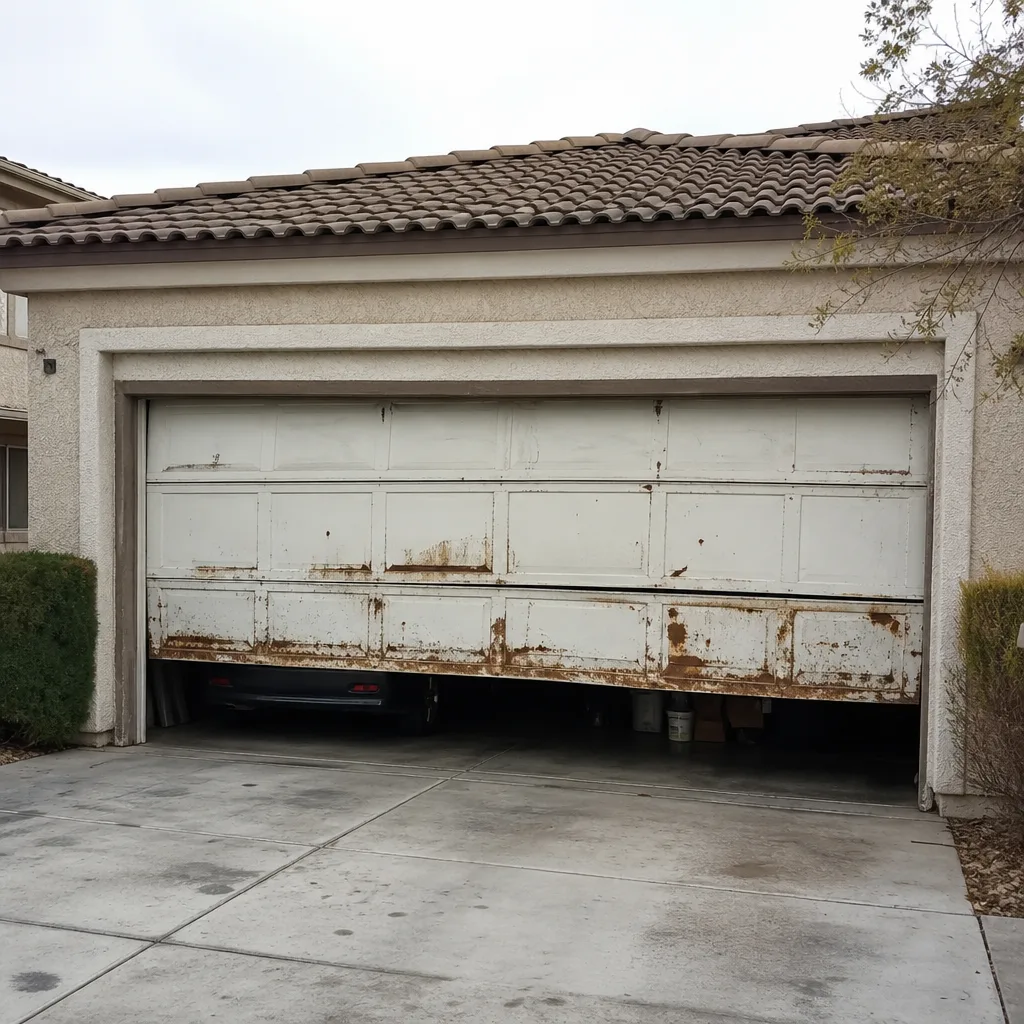 Before
 After
 Before
 After
 Before
 After
Frequently Asked Questions
Replace torsion springs by cycle count, typically every 7-10 years on a two-car household, and extension springs every 6-8 years. In Summerlin’s heat and dust, springs fail toward the shorter end of that range more often than not. If your door is past seven years old and you don’t know the cycle rating, an inspection is the fastest way to find out. Call (855) 608-8802 for a free estimate.
Yes, applying lubricant to the exterior of the spring coil is safe if you don’t touch, turn, or attempt to adjust it. Use a spring-specific lubricant or white lithium grease, not WD-40. Never attempt to wind or unwind a torsion spring – that requires a trained technician and the right tools. If you’re unsure, ask during your tune-up. Call (855) 608-8802 with any questions.
Because Summerlin’s climate is harder on lubricants than the manual assumes. High heat, dry air, and fine desert dust break down grease faster than a moderate climate. The manufacturer’s “every 6 months” target is a safe minimum for most of the country, but here we recommend every 3-4 months on the springs, hinges, and rollers. Call (855) 608-8802 and we’ll walk you through a schedule for your door.
White lithium grease for hinges and steel rollers. Silicone spray for nylon rollers. A dedicated spring lubricant for springs. Do not use WD-40 as a substitute for any of these – it’s a solvent and strips the proper grease. Tracks should never be lubricated at all. If you’d rather not buy three products, a tune-up covers all of it. Call (855) 608-8802 to schedule.
You usually can’t tell with certainty, but there are warnings. A visible gap or separation in the torsion spring coil, heavy rust, a nick in the coil, or a door that suddenly feels unbalanced – a sign the spring has lost tension. A stiff door that groans as it opens after a cold night is a strong hint. If any of these show up, stop using the door and call a professional. Reach us at (855) 608-8802.
Yes, for most doors past five years old. Our seasonal tune-up is $89, and it catches worn rollers, aging weatherstripping, and spring wear long before they become emergency repairs. In Summerlin’s climate a missed tune-up often turns into a broken spring and a trapped car, which runs several times the tune-up cost. Worth the $89 many times over. Call (855) 608-8802 to book one.
The Bottom Line
Skip the single-calendar approach. Springs run on cycle count, cables and rollers run on inspection, and weatherstripping runs on UV exposure. Lubricate the moving parts every 6 months in most climates – every 3-4 months here in Summerlin. Inspect monthly, test the auto-reverse monthly, keep a paper log, and schedule a tune-up annually. Replace rollers every 5-7 years, seals every 3-5 years, and springs based on your household’s actual cycle count. The parts that can hurt you – springs and cables – belong to a trained technician. The rest you can handle. Either way, the schedule works, and your door will run quieter for it.
If you’d rather have a trained eye look at your door, we’re glad to help. Call (855) 608-8802 to schedule a free estimate in Summerlin. Live person answers the phone, upfront pricing before any work begins, and the 90-Day Done Right Promise on every job. That’s the deal.
Written by the team at Mainspring Garage Door Co. Summerlin.