
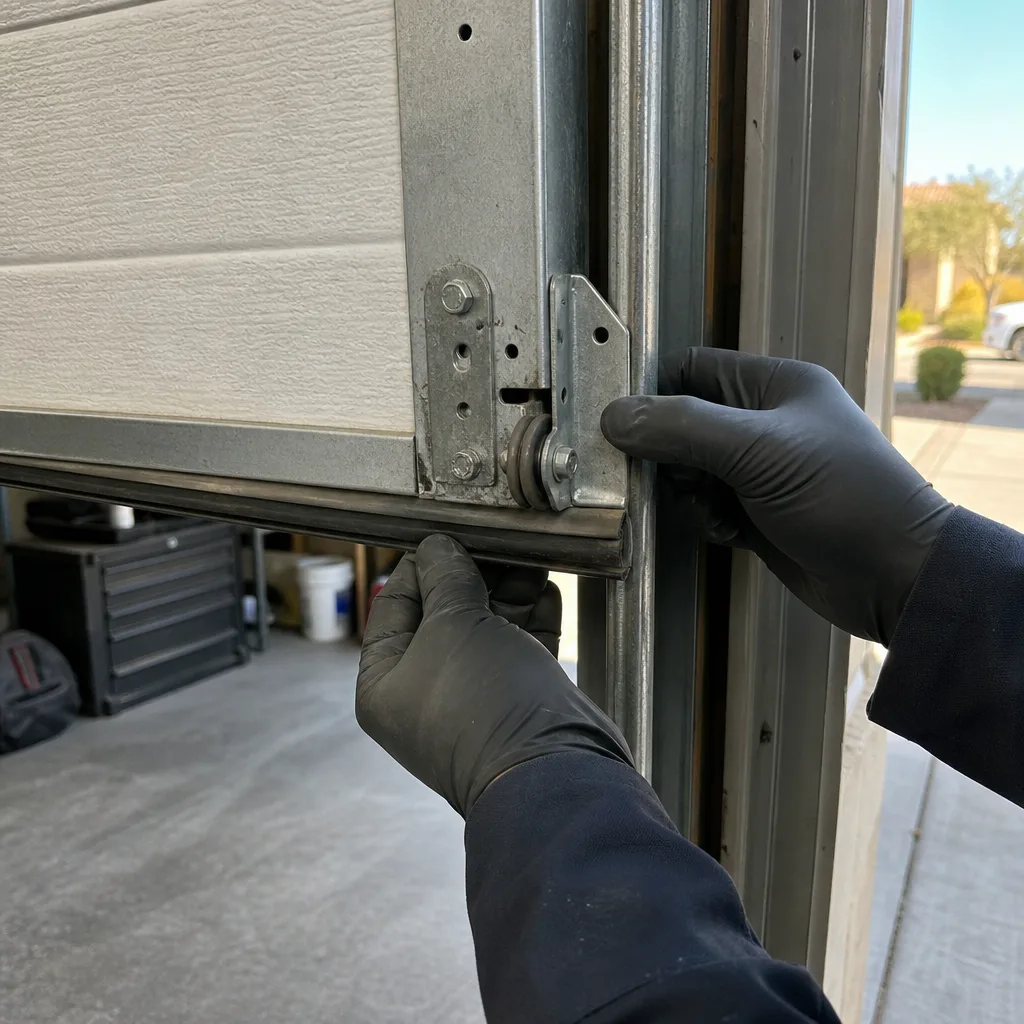
Last updated November 18, 2026
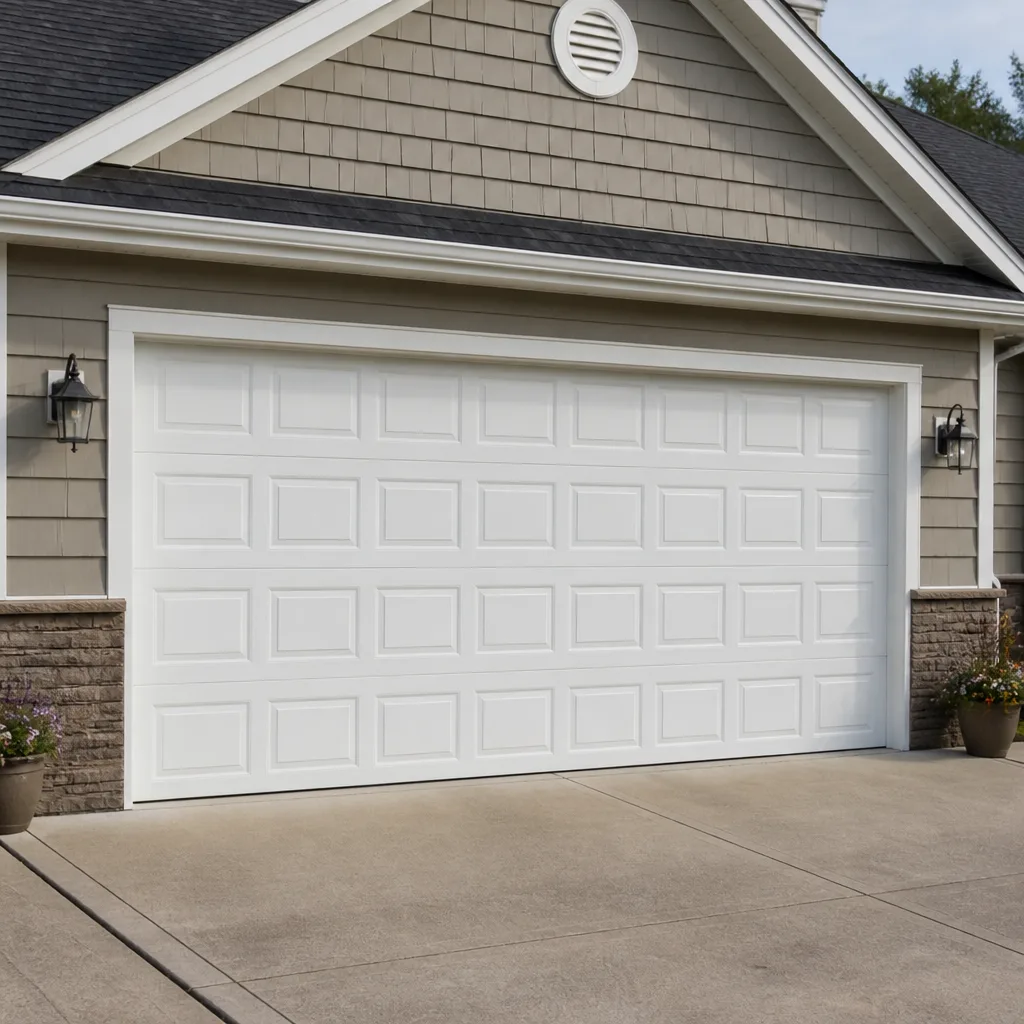 Raised-panel steel
 Carriage house
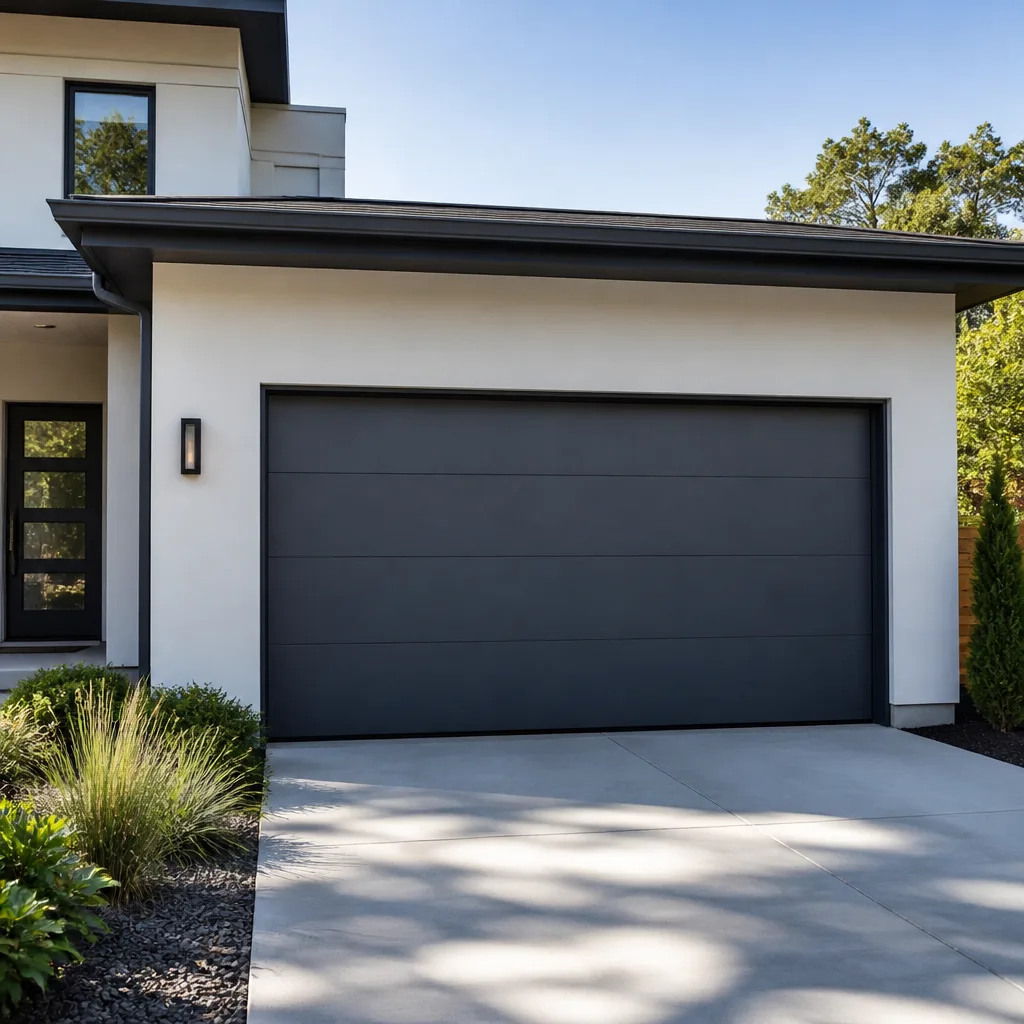 Modern flush
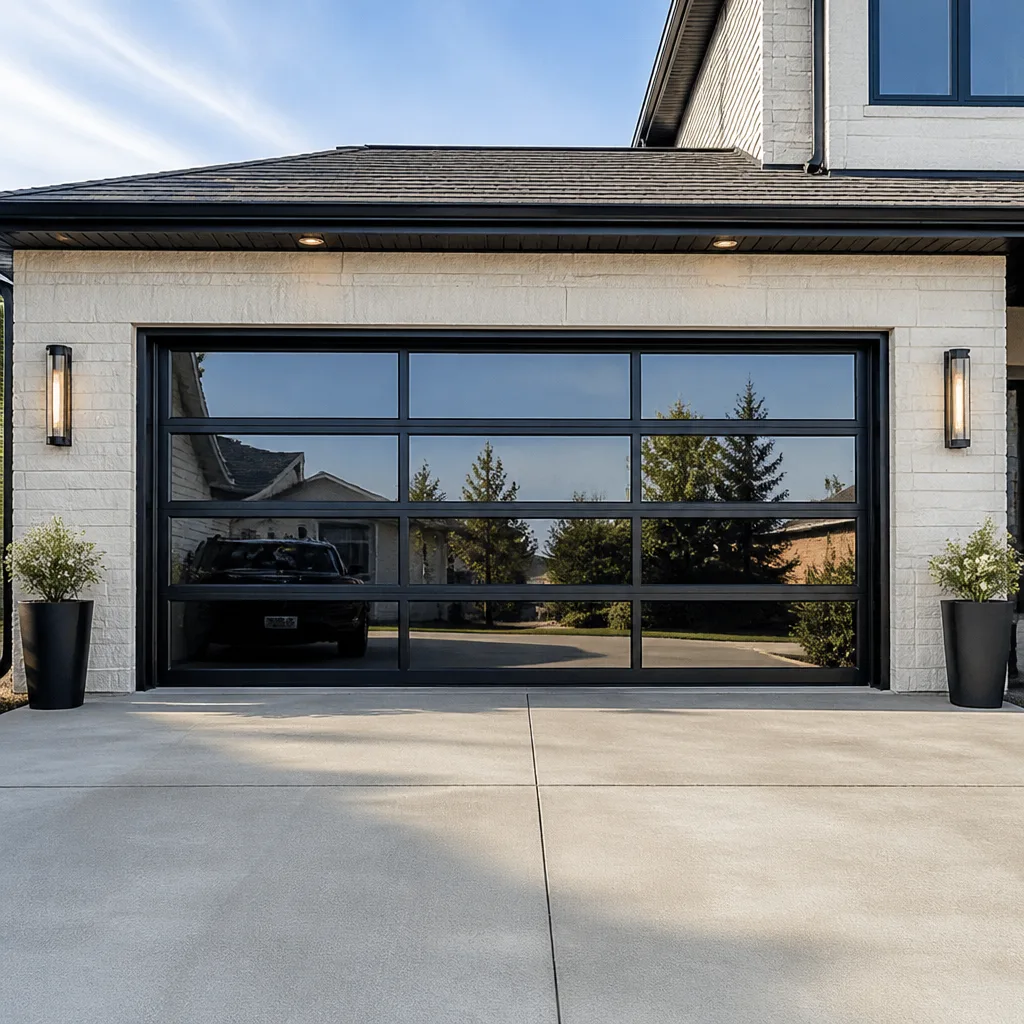 Full-view glass
 LiftMaster openers
 Chamberlain openers
Full 25-point door and opener safety check with every visit - springs, cables, rollers, tracks, and your LiftMaster or Chamberlain opener included
You get a price before we start. It does not change when the pro arrives.
Get your free estimateGarage Door Repair Troubleshooting: Common Problems and How to Fix Them
If your door reverses before it hits the floor, that is not a sensor problem. It is almost always a limit-switch setting, and knowing the difference saves you from replacing sensors you don’t need. Most troubleshooting guides read like a dictionary: symptom, alphabetized, no cause in sight. This one maps each symptom to the root cause behind it, so you can tell a technician exactly what your door is doing in Summerlin and skip paying someone to diagnose what you already identified. We’ll show you the two-finger balance test, what to log before anyone arrives, and the red flags that mean call today, not next week.
Quick Answer
Most garage door problems fall into three buckets: mechanical (springs, cables, rollers, tracks), operator-side (limit switches, force settings, logic boards), or electrical (sensors, wiring, power). Match the symptom to the bucket first, then decide. A door that reverses early is usually operator-side. A door that won’t lift or feels impossibly heavy is usually a broken spring. A door that opens partway and stops is usually a limit switch or travel setting. Know which bucket you’re in and you stop guessing.
Styles & brands we work with
- Raised-panel steel
- Carriage house
- Modern flush
- Full-view glass
- LiftMaster openers
- Chamberlain openers
Table of Contents
- Symptom-to-Root-Cause Map: The First Thing to Check
- Mechanical vs. Electrical vs. Operator-Side: How to Tell the Difference
- The Two-Finger Balance Test: Spot a Failing Spring Before It Breaks
- Noisy Door? What Each Sound Is Telling You
- Door Reverses Before the Floor: Limit Switch, Not Sensors
- Slow Movement and Partial Opening: Travel Settings and Rollers
- What to Log Before You Call: Sounds, Timing, Frequency
- Red-Flag Symptoms That Need a Same-Day Call
Symptom-to-Root-Cause Map: The First Thing to Check
Before you touch anything, write down what the door actually did. Not what you think broke. What happened. A map from symptom to cause narrows the field fast, and in Summerlin’s dry heat the causes cluster in predictable ways. Springs weaken faster here than homeowners expect because the desert cycle of hot days and cool nights works the metal constantly. When a homeowner calls and says “it’s making a grinding noise,” we know to ask about the opener carriage first, not the springs. When they say “it goes up a foot and stops,” we ask about the limit switch. The symptom points to the bucket.
- Door won’t move at all, motor hums: operator-side. Likely a stripped gear, dead capacitor, or logic board fault.
- Door won’t lift, motor runs fine: mechanical. Broken spring or snapped cable.
- Door reverses before hitting the floor: operator-side. Limit switch or force sensitivity.
- Door stops partway up or down: operator-side. Travel limits or obstruction in the track.
- Door is loud, grinding or squealing: mechanical. Worn rollers, dry hinges, or a failing bearing plate.
- Door moves slowly: operator-side or mechanical. Aging opener motor or binding rollers.
- Door is crooked, one side sags: mechanical. Cable off the drum or a broken spring on one side.
- Remote or wall button doesn’t work, motor silent: electrical. Dead battery, tripped breaker, or failed logic board.
Walk outside and look at the door before you call. If you can see the bottom panel is cocked to one side, the problem is mechanical. If the door looks perfectly level but won’t move, it’s operator or electrical. That single check saves most homeowners a diagnostic fee because they already know where to look.
Mechanical vs. Electrical vs. Operator-Side: How to Tell the Difference
Most homeowners call everything “the motor.” In our experience, less than a third of the calls we take in Summerlin are actually motor failures. The motor is the loudest part, so it gets blamed. Here’s how to sort it out before we arrive, because the bucket you identify tells the technician what to load on the truck.
- Test the wall button, not the remote. If the wall button moves the door but the remote doesn’t, the problem is electrical (battery, remote pairing, or receiver) and the opener is fine. If neither works, move to step two.
- Listen for the motor. Press the button and put your hand on the opener housing. If you feel the motor hum or vibrate but the door doesn’t move, the motor is alive and the problem is mechanical or operator-side. If the motor is silent, the problem is electrical or the logic board.
- Pull the emergency release. With the door disconnected from the opener, lift it by hand. If it’s heavy or impossible to lift, the problem is mechanical (spring or cable). If it lifts easily, the problem is operator-side.
- Check the sensors. Look at the two small lights near the floor on either side of the door. If one is off or flickering, the safety beam is broken and the door won’t close. That’s electrical.
Do those four checks and you’ll know whether you’re dealing with a mechanical repair (springs, cables, rollers), an operator adjustment (limits, force), or an electrical fault (sensors, wiring, power). Call us with that answer and we’ll often have the right part on the truck before we leave the shop. That’s a big part of why garage door repair in Summerlin finishes in one visit more often than not.
The Two-Finger Balance Test: Spot a Failing Spring Before It Breaks
A torsion spring carries almost the entire weight of a garage door. When it weakens, it doesn’t fail all at once. It gives you a warning, and the two-finger balance test is how you hear it. Do this test with the door closed and the opener disconnected. Pull the emergency release cord so the door is free of the motor.
- Stand at the center of the door and lift it by hand to about waist height.
- Let go. A healthy door stays where you left it, balanced, because the spring is carrying its weight.
- Push the door up with two fingers. A properly sprung door lifts with almost no resistance. A door with a weakening spring will need real effort, and it will feel heavy in one spot rather than smooth throughout.
- Reconnect the door and run it through a full cycle. If it slams the last two feet or lurches when it starts, the spring is tired.
This test is the single best way to catch a spring failure before it strands you. It’s also the test that tells you the difference between a door that needs a spring and a door that needs an opener. Most homeowners we talk to in Summerlin have never tested their door by hand, and a surprising number have been living with a half-tired spring for a year without knowing it.
A word of caution. Never adjust, remove, or attempt to wind a torsion spring yourself. The springs and the cables under tension store enough energy to cause serious injury in an instant, and they have no safe DIY path. The two-finger test tells you the spring is weak. It does not tell you to fix it. That’s a job for a trained technician with the right winding bars, and it’s exactly the kind of work a live person on our phone line will help you schedule, day or night because we run a 24/7 emergency line at garage door opener in Summerlin and the repair side.
Noisy Door? What Each Sound Is Telling You
Noise is the easiest symptom to diagnose because each type of sound comes from a specific component. Bring your phone outside and record a cycle. That recording is worth ten descriptions.
- Squeal or high-pitched squeak: dry hinges or a worn bearing plate. The metal is grinding against metal with no lubrication. A proper tune-up resolves this and prevents the wear that leads to bigger repairs.
- Grinding or scraping: worn rollers with flat spots, or a carriage dragging on the track. On older doors in Summerlin we often find nylon rollers that have hardened and cracked from the dry air.
- Rattling or banging at the start: loose hinge bolts or a door that’s out of balance and slamming against the opener on startup.
- Loud groan or pop when the door starts moving: a failing spring. The pop is the spring shifting as it takes load, and it’s the sound that comes just before a break.
- Clicking from the opener housing: a stripped plastic gear inside the operator, common on Craftsman and older LiftMaster units. The motor runs, the gear slips, the door doesn’t move.
Some noises are cosmetic and some are the last warning before a break. A squeal is cosmetic. A pop is not. When you call us and describe the sound, that description tells us what to bring. If the door needs a spring, we’ll have it on the truck. And the flat price for the repair will be stated before the wrench comes out, so there’s no surprise on the bill once the door’s already apart.
Door Reverses Before the Floor: Limit Switch, Not Sensors
This is the most misdiagnosed problem in garage door repair, so we’ll say it plainly. If your door goes down and reverses before it hits the floor, the sensors are almost never the cause. Limit switches are. The sensors detect an obstruction in the beam’s path. The limit switch tells the opener where the door should stop. When that down-limit is set too high, the opener thinks it has hit an obstacle and reverses.
Here’s the tell. If your door reverses at the exact same spot every time, and there’s nothing in the beam’s path, that’s a limit setting. If the reverse is random or happens only when a car is parked in the path, that’s the sensors. The distinction is important because replacing working sensors is one of the most common unnecessary charges we see. Homeowners in Summerlin pay for new sensors when they needed a two-minute limit adjustment.
You can confirm it. With the door closed, stand inside and watch the beam lights. Run the door down. If the beam stays steady green and the door still reverses, the sensors are fine and the limit is off. That’s a fix, not a replacement. On a LiftMaster or Chamberlain unit, the limit screws are on the back of the opener. We don’t recommend homeowners turn them without understanding the travel distance, because a bad adjustment can jam the door against the floor and burn out the motor. But you can absolutely diagnose it, and telling us “it reverses at the same spot every time” saves the whole diagnostic step.
Slow Movement and Partial Opening: Travel Settings and Rollers
A door that moves slowly or stops halfway up is usually dealing with two issues at once. The opener is working harder than it should, and the travel limit is clipping the movement short. Slow is the first symptom. Partial opening is the second. Catching slow movement before it becomes a half-open door is far cheaper than waiting.
Slow movement typically comes from binding rollers or a dry track, both of which are mechanical. The opener has to fight the resistance, and your door creeps. If you can hear the motor straining or the housing gets warm after one cycle, that’s the signal. Worn rollers on doors in Summerlin are common because the heat dries out the bearings faster than in cooler climates. A tune-up with fresh rollers and proper lubrication restores normal speed.
Partial opening is a travel-setting problem, and it’s operator-side. The up-limit screw sets where the door stops. If it’s drifted, the door will halt mid-open. On Raynor and Wayne Dalton openers, the limit is adjusted differently than on LiftMaster models, so the opener’s brand matters for the fix. If you don’t know the brand, that’s fine. Look at the label on the back of the motor and read it off when you call. We’ll know what to expect.
If your opener has lost its travel settings after a power outage, most modern units will re-learn the limits on the first couple of cycles. If two cycles don’t cure it, the limit needs manual resetting.
What to Log Before You Call: Sounds, Timing, Frequency
A technician who can’t replicate the fault will often have to make a second trip. That’s a cost to you in time and sometimes in diagnostic fees. The fix is a 30-second log. Write down four things, and you give the technician enough to arrive prepared.
- What the door does, in your own words. “It goes up a foot and stops, then goes back down when I hold the button.” Not “it’s broken.”
- When it happens. First cycle of the morning? After a power outage? Only when the sun hits the sensors? Only when it’s cold? Cold mornings are a strong clue for a weakening spring.
- How often. Every time, or once in a while? Intermittent problems almost always trace to electrical, not mechanical.
- What you hear. Motor running or silent? Clicking from the housing? Grinding in the tracks? Record it on your phone if you can.
That log cuts the diagnostic time in half. On garage door repair in Summerlin, the most common story we get is “it worked fine yesterday and today it won’t move.” That’s a proper description. The half-troubleshooting description, “it’s just making a weird noise,” tells us we’ll probably need a follow-up. Get the four items down and you skip the second trip.
Red-Flag Symptoms That Need a Same-Day Call
Some symptoms will resolve with a tune-up and some need attention today. These are the ones we treat as urgent, and a homeowner should too.
- The door comes down crooked or hangs at an angle. That’s a cable off the drum. Do not run the door again. A snapped cable can whip, and the door can fall.
- A loud bang from the spring bar, then the door won’t lift. That’s a broken torsion spring. Stop cycling the door. The opener will strip its gear trying to lift a door with no spring support.
- The door slams shut instead of lowering smoothly to the floor. A failing spring has stopped holding the door’s weight, and the door is essentially free-falling.
- The door is jammed half-open and you can’t pull it by hand. Could be a bent track or a bound roller. Forcing it risks injury and more damage.
- You hear the motor running but the door doesn’t move, and the door feels heavy. Combined mechanical and operator-side. The spring is gone and the opener is trying to compensate.
- Any wire or cable hanging loose where you can touch it. Do not touch it. Pull the emergency release only from the ground, and call.
When one of these shows up, don’t wait for a scheduled appointment. Pull the emergency cord, disconnect the opener so it stops trying to lift the door, and call. Our emergency line is staffed by a live person, and garage door repair in Summerlin handles same-day calls for these faults. If the tech gets there and the spring is fine, you’ll get the flat price for a tune-up, not a spring replacement. We’re not here to sell you a part you don’t need.
Common Mistakes to Avoid
- Replacing sensors because the door reverses. If it reverses at the same spot, the limit switch is the problem. Sensors are a whole different diagnosis. You’ll pay for new sensors you didn’t need.
- Turning limit screws without understanding travel. A limit set too tight jams the door against the floor and can burn out the motor. Diagnosing a limit is fine. Turning it without setting the travel is not.
- Doing the two-finger test with the opener engaged. You’ll get a false reading because the motor is pushing the door along with you. Pull the release cord first.
- Ignoring slow movement in the winter. Summerlin cools off at night, and a weakening spring shows up in the first cold morning. It’s a cheap diagnosis, not a coincidence.
- Greasing the track. A common instinct, and a mistake. Track grease traps grit and makes the rollers slide instead of roll. Clean the tracks; don’t lubricate them.
- Pulling the door up by hand after a spring breaks. A door with no spring support weighs 150 to 200 pounds and can drop. Leave it and call.
- Waiting out a loud pop. That pop is the spring talking. Cycling the door on a failing spring takes the opener down with it and turns a spring repair into a spring-and-opener repair.
See the difference
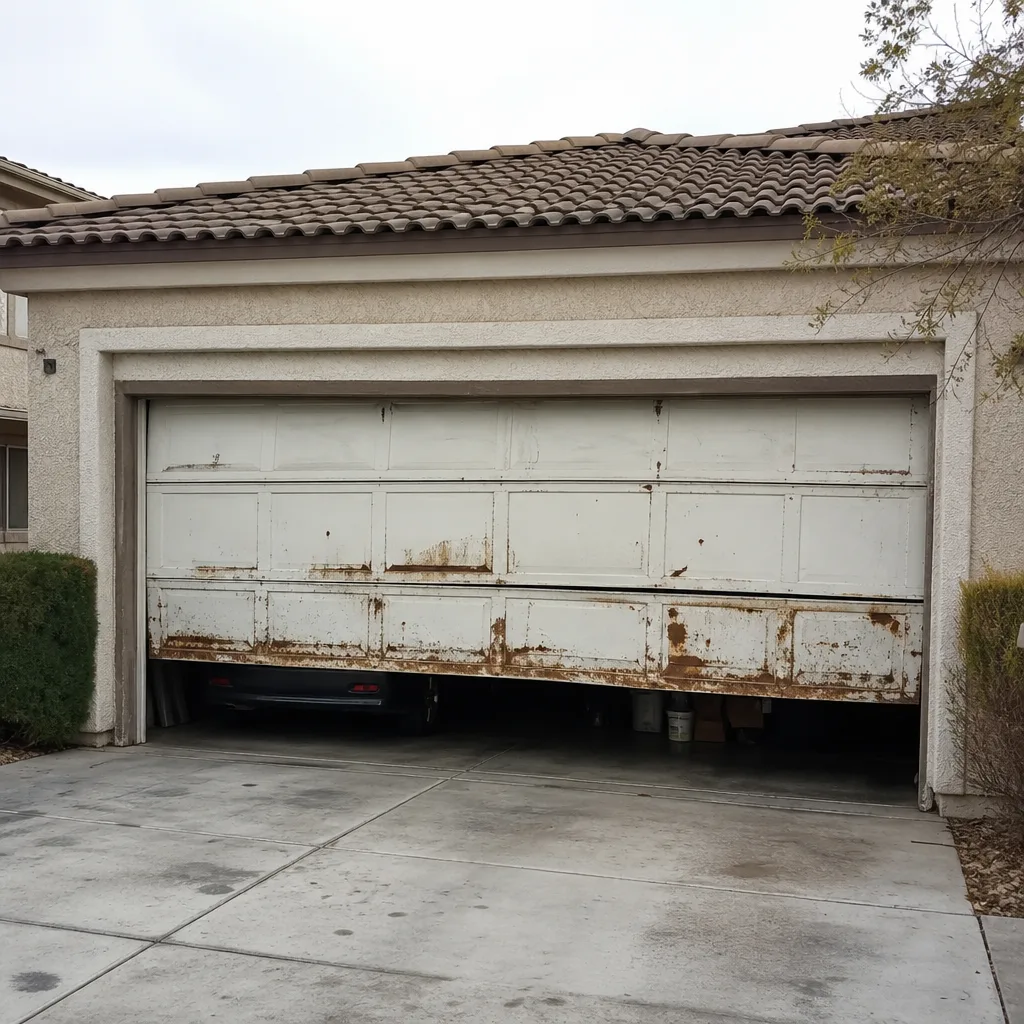 Before
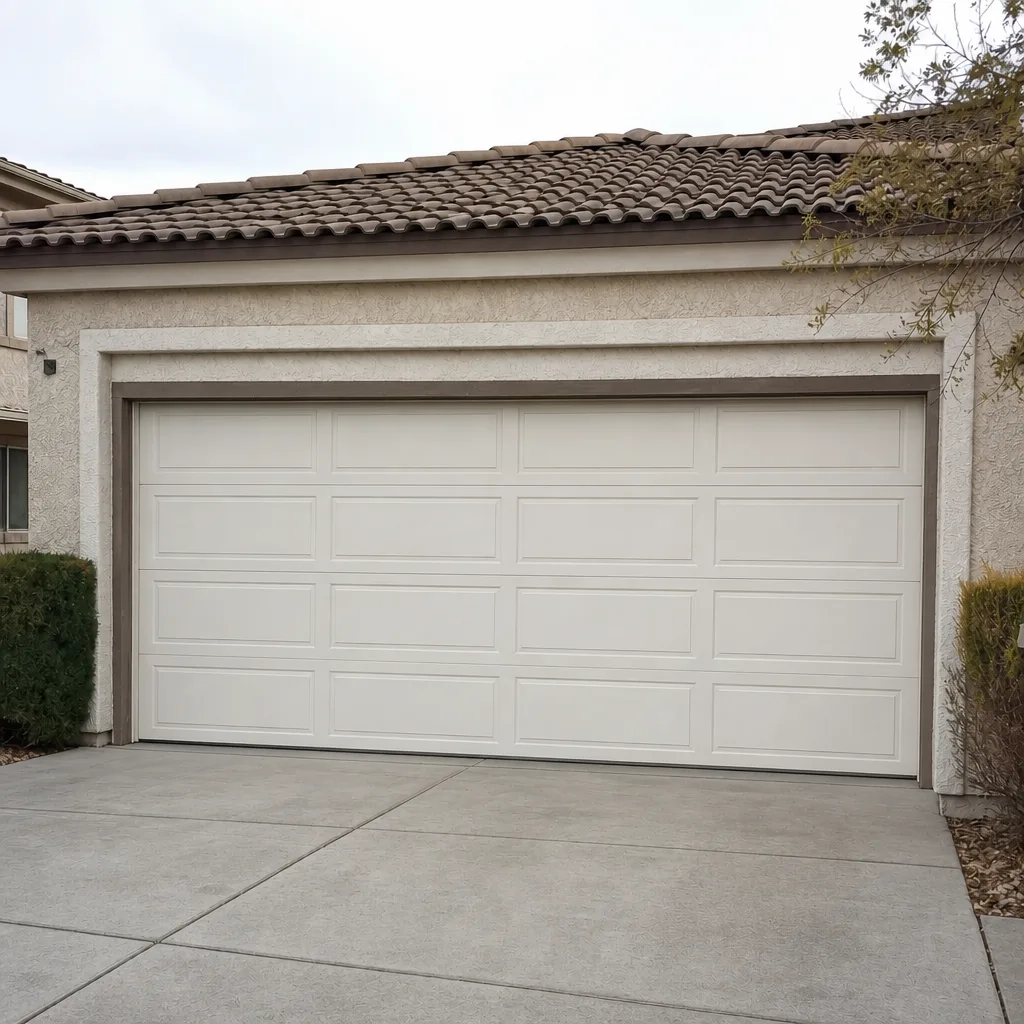 After
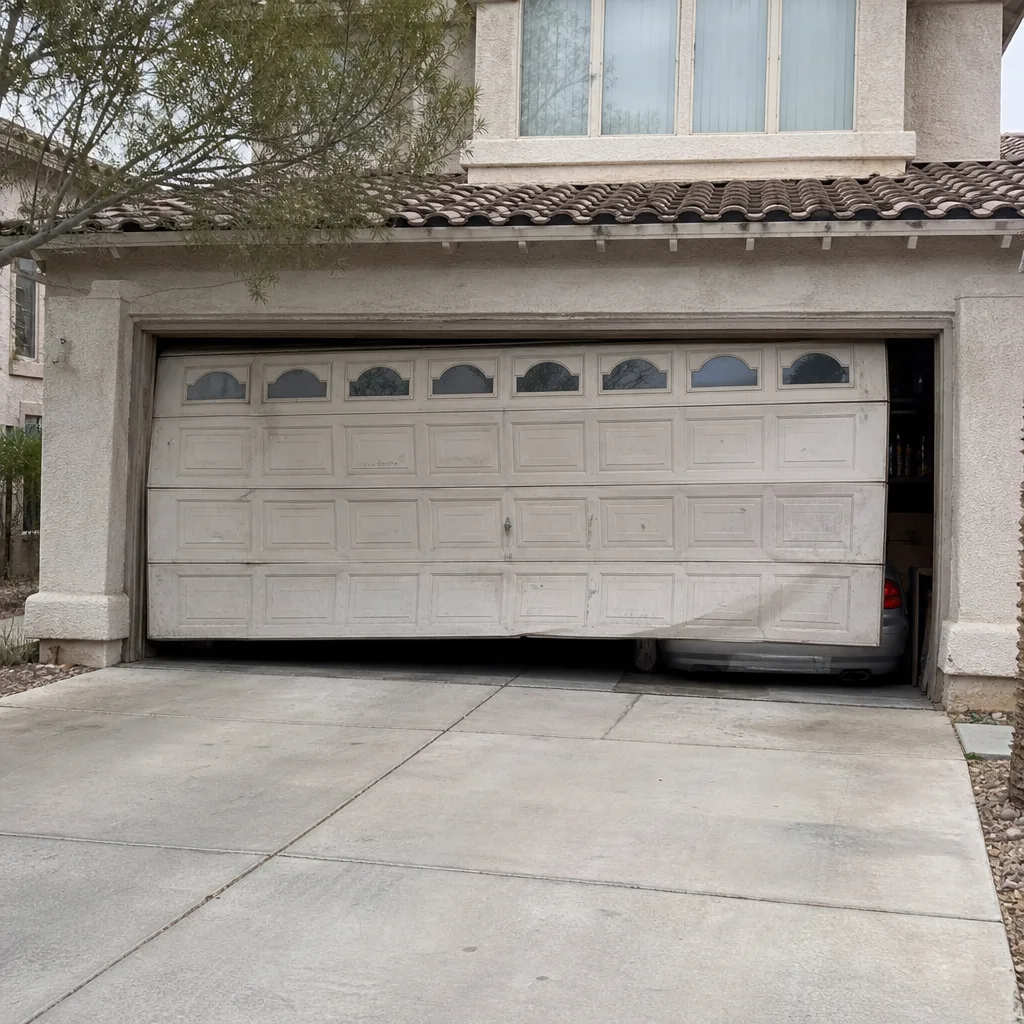 Before
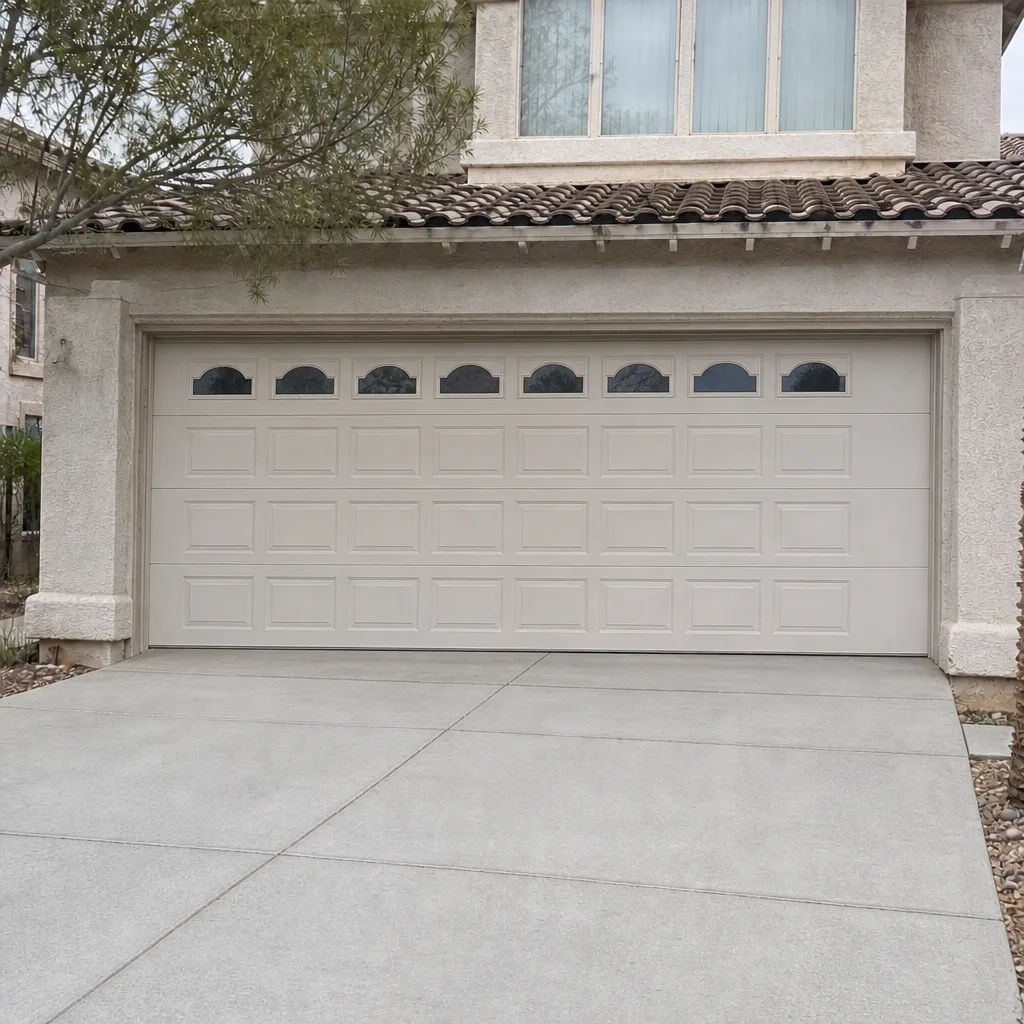 After
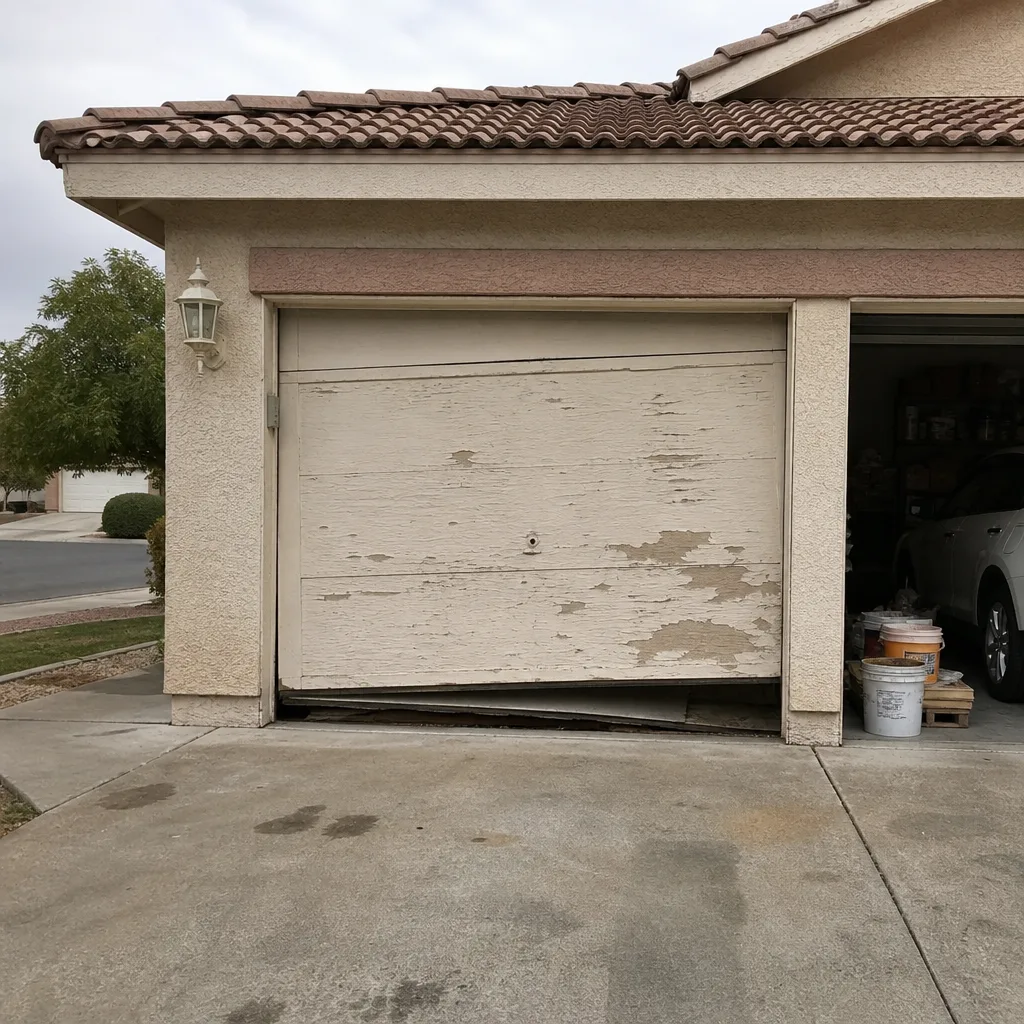 Before
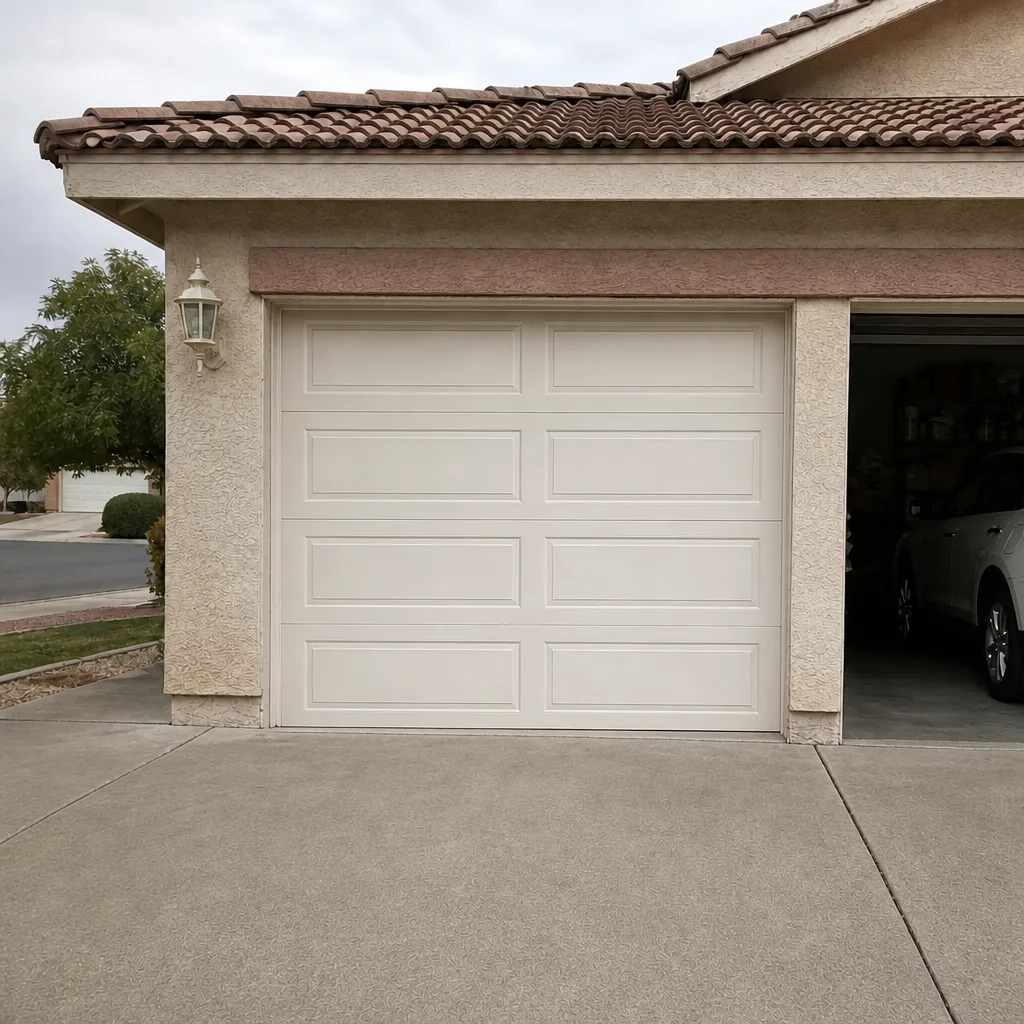 After
When to Call a Professional
If the door comes down crooked, slams to the floor, or makes a loud bang from the spring bar, stop cycling it and call. If you can’t lift the door by hand, that’s a spring or cable problem, not an opener problem, and it needs a technician. A weakening spring, a jammed track, a snapped cable, and any loose electrical wire are all reasons to call rather than watch and wait. Mainspring Garage Door Co. Summerlin offers free estimates in Summerlin – call (855) 608-8802. Our technicians have up to 10 years of experience, and every completed job is covered by our 90-Day Done Right Promise, stated in writing. When you call, a live person answers, day or night.
Frequently Asked Questions
Almost never, if the reverse happens at the same spot every cycle. That’s a limit-switch setting, not a sensor problem. Sensors fail randomly or only when something crosses the beam. A consistent early reverse is the opener thinking it has hit an obstacle because the down-limit is set too high. Call (855) 608-8802 for an exact quote on a travel adjustment – estimates are free.
The two-finger balance test tells you. Pull the emergency release, lift the door by hand to waist height, let go, and push with two fingers. A healthy door stays where you leave it and lifts easily. A weakening spring feels heavy, lurches at the bottom, or slams the last couple of feet. A loud pop from the spring bar that leaves the door too heavy to lift is a break, and that’s a same-day call.
No. We state the flat price before any work begins, and that price holds. If the technician finds the door needs a different part than expected, you hear the new price before the repair starts. If the diagnosis in your call turns out to be the actual fix, the quote is the quote. Call (855) 608-8802 for an exact quote – estimates are free.
Yes. Every technician is background-checked, uniformed on the job, and trained under our K.E.Y.S. values code, and every completed job is insured. If the work isn’t right, we come back – the 90-Day Done Right Promise is in writing, no arguing.
For urgent faults – a crooked door, a broken spring, or a door slamming shut – we dispatch same-day. The emergency line is answered by a live person around the clock. For scheduled work like a tune-up or opener replacement, we’ll give you a time window when you call, and a technician usually arrives with the parts already on the truck.
No. Torsion springs store enough energy to cause serious injury in an instant, and they have no safe home-repair path. Cables under tension are just as dangerous. If you hear the bang from the spring bar, disconnect the opener, don’t run the door, and call for a technician.
The Bottom Line
Troubleshooting is mostly about matching the symptom to the right bucket before anyone arrives. A door that reverses at the same spot needs a limit adjustment. A door that won’t lift feels heavy because the spring has failed. A crooked door that slams to the floor is a cable problem that shouldn’t be run again. Get those three straight and you save yourself the diagnostic fee, the second trip, and the parts you don’t need. For the rest, log what you see and hear, run the two-finger test, and call before a small symptom turns into a broken door. Mainspring Garage Door Co. Summerlin home is here when you’re ready.
For a free estimate in Summerlin, call Mainspring Garage Door Co. Summerlin at (855) 608-8802. A technician will come out, look at the door, and give you a flat price before any work starts. If it’s a tune-up, that’s an $89 Seasonal Tune-Up. If it’s a repair over $250, you get $50 off. And if you’d rather check our garage door installation in Summerlin page first, that’s the best place to start if you’re weighing repair against replacement.
Written by the team at Mainspring Garage Door Co. Summerlin.