
Last updated November 18, 2026
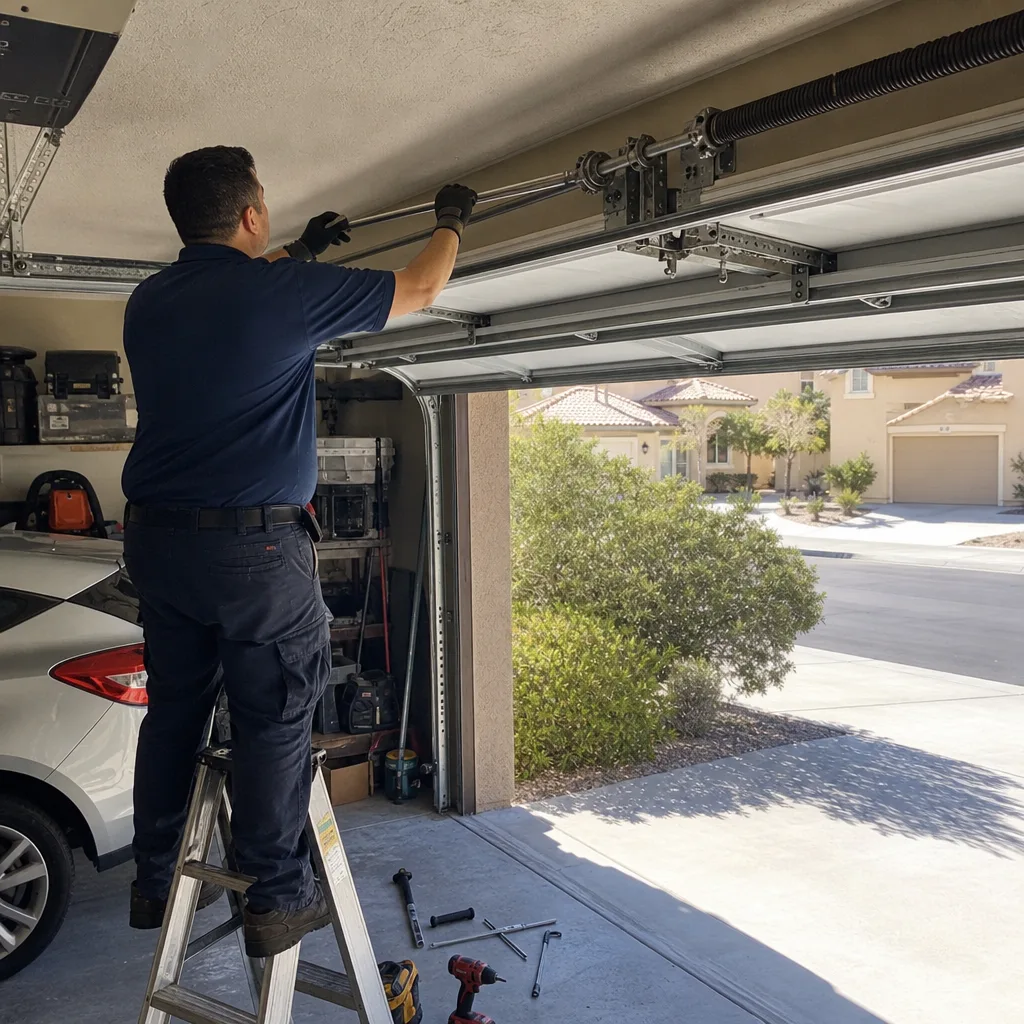
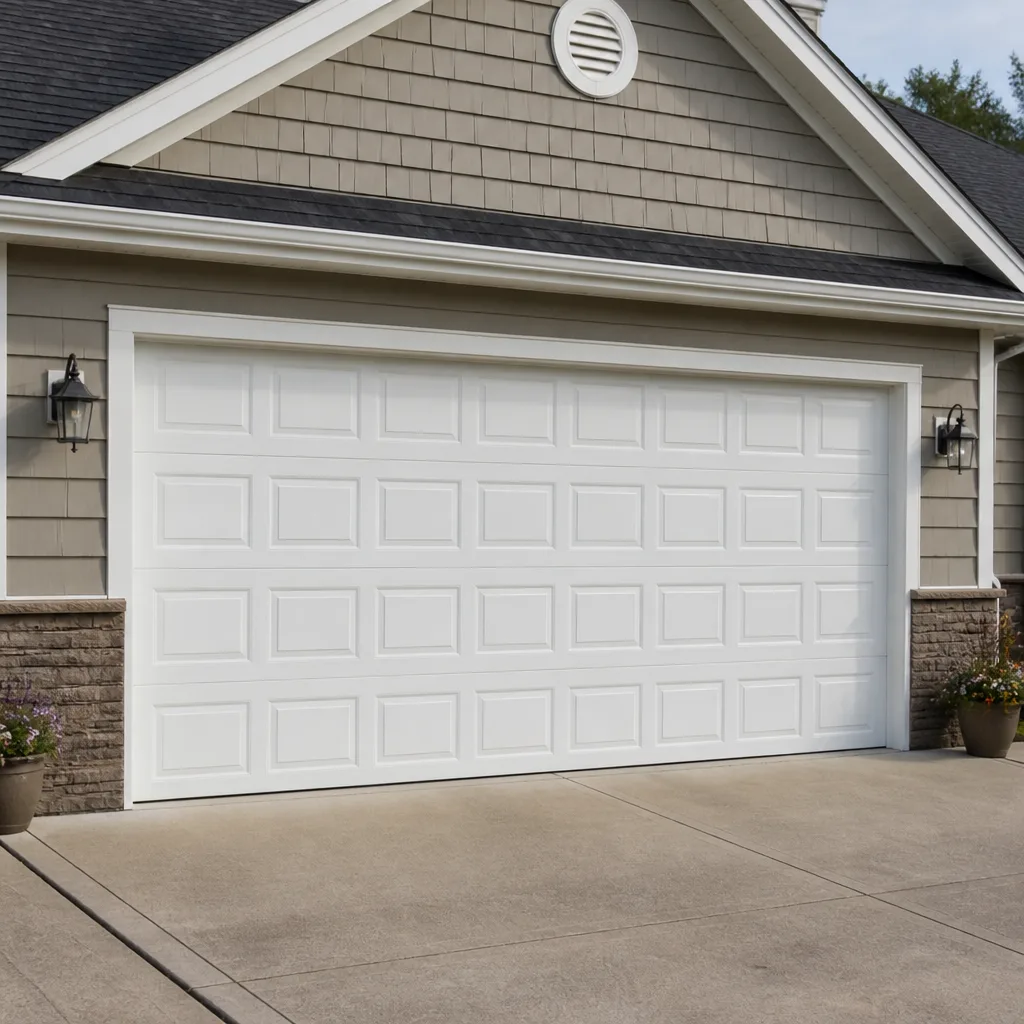 Raised-panel steel
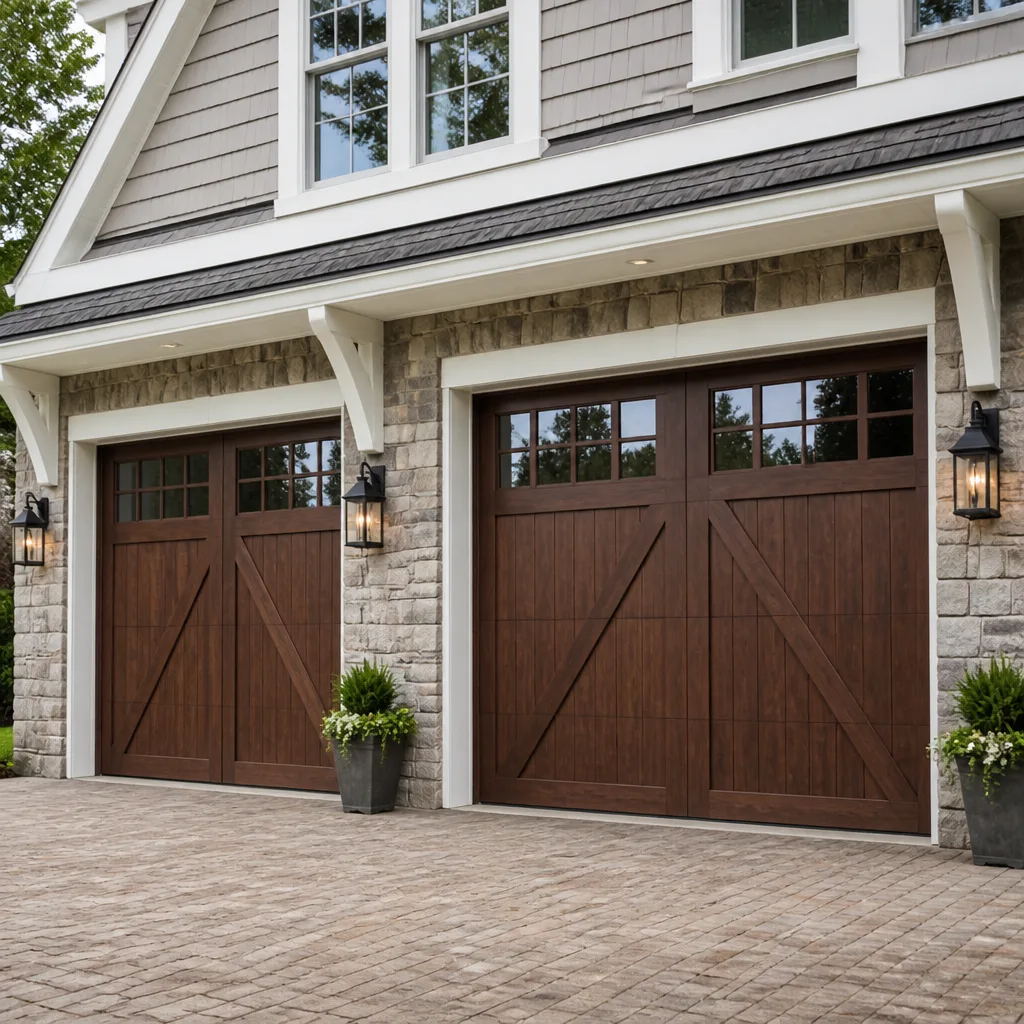 Carriage house
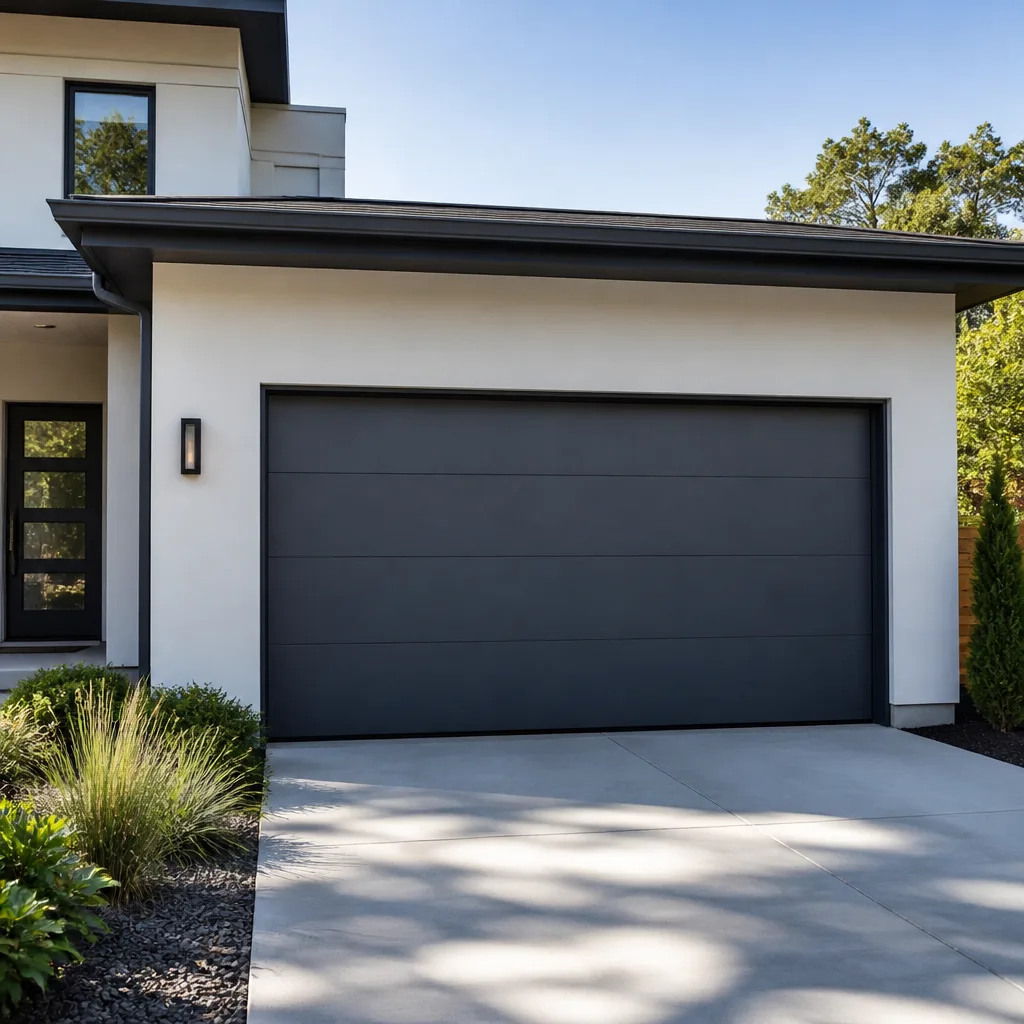 Modern flush
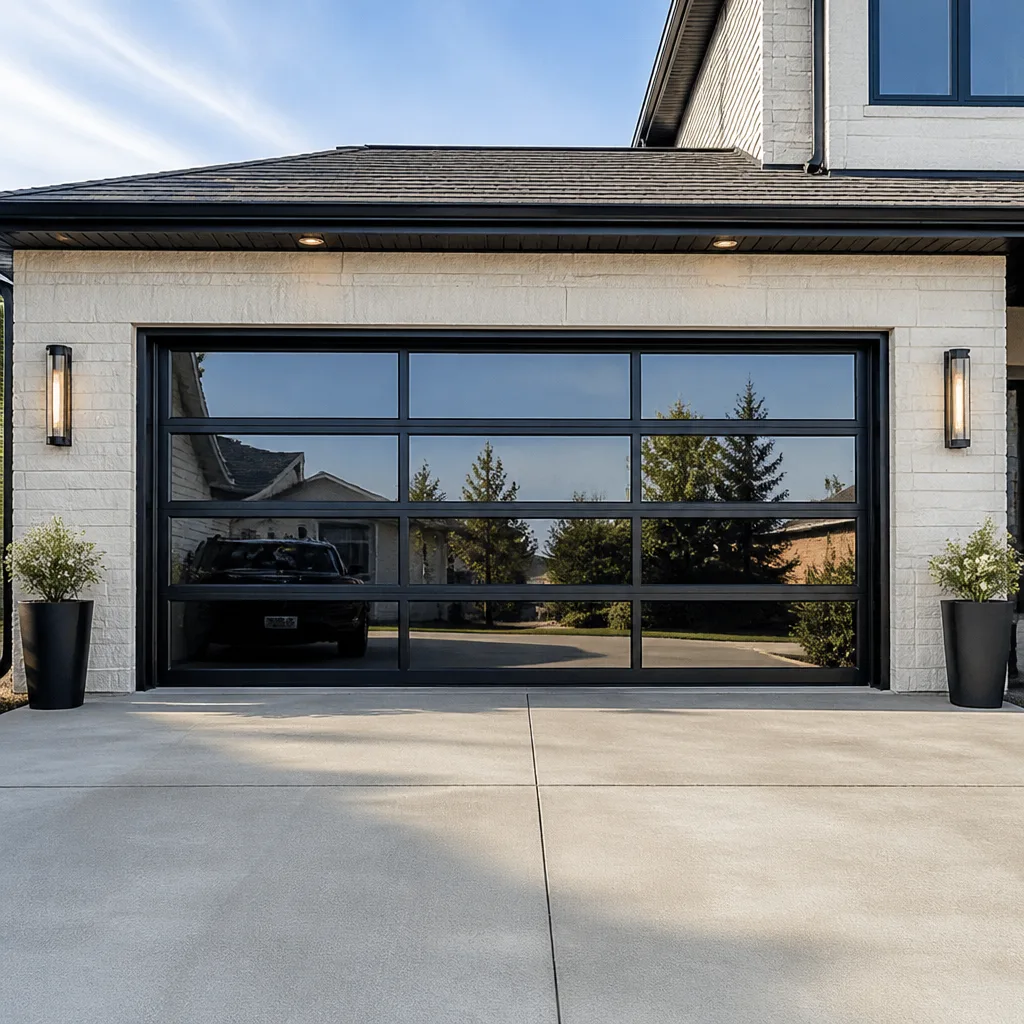 Full-view glass
 LiftMaster openers
 Chamberlain openers
Full 25-point door and opener safety check with every visit - springs, cables, rollers, tracks, and your LiftMaster or Chamberlain opener included
You get a price before we start. It does not change when the pro arrives.
Get your free estimateGarage Door Repair Warning Signs Every Homeowner Should Know
Most garage doors that fail outright gave months of notice first. The warning rarely arrives as a dramatic crash. It arrives as a slight change in rhythm, a scrape that wasn’t there last winter, or a door that suddenly takes fourteen seconds to open instead of nine. In Summerlin, where we’ve watched doors ride out 100-plus-degree summers and the occasional cold snap, the pattern holds: a worn torsion spring usually starts complaining weeks before it breaks. Notice the noise and you spend a little. Ignore it and you spend a lot more, often on an emergency call at night. What follows is a plainspoken catalog of the signals, what each one means mechanically, and how to tell the difference between cosmetic and urgent. Read it once and you’ll hear your door differently.
Quick Answer
A failing garage door usually announces itself weeks before it stops working, through three main signals: new or worsening sounds (grinding, popping, squealing), visual asymmetry (a door that rises crooked or hangs unevenly), and timing changes (a door that takes more than 12 to 15 seconds to open). Catching any of these early usually means a repair of a few hundred dollars. Waiting until the door won’t move at all often means a coil spring replacement plus cable service under pressure. In Summerlin, we see the same three signs play out in nearly every door that fails in a single visit’s worth of work.
Styles & brands we work with
- Raised-panel steel
- Carriage house
- Modern flush
- Full-view glass
- LiftMaster openers
- Chamberlain openers
Table of Contents
- 1. Listen First: What Your Garage Door Is Telling You
- 2. Watch the Door Rise: Spotting Uneven Cable Tension From Outside
- 3. The Slow-Open Test: When 12 Seconds Becomes a Warning
- 4. Daylight at the Edges: Weather-Seal Gaps You Can See From Inside
- 5. How Far Ahead Do Warning Signs Show Up?
- 6. What the Repair Actually Costs: Early Versus Emergency
- 7. A Monthly Three-Minute Check You Can Actually Keep
- 8. What Not to Do: The Danger in Self-Diagnosis
1. Listen First: What Your Garage Door Is Telling You
The loudest warning sign of an impending spring failure is silence. Specifically, it is the absence of the balanced, smooth hum you stopped noticing two years ago and replaced with a grinding cycle you have quietly accepted as normal. Sound is the first thing to go and the last thing most homeowners fix.
Here is what each sound is telling you, and how urgent it is:
- Grinding when the door starts to move usually means metal-on-metal friction in the tracks or rollers, or dry hinges. Urgency: medium. Left alone, grinding wears the rollers down to nothing and puts strain on the opener. In Summerlin, the dry desert air accelerates this; hinges that would stay lubricated elsewhere dry out fast.
- Loud popping or snapping under the door is the classic sound of a torsion spring gathering tension and releasing it in unsatisfying increments. This is your highest-priority sound. On a 15 to 20-year-old door, popping is often the last warning before the spring gives way completely.
- Squealing or squeaking as the door travels up and down points to worn bearings, a dry roller shaft, or a bent track. Urgency: medium-low. Annoying but rarely dangerous on its own, though worth fixing before it worsens.
- Clunking or banging at the very top of travel often means the opener’s drive gear is failing, or the door is hitting a mechanical stop. Urgency: medium to urgent. A failing garage door opener in Summerlin that finishes with a bang is one that’s likely to stop working entirely before long.
In Summerlin, we’ve seen doors go years without a drop of lubrication because the climate never reminded anyone. The bearings aren’t fighting winter salt, and the rollers aren’t getting soaked. That’s the trade-off: less rust, more silent wear. Once a season, take three minutes to listen to your door with the light off and nothing else running. You’ll hear problems your neighbors never will.
2. Watch the Door Rise: Spotting Uneven Cable Tension From Outside
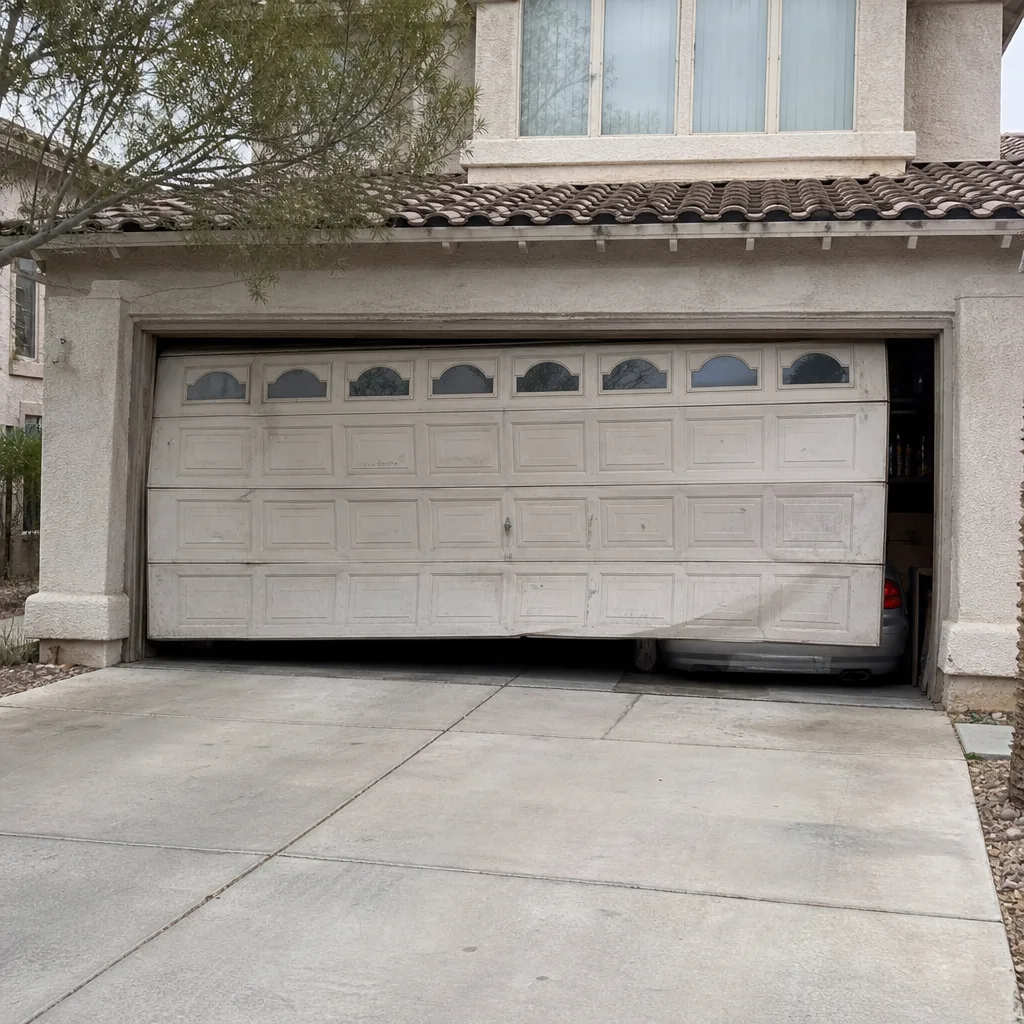
Step outside and watch the door from a few feet back while someone opens it from the inside. What you’re checking for is symmetry. A door in good shape rises as a single unit, level and even. A door with a cable problem shows it in the tilt.
Here’s the visual checklist:
- Look at the bottom edge as the door starts to lift. If one side rises higher than the other by more than an inch or two, one cable is either slack, stretched, or frayed. That asymmetry strains the panels and the tracks every cycle.
- Watch the gap between the door and the left and right tracks. The gap should be equal. If it’s visibly tighter on one side, the door is being pulled off-center. This is a cable or drum problem, not a track problem, no matter how it looks.
- Check the cables themselves with the door closed. You should see the cable sitting evenly against the drum at the top of the track. If it’s birdcaged (coiled against itself), off the drum, or visibly frayed with wire ends poking out, stop using the door. This is a genuine safety issue, not a maintenance item.
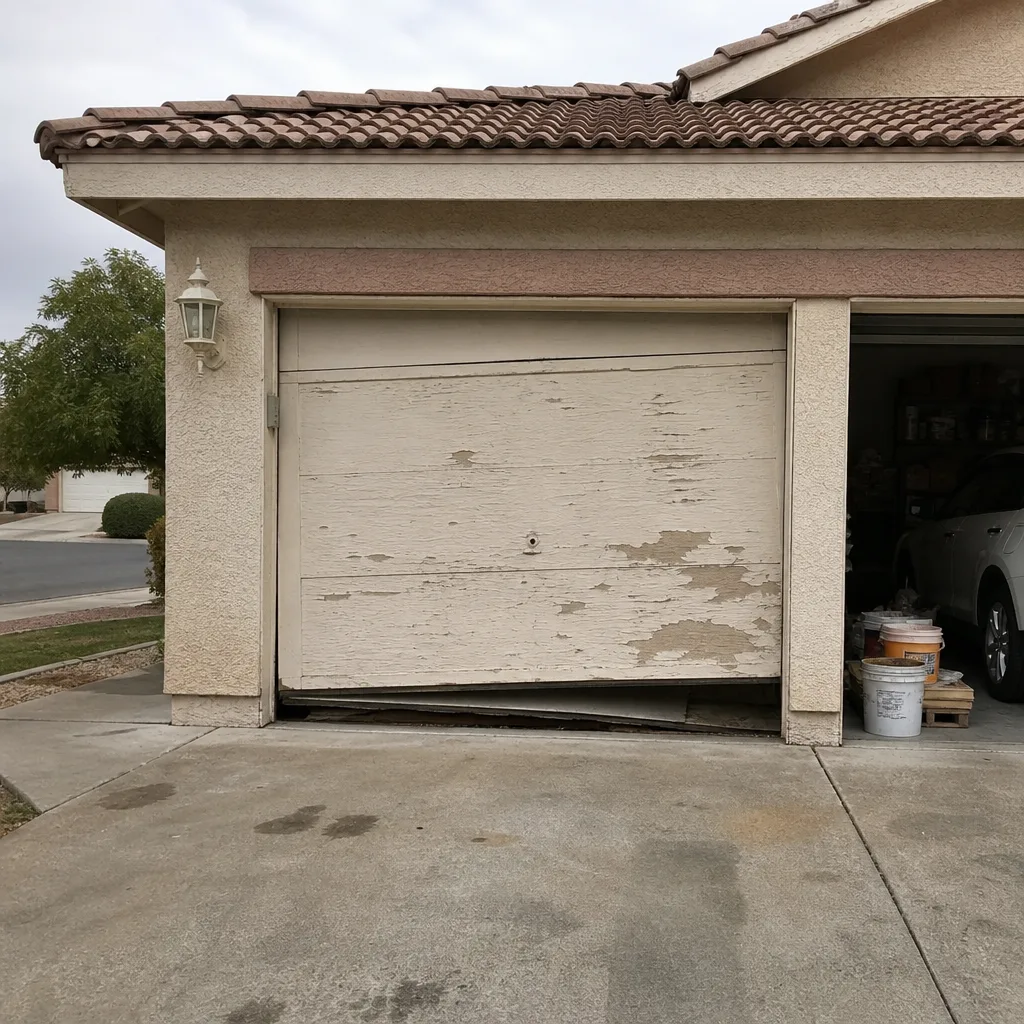
- Look for sagging or bent panels. A single panel out of alignment usually means the door has been opened many times while off-tension, and the stress has started showing.
Cable work and spring tension are not a homeowner’s job. The cables on a standard residential door carry hundreds of pounds of stored force from the springs, and a cable that lets go under tension can cause serious injury. We’re not being cautious to protect our trade; the physics are unforgiving. If you see asymmetry, slack, or a birdcaged cable, treat it as a “call today, don’t use the door” condition. In Summerlin, doors facing direct afternoon sun along the west side of the valley get more heat cycling on the panels and cables than those in shaded parts of the community, and we see more panel and cable wear on those west-facing doors as a result.
3. The Slow-Open Test: When 12 Seconds Becomes a Warning
A healthy residential garage door opens in roughly 8 to 12 seconds on a standard opener. If yours has crept past 12 to 15 seconds, something is asking for attention. The most common cause is a torsion spring that has lost tension, which means the opener is fighting the door’s full weight instead of being assisted.
Here is how to run the test:
- Disconnect the opener first. Pull the red emergency release handle so the door is on its own. Lift the door by hand about halfway. A properly balanced door stays roughly where you put it. A door that sinks on its own, or feels heavy the whole way up, has a spring problem.
- Reconnect and time it. Count the seconds from the moment the door begins moving to the moment it fully opens. Three runs is a fair sample.
- Roll it up against your memory. If it feels slower than it did a year ago, or you’ve recently increased the opener’s force or travel adjustment to make it work, the spring is the likely culprit. So is a failing opener drive gear, or a door that’s heavier than it was because a panel has warped.
We see this more often than any other warning sign in Summerlin, because the same cool, dry air that spares a door from rust also lets the springs work through their full cycle count with no moisture to slow oxidation. A torsion spring rated for 10,000 cycles is only good for about 7 to 9 years of normal daily use. If you’ve been in the same house for a decade or more, the spring on your door is likely near the end of its life. A slow door that hasn’t yet broken its spring is still a pending call, not a “wait and see.”
4. Daylight at the Edges: Weather-Seal Gaps You Can See From Inside
Close the garage door, stand inside, and turn off the lights. If you can see daylight around the sides, top, or bottom, your weather seal has failed. This is not cosmetic. In Summerlin, gaps along the edges are a two-part problem: they let oven-hot air into the garage, and they let small animals, dust, and insects through. They also tell you the door isn’t closing flush against the frame, which usually points to a track alignment issue, a bent bottom panel, or a worn threshold seal that’s been flattened over the years.
What to check:
- Bottom seal: The rubber astragal along the bottom edge should make contact along its full length. If it’s flattened, cracked, or missing in spots, it’s due. This is a small, inexpensive fix and one of the most worthwhile things to do before a Summerlin summer.
- Side and top seals: The strip along the door jambs should overlap the door edge by about a quarter inch. If it’s shrunk, torn, or hanging loose, hot air gets in fast.
- Light gaps at the corners: A clear gap that doesn’t close no matter what you try often means the track has been knocked out of alignment, or the panels have shifted.
Seal replacement is a job we finish in one visit and it’s the kind of thing that quietly pays you back, especially if the garage shares a wall with the house or has anything heat-sensitive stored in it. When you’re ready to bring the door back to tight, our garage door repair in Summerlin service routinely includes a full seal assessment.
5. How Far Ahead Do Warning Signs Show Up?
In our experience, the most common failure sequence plays out over weeks, not hours. A torsion spring that finally snaps is one that has been popping or losing tension for two to six weeks. A cable that fails is one that has been visibly fraying for a similar stretch. The opener that dies was sluggish for a month first. That window is why warning signs matter: it’s the difference between a scheduled repair during the workday and a Sunday-night emergency with the car trapped inside.
Here is the rough timeline we see in Summerlin:
- Popping or grinding begins: typically 2 to 6 weeks before a spring fails.
- Slow-open creep: usually 3 to 8 weeks of gradual slowdown before the door stops responding.
- Visual asymmetry: often 1 to 3 weeks between the first visible tilt and a cable letting go.
- Daylight at the edges: a slow, seasonal problem that rarely causes outright failure but steadily worsens until the seal is replaced.
The less obvious point is that Summerlin’s summer heat pushes this timeline in both directions. High temperatures soften and stress seal material and lubricants, while the dry air keeps the springs from rusting into a slow, obvious failure. A door that gives you only two weeks’ warning here might have given three in a wetter climate.
6. What the Repair Actually Costs: Early Versus Emergency
The cost difference between catching a warning sign and waiting until the door won’t move is substantial. The next two paragraphs are ballpark ranges for the Summerlin area; every job gets a flat price quoted and agreed before we start, so you’ll know exactly where yours lands.
- Torsion spring replacement (caught early): typically a routine scheduled repair, often under the $50 Off Any Repair Over $250 standing offer.
- Cable replacement or track realignment (caught early): a scheduled single-visit job.
- Roller and hinge service plus lubrication plus seal replacement: modest, and one of the smartest routine investments you can make.
- Emergency repair after the door stops moving: higher, because you’re paying for after-hours response as well as the repair.
- Panel damage from a door that fell or mis-ran: the highest category, and the one early inspection most reliably prevents.
We can’t put specific dollars on a page because the honest answer depends on your door, opener, and what we find – and because committing to a number before we’ve seen your door is the kind of promise you’d be right not to trust. What we will promise is this: the price is quoted and agreed before any work starts, and the 90-Day Done Right Promise covers the work in writing. If it’s not right, we come back at no charge. No arguing, no paperwork to fill out.
For homeowners who have a written estimate from another shop, we’ll take a second look for free. That’s a standing offer, not a limited-time one.
7. A Monthly Three-Minute Check You Can Actually Keep
Ten minutes a year, once a month, is enough to catch every warning sign in this guide. Here is the whole routine:
- Listen. Run the door up and down once with nothing else going on. Note any new sound.
- Watch it rise. Step outside and look at the bottom edge for tilt.
- Time it. Count seconds on a single open cycle.
- Light test. Close the door and look for daylight at the edges.
- Balance test. Disconnect the opener once a quarter and lift the door by hand. It should stay where you put it.
Write down the approximate time to open on a sticky note and leave it on the wall. In two years, you’ll know more about your door than most of your neighbors do, and you’ll know exactly when to call. In a Summerlin subdivision where most of the homes were built in the same decade, that same spring is going out on every door on your street at about the same time. The neighbors who noticed call before the failure. The neighbors who didn’t call after.
8. What Not to Do: The Danger in Self-Diagnosis
You can safely check all of the above. You can safely watch, listen, time, and observe. What you cannot safely do is loosen a torsion spring, wind or unwind a drum, adjust a cable, or remove a bottom bracket. Those parts hold the entire weight of your door, and they hold it as stored energy that does not politely release when a bolt turns. Every year, homeowners across the country are seriously injured attempting this work.
There’s a second reason: an improperly set spring can cause the door to fall on a person or a car. That’s not a repair bill; it’s a safety incident. Our direction is simple. Diagnose by observation, then call a trained technician to make any adjustment that involves the springs, cables, or brackets. That’s the kind of work our technicians trained as journeymen handle on every visit, and it’s why we send a trained tech rather than a generalist. The door is quiet when the work is done right. That’s the standard.
Common Mistakes to Avoid
- Accepting a grinding cycle as “just what it sounds like now.” It wasn’t two years ago. It won’t be tomorrow if you ignore it. Grinding is friction, and friction always has a cause worth naming.
- Increasing the opener’s force setting to make a slow door work. That’s masking a spring problem and pushing strain onto the opener, which will fail in response. The opener isn’t weak; the spring is tired. Fix the right part.
- Treating a daylight gap as cosmetic. In Summerlin, a seal gap lets 110-degree air straight into the garage all summer. That’s a small energy cost every month that adds up to more than the seal replacement.
- Calling the cheapest bid on an emergency. An emergency van with no stocked parts comes twice. A second trip and a second flat price is how “cheap” becomes expensive. Call the shop that carries springs and cables on the truck.
- Skipping lubrication because “it doesn’t rain here.” It doesn’t rain here, which is exactly why the rollers and hinges dry out faster than anywhere else. Lubricate those parts once a season.
- Letting a written estimate expire without a second opinion. We’ll review any written estimate for free. It costs you nothing to confirm the price is fair, and a free guarantee against a bad bill is worth the phone call.
- Assuming a 15-year-old door is “still fine.” It may be. But 15 years is past the average spring’s cycle life, and the warning signs are your best defense. Watch for them rather than wait for a failure.
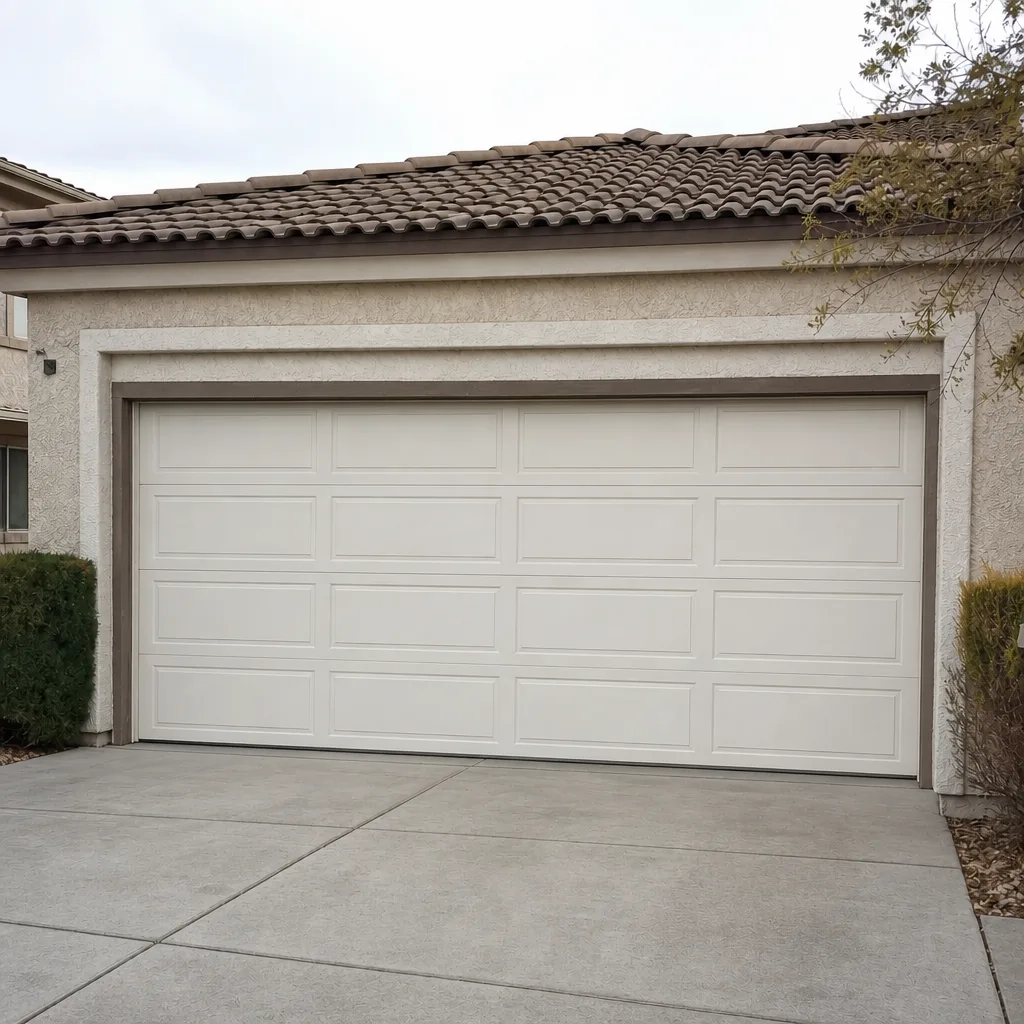
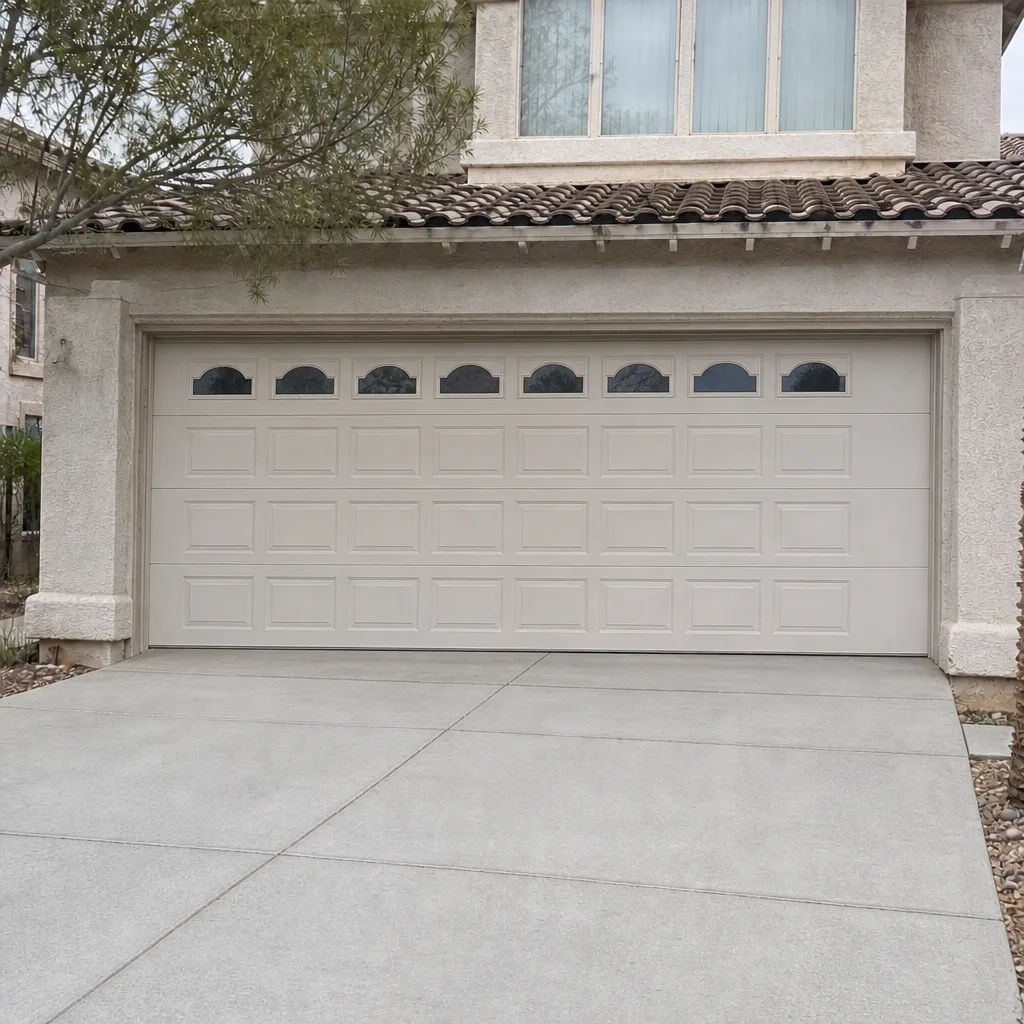
See the difference
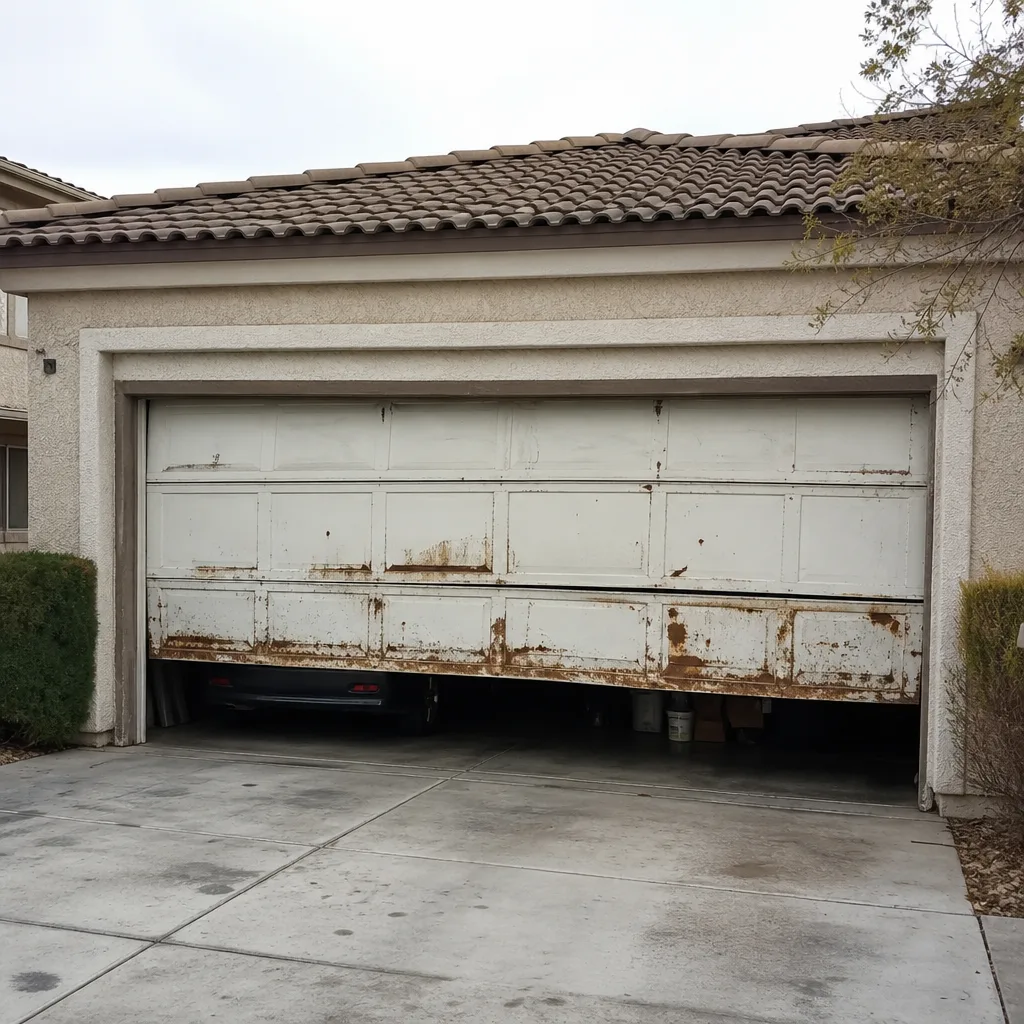 Before
 After
 Before
 After
 Before
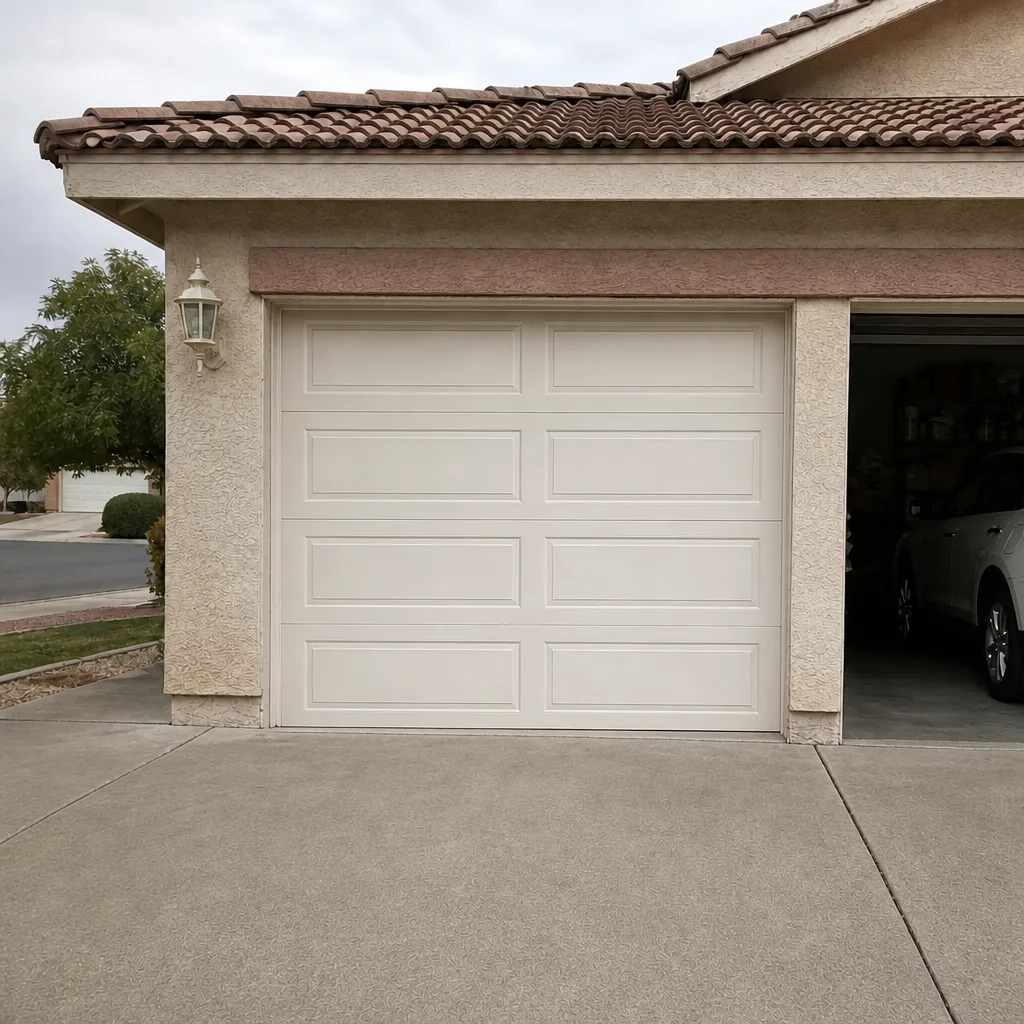 After
When to Call a Professional
Call a professional if you hear popping from the springs, see a birdcaged or frayed cable, notice asymmetry in the door as it rises, or if the door has slowed to more than 12 to 15 seconds on open. Also call if the door won’t open at all, is balanced on the opener (falls on its own when released), or if your opener’s light is blinking in a code pattern you don’t recognize. Any of these deserves an inspection. Our technicians arrive with springs, cables, and openers on the truck so most visits finish in a single trip, and every job carries the 90-Day Done Right Promise in writing. Mainspring Garage Door Co. Summerlin offers free estimates – call (855) 608-8802 for a free estimate.
Frequently Asked Questions
The first warning sign is usually a new or worsening sound, most often popping from the springs or grinding in the tracks, weeks or even months before the door stops working. In Summerlin, the most common early notice is a slow-open problem, where the opener fights a spring that’s lost tension. Call (855) 608-8802 for an exact quote – estimates are free.
Days, not weeks, if the sign is popping springs or a frayed cable. A slow door or a squeak can wait until it’s convenient, but visible asymmetry or a birdcaged cable is a “stop using the door” condition. When in doubt, don’t open it – call (855) 608-8802 for a same-day assessment.
Most routine repairs fall into the few-hundred-dollar range; a torsion spring replacement is at the higher end of that and a roller and hinge service is at the lower end. Emergency repair after the door stops moving costs more than the same repair done proactively. The price is always quoted and agreed before any work starts. Call (855) 608-8802 for a free second opinion on any written estimate.
Yes – Mainspring handles same-day repair calls and after-hours emergencies, and our phones are answered by a live person 24 hours a day. Call (855) 608-8802 and we’ll tell you honestly how soon we can be there. Jobs that require a new door or opener are measured and scheduled rather than same-day, and we’ll give you a written price before we order anything.
No. The flat price is quoted and agreed before any work begins, and it does not change mid-job. The only reason it might change is if you and our technician agree to add work on the spot, which we’ll put in writing first. Call (855) 608-8802 for an exact quote – estimates are free.
Yes. Our technicians are background-checked, uniformed, and trained as journeymen, and every job is insured and backed by the 90-Day Done Right Promise in writing. We’re factory-familiar with all major brands including LiftMaster, Chamberlain, Genie, Clopay, Amarr, Wayne Dalton, Craftsman, and Raynor, so we walk in already knowing your door. Call (855) 608-8802 with the brand and model if you have it and we’ll be better prepared.
The Bottom Line
Your garage door is talking to you every day. It’s telling you whether the springs are healthy, whether the cables are pulling evenly, whether the seals are tight, and whether the opener is working harder than it should. The signal to listen for first isn’t a new noise. It’s the loss of the smooth rhythm you stopped noticing, replaced by something you’ve quietly accepted. Train yourself to hear that change, and you’ll catch every warning sign in this guide, usually weeks before it becomes a failure. In Summerlin, doors age on a predictable schedule; so do the springs, cables, and seals on every door on your block. The homeowner who catches them early spends less, waits less, and never has a car trapped in the garage on a Tuesday morning.
If anything in this guide matches what your door is doing right now, call us. We’ll listen, tell you honestly what we think is going on, and give you a written flat price before any tool comes out of the truck. No surprises on the bill. No arguing about the guarantee. Just a square deal from people who will still be here when it matters.
Written by the team at Mainspring Garage Door Co. Summerlin.