
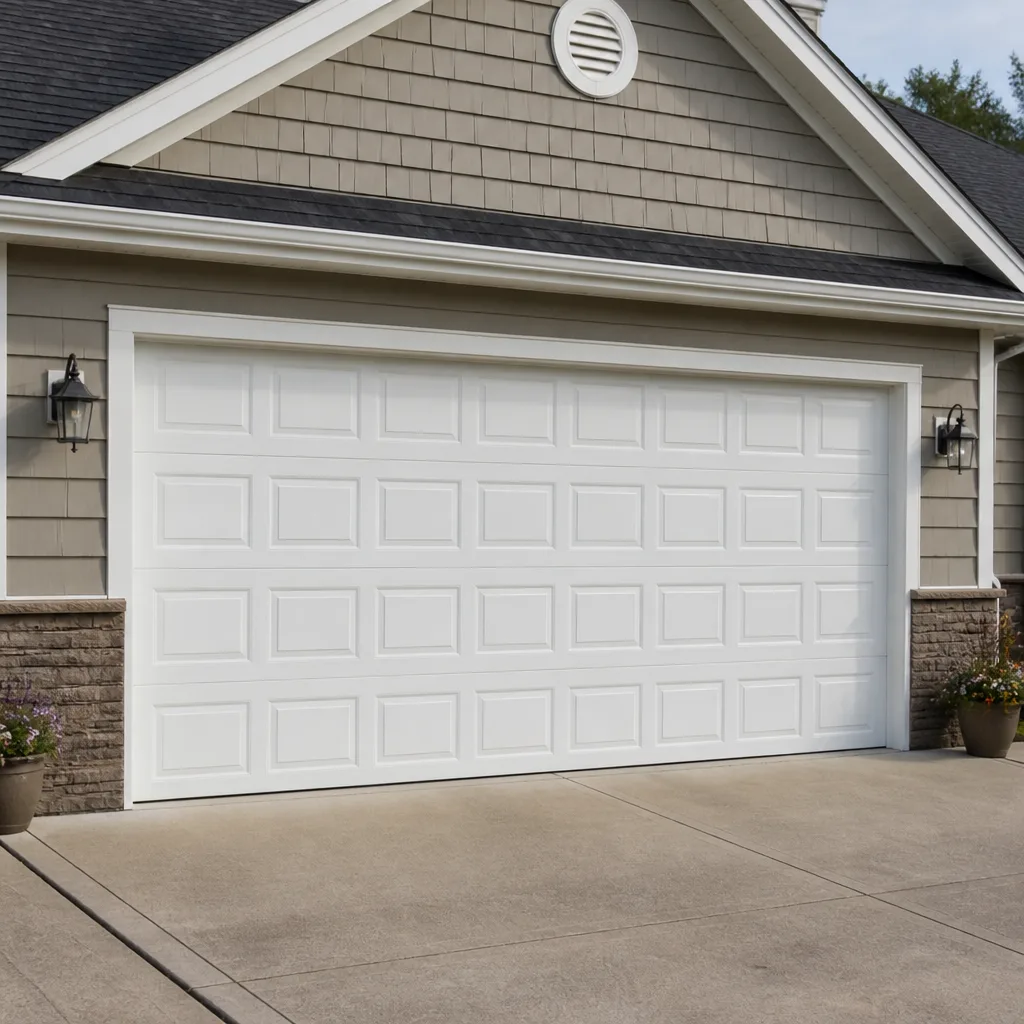
 Raised-panel steel
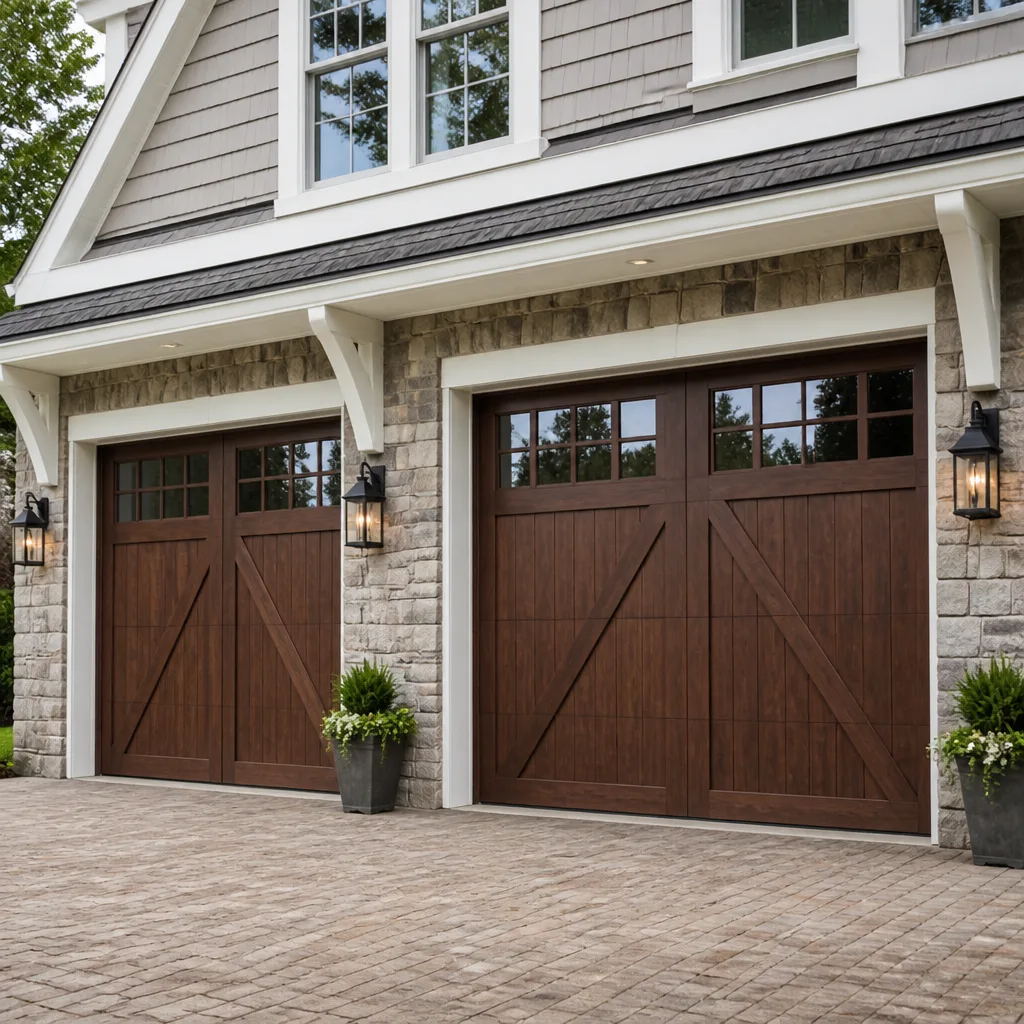 Carriage house
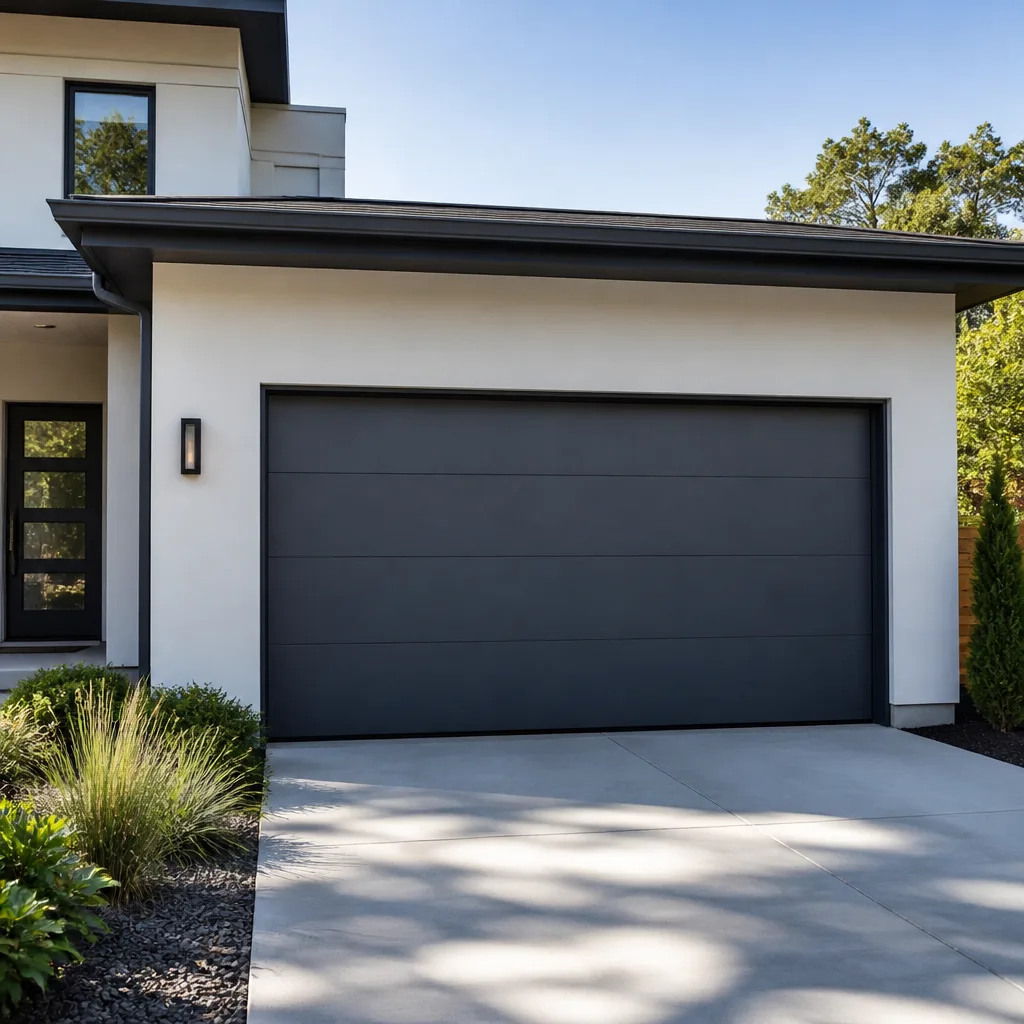 Modern flush
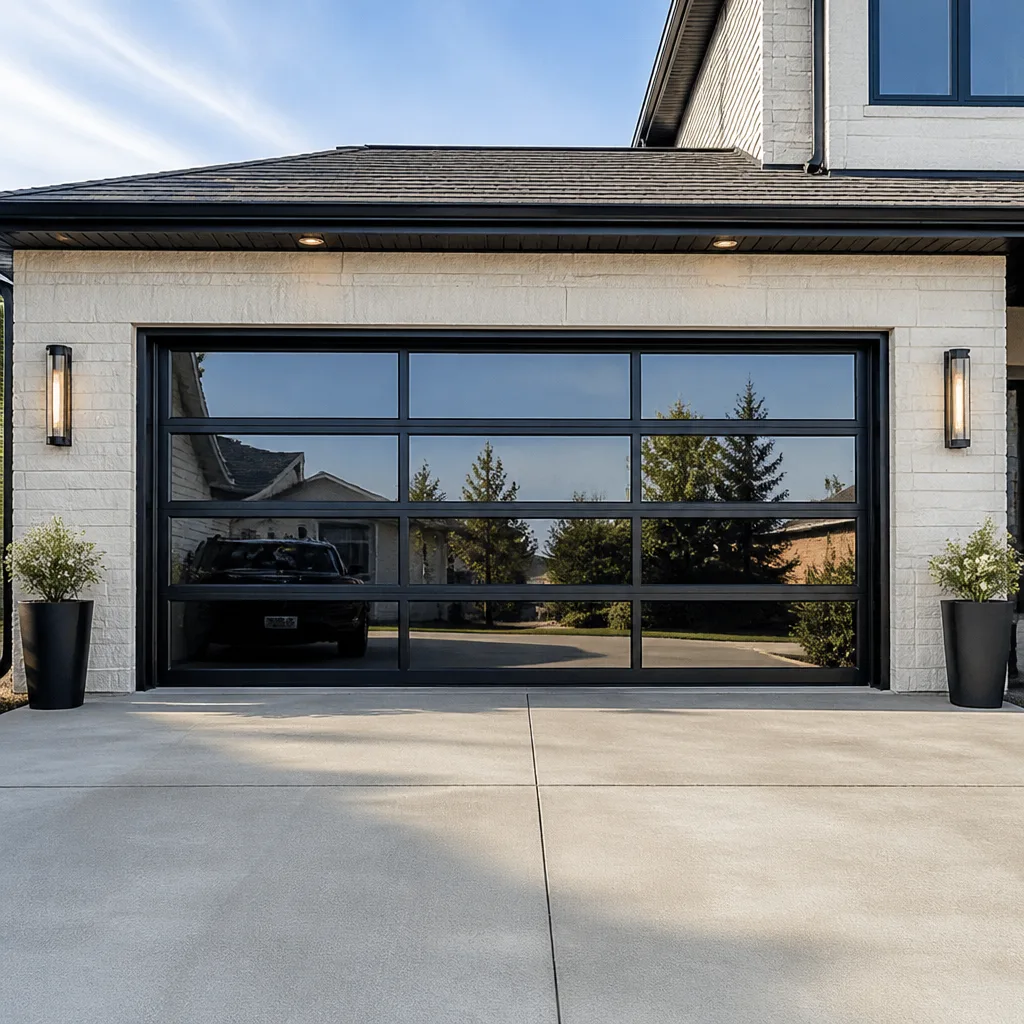 Full-view glass
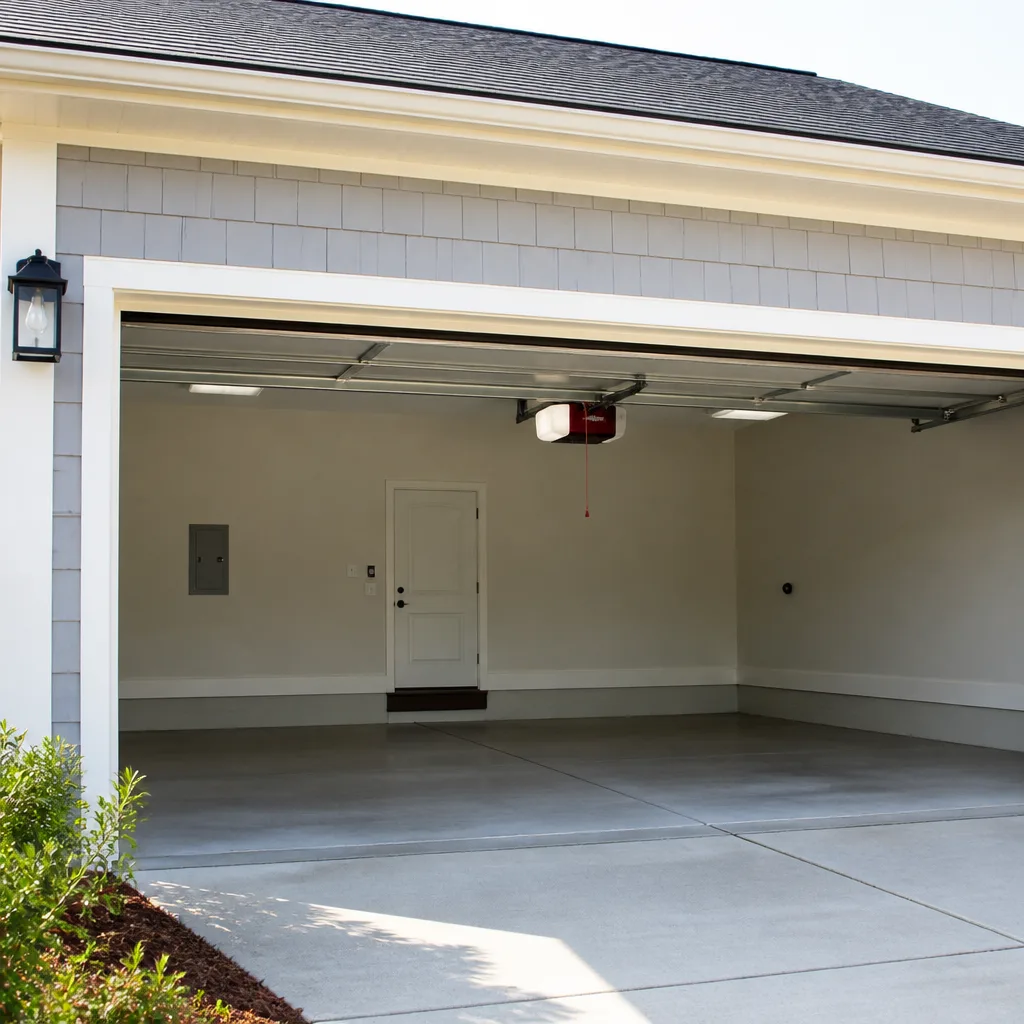 LiftMaster openers
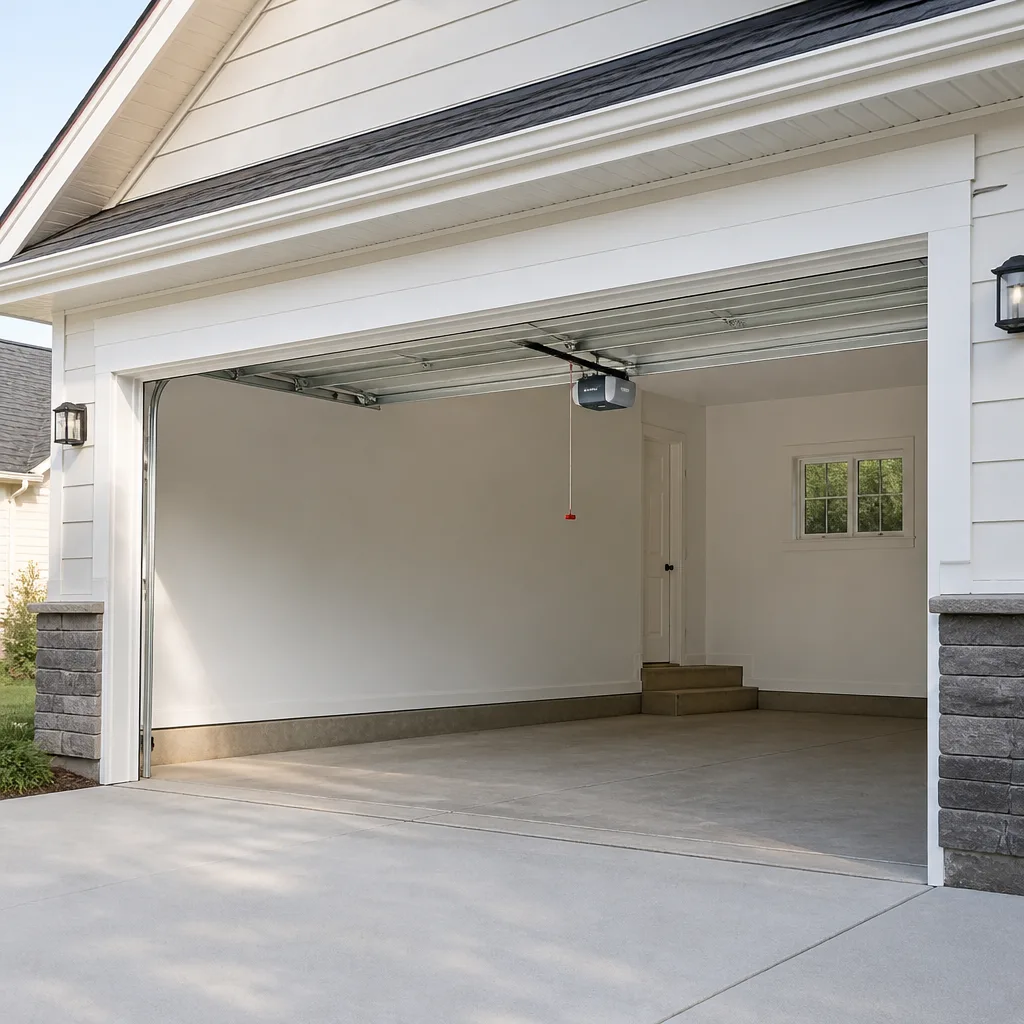 Chamberlain openers
Full 25-point door and opener safety check with every visit - springs, cables, rollers, tracks, and your LiftMaster or Chamberlain opener included
You get a price before we start. It does not change when the pro arrives.
Get your free estimateStyles & brands we work with
- Raised-panel steel
- Carriage house
- Modern flush
- Full-view glass
- LiftMaster openers
- Chamberlain openers
See the difference
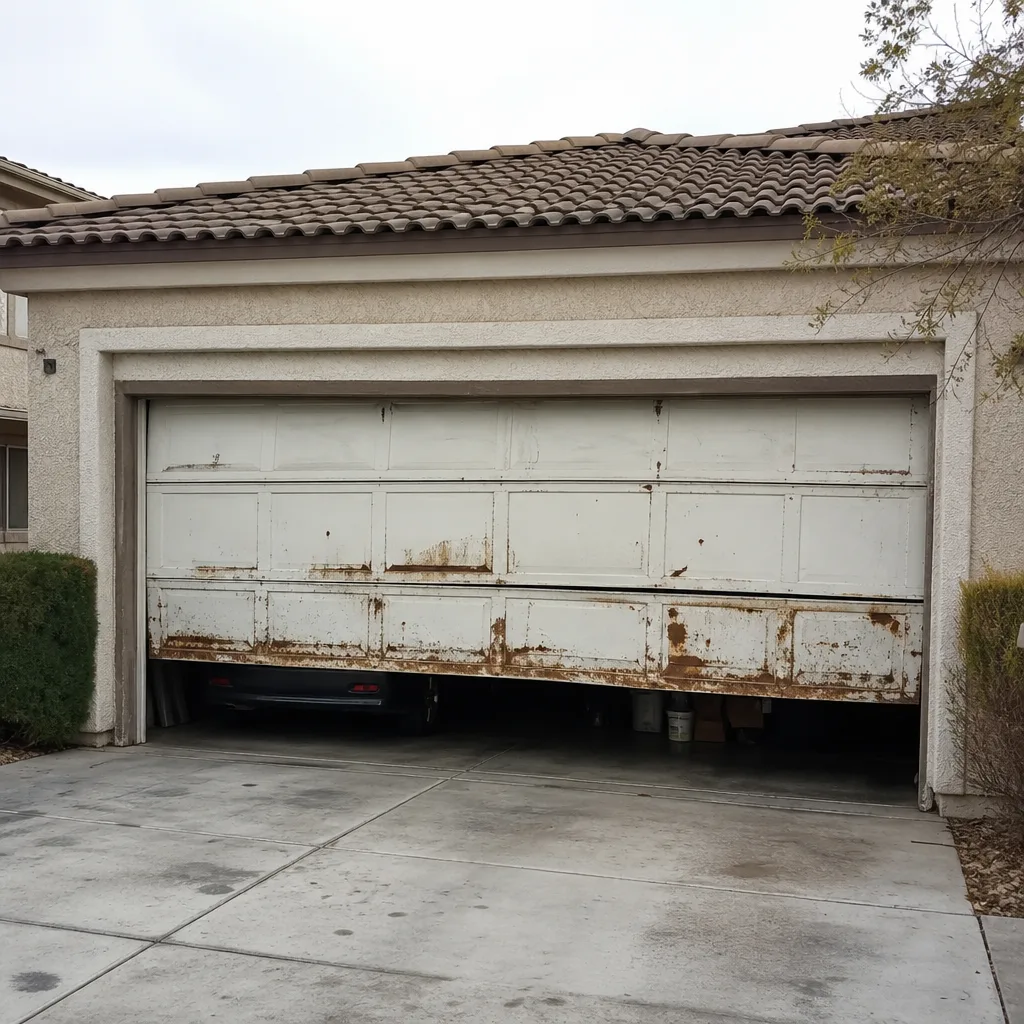 Before
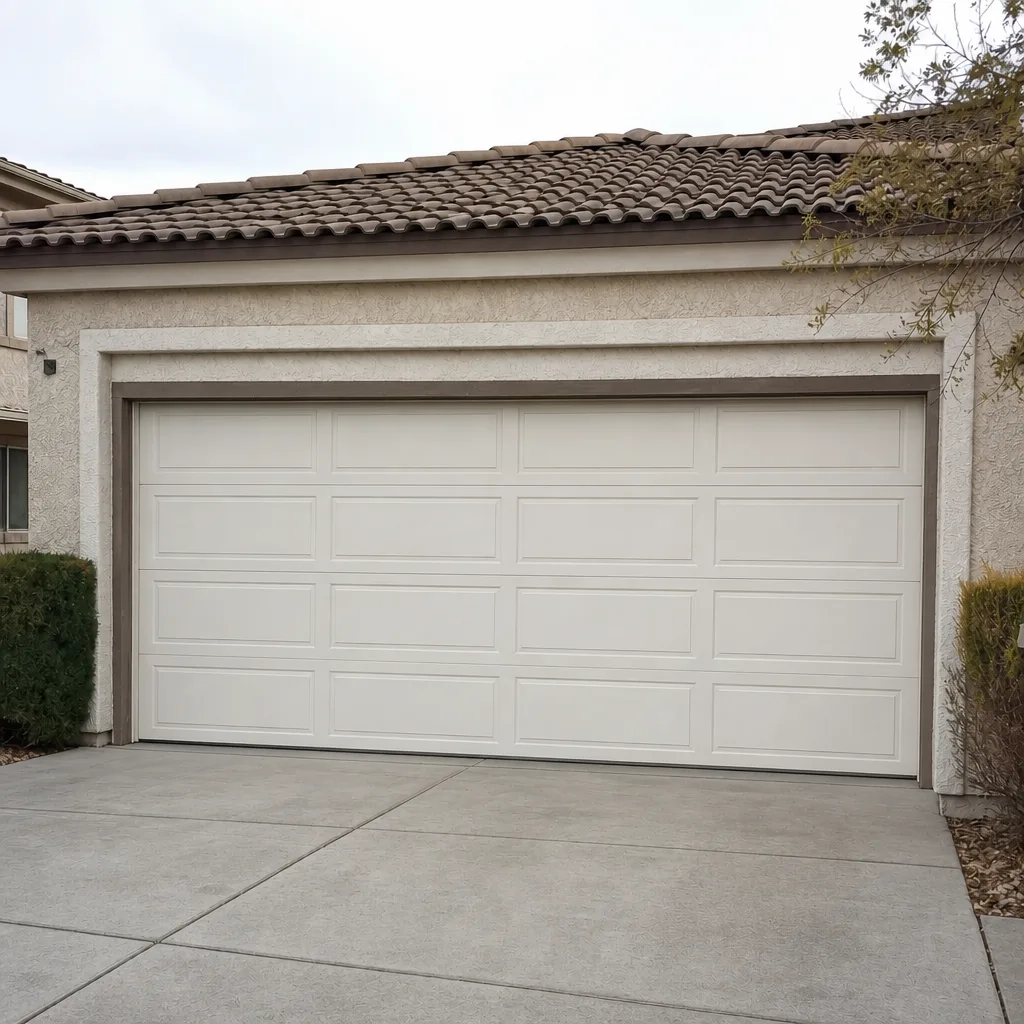 After
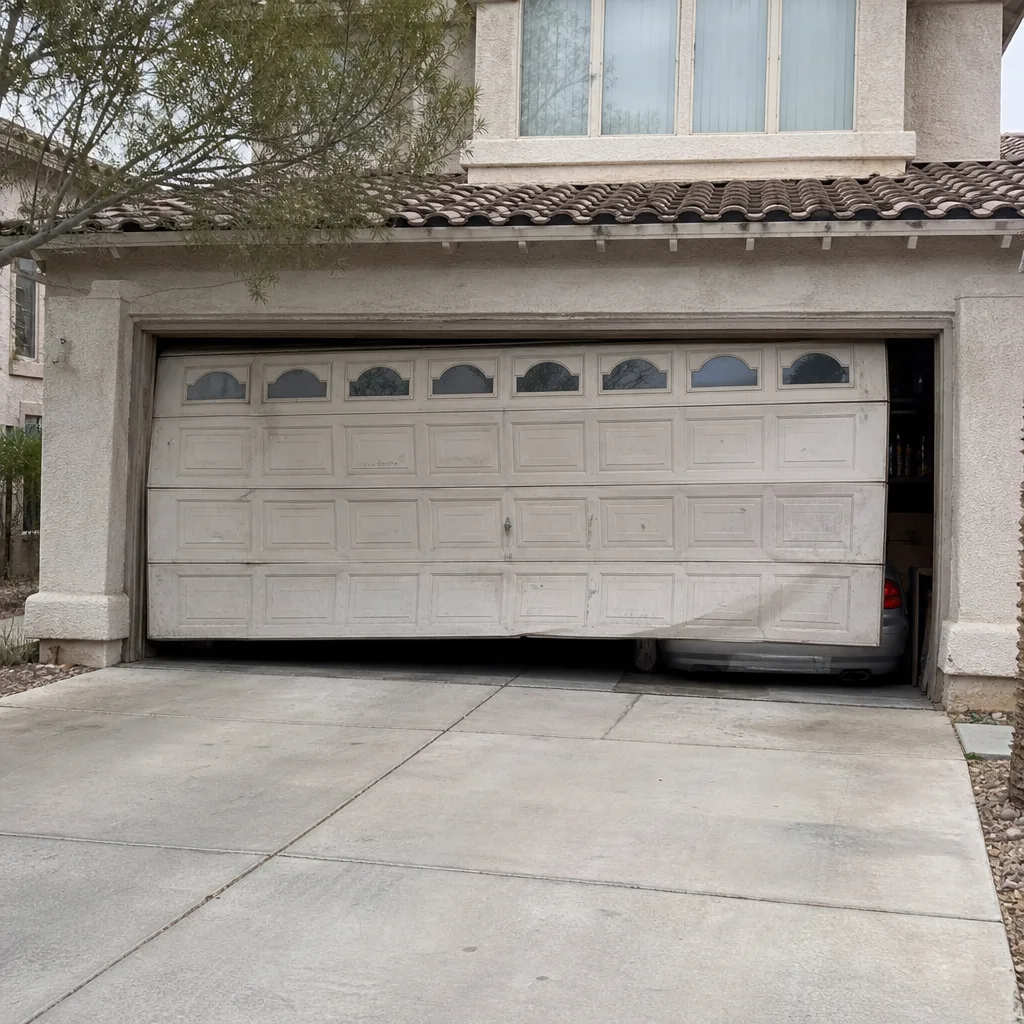 Before
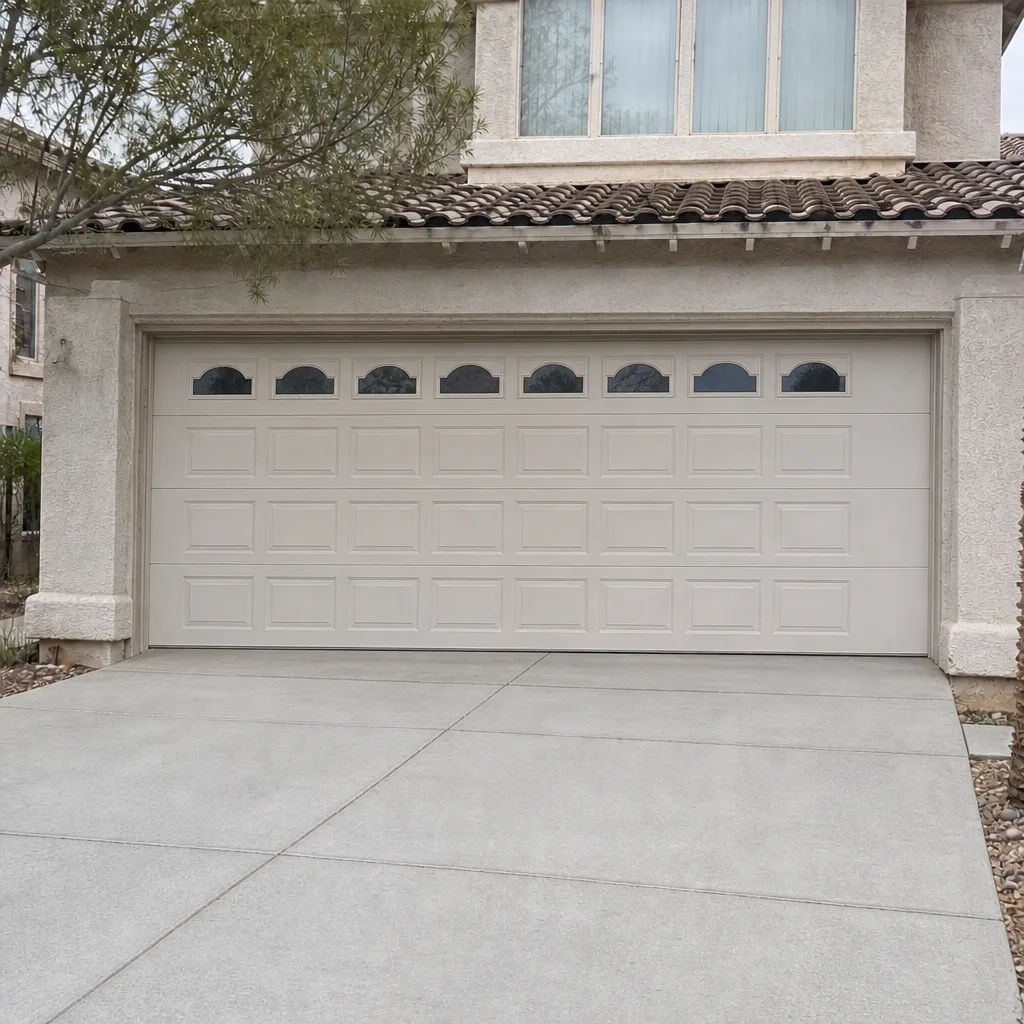 After
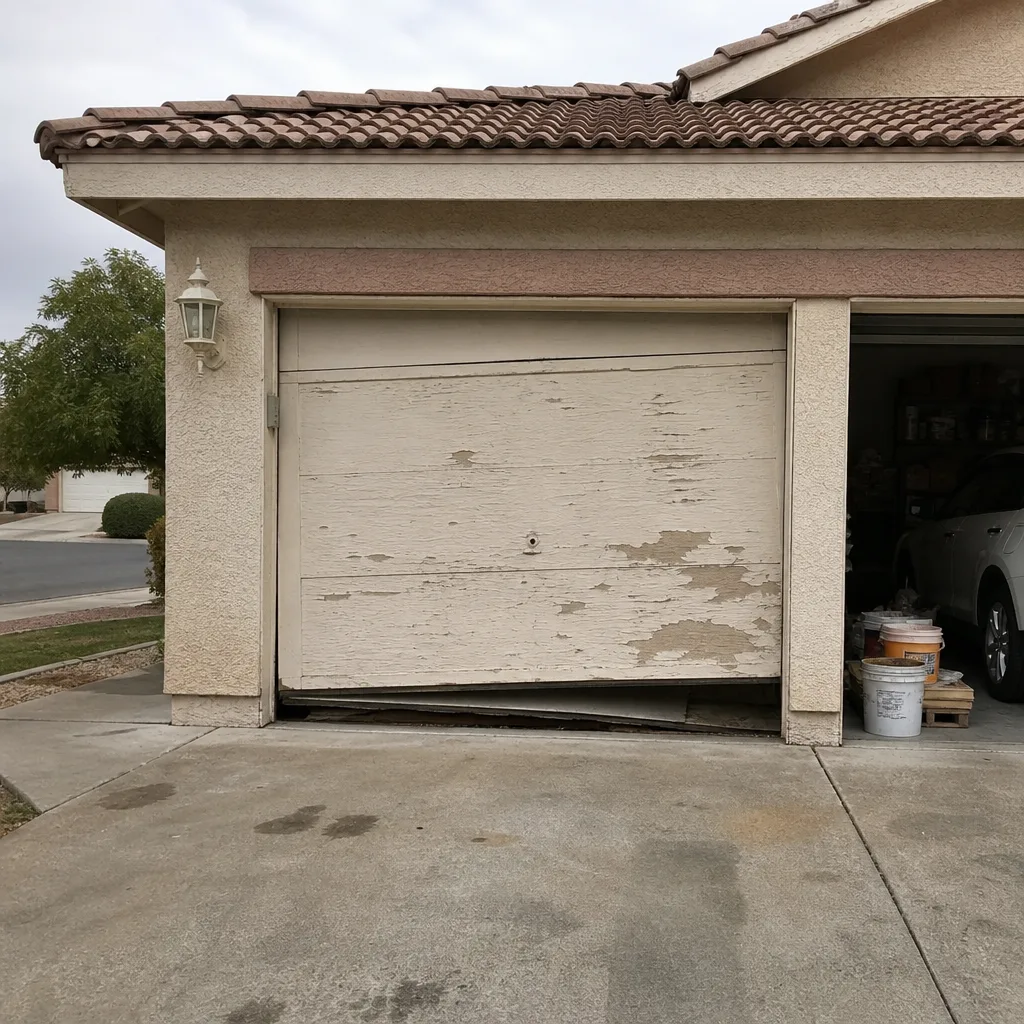 Before
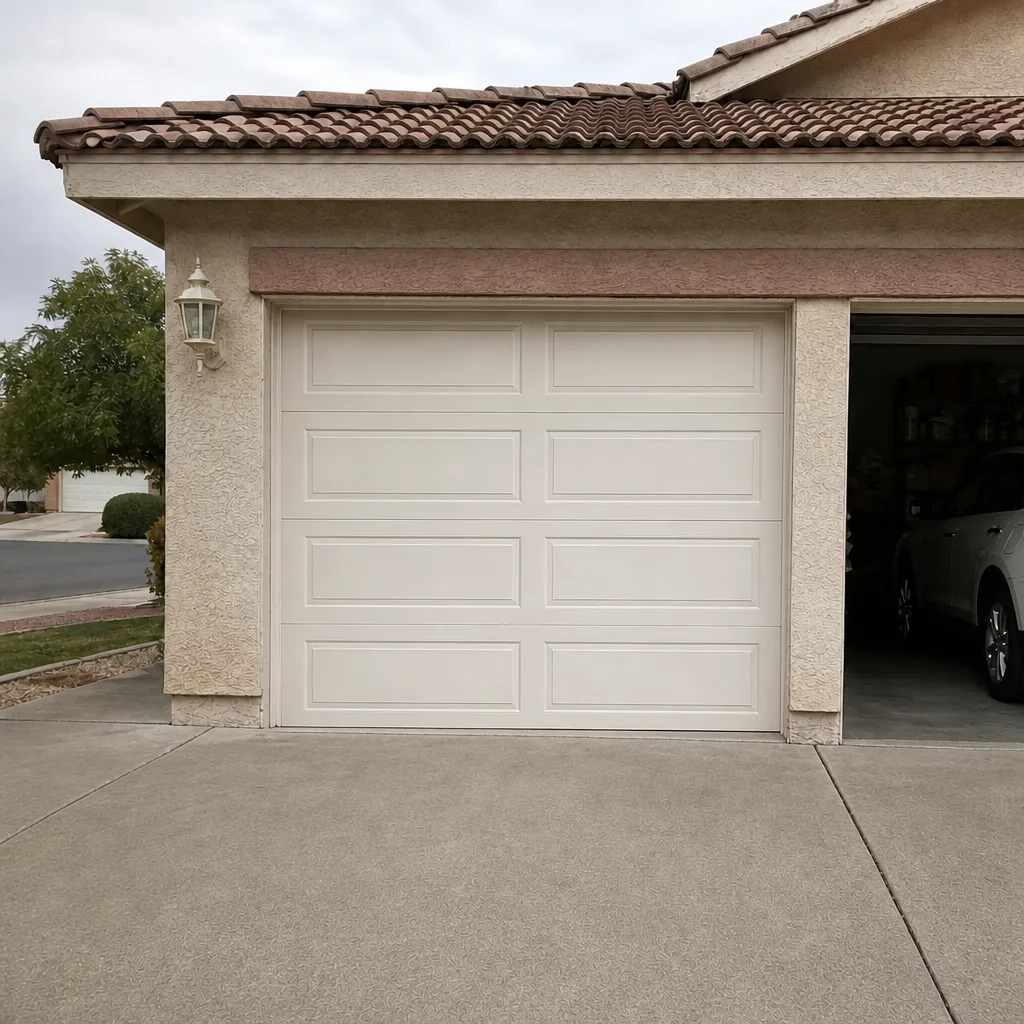 After
Garage Door Maintenance Tips for Summerlin, NV: Tune the Schedule to Sun, Grit, and HOA Eyes
The short answer: lubricate rollers, hinges, and torsion spring bearings in September after summer heat peaks (not spring), clear grit from the bottom seal track and wipe rollers down before every monsoon season, test the auto-reverse force monthly through the hot months, and check the panel finish once a year for chalking. Standard quarterly checklists miss the forces that actually wear out a Summerlin door. A steel door on the west side of a Summerlin home absorbs direct afternoon sun from roughly 1 p.m. until sunset. That’s 5-6 hours of radiant heat at 110°F, which bakes the lubricant out of every roller and hinge in a single season rather than a year.
Our technicians have up to 10 years of experience, and we’ve learned that a maintenance routine tuned to west-facing sun, Red Rock grit, and tight HOA inspection windows outlasts any generic calendar. Call (855) 608-8802 if you’d rather have a trained eye walk the door.
Key Takeaways
- Re-lubricate in September, not spring, because July and August drain grease from south- and west-facing doors faster than valley-floor homes.
- Blow out the bottom seal track and dry-wipe rollers before monsoon season (June-September); Red Rock Canyon haboobs push coarser grit than valley dust.
- Test auto-reverse force monthly in summer, since heat expansion warps steel panels slightly and changes resistance.
- Inspect the paint finish annually for chalking or bubbling; failing paint oxidizes builder-grade steel from the inside out.
Why the Summerlin Maintenance Calendar Doesn’t Match the Generic Checklist
Most garage door guides are written for flat-valley homes where the sun hits every side equally and the wind carries fine dust. Summerlin sits 500-1,000 feet higher than the valley floor, backed against the Spring Mountains and Red Rock Canyon. Houses here catch harder afternoon sun and coarser windblown grit. The result is a maintenance rhythm driven by three forces the checklist writers never accounted for.
First, sun. A west-facing door takes the full afternoon load. South-facing doors on two-car garages do the same through midday. Second, grit. When a habboob rolls off Red Rock, it carries a rougher grade of dust than the valley floor sees, and that grit scores roller tracks in a single season if it isn’t cleared. Third, HOA scrutiny. Summerlin is a master-planned community where nearly every home is HOA-governed, and architectural review often controls not just replacement doors but color changes. A door that’s chalky and stiff from neglect is exactly what an inspector flags. Compare that to neighboring Las Vegas or Henderson, where no such review layer exists.
The September Relube: Why Timing Beats Frequency
Generic guides tell you to lubricate in spring. That’s backwards here. By the time September arrives, a Summerlin door has just survived July and August, when 110°F air and five or six hours of direct sun cook the lubricant off rollers, hinges, and the torsion spring bearings. Relubing in spring means your grease has another full summer to fail before it does any good.
Here’s what we look at during a September tune. Use a lithium- or silicone-based lubricant on rollers and hinges, not WD-40 or a spray that evaporates. Rollers should spin freely and quietly. The torsion spring needs a light coat on its bearings, though the spring itself is a different story – adjusting or swapping one is dangerous work (see below). Hinges at the panel joints squeak first when they’re dry. If yours are already grinding, don’t wait for the calendar; call us and we’ll check it in one visit.
A finished September tune usually costs $89 on our seasonal offer, and our technicians have a full hand-held kit on hand, so nothing waits on a parts run.
Monsoon Grit: The June-to-September Cleanup That Protects Rollers and Tracks
Monsoon season runs roughly June through September, and that’s when Red Rock dust gets into everything. The bottom seal track is the first place it collects. Use a blower or a shop vacuum to clear the channel, then wipe rollers with a dry cloth. Don’t wet them; moisture pulls grit into the bearing races instead of out.
Our technicians see multiple cases each season of doors that still open but sound rough because the tracks are scored and the rollers are packed with fine sand. A scored track doesn’t repair itself and can chew through rollers in months. A track realignment typically runs $120-$240, and replacing scored rollers runs $110-$220. If your door shudders or scrapes, that’s worth a look before it becomes a bigger repair. We link back to our full garage door service page for the range of fixes we handle.
Panel Finish, Chalking, and the HOA Notice Clock
Builder-grade steel doors from the 1990s and early 2000s are now reaching end-of-life across Summerlin. These panels oxidize from the inside out when their paint coat fails, and the first visible sign is a chalky, dull finish. Once that chalk shows, the metal underneath is already beginning to rust. In an HOA community with matching-door covenants, a chalky door is exactly the thing that draws a violation letter, and then an architectural review before a replacement can go up.
Some villages have approved palettes and even approved manufacturers, so a replacement that ignores that paperwork can trigger a notice even when it’s code-compliant. That’s a layer most homeowners don’t think about until the letter arrives. Checking your finish once a year, ideally with a chalk test in a hidden corner, gives you time to plan rather than react. A new door installation runs $700-$2200 depending on size and style, but a fresh coat on a sound panel is far less. Familiar brands like Clopay and Amarr make panels that match many community palettes, though some communities restrict specific lines. We’ll help you match before you buy.
The Summer Force Test: What Heat Does to Auto-Reverse
Every modern opener has a safety reverse that should stop and go back up when it meets an obstruction. In summer, heat expansion warps steel panels slightly, which changes the door’s resistance. That can trigger false “obstruction” stops or, worse, prevent the door from reversing at all. Test it monthly through June, July, and August. Place a small block of wood in the door’s path and watch whether it reverses. If your opener makes a stuttering stop or doesn’t reverse, call before it becomes a safety issue. This is a genuinely dangerous failure mode, and it’s not worth experimenting with.
Openers from LiftMaster, Chamberlain, and Genie have force-adjustment and learn functions, and a heat-warped door often just needs a re-learn. But if the opener is shorting or the door is binding, that’s a job for a trained technician. Wayne Dalton and Craftsman models occasionally share a force setting that drifts with age, so a check at the opener is part of any tune.
A Safety Note Before You Grab the Wrench
Torsion springs and overhead cables carry enormous stored force, and they can release without warning. Do not attempt to adjust, wind, or replace a torsion spring or cable yourself. Do not oil a torsion spring that’s under tension. A trained technician handles that, and it’s worth the call. Everything else in this guide – the cleaning, the dry-wiping, the force test – is safe to do yourself. When in doubt, we’ll take a look.
Common Local Scenarios
West-facing door on a two-car garage. Five-plus hours of afternoon sun bakes the drive side and cooks the roller grease. September relube is critical, and the panel finish will chalk earlier than a shaded door’s.
South-facing door on a 1990s build. Midday sun is the worst load, and builder-grade panels are already nearing end-of-life. A chalk test in spring gives you a season to plan.
HOA village near Red Rock. Coarser monsoon grit means monthly track clearing during June-September. One scored track can force a realignment, and an unapproved replacement door can trigger a violation notice.
Tune-Up Pricing at a Glance
| Service | Typical Range |
|---|---|
| Seasonal tune-up | $89 (standing offer) |
| Roller replacement | $110-$220 |
| Track realignment | $120-$240 |
| Cable repair | $130-$250 |
| Spring repair | $180-$340 |
| Opener repair | $120-$320 |
| Garage door repair (general) | $150-$600 |
Every job is covered by our 90-Day Done Right Promise: if it isn’t done right, we make it right, in writing. We’ll tell you the price before any work begins.
How to Build the Summerlin Calendar, Step by Step
- Test the door balance and force. Pull the opener release, lift the door halfway by hand, and check that it holds without help. In summer, re-test after a hot week.
- Clear grit from the bottom seal track. Blow or vacuum the channel, then dry-wipe the rollers. Do this monthly through June-September.
- Inspect rollers, hinges, and bearings. Any that squeak or grind get a lithium or silicone lube. Skip the WD-40.
- Check the panel finish. Look for chalking, bubbling, or rust at the seams. Note the corner where your HOA palette lives.
- Schedule a September tune. Our technicians bring the lube and tune kit, service the spring, cables, rollers, and opener in one stop, and flag anything approaching end-of-life.
- Retest auto-reverse monthly. Block of wood in the path; if it doesn’t reverse, stop and call.
FAQs
Once in September, after summer heat peaks, is the rhythm that works here; a second light touch in spring can help south- and west-facing doors. That timing is the important part. A west-facing door can lose its lubricant across a single July and August, and relubing in spring just puts the grease in place for a summer of failure.
The rough sound is usually grit packed into your roller tracks and bearings, almost always from Red Rock dust after a haboob. Blow out the bottom track, dry-wipe the rollers, and listen again. If it still scrapes, one of the rollers or a track section may already be scored, which typically runs $110-$220 for rollers or $120-$240 for realignment.
Repair the finish first if the panel is sound; a replacement is only necessary when rust or warping has gotten into the structure. If you’re facing an HOA architectural review in a matching-door community, note that a replacement is $700-$2200 for a full new door, so match the approved palette and manufacturer before you buy.
Stop using it and call. Heat-expanded panels sometimes trip a false obstruction stop, but a door that won’t reverse can’t stop safely, and that’s a genuine safety hazard. A trained technician will check the opener’s force and travel settings and inspect the door for binding. Call (855) 608-8802 – we can often fit a tune-up the same week.
Get It Looked At
If you’d rather have a trained eye on the door than work through the list yourself, Mainspring Garage Door Co. Summerlin offers a no-pressure assessment in Summerlin. We’ll tell you what the door needs, quote a flat price before any work begins, and most tune-ups finish in a single visit. Call (855) 608-8802 for a free estimate.
Written by the team at Mainspring Garage Door Co. Summerlin, serving Summerlin, NV.