
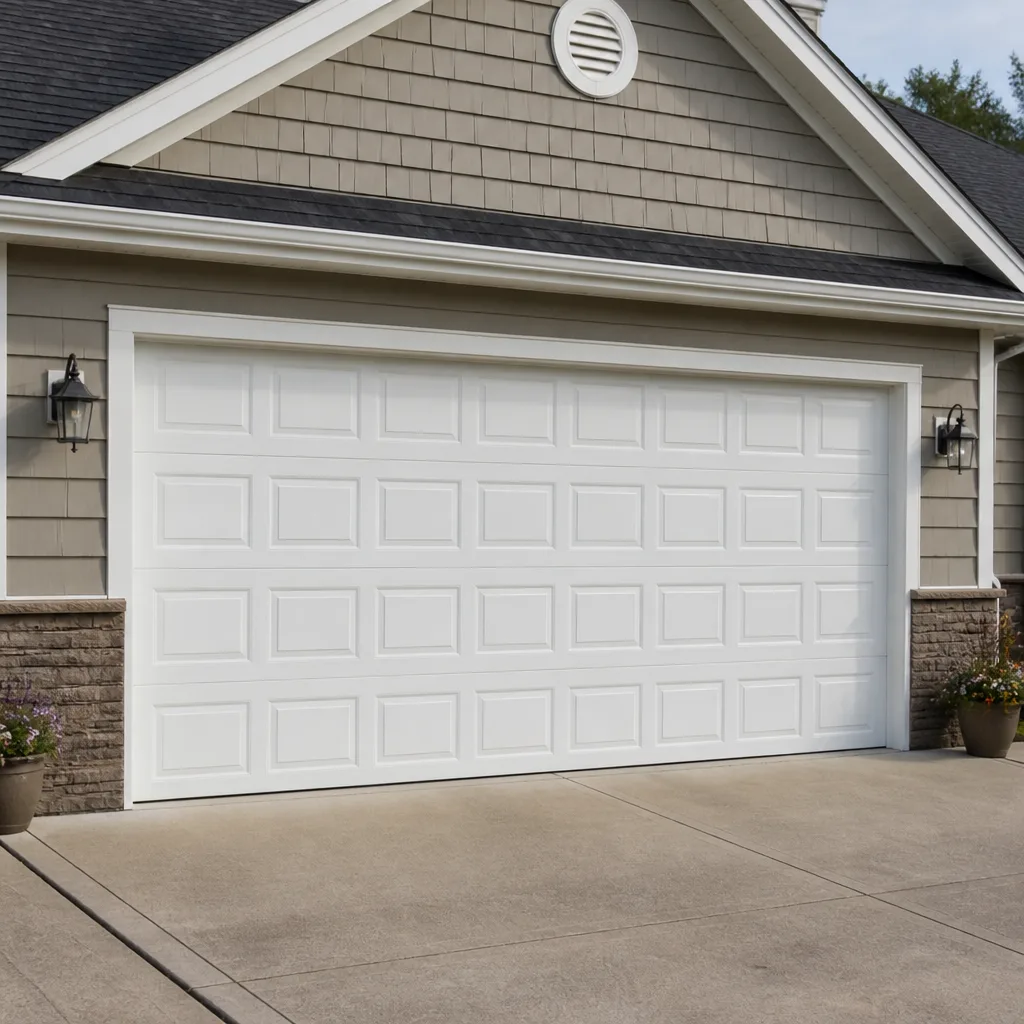
 Raised-panel steel
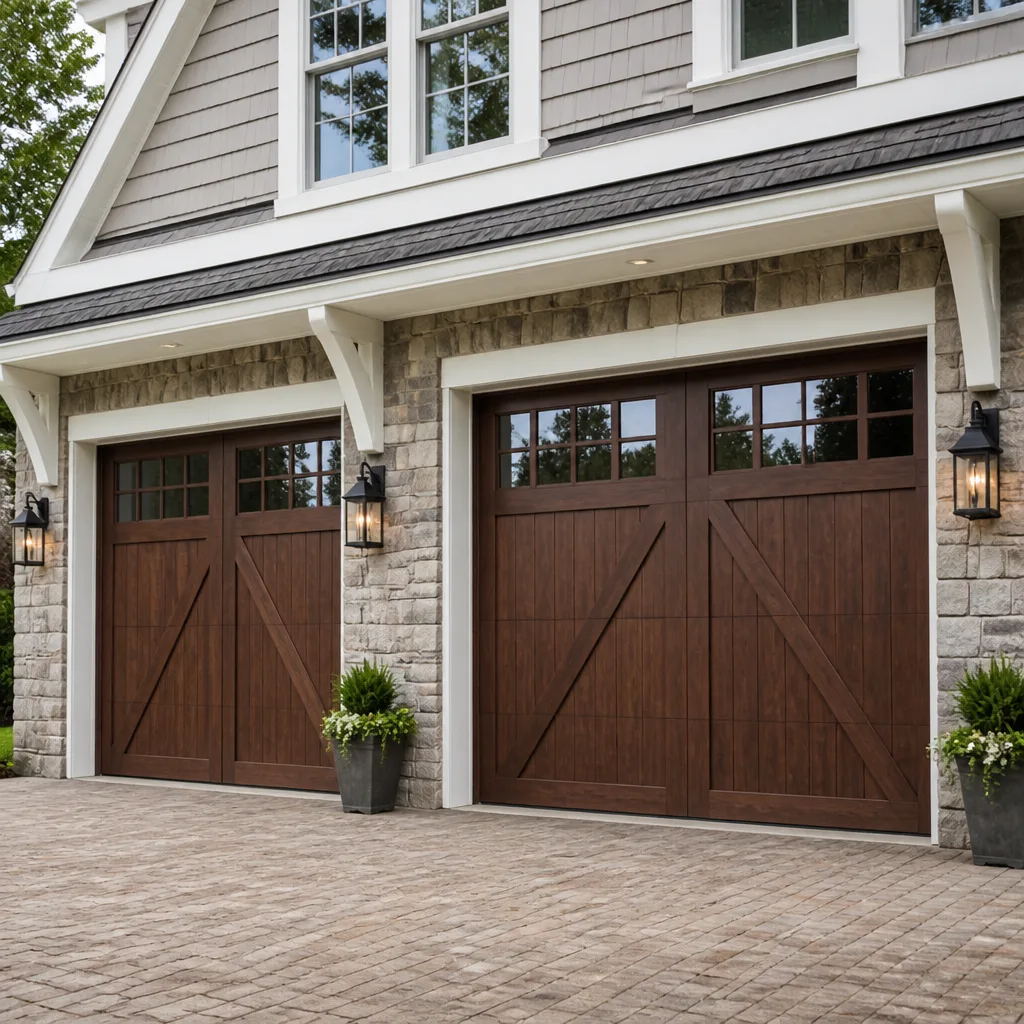 Carriage house
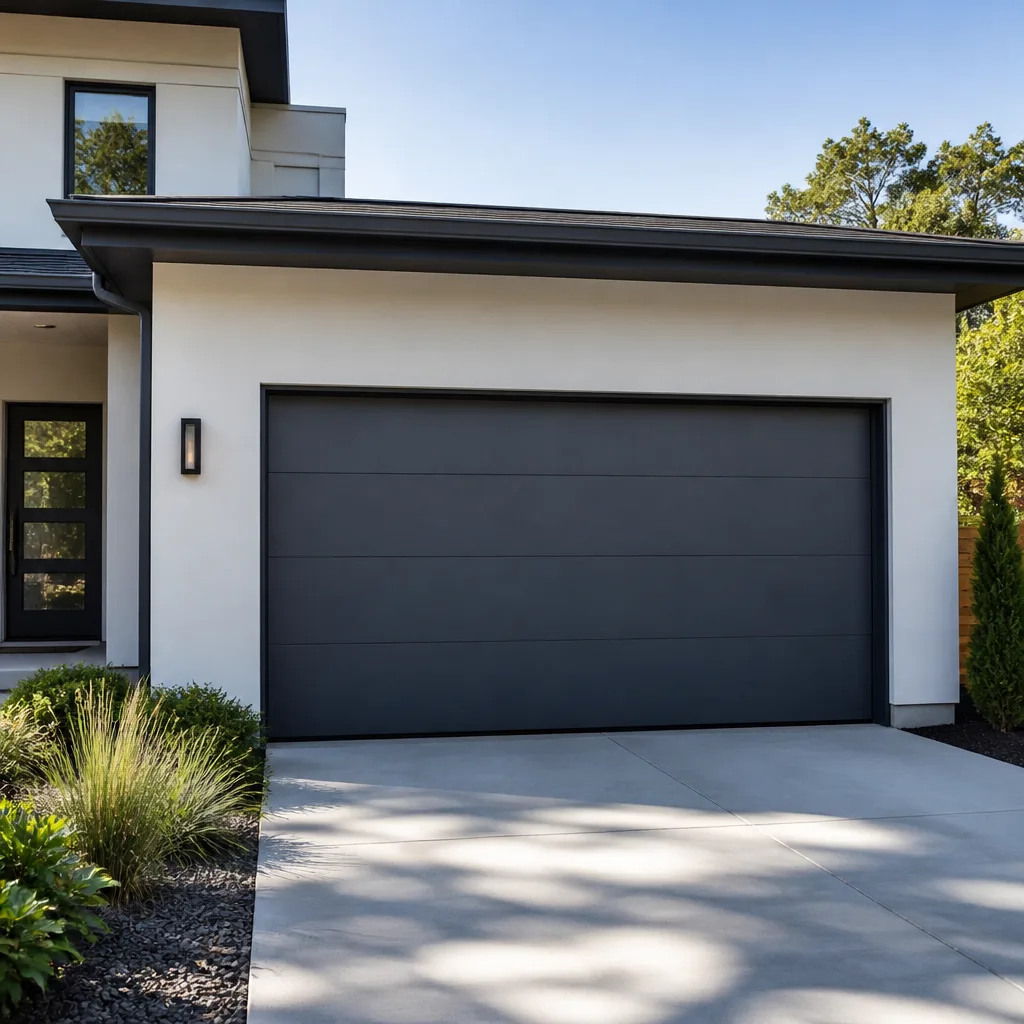 Modern flush
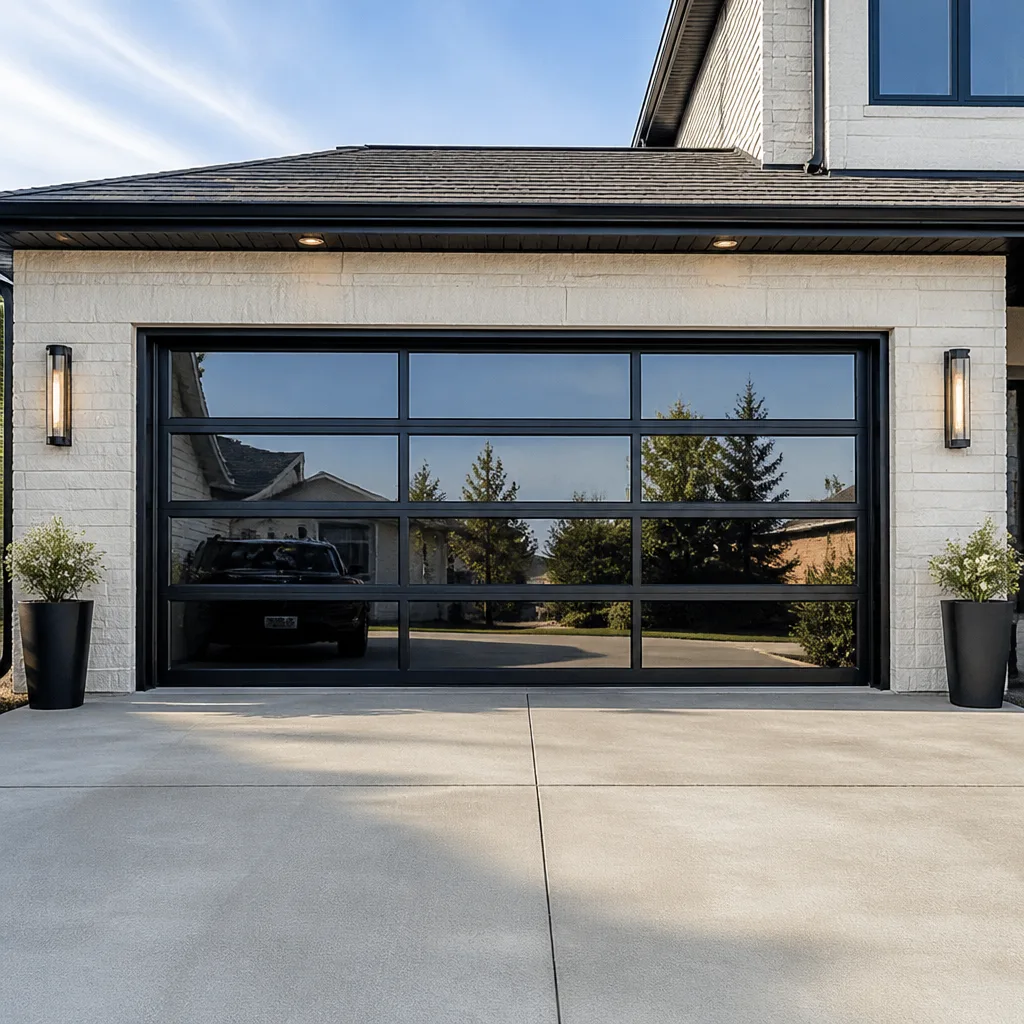 Full-view glass
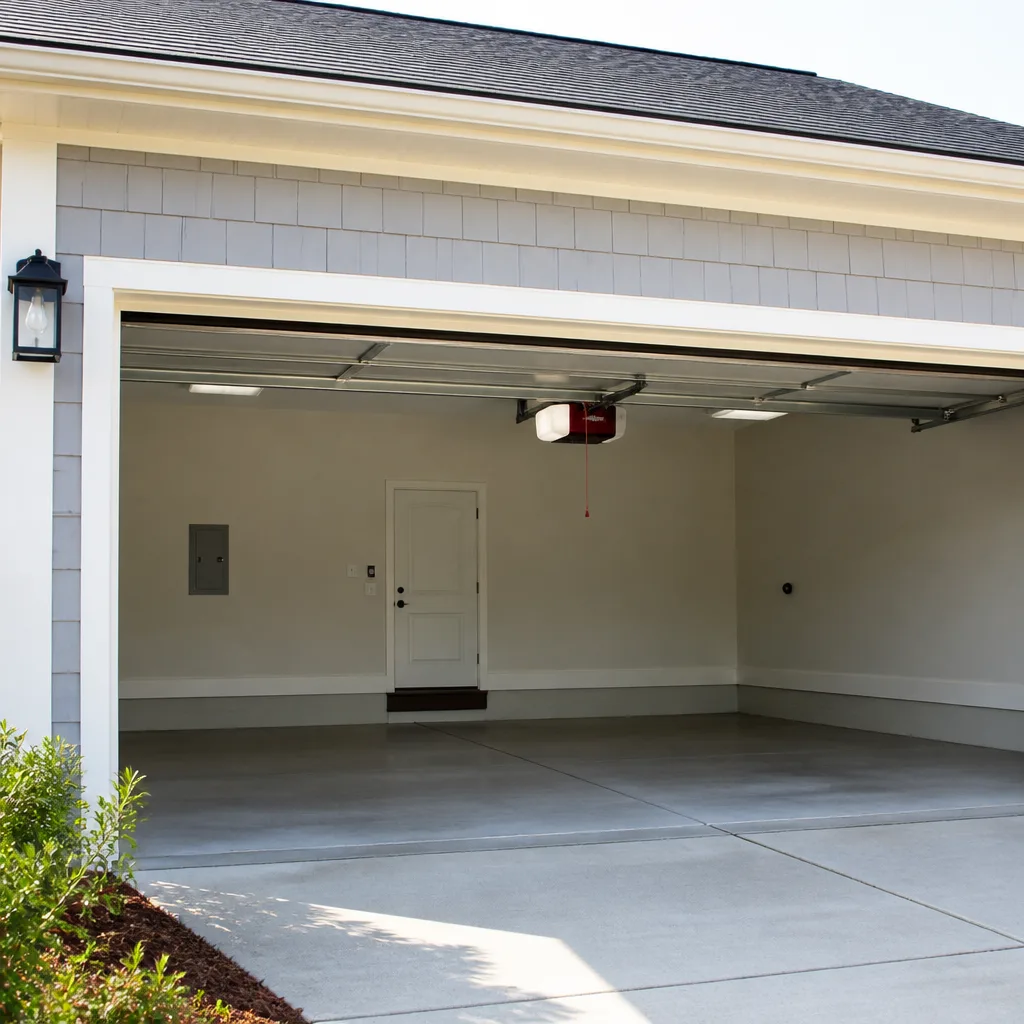 LiftMaster openers
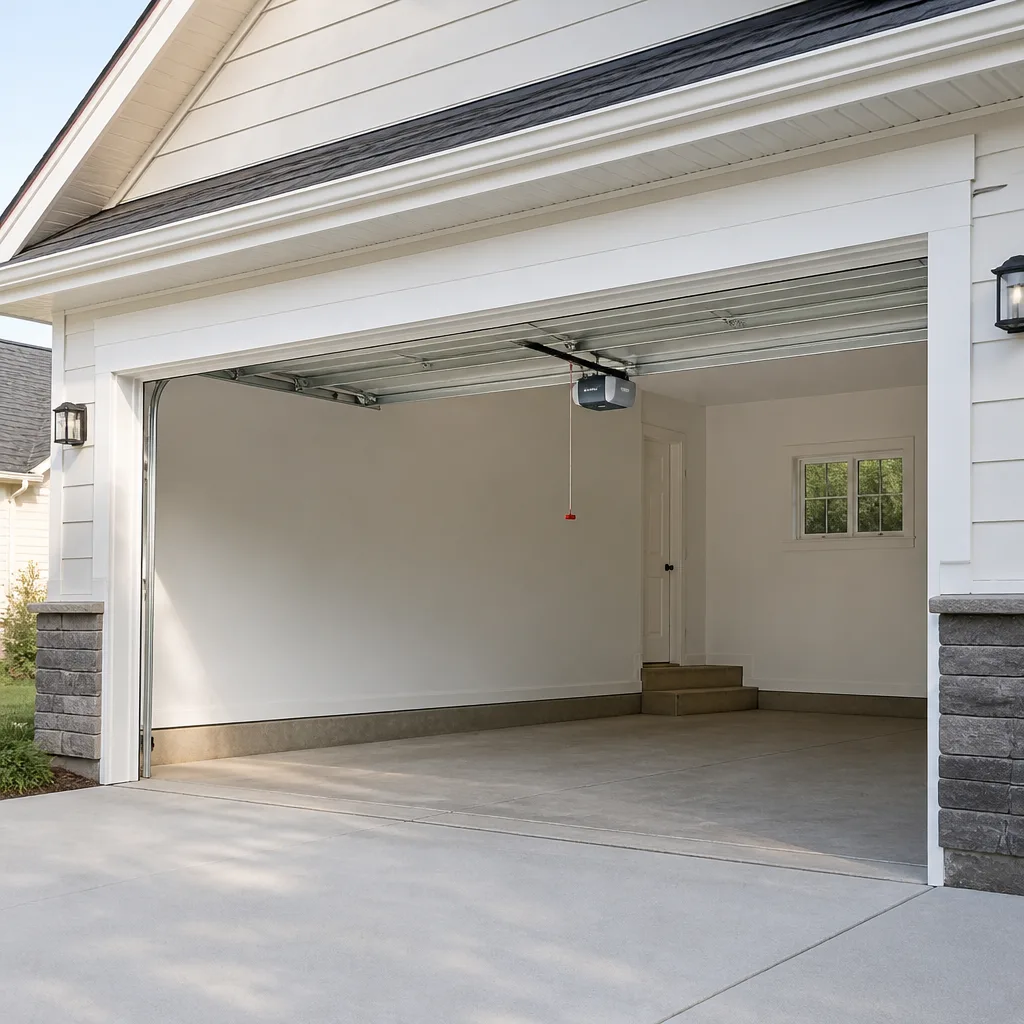 Chamberlain openers
Full 25-point door and opener safety check with every visit - springs, cables, rollers, tracks, and your LiftMaster or Chamberlain opener included
You get a price before we start. It does not change when the pro arrives.
Get your free estimateStyles & brands we work with
- Raised-panel steel
- Carriage house
- Modern flush
- Full-view glass
- LiftMaster openers
- Chamberlain openers
See the difference
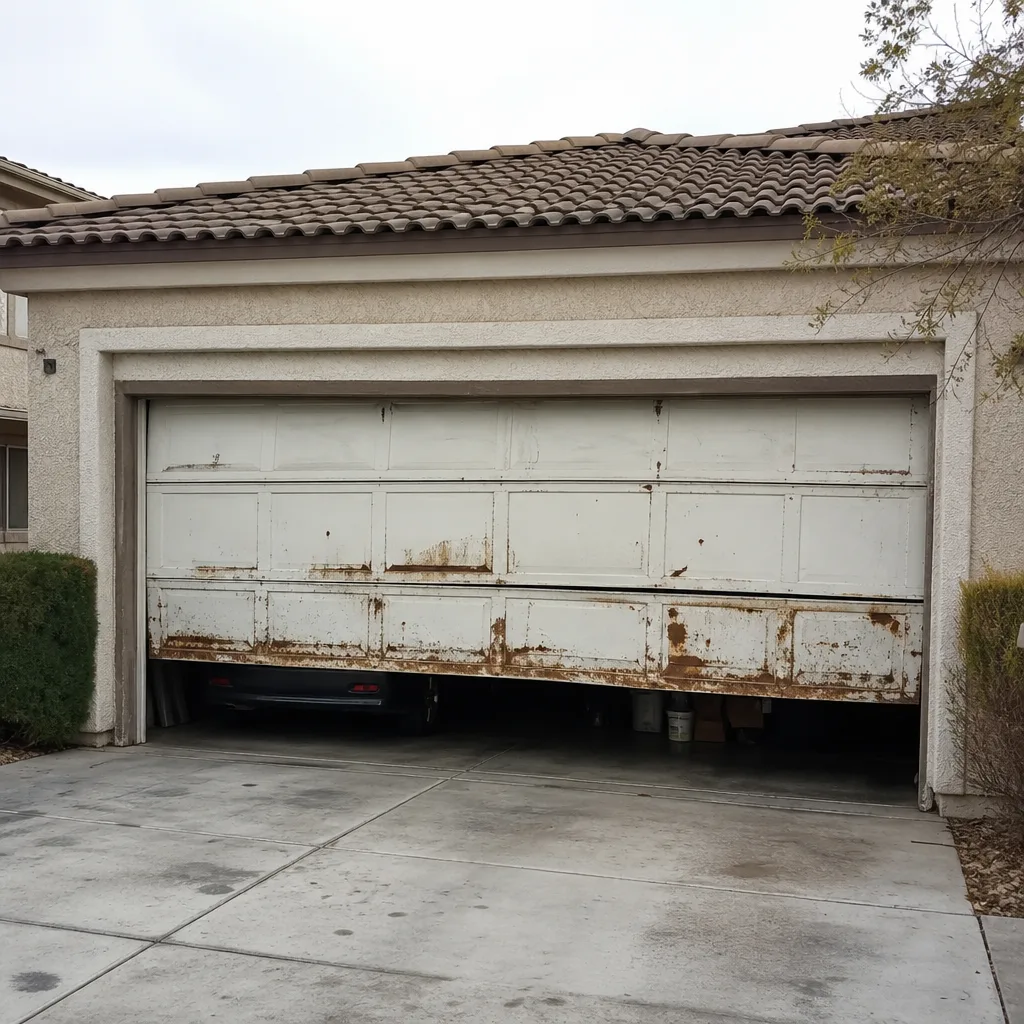 Before
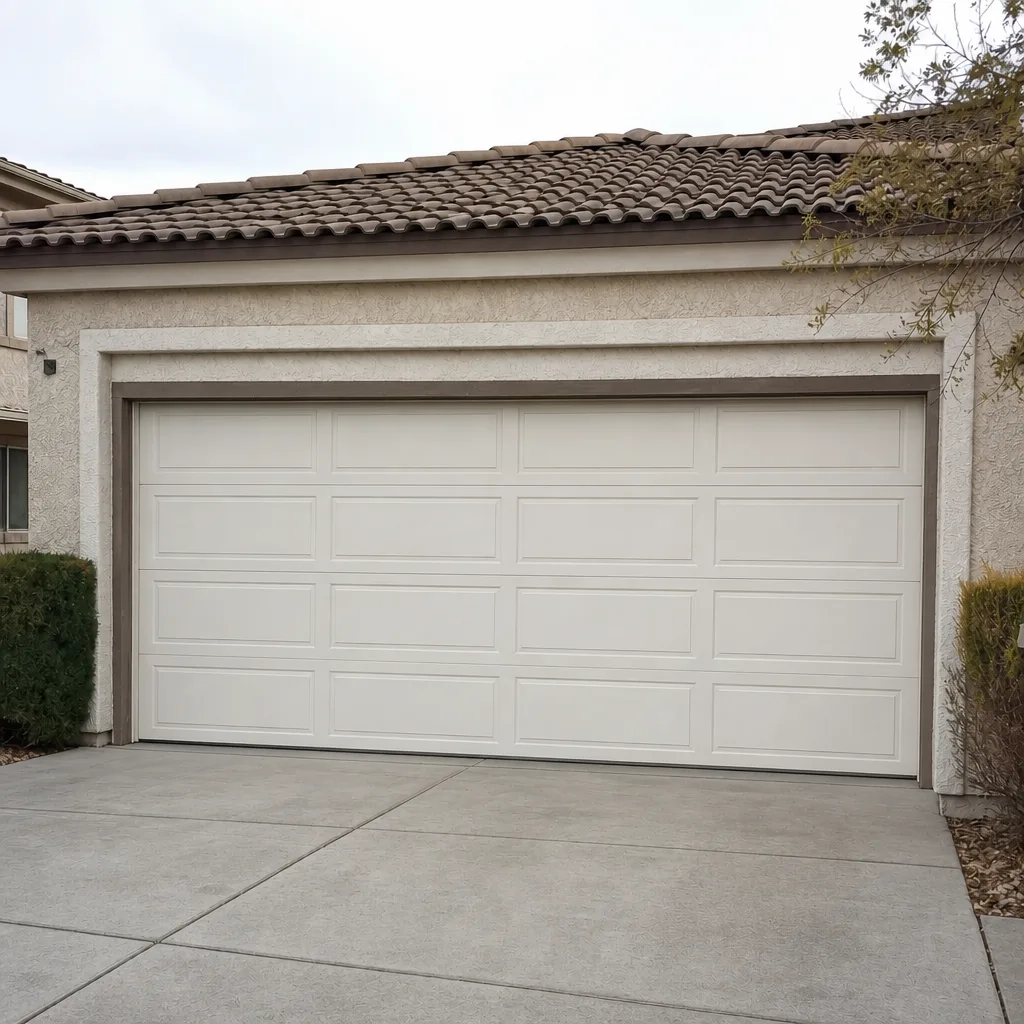 After
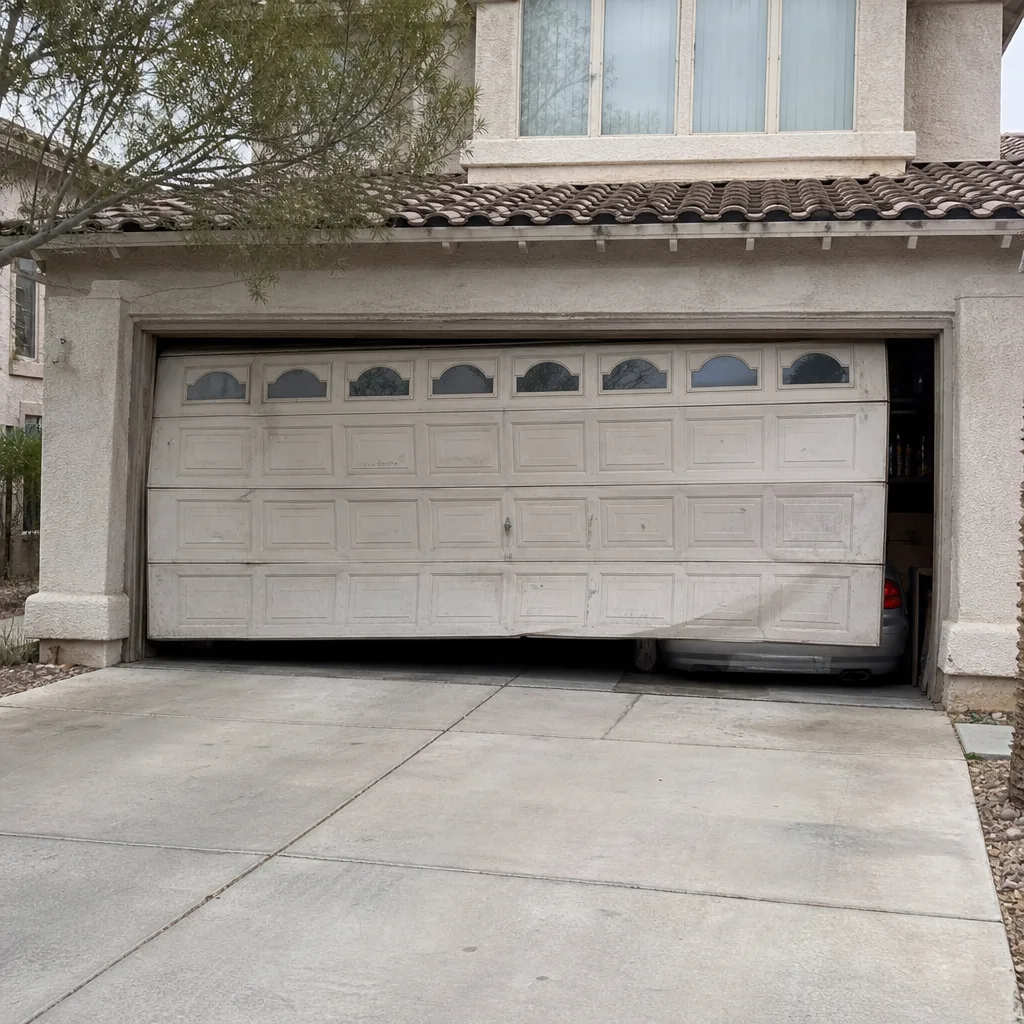 Before
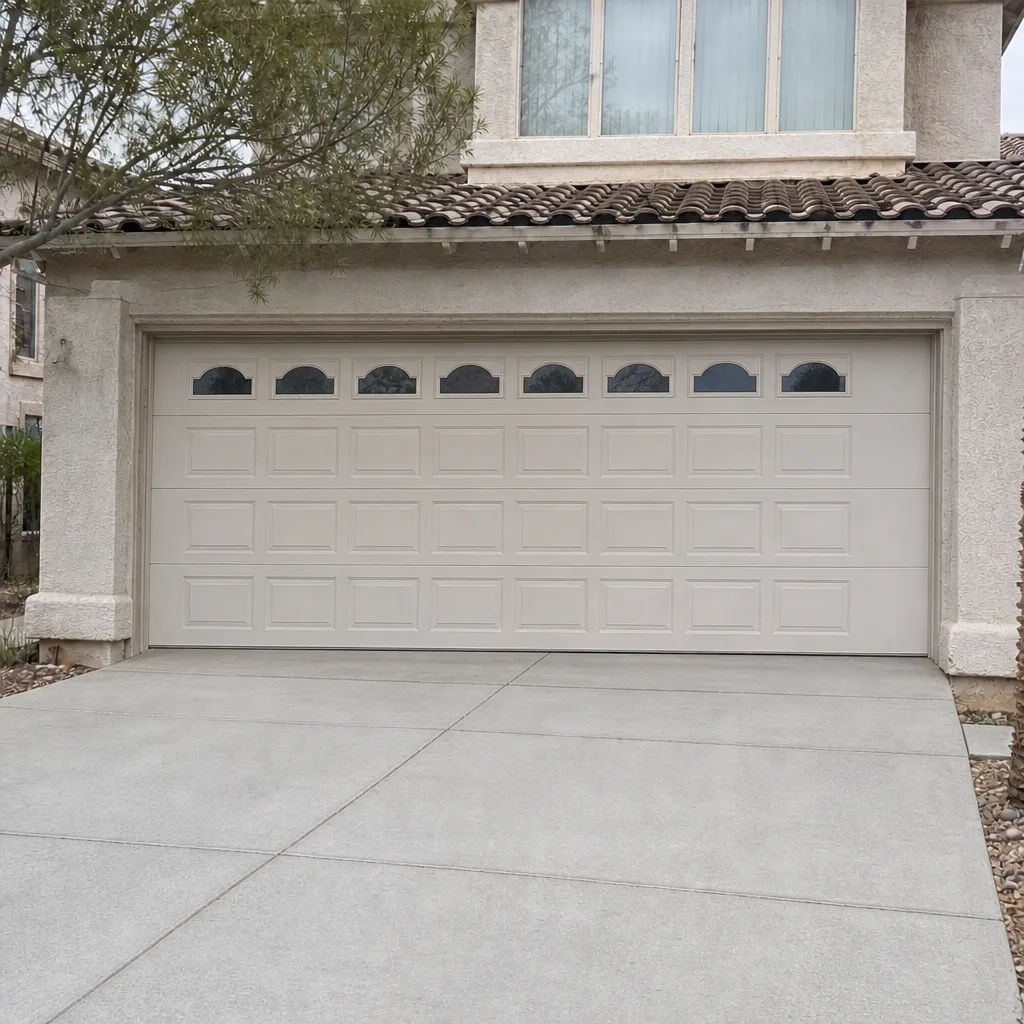 After
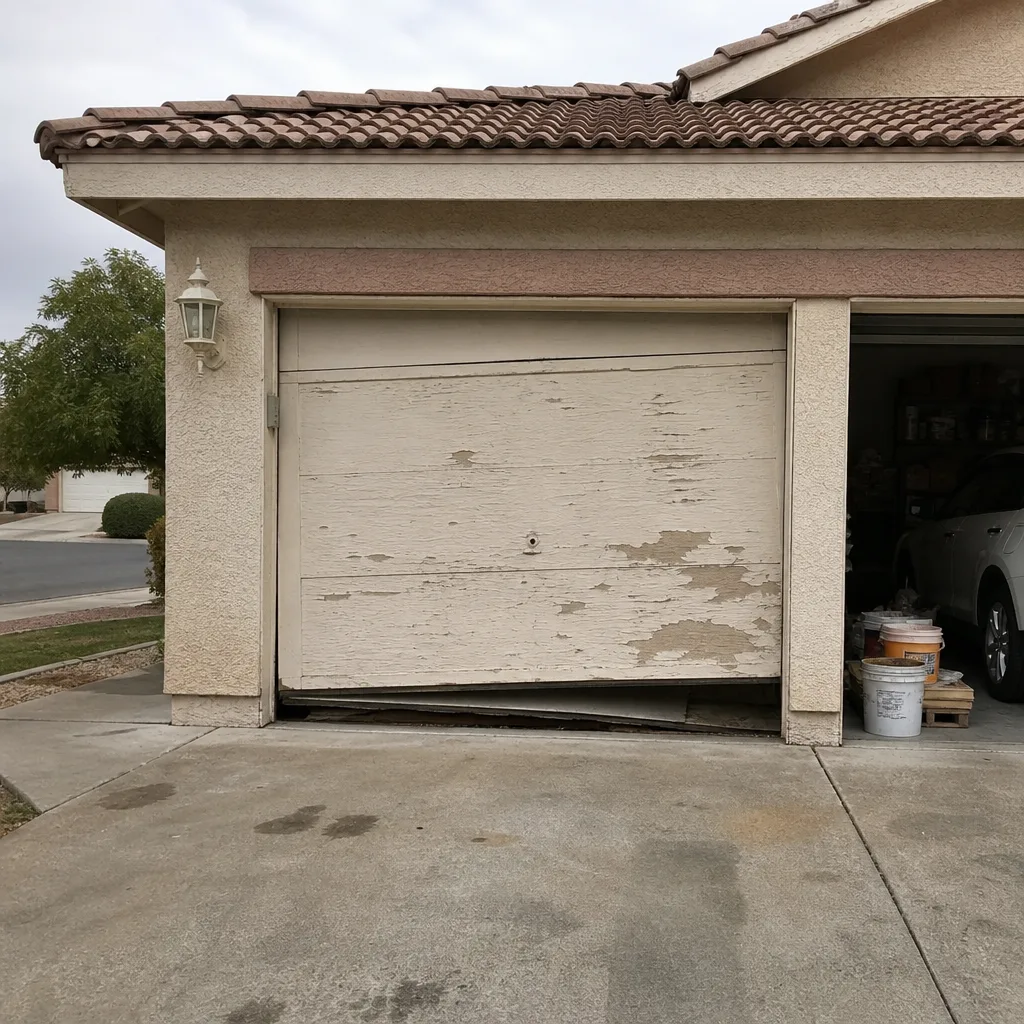 Before
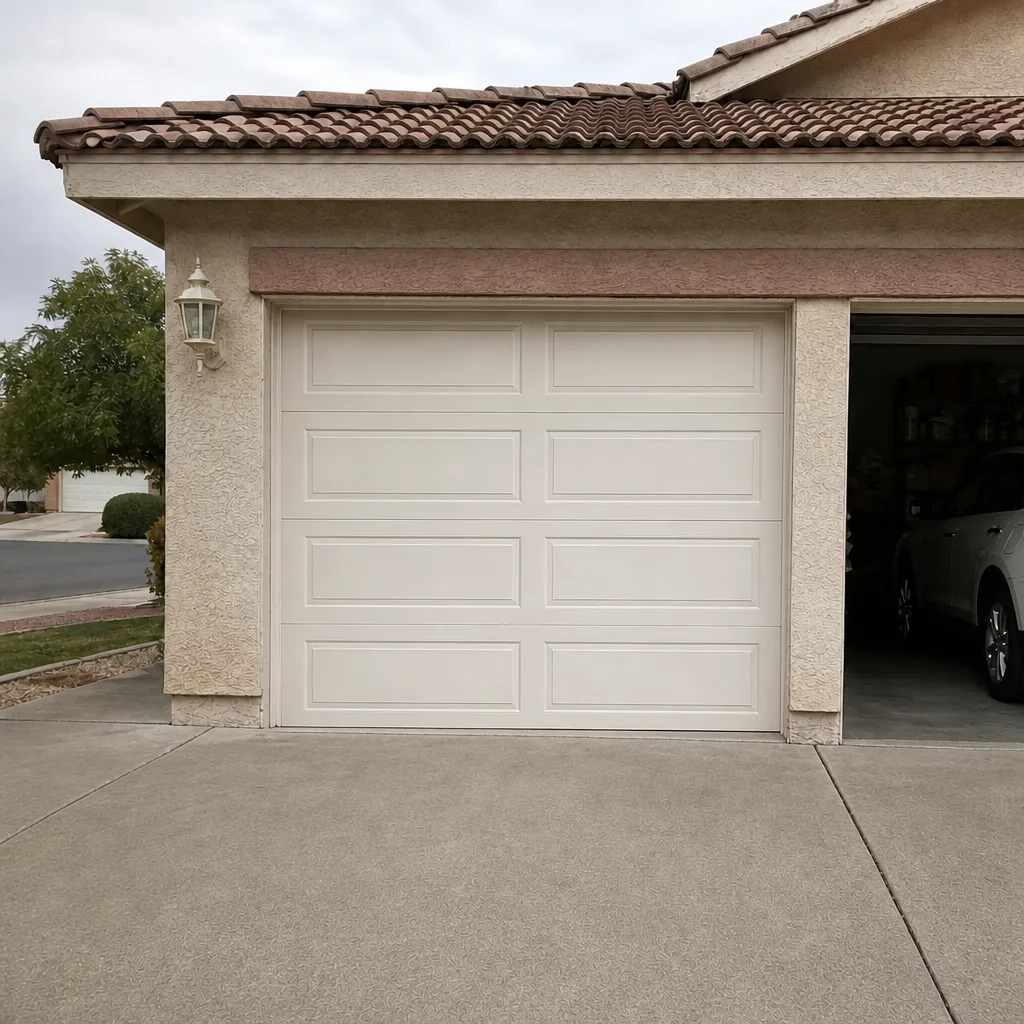 After
How to Program a Garage Door Opener in Summerlin, NV (And Why It Sometimes Won’t Stick)
Most garage door opener remotes and HomeLink buttons program in about 90 seconds: put the opener in learn mode, press the remote, done. If you’ve done that twice and it still won’t work, the cause is almost always rolling-code technology. Openers built in 1996 or later use a changing security code and need a different sequence than the fixed-code units in older guides. In Summerlin, where most homes went up in the 1990s and 2000s, you’re very likely dealing with the newer system.
We’re Mainspring Garage Door Co. Summerlin, and we program and test every remote and HomeLink button as part of each opener install. If you’d rather have someone walk you through it, our line is answered by a live person around the clock at (855) 608-8802.
Fixed-Code vs. Rolling-Code: The Step Every Generic Guide Skips
The reason the instructions fail is that there are two openers, not one. Fixed-code openers, generally pre-1996, use a set of dip switches. Each switch is on or off, and the remote has to match that exact pattern. Rolling-code openers, including LiftMaster and Chamberlain units with Security+ and the Genie Intellicode line, change the code every time the door moves. That’s better security and it’s why a fixed-code method simply won’t pair with a rolling-code receiver.
Before you start, look at the back of the opener motor head. If you see a row of small dip switches, you have a fixed-code unit. If you see a learn button, you have rolling code. The learn button’s color also tells you the band: older green or orange buttons pair with older remotes, and the newer purple, yellow, and red buttons pair with current ones. Match the remote to the button, or you’ll be pressing a button that was never going to work.
Rolling-Code Programming (Most Openers 1996 to Present)
- Locate the learn button on the back of the motor head. Press and release it once. The LED beside it will light or the opener will click.
- Within 30 seconds, press and hold the remote button you want to use. Hold it until the opener clicks or the light flashes. That confirms the pairing.
- Press the remote again to test. The door should move. If nothing happens, the 30-second window closed; start over with a fresh press of the learn button.
That third step is where most people give up: they take too long between the learn button and the remote. Keep the remote in your hand before you press learn.
Fixed-Code Programming (Older Openers)
For a fixed-code unit, match the dip switches on the remote to the pattern on the opener’s receiver, then test. This is a physical match, not a radio handshake, so there’s no timing window to beat. If your opener has dip switches but your new remote doesn’t, the remote is the wrong generation, and no amount of pressing will help.
HomeLink in the Car: The Train-to-the-Remote Step
Summerlin is full of homes built in the 2000s onward, which means a lot of vehicles in these driveways came with HomeLink built in. The owner’s manual buries the step you actually need: you can’t train HomeLink straight to the opener on a rolling-code system. You train it to the remote first, then push the code to the opener.
- Hold your existing working remote 1 to 3 inches from the HomeLink buttons and press both buttons together until the HomeLink light flashes rapidly. That’s the train-to-the-remote step.
- Now press the opener’s learn button and, within 30 seconds, press and hold the HomeLink button you just trained. The opener will accept the rolling code.
- Test from inside the car. If the door moves, you’re finished. If the HomeLink light blinks slowly, it retained the remote’s code but not the opener’s; repeat just the learn-button step.
This two-stage method is the fix for the “my car won’t talk to my garage” call we field most often. It’s also the reason a remote that works perfectly and a car that refuses to are not a contradiction. The remote carries one code; the car has to be taught the opener’s rolling one.
Summerlin’s Gated Villages: Two Systems, One Button
In gated communities like The Ridges and Red Rock Country Club, residents often try to put the garage door and the community gate on a single HomeLink button. That usually doesn’t work, because the gate system runs on a different protocol or frequency than the opener. HomeLink can hold several buttons, so the practical answer is one button for the garage and another for the gate. And getting the gate to work at all sometimes needs an access code from your HOA, not just the opener steps.
This is the layer that generic guides never mention, and it’s a common source of frustration in Summerlin’s HOA-governed villages. Know which system you’re pairing before you start. The garage opener follows the steps above; the gate may need HOA involvement.
When Programming Succeeds but the Door Still Won’t Move
If the remote and the opener clearly paired but the door doesn’t budge, the problem has moved. It’s no longer a programming issue. That’s your signal to stop reprogramming and look at the mechanism. The safety sensors at the bottom of the tracks may be misaligned or dusty (Summerlin’s windblown dust gets into them regularly). The opener may be tripping on a bound roller or a worn spring. A door that opens partway and reverses usually points to a door problem, not a radio problem.
Here’s where we’d tell you plainly: high-tension torsion springs and the cables they’re attached to carry the entire weight of the door, and they’re genuinely dangerous to work around. Don’t put your hands near them. If the door is heavy, binds, or reverses, that’s a call for a trained technician, not a DIY session.
For the broader picture on opener repair and replacement, our Garage Door Opener Repair & Installation in Summerlin page covers the service side. And for everything else we do, from a home overview to specific repairs, you can see the range.
What Remote and Opener Work Costs in Summerlin
If a technician needs to step in, these are the ranges we quote in Summerlin. Most jobs are finished in a single visit because the parts are already on the truck.
| Job | Typical Range |
|---|---|
| Opener repair | $120-$320 |
| Opener installation | $250-$550 |
| Generic garage door repair | $150-$600 |
| Spring repair | $180-$340 |
We state the flat price before any work begins, so there are no surprises on the bill. We’re also factory-familiar with the major brands, including LiftMaster, Chamberlain, Genie, Amarr, Wayne Dalton, and Craftsman, so the right remote or receiver is a known quantity. Every completed job is backed by our 90-Day Done Right Promise: if it isn’t right, we come back at no charge.
Why It’s Worth the Two Minutes on the Phone
Before you book a service call, a live person can often walk you through the right sequence over the phone, which is sometimes the whole fix. Our technicians have up to 10 years of experience and program remote and HomeLink buttons on every install. If a remote is simply the wrong generation for your opener, we’ll tell you that, too.
FAQs
Your new remote is almost certainly rolling-code and your opener is fixed-code, or the reverse, so the two can’t talk. Check the back of the motor head: dip switches mean fixed-code, a learn button means rolling-code. Match the remote generation to the opener, and it’ll pair.
On a rolling-code opener, you generally can’t; HomeLink needs an existing remote to train from first. If you have no remote, a technician can program the car directly to the opener or supply a compatible remote. Call (855) 608-8802 and we can sort out which you need.
The community gate runs on a different protocol than your opener, so the same programming steps don’t apply. In Summerlin gated villages, the gate often needs an access code from the HOA. Use a separate HomeLink button for the gate and contact your HOA for the gate-side steps.
Yes. We program and test every remote and HomeLink button as part of each opener installation, and we walk through the steps so you can re-pair later if you need to. Estimates are free, so call (855) 608-8802 for an exact quote.
One Call, Done Right
If you’ve tried the steps twice and it still won’t take, you don’t have to keep guessing. Mainspring Garage Door Co. Summerlin offers a no-pressure assessment in Summerlin, and a live person answers every call, day or night. Call (855) 608-8802 for a free estimate.
Written by the team at Mainspring Garage Door Co. Summerlin, serving Summerlin, NV.