
Last updated November 18, 2026
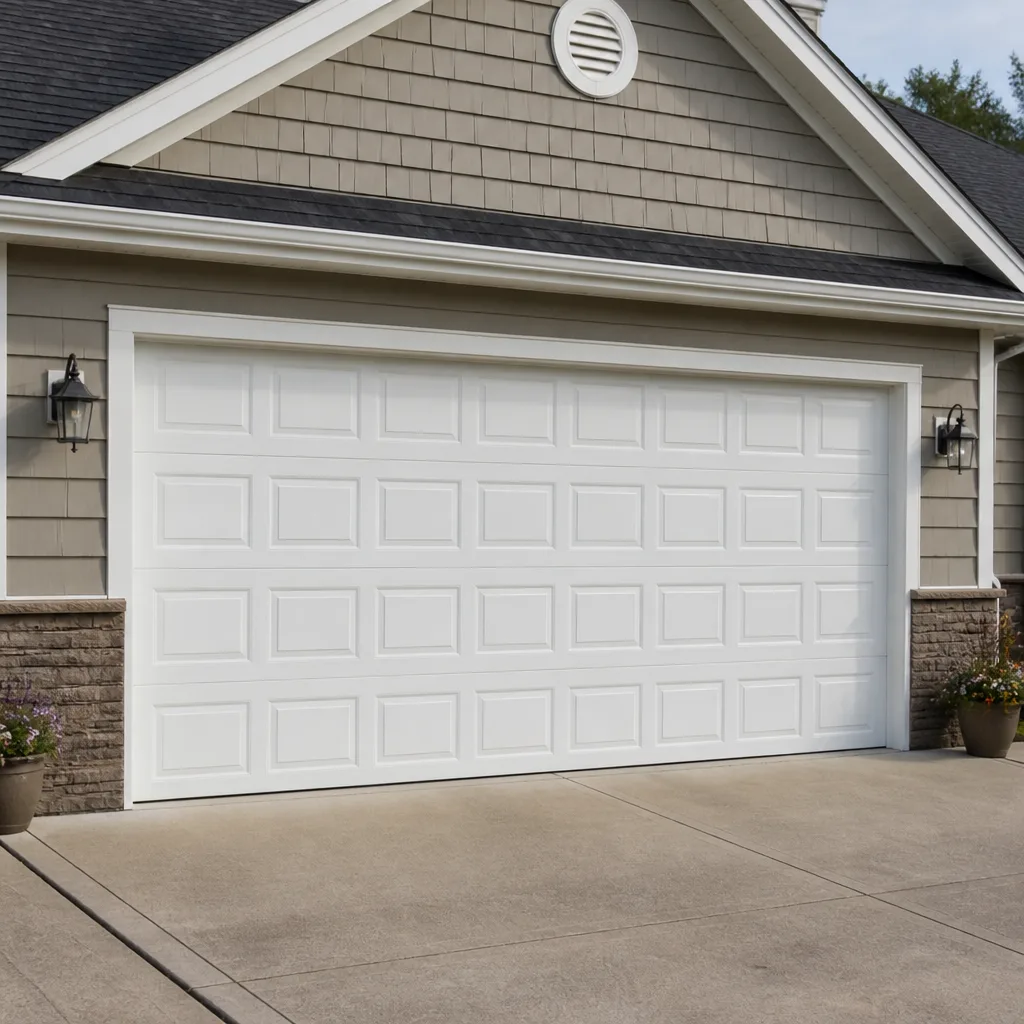 Raised-panel steel
 Carriage house
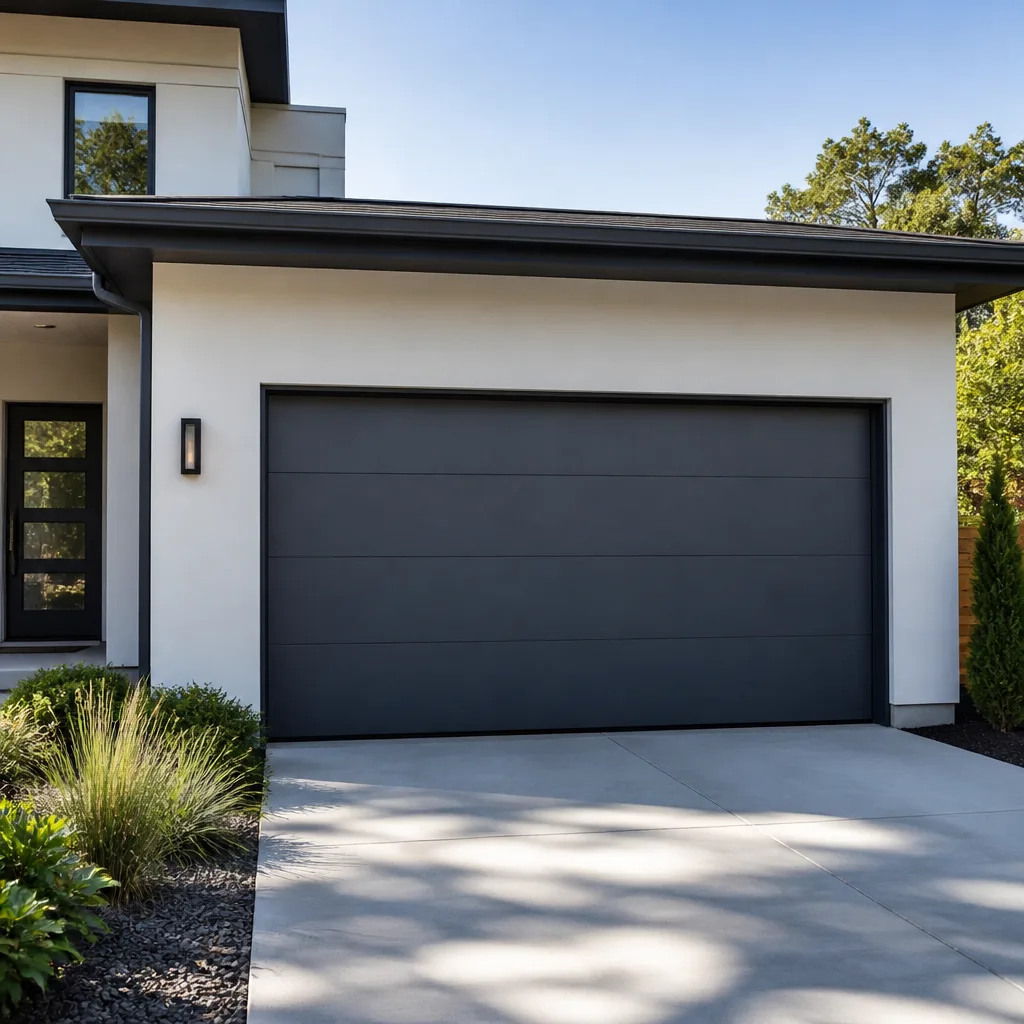 Modern flush
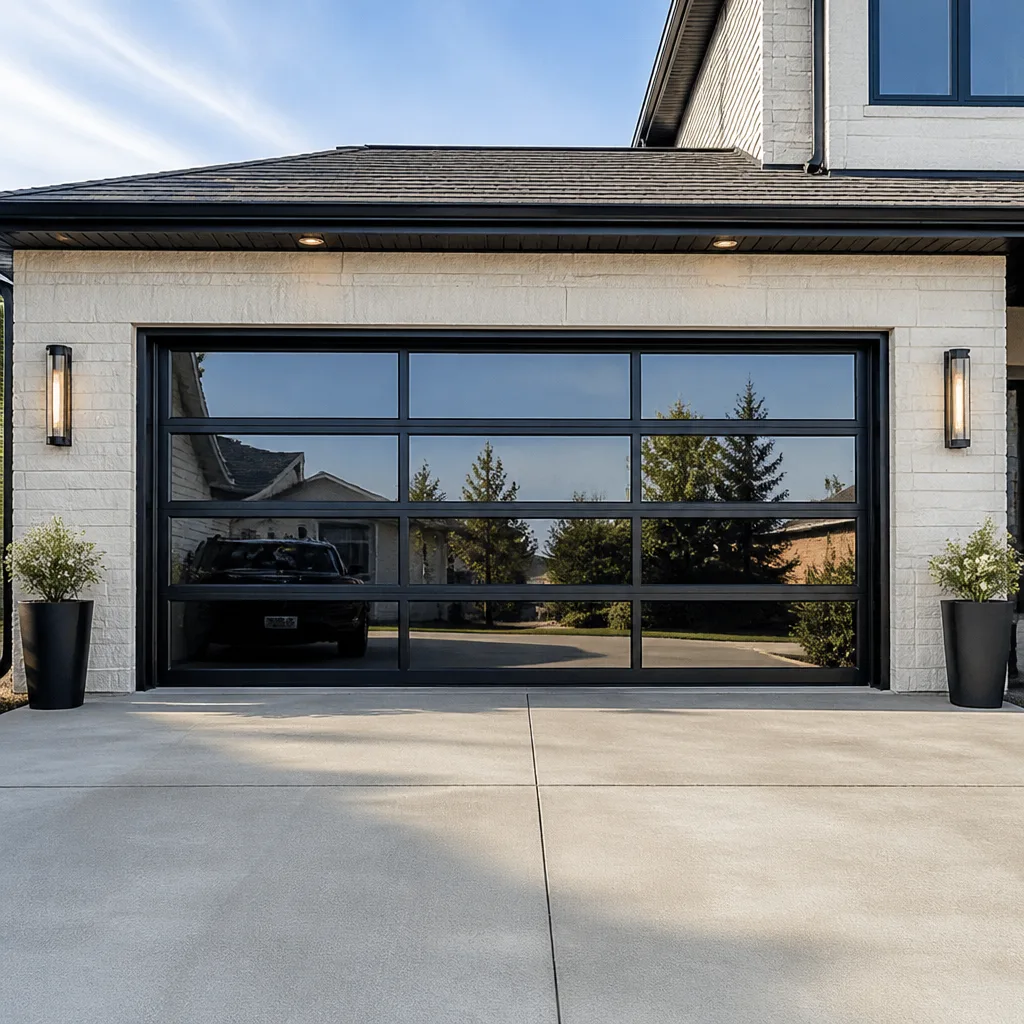 Full-view glass
 LiftMaster openers
 Chamberlain openers
Full 25-point door and opener safety check with every visit - springs, cables, rollers, tracks, and your LiftMaster or Chamberlain opener included
You get a price before we start. It does not change when the pro arrives.
Get your free estimateEmergency Garage Door Warning Signs Every Homeowner Should Know
Three days before most garage door springs break, the door takes noticeably longer to open. Not dramatically. Maybe half a second. That hesitation is the torsion spring losing its return energy, and it’s the closest thing to a warning light this system has. Most people don’t notice it until the door doesn’t open at all. We’ve seen it in Summerlin countless times: a door that ran fine in June fails at 10 p.m. in July, and the homeowner is genuinely surprised. The failure was rarely sudden. It was just unobserved. This guide walks through the specific precursor behaviors for the three failures that bring us the most emergency calls, the time windows attached to each, and how to decide whether a door showing warning signs is safe to use through the weekend or needs attention today.
Quick Answer
Emergency garage door failures announce themselves through slowing cycles, off-level closed positions, and grinding that changes with weather, usually 2 to 10 days before the failure. Any door that gets harder to operate, hangs crooked when closed, or makes a new sound after a temperature spike should be evaluated the same day, not the same week. In Summerlin’s summer heat, the warning window compresses, and what would take ten days in mild weather can fail in two.
Styles & brands we work with
- Raised-panel steel
- Carriage house
- Modern flush
- Full-view glass
- LiftMaster openers
- Chamberlain openers
Table of Contents
- What to Look and Listen For: The Three Warning Systems
- Spring Fracture: The Three-Day Hesitation
- Cable Snap: Why an Off-Level Door Is Never a Floor Problem
- Opener Motor Burnout: The Grinding That Isn’t the Door
- Sound Identification: Dry Roller vs. Grooved Drum
- The Overnight Test: Safe Through the Weekend or Call Today?
- Why Summerlin Heat Compresses the Warning Window
- Three Things You Can Track This Week
What to Look and Listen For: The Three Warning Systems
Garage doors don’t have a diagnostic display. Instead, a functioning door communicates through three channels, and each one fails in a characteristic way before a real emergency. Learn to read all three and you’ll rarely find yourself standing in the driveway with a car trapped inside.
The first channel is speed. A spring carries the door’s weight, so when the spring weakens, the opener has to work harder to lift that weight, and the door slows. You might not catch this in the moment, but you can catch it against a baseline by running the door and counting. Most residential openers in Summerlin travel from fully closed to fully open in about fourteen to fifteen seconds. If you count seventeen or eighteen where you used to count fourteen, something has changed.
The second channel is sound. A healthy door is not silent; it produces a muffled rumble with a steady rhythm. A failing door produces a sound that varies, accelerates, or changes with the weather.
The third channel is rest position. How the door sits when it’s fully closed tells you a lot about whether the two sides of your system (cables, drums, and springs) are still balanced. A door that closes evenly every night and then one night sits a half-inch askew is telling you something specific, which we cover below.
Our technicians have up to 10 years of experience reading these three channels, and the pattern is remarkably consistent across brands. Whether the door is a Craftsman, a LiftMaster, or a Raynor, the warning signs look the same. The brand changes the parts, not the physics.
Spring Fracture: The Three-Day Hesitation
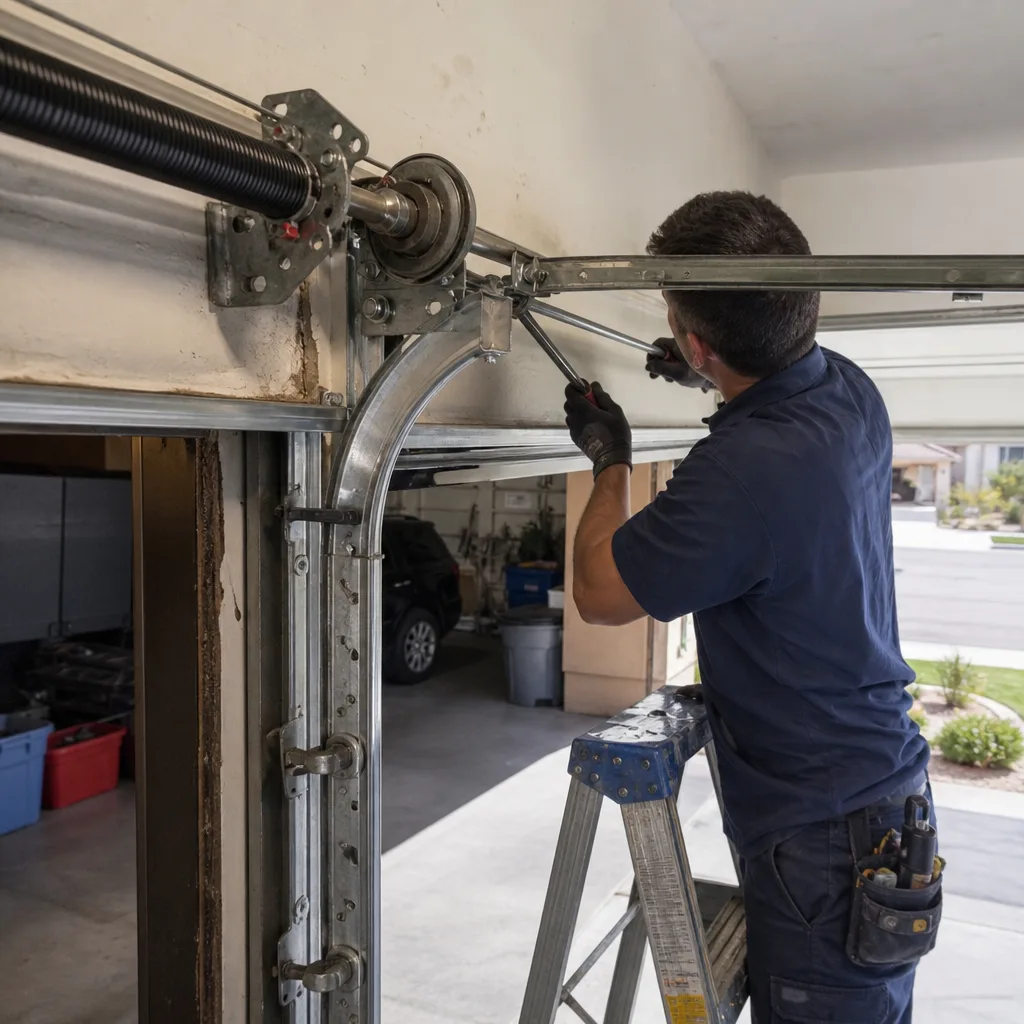
A torsion spring stores the energy that carries a door’s weight up to 200 times a day. It’s under constant tension, and it eventually fatigues and breaks with a sound like a gunshot. The good news: it telegraphs its failure more loudly than any other component. The bad news: the warning window is short and easy to miss.
In our experience, a spring typically shows warning signs 2 to 4 days before it breaks. The signs stack:
- Half-second hesitance. The door pauses at the start of its open cycle, or pauses at the top before settling into the open position.
- Slightly heavier door. If your opener is up to code, it will push back on a door that’s too heavy. If it’s an older unit without a load sensor, the door will just lift slower.
- A faint tick or pop. As the torsion spring’s wire begins to crack internally, it makes a series of small coiled sounds as the door cycles.
- Visible gap or rust mist. Look at the torsion spring above the door header. A hairline crack, an uneven coil gap, or a fine rust dust on the shaft is a real warning.
A torsion spring holds hundreds of pounds of stored energy. Never attempt to inspect, adjust, or replace one yourself. This is a genuine injury risk, not a caution to cover ourselves. If you suspect spring fatigue, stop using the door and have it inspected. That’s the moment when a Monday service call is far cheaper than a 10 p.m. emergency, and in Summerlin where the heat is unforgiving, we hear from a lot of homeowners who waited one cycle too long.
Cable Snap: Why an Off-Level Door Is Never a Floor Problem
When a homeowner notices a door sitting crooked when closed, the first thing they often suspect is the floor. Uneven slab, settling, a new crack in the driveway. It almost never is. An off-level door is a cable warning, and it’s the most reliable single sign in the trade.
Here’s why. Each side of the door has its own cable that winds around a drum on the end of the torsion shaft. The two cables have to be under equal tension for the door to sit level. When one cable begins to fray or slip out of the drum groove, the tension on that side drops, and that side of the door drops with it. So the door sits half an inch or an inch lower on one side. The floor didn’t change. The cable did.
You can check this in 30 seconds:
- Stand in the driveway, about ten feet back, in daylight.
- Look at the gap under the door where it meets the ground. Photo it with your phone to see it clearly.
- Run your eye from one side of the door to the other. The gap should be even. If it isn’t, note which side is lower.
- Repeat the check two more times on different days. A consistent tilt is a cable sign. A one-time tilt that corrects itself is worth watching but not urgent.
If the door sits off-level and also makes a snapping, twanging, or thunking sound as it operates, the cable is close to failure. Do not cycle the door again. A snapped cable can whip and cause serious injury, and a door that drops on one side can pull out of its track entirely. In Summerlin neighborhoods where the afternoon sun hits west-facing doors hard, the cable wear cycle is faster than in cooler climates, and we hear more of these in July and August than any other month. If you see a tilt, call for an inspection. For a free second opinion on any written estimate, we’re happy to look.
If the trouble turns out to be more than the cables, our Garage Door Repair in Summerlin page covers the broader repair checklist.
Opener Motor Burnout: The Grinding That Isn’t the Door
Opener motors fail slowly in a way that mimics a failing door. The symptom most people notice is that the door reverses on its way down or refuses to open fully. It’s tempting to blame the door, but the motor is often the culprit, and the warning window is longer: usually one to three weeks from the first sign to full failure.
The precursors:
- A strained or laboring motor sound. The opener sounds like it’s working harder than it used to, even when the door cycles normally.
- Reversal on close. The door reverses for no visible reason. This can be a sensor issue, but a worn drive gear produces the same symptom.
- Refusal to open from the wall button but not the remote. Or the reverse. That points to a logic board issue that’s often progressive.
- Clicking without movement. The motor clicks but the door doesn’t move. That’s a gear or capacitor on its way out.
On a LiftMaster or Chamberlain unit, a worn main drive gear is the most common mechanical failure and produces a distinctive grinding sound from inside the housing. On a Genie or a Craftsman chain-drive, a stretched chain or worn trolley is more likely. The good news: a motor in this condition is usually still fixable if you catch it in the warning window. Once the drive gear has stripped completely, the opener is done, and you’ll either replace the gear or replace the opener. In Summerlin’s heat, motors run hotter and we see burnout at higher rates than in cooler markets. If your opener is more than twelve years old and starting to show these signs, plan for a replacement rather than waiting for a failure. Our Garage Door Opener in Summerlin page walks through what to expect when replacement is the right call.
Sound Identification: Dry Roller vs. Grooved Drum
Not every grinding sound is urgent. Most grinding is a dry roller, and the fix is a five-minute lubrication job. A smaller percentage is a cable riding on a worn drum groove, and that one is a real emergency in waiting. The two sounds are different if you know what to listen for.
The dry roller grind is a squeal or a high-pitched moan, most noticeable on the first cycle of the day and quieter once the door has run a few times. It’s continuous through the cycle, and it stops completely after a proper lubrication of the rollers and hinges. If you can point at a specific roller and hear the sound coming from it, you’re hearing a dry bearing. Non-urgent.
The grooved-drum grind is a rhythmic metal-on-metal scrape, and it gets worse through the cycle rather than better. It often has a slight hesitation at one specific point in the travel, and you can usually see the wear: the cable does not sit in a clean groove on the drum, it crosses or overlaps. On a door that’s already sitting off-level, a grooved-drum grind is the final warning before a cable snap.
If you’re not sure which you’re hearing, run the door and record it on your phone. A technician can identify the sound from a recording in under a minute, which saves you a trip if it’s just a lubrication issue. When a cycle turns into a genuine grinding scrape that gets worse as the door travels, don’t cycle it again. Call us for the answer.
The Overnight Test: Safe Through the Weekend or Call Today?
Homeowners often ask us whether a door showing warning signs is safe to use until Monday. Our honest answer: sometimes yes, sometimes no. Here’s the workflow we recommend.
- Check the sound. A grinding squeal that’s quieter after a few cycles is a lubrication issue. A rhythmic metal scrape that gets worse is a cable issue. If you can’t tell the difference, treat it as the cable issue.
- Check the closed position. Fully close the door and photograph the gap under it from ten feet back. If the gap is even, the door is balanced. If it’s off-level by more than a quarter inch, do not operate the door again until it’s inspected.
- Test the door by hand. Disconnect the opener using the manual release (pull the red handle while the door is fully closed). Lift the door to waist height with one hand. A well-balanced door will hold that position. If it drops or lifts too easily, the spring or the cable is compromised. Reattach the opener and stop using the door.
- Check the reversal test. With the door moving down, wave a hand or a two-by-four through the safety beam. It should reverse. If it doesn’t, don’t use the door until it’s fixed (this is the one issue that’s an emergency even when everything else looks fine).
- Decide based on heat. If the temperature is over 100°F and rising (typical for a Summerlin July), lean toward calling today. If it’s a mild October week and the only sign is a slight squeal, you can wait until Monday.
Our 24/7 phone line is answered by a live person, including weekend nights. If you’re not sure which way to lean, call and describe the symptom. That costs nothing, and it turns a guess into an answer.
Why Summerlin Heat Compresses the Warning Window
Summerlin’s climate is unusually hard on garage doors. That’s a factor most warning-sign guides never mention, and it matters here. Between June and September, garage interiors regularly reach 110°F to 130°F, especially when the door faces west or southwest. That heat has three specific effects on the components we’ve been discussing.
Springs lose tension faster. The steel in a torsion spring relaxes more quickly at high temperature. The half-second hesitation you’d catch in April can become a full-second hesitation in July, and the flex becomes a fracture sooner.
Cables expand and contract. The thermal cycling is modest but daily, and the wrap-on-drum wear accelerates. In Summerlin we see cable failures clustered in the third week of a sustained heat wave. If a cable is going to snap, it usually does it in July or August.
Opener motors run hotter. A motor rated for a certain duty cycle at 70°F is working outside its comfort zone at 130°F. Capacitors dry out faster, gears soften faster, and the whole assembly ages more quickly. A LiftMaster or a Chamberlain rated for fifteen years might give you ten in Summerlin if the garage isn’t ventilated.
The practical consequence: the same warning sign that would give you a week to call in a cooler city gives you two or three days here. If you see a warning sign in Summerlin in July, treat it as more urgent than you would in December. We’ve written more detail about this in our repair service guide.
Three Things You Can Track This Week
You don’t need to be mechanically inclined to catch most failures in their warning window. You just need a baseline. Here are three things worth tracking, starting this week.
Time the open cycle. Start a stopwatch on the wall button and time how long the door takes from full close to full open. Do it three times and average. Write the number on a sticky note inside the door of your garage cabinet. Re-check the number next month. A drift of more than two seconds is worth a call.
Photograph the closed gap. Stand ten feet back, kneel, and take a photo of the gap under the door across its full width. Date the photo. Repeat monthly. A change in the photo is easier to catch than a change in person, because your eye normalizes small drift.
Listen on the first cycle of the day. The first cycle of the morning is the diagnostic cycle, because the door has sat overnight in the coolest part of the day. That’s when a dying roller is loudest and a worn drum is quietest. Listen for ten seconds, then open the door. You’ll start to hear things you didn’t notice before.
If you need a full inspection, our Garage Door Repair in Summerlin page covers what we charge and what’s included. If you’re considering a new door entirely because the cycle count is adding up across multiple components, our Garage Door Installation in Summerlin page covers the range and what to expect.
Common Mistakes to Avoid
- Blaming the floor for an off-level door. We see this in Summerlin constantly. The slab didn’t move; the cable did. If the door was level last year and isn’t now, look at the cables, not the concrete.
- Greasing the torsion spring to quiet a sound. A torsion spring under load must not be lubricated, adjusted, or inspected by anyone other than a trained technician. The stored energy is lethal if released wrong. The sound you’re hearing from the spring is a mechanical issue, not a lubrication issue.
- Lubricating a roller that’s actually grinding on a grooved drum. The two sounds are different. Lubrication won’t fix the grooved drum, and it can mask the sign long enough for a cable to snap.
- Replacing the opener when the door is the problem. A slowing door is more often a tired spring than a tired motor. Don’t spend $400 on a new opener to solve a $180 spring issue. Diagnose first.
- Ignoring the safety reversal test. It’s the only check on this list where a failure is not a warning, it’s an actual hazard. If the door doesn’t reverse on a blocked beam, don’t use it until it’s fixed.
- Waiting out a heat wave. In Summerlin in July, warning signs that would be a “call Monday” in March are a “call today” in the heat. We hear from homeowners who waited a week and paid for a full door instead of a spring.
- Trusting a single phone call with no written price. The right response to any warning sign is a quote that is stated before work begins and put in writing. If you don’t get that, try another shop. A free second opinion on any written estimate is one of our standing offers.
See the difference
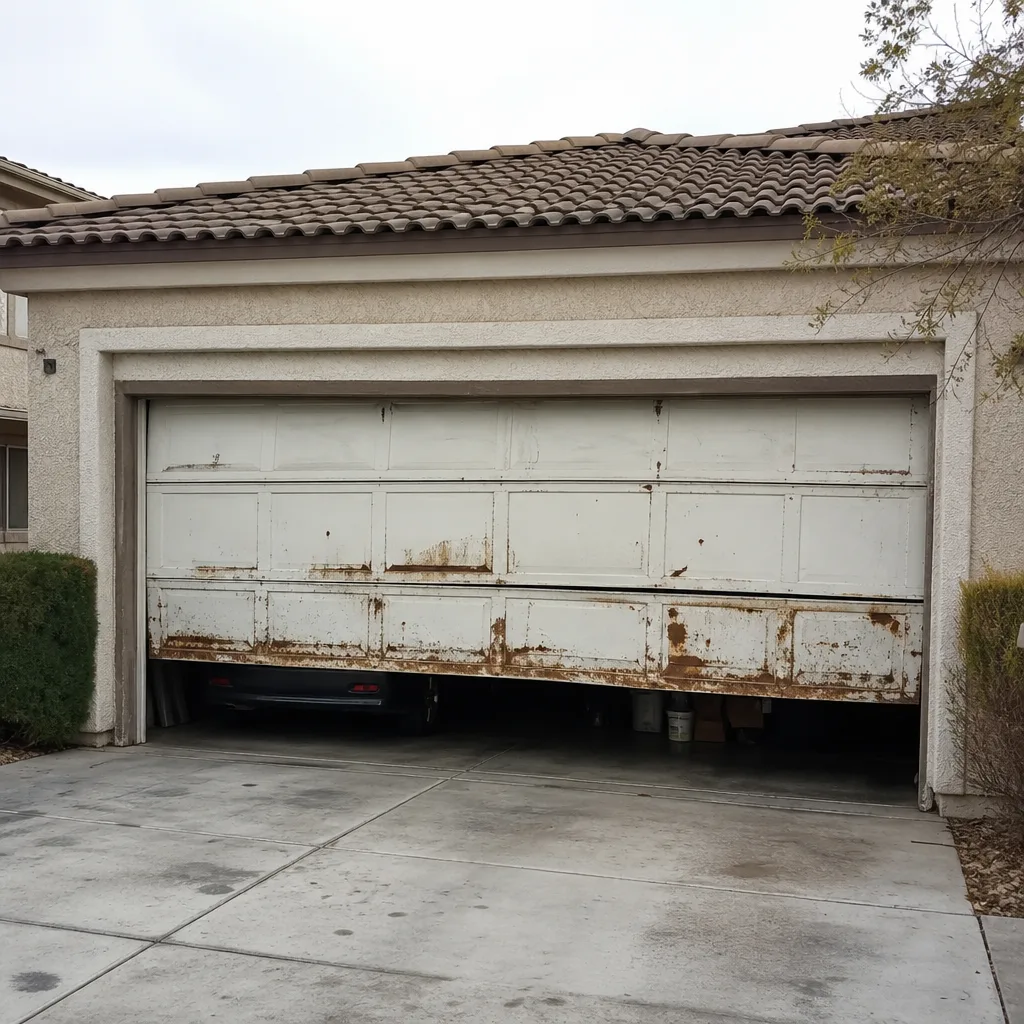 Before
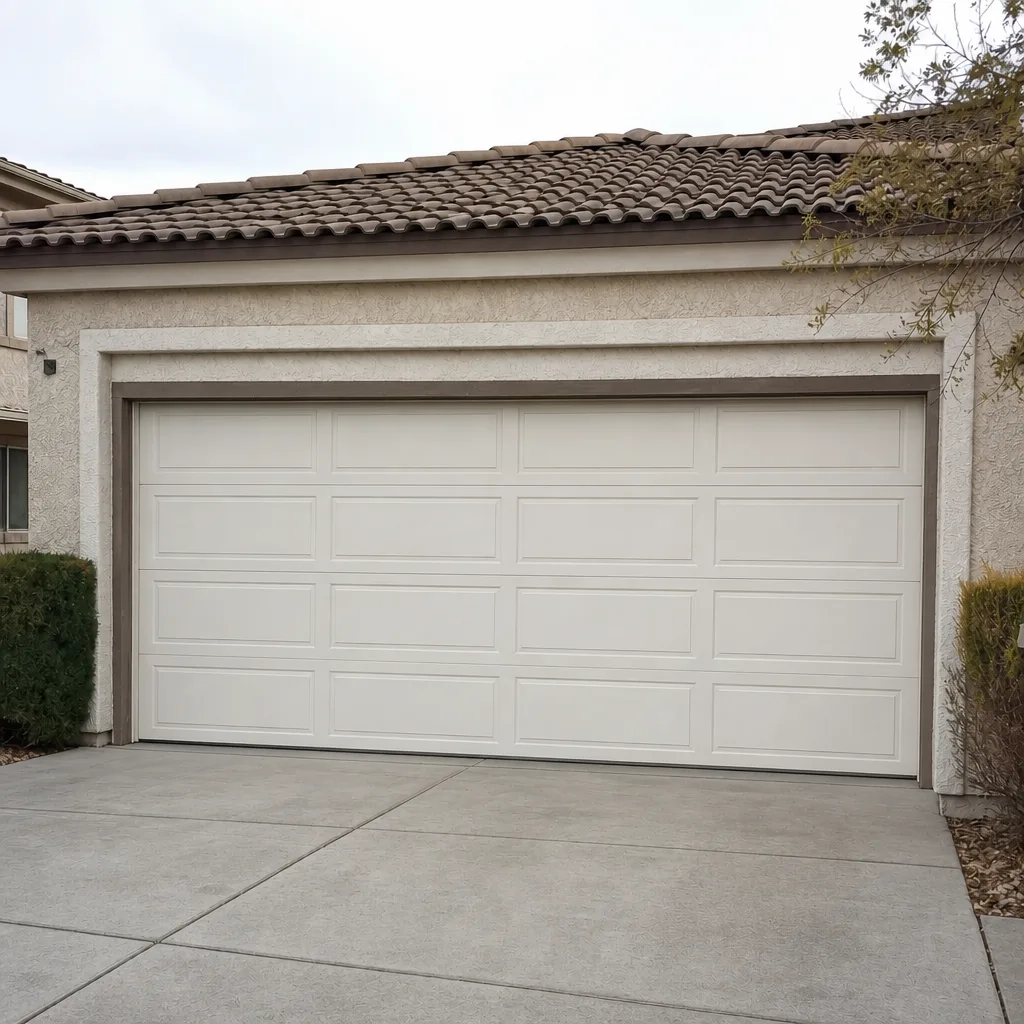 After
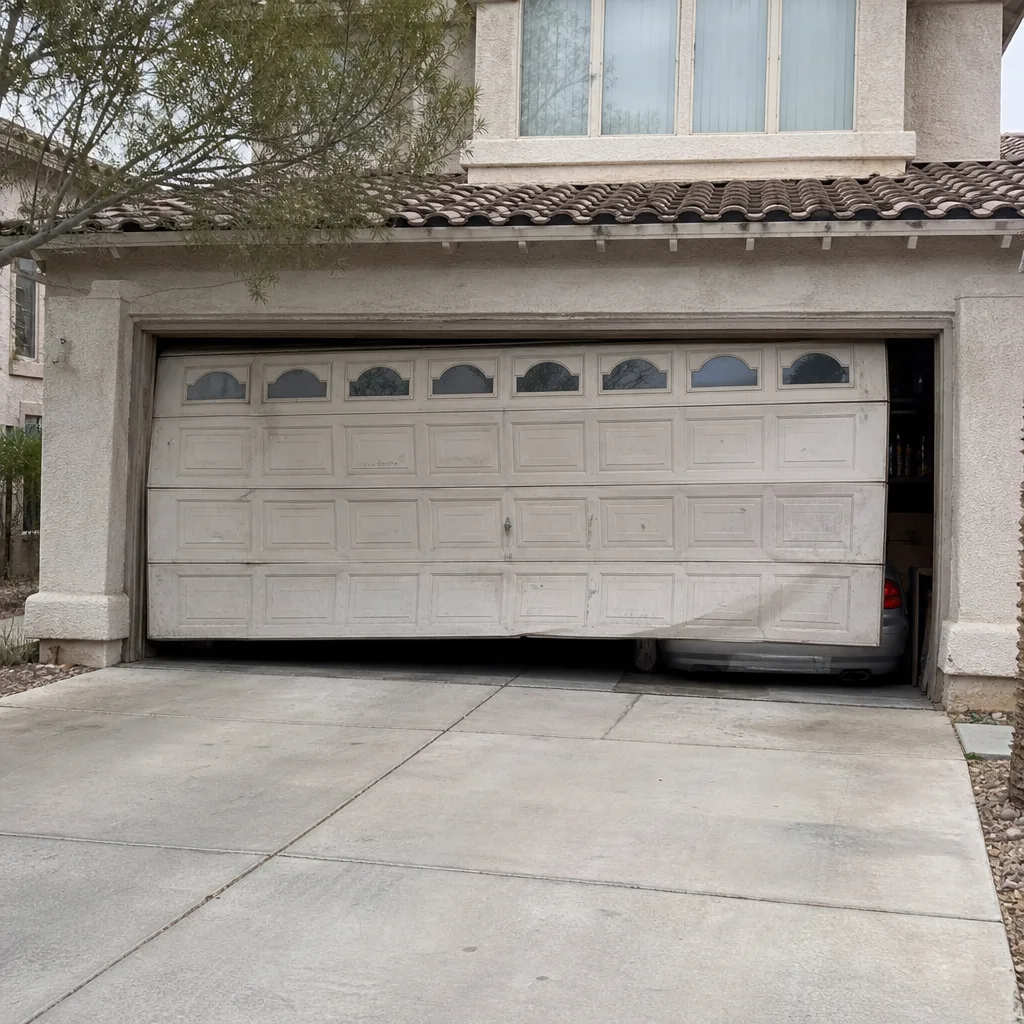 Before
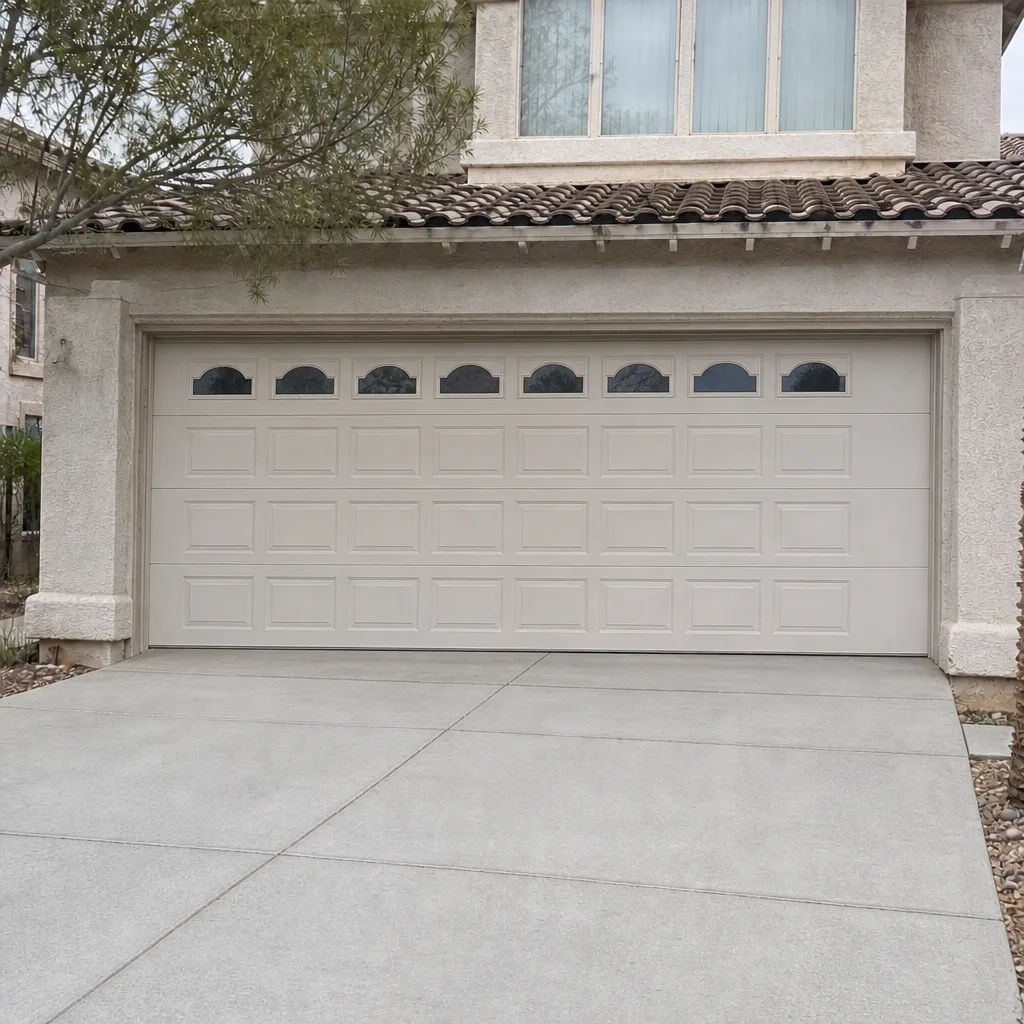 After
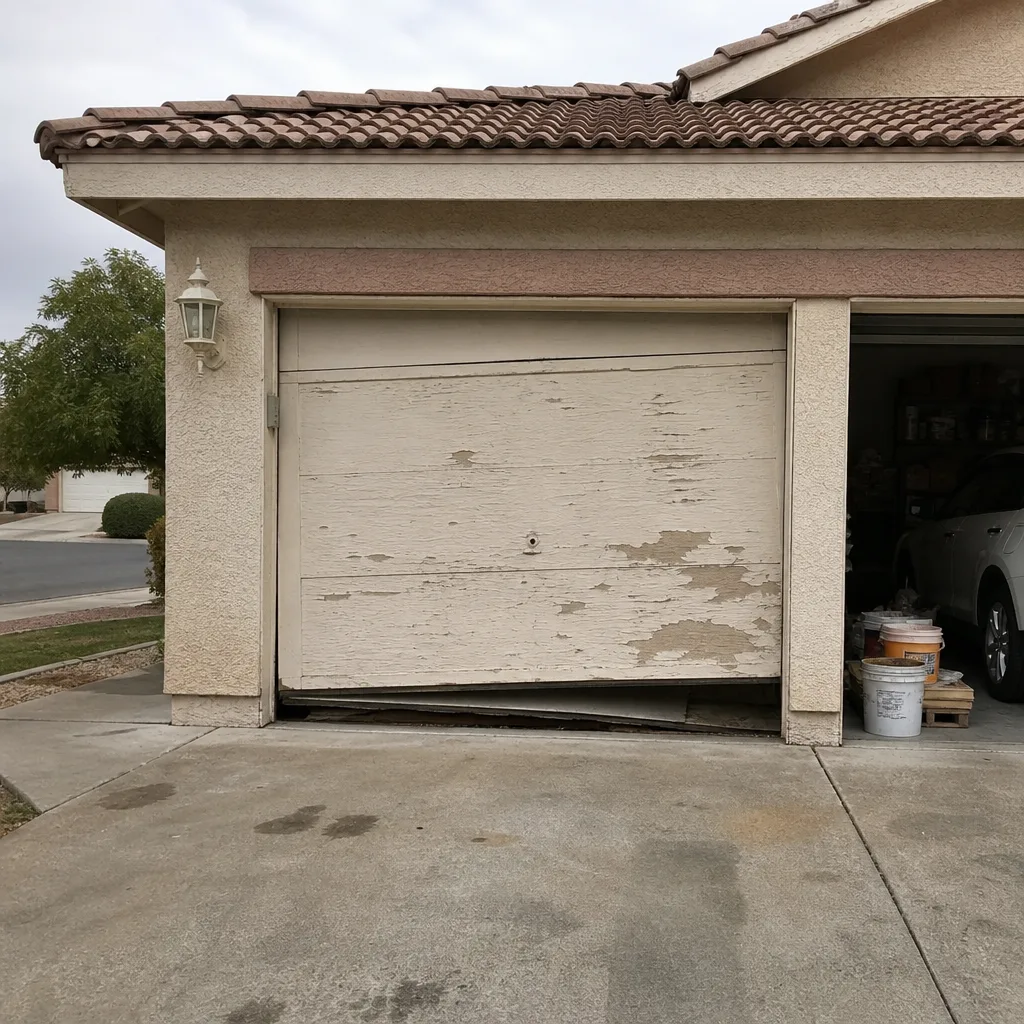 Before
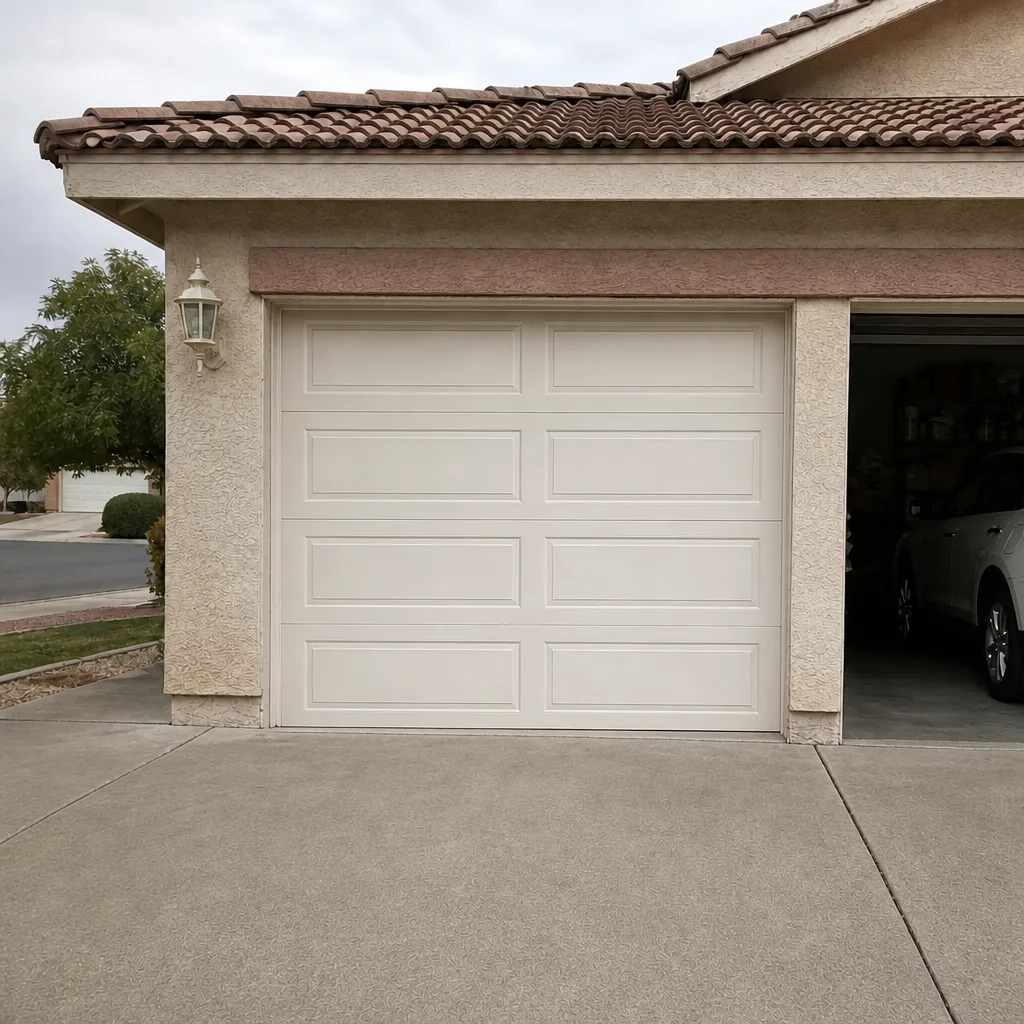 After
When to Call a Professional
Call a professional today if any of the following is true: the door sits off-level when closed, a grinding sound changes with each cycle and gets worse, the door reverses consistently on close with no visible obstruction, the door won’t open at all, or the safety reversal test fails. All of these have a genuine injury or property-damage risk, and all of them are cheaper to fix now than after a failure.
You can also call for a warning-sign inspection when you’re not sure. Mainspring Garage Door Co. Summerlin offers free estimates in Summerlin and second opinions on any written estimate you’ve received elsewhere, and our technicians carry springs, cables, and openers on the truck so most jobs are finished in a single visit. If a warning sign has been there a few days and you’ve been meaning it to call, this is the week to do it. Call (855) 608-8802.
Frequently Asked Questions
The single most reliable warning sign is a door that gets slower to open over successive days. A spring losing return energy, a cable losing tension, or a motor losing torque will all show up as a half-second to two-second increase in the open cycle before any other symptom appears. If you time the cycle and it has changed, have the door inspected.
A torsion spring is rated for a set number of cycles (usually around 10,000), which at four cycles a day is roughly seven years of use. In Summerlin’s heat, that lifespan shortens because the steel relaxes faster. If your spring is more than six or seven years old and starting to show the half-second hesitation, plan for a replacement rather than waiting for the fracture.
No. An off-level door is a cable warning, and a snapped cable can whip and cause serious injury. Stop using the door and have it inspected. This is true in every city, but it’s especially important in Summerlin in the summer, when the heat accelerates cable wear.
If the grinding gets worse through the cycle and has a rhythmic metal-on-metal scrape, it’s urgent (likely a grooved drum). If it’s a continuous high-pitched squeal that quiets after a few cycles and stops after lubrication, it’s a dry roller and it’s not urgent. Record it on your phone and call; a technician can identify it in under a minute.
Yes, and it compresses the warning window. Garage interiors in Summerlin regularly reach 110°F to 130°F in July and August, which accelerates spring relaxation, cable wear, and opener motor burnout. The same warning sign that gives you a week to call in a cooler climate gives you two or three days in Summerlin heat.
Yes. Mainspring Garage Door Co. Summerlin works with background-checked, uniformed technicians, and every completed job is covered by our 90-Day Done Right Promise: if the work isn’t right, we come back at no charge, in writing. Our flat price is stated before any work begins, so there are no surprises on the bill. Call (855) 608-8802 for an exact quote on any warning sign you’re seeing.
The Bottom Line
The difference between a warning sign and an emergency is usually whether the homeowner was paying attention. A spring that hesitates for half a second on Monday is a spring that fractures on Thursday. A door that sits a half-inch off-level is a cable that has two cycles left before it lets go. In Summerlin, the warning window is shorter than you’d think, especially when the temperature hits triple digits. You don’t have to be an expert to catch most failures in the warning phase. You just have to notice the slowdown, look at the closed position, and listen on the first cycle of the day. When something feels off, call early. A warning-sign inspection is cheaper than an emergency repair, and it’s the square deal every homeowner deserves.
To learn more about our broader service offer, visit our Mainspring Garage Door Co. Summerlin home page.
If any of the warning signs in this guide sound familiar, call Mainspring Garage Door Co. Summerlin today at (855) 608-8802 for a free estimate. Our phones are answered by a live person around the clock, and our trucks carry the springs, cables, and openers we need to finish most jobs in a single visit. Upfront pricing, stated before any work begins. Background-checked, uniformed technicians. A written 90-Day Done Right Promise on every job. When we say we’ll be there, we will be there.
Written by the team at Mainspring Garage Door Co. Summerlin.