
Last updated November 18, 2026
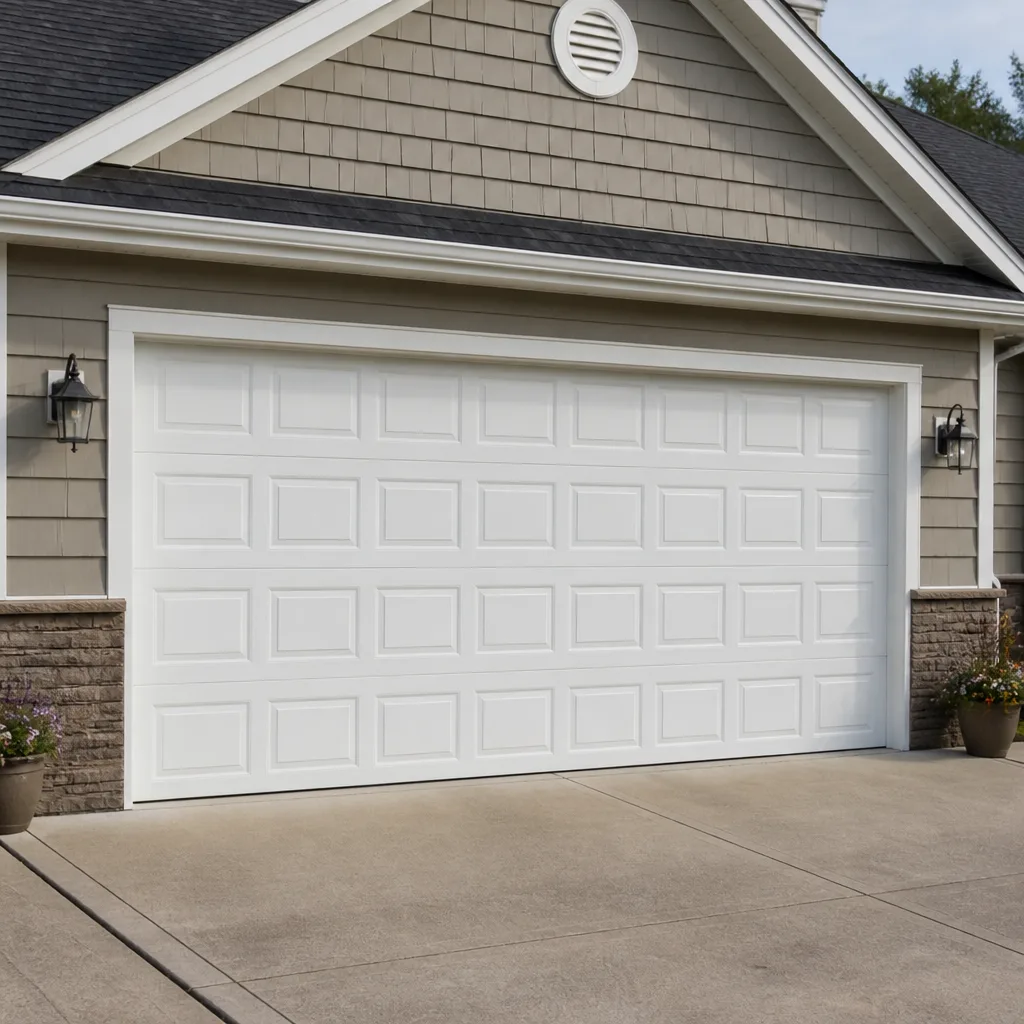 Raised-panel steel
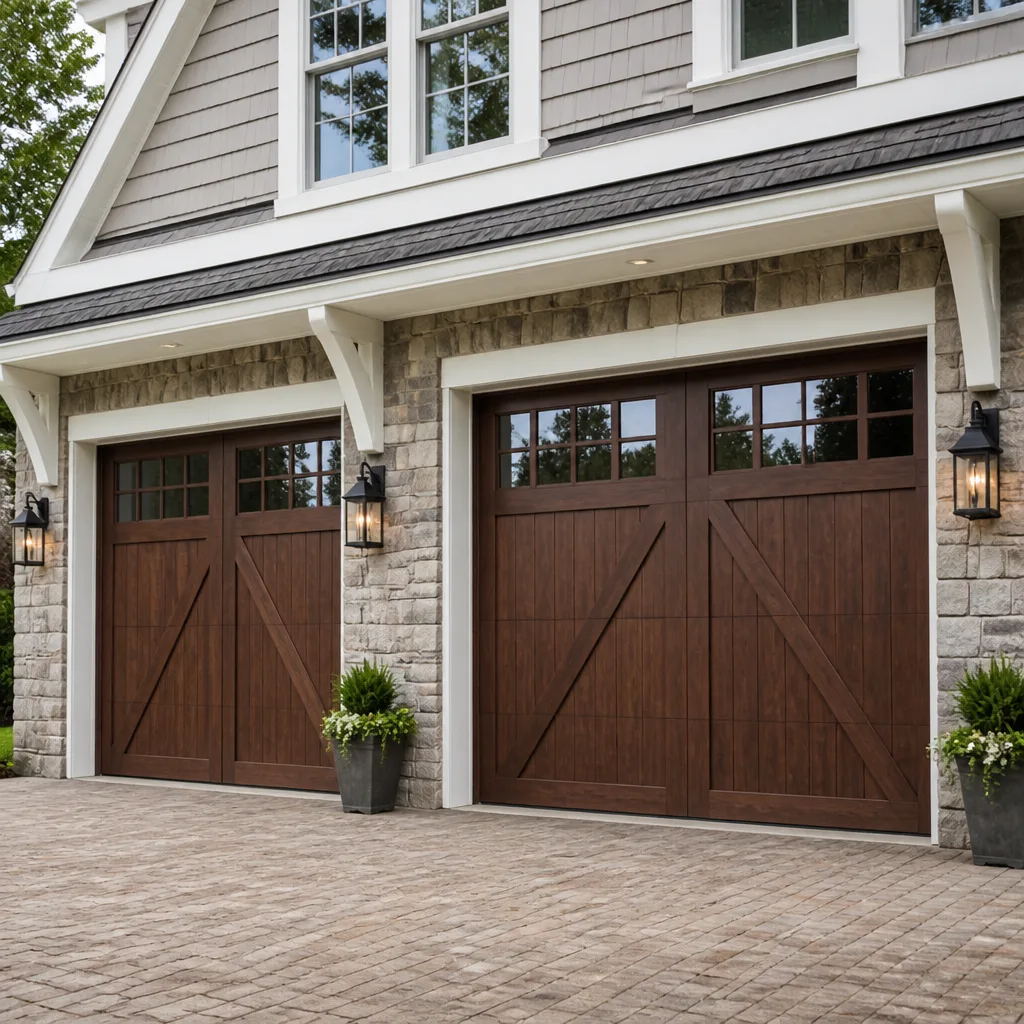 Carriage house
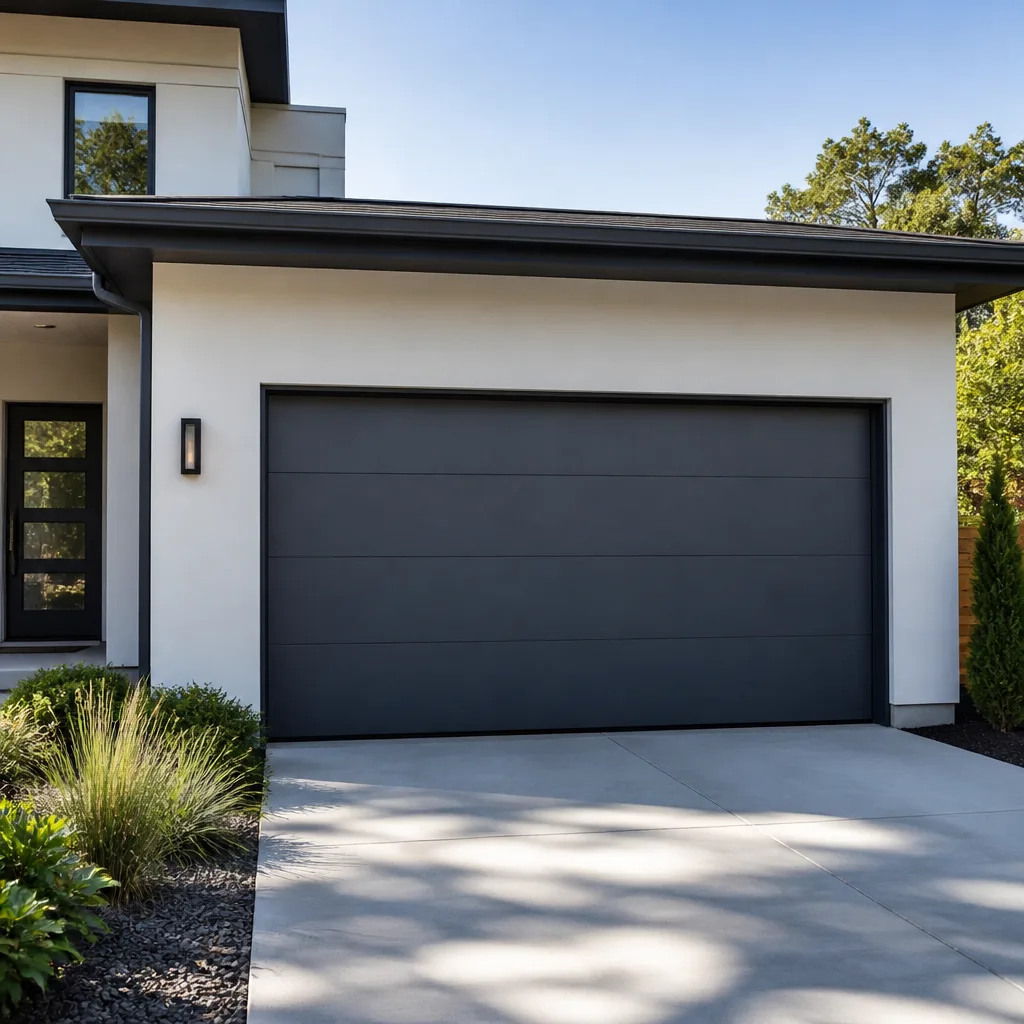 Modern flush
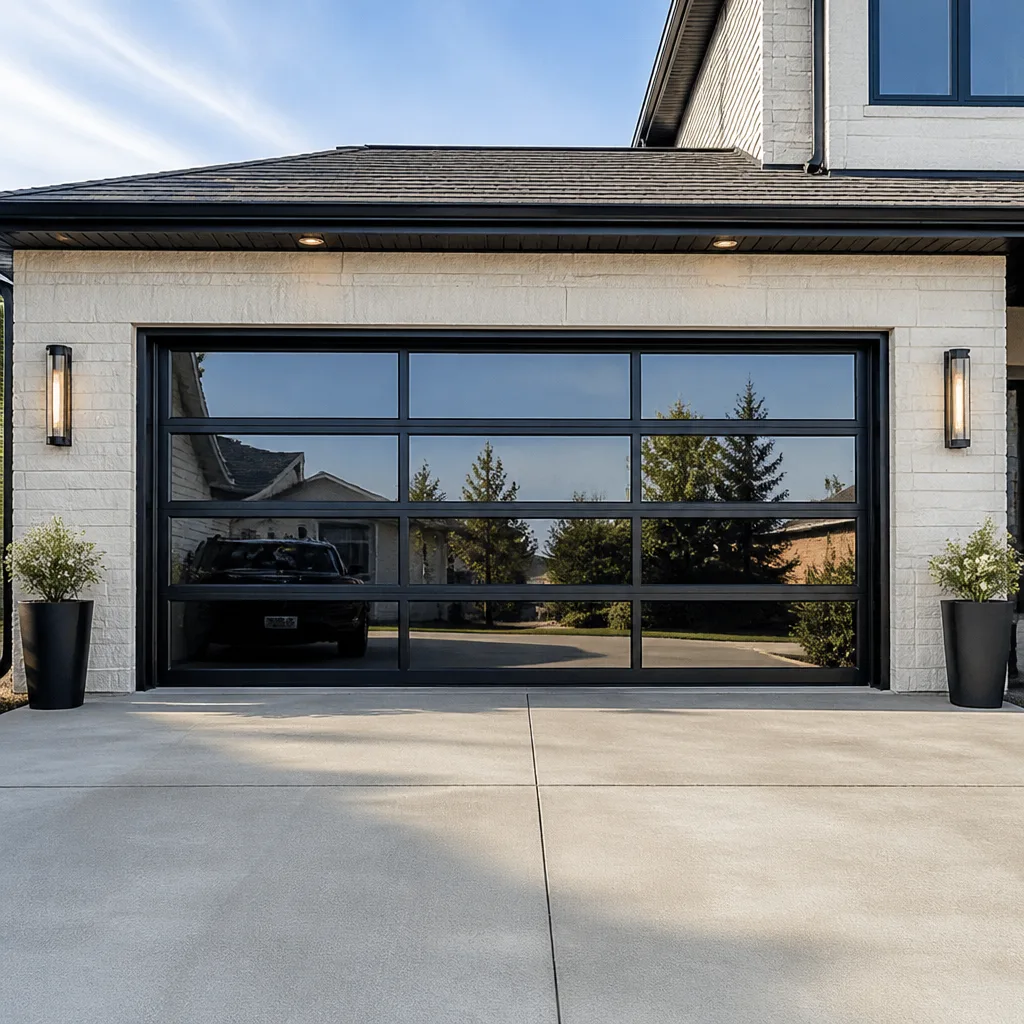 Full-view glass
 LiftMaster openers
 Chamberlain openers
Full 25-point door and opener safety check with every visit - springs, cables, rollers, tracks, and your LiftMaster or Chamberlain opener included
You get a price before we start. It does not change when the pro arrives.
Get your free estimateHow Long Does Emergency Garage Door Take? Timelines and What to Expect
Here is the part most homeowners get wrong about an emergency garage door call: the emergency is about when we arrive, not how long the work takes once we’re there. A broken torsion spring is a 45 – 90 minute repair whether you call it in at 2 a.m. or schedule it for Tuesday morning. The clock that matters to you is the arrival window, and that’s where honest information is scarce. In this guide we’ll walk through realistic arrival times in Summerlin, why emergency repairs often finish faster than planned ones, what happens when a part isn’t on the truck, and what “fully operational” should mean before a technician packs up and leaves.
Quick Answer
Emergency garage door repairs typically take 45 minutes to 2 hours of actual labor once a technician arrives, with most common failures like springs, cables, and off-track rollers finishing in under 90 minutes. The arrival window is the variable: same-day service usually means within 4 to 8 hours, while “within two hours” is realistic for true emergencies like a door stuck open or a vehicle trapped inside. The total elapsed time from your call to a working door is usually 2 to 4 hours in Summerlin.
Styles & brands we work with
- Raised-panel steel
- Carriage house
- Modern flush
- Full-view glass
- LiftMaster openers
- Chamberlain openers
Table of Contents
- What Emergency Arrival Windows Actually Mean
- Why Emergency Repairs Often Finish Faster Than Planned Ones
- The Single-Point Failure Advantage
- What Happens When the Part Isn’t on the Truck
- How Your Phone Description Shortens the Job
- What “Fully Operational” Means at the End of the Call
- The Follow-Up Items a Technician Should Flag
- Summerlin-Specific Factors That Affect Timelines
What Emergency Arrival Windows Actually Mean
When you call Garage Door Repair in Summerlin at 6 p.m. on a Friday because the door won’t close, the phrase “same-day” gets used a lot in this trade without much clarity. Here’s how the windows actually break down:
- “Within two hours” – Realistic when a technician is already in the area and the failure is a genuine safety issue: door stuck open, vehicle trapped, cable snapped with the door hanging. In Summerlin, two-hour response is achievable most weekdays because the valley’s service density is high.
- “Same-day” – Usually 4 to 8 hours from call to arrival. This covers most spring, opener, and roller failures where the door is secure but nonfunctional.
- “Next-day” – Common in summer heat waves when call volume spikes 40 – 60% in a single day. The garage door motors work harder in 110°F heat, and the failures cluster.
- “Within 24 hours” – The honest window for non-emergency repairs where the door is fully closed and locked, and no one is trapped.
What moves the window in either direction: time of day, day of week, proximity of the call to the technician’s current location, and whether the failed part is a stock item. A live person who answers the phone (not a phone tree, not an answering service) can usually give you a tighter window in 90 seconds than any online booking form. That’s the standard we hold ourselves to at Mainspring Garage Door Co. Summerlin.
Why Emergency Repairs Often Finish Faster Than Planned Ones
The counterintuitive part of this trade: an emergency repair often takes less time on the tools than a scheduled one. The reason is diagnostic. An emergency call is triggered by a sudden, obvious symptom – a snap, a bang, the door dropping hard, the opener running but the door staying put. That symptom usually points to one failed component. The technician knows what to check, confirms the failure in 5 to 10 minutes, replaces the part, tests the balance, and rolls out. Total labor: 60 to 90 minutes in most cases.
A scheduled repair is different. When a homeowner calls because “the door just feels wobbly” or “it’s been getting louder for a few months,” the technician often finds three or four contributing issues: worn rollers, a stretched spring, loose hinges, and a tired opener gear. One fix exposes another. The job grows. Add in the time to walk the customer through each issue and get approval, and a scheduled repair can easily run 2 to 3 hours.
This is why we tell Summerlin homeowners the emergency timeline is usually shorter, not longer. The failure is loud. The fix is specific.
The Single-Point Failure Advantage
Most emergency calls break down into a handful of predictable failures, each with its own typical repair time on a stocked truck:
| Failure | Typical Labor Time |
|---|---|
| Torsion or extension spring | 45 – 90 minutes |
| Cable snapped or off drum | 45 – 75 minutes |
| Door off track | 60 – 120 minutes |
| Roller or hinge failure | 30 – 45 minutes |
| Opener motor or logic board | 60 – 90 minutes |
| Opener gear and sprocket | 45 – 75 minutes |
| Photo-eye or safety sensor fault | 15 – 30 minutes |
The pattern here matters. Springs and cables account for the bulk of true emergency calls, and both are single-point repairs. When your door has been running on a 20-year-old torsion spring and it finally gives, the failure is isolated. We’ve seen this repeatedly in Summerlin’s older sections where original builder-grade springs are still in service. The replacement is quick once the technician is on site. The door goes back into balance, the safety check passes, and you’re done.
One note on springs: do not attempt this yourself. Torsion and extension springs are under extreme tension and carry the full weight of the door. A sudden release can cause serious injury. This is a job for a trained technician with the right winding bars and the door properly secured.
What Happens When the Part Isn’t on the Truck
This is the scenario that separates a prepared shop from a hopeful one. About eight out of ten emergency failures come down to parts a trained tech carries in bulk: torsion springs in standard sizes, cables, rollers, hinges, photo-eyes. The remaining two out of ten are the interesting cases.
Common reasons a part isn’t stocked:
- Nonstandard spring size. Some custom or high-lift doors use a spring with a specific wire gauge and length that isn’t a same-day stock item.
- Proprietary opener logic boards. Some older Genie and Chamberlain models use boards that need a specific replacement.
- Specialty door panels. A Wayne Dalton or Clopay panel with a color or window option that’s no longer in current production.
- Commercial-grade or oversize doors. Not typical in a Summerlin residence, but a factor for hoa-community clubhouses and entry gates.
What a reputable shop does in that scenario: secures the door safely so it can’t drop or move, tells you exactly what part is needed and when it will arrive, gives you the price before ordering, and schedules the return visit rather than leaving you with a door that’s half-fixed. The total time from your call to a fully working door stretches to 1 to 3 days in that case, and a shop that tells you otherwise is guessing.
How Your Phone Description Shortens the Job
The single biggest lever you control over total job time is the accuracy of what you tell the person answering the phone. A clear description lets the dispatcher route the right technician, load the right parts, and give you an honest arrival window. Here’s what to include on the call:
- What changed and when. “It started yesterday afternoon and stopped working entirely this morning” is far more useful than “it’s broken.”
- Where the door is right now. Fully open, fully closed, halfway up, or hanging off one side.
- What you hear. A snap, a grind, a hum with no movement, or complete silence.
- What brand and rough age the door and opener are. “Clopay door, 2005, LiftMaster opener” tells the dispatcher a lot.
- Whether anything is trapped. A vehicle inside or a person who can’t get out changes the priority level instantly.
- Whether the door is secure. A closed and locked door means a next-day window is fine. An open door to your home means two-hour response.
In our experience, a homeowner who gives those six details on the first call cuts the total elapsed time by 20 to 40 minutes on average. The technician arrives with the right spring, avoids a diagnostic detour, and starts work immediately.
What “Fully Operational” Means at the End of the Call
An emergency call should end with more than “it opens and closes again.” The threshold for “fully operational” includes:
- The door is in balance. Lifting it by hand halfway up, it should stay put without drifting.
- The safety reverse test passes. An object under the door triggers immediate reversal.
- The photo-eye sensors are aligned, clean, and wired correctly.
- The opener force limits are set correctly for the door’s weight.
- The track is aligned, rollers are seated, and no cable is frayed or off drum.
- The technician has documented the work and left a written record.
If any of those aren’t checked off, the door isn’t fully operational – it’s just running. A qualified technician walks through every one of these before signing off. That’s the standard, and it’s the one you should ask about when you book the call.
The Follow-Up Items a Technician Should Flag
The door is running again, but the emergency call is also a diagnostic opportunity. A trained technician sees the whole door while fixing the one part, and a good one will identify what’s next before it becomes the next emergency:
- The other spring. Torsion springs are replaced in pairs on standard doors. If one broke at age 18, the second is on borrowed time.
- Roller condition. Worn nylon rollers create drag that strains the opener and shortens spring life.
- Cable fraying. A single strand out of place is the warning sign for a snapped cable.
- Opener age and gear wear. Most openers have a 10 to 15 year service life. Past that, the gear and logic board are candidates for failure.
- Weather seal and bottom rubber. In Summerlin’s heat, the bottom seal can crack and harden within 3 to 4 years, letting in dust and reducing insulation.
- Door balance drift. A door that was balanced in spring may need adjustment by fall as the metal expands in the 100°F-plus summer heat.
None of these are urgent on the day of the repair. All of them are worth knowing about, and a written estimate for each should be part of what you leave the call with.
Summerlin-Specific Factors That Affect Timelines
Local context changes timelines in ways that national guides miss. In Summerlin specifically:
- Summer heat drives cluster failures. June through September, garage interior temperatures push past 120°F. Springs lose tension faster, opener motors overheat, and photo-eyes fog with dust. Emergency call volume runs highest in late July and August.
- HOA rules on door color and panel style. Some Summerlin communities require specific Clopay or Amarr panel styles and colors. When a panel needs replacement rather than repair, HOA approval can add 24 to 72 hours to the timeline.
- Monsoon-season dust. July through September, wind-driven dust infiltrates tracks and rollers. A door that ran quiet in May can start grinding in August.
- Builder-grade springs in older sections. Homes built in the late 1990s and early 2000s in neighborhoods like The Trails and Sun City Summerlin commonly still have original 20-year springs. Many are past service life, which is why spring failure is the most common emergency call we see in those areas.
- Newer sections with premium openers. In The Ridges and Red Rock Country Club, homes often have Genie or LiftMaster belt-drive openers with Wi-Fi modules. Diagnostics on those can add 15 to 20 minutes compared to a standard chain drive.
Common Mistakes to Avoid
- Force-opening a stuck door by hand. A door off track or with a snapped cable is under tension you can’t see. Pulling on it can snap a cable or drop the door. Two Summerlin homeowners we’ve worked with learned this the hard way and turned a 60-minute repair into a 3-hour one.
- Ignoring the “second spring” warning. When one torsion spring breaks, the other is typically installed at the same time and has the same service life. Fixing only the broken one means the next emergency is already scheduled.
- Calling an “emergency” line that rings to voicemail. If nobody picks up, the emergency response is zero. Confirm you’re reaching a live person before you hang up.
- Skipping the safety-reverse test after a repair. A door that closes on a child or pet is a serious hazard. If a technician doesn’t test this before leaving, ask them to.
- Replacing the opener without checking the door first. A straining door makes the opener strain. Fixing the opener without fixing the door’s balance and rollers shortens the new opener’s life.
- Treating a scheduled tune-up as optional. A $89 seasonal tune-up in spring catches spring wear, roller drag, and cable fraying before any of them become emergencies in August. This is the highest-value call you can make on a garage door.
- Assuming all emergency calls finish in one visit. Most do, because the failed part is usually a stock item. The ones that don’t are usually nonstandard springs or specialty panels, and a shop that’s honest with you will say so on the call.
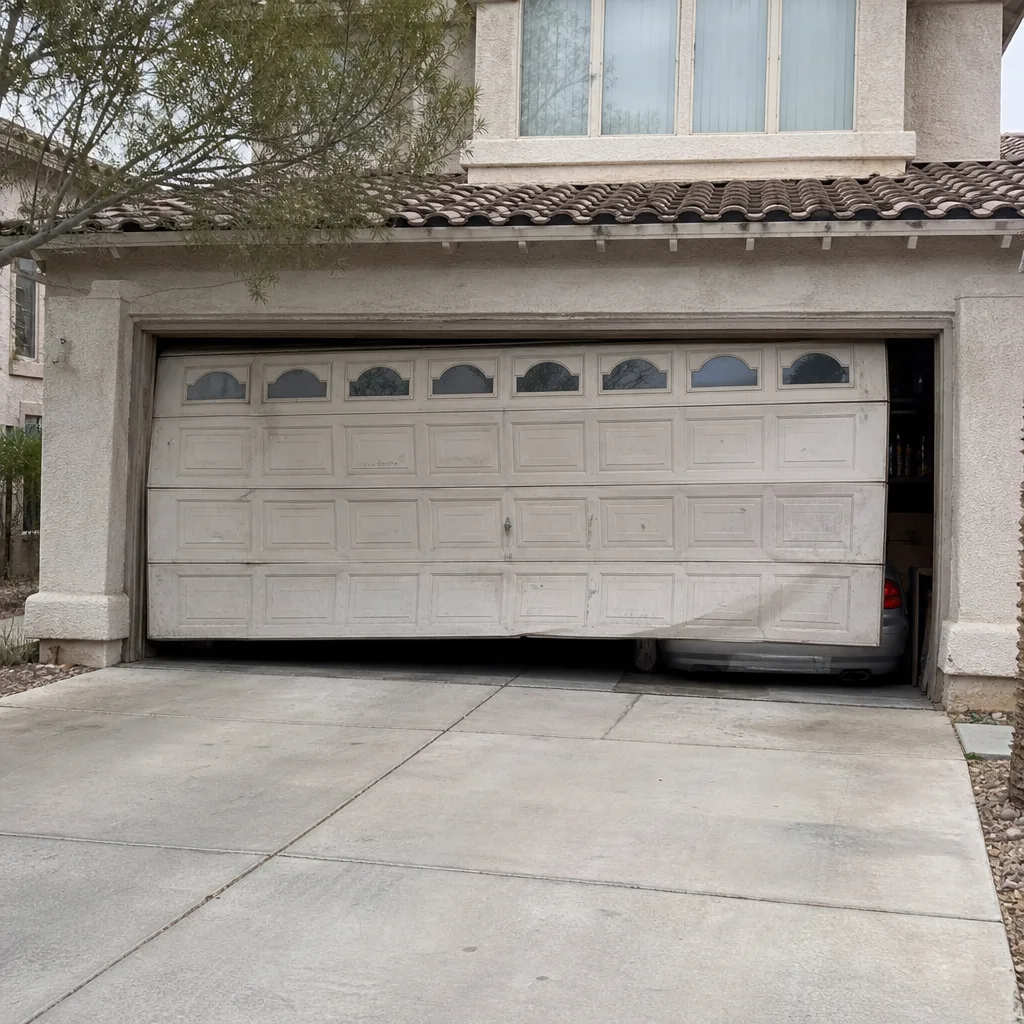
See the difference
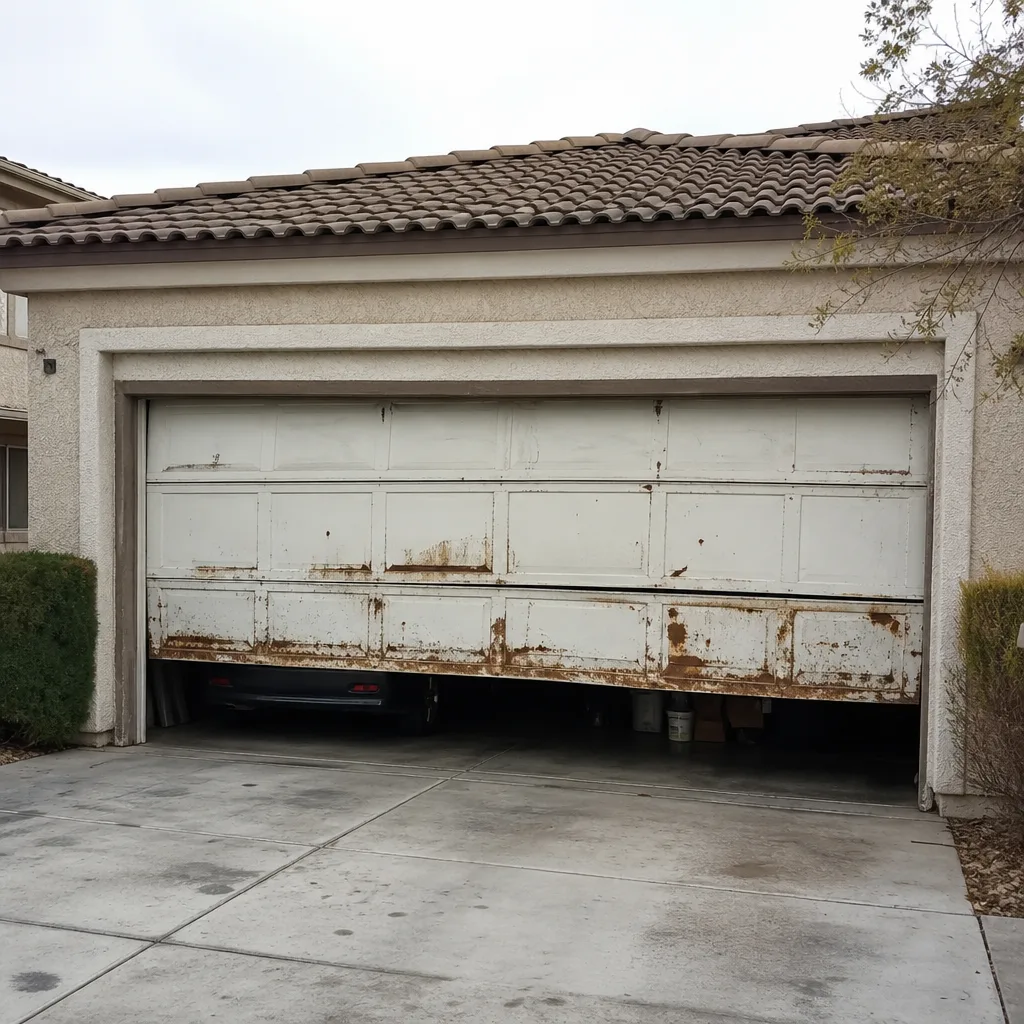 Before
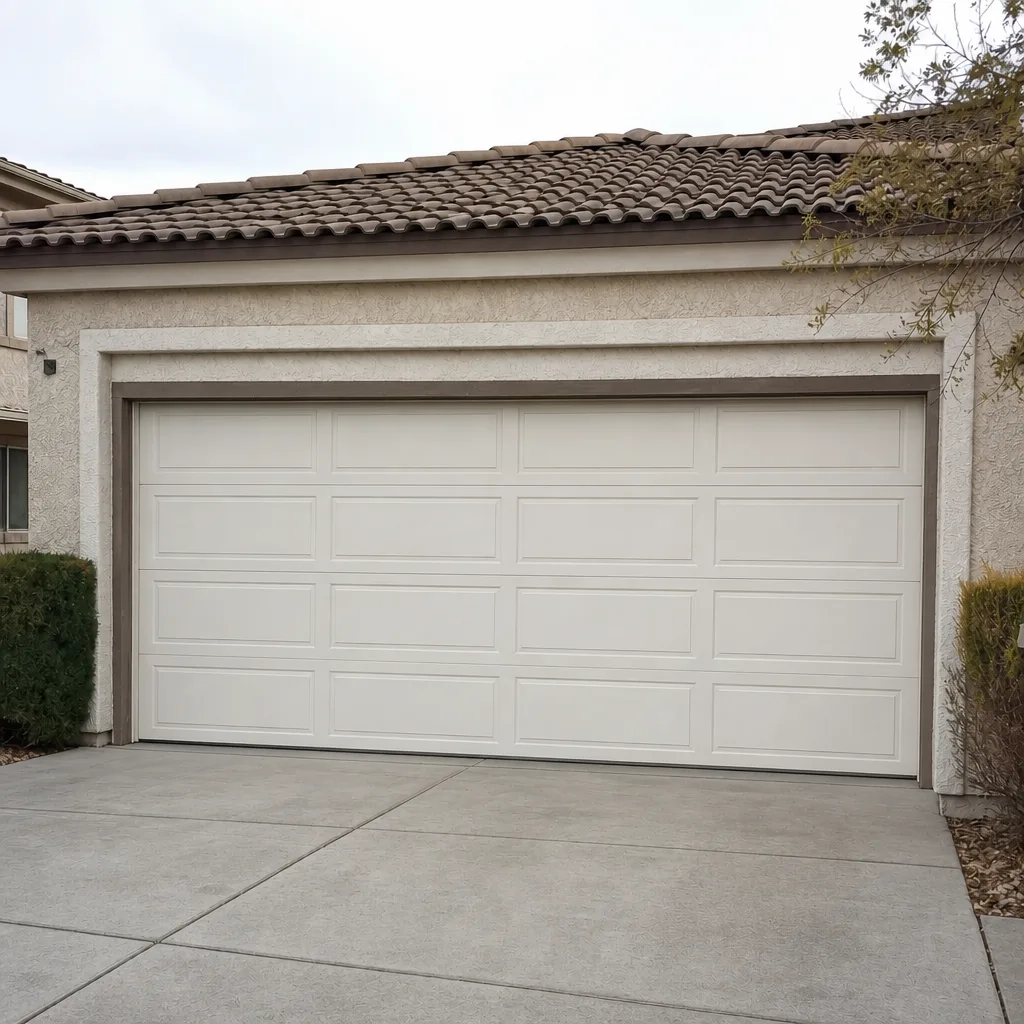 After
 Before
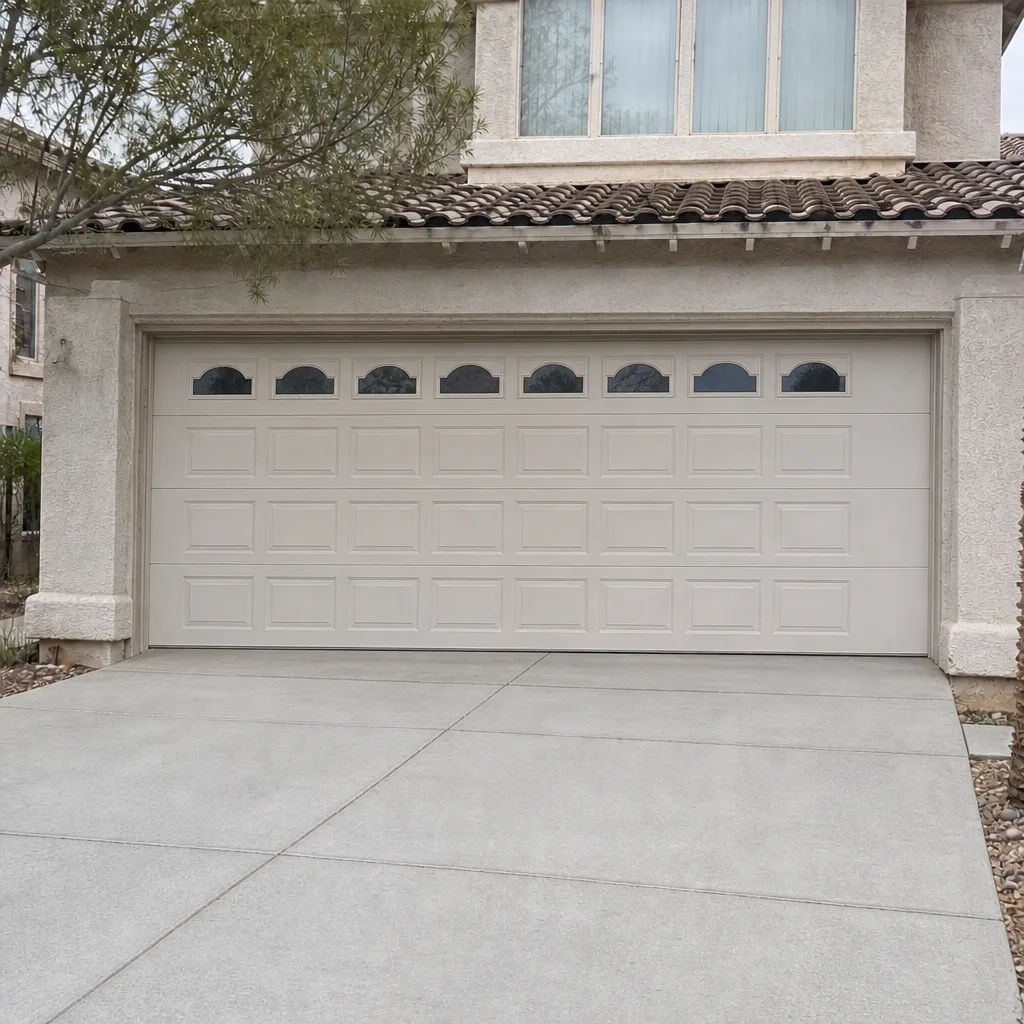 After
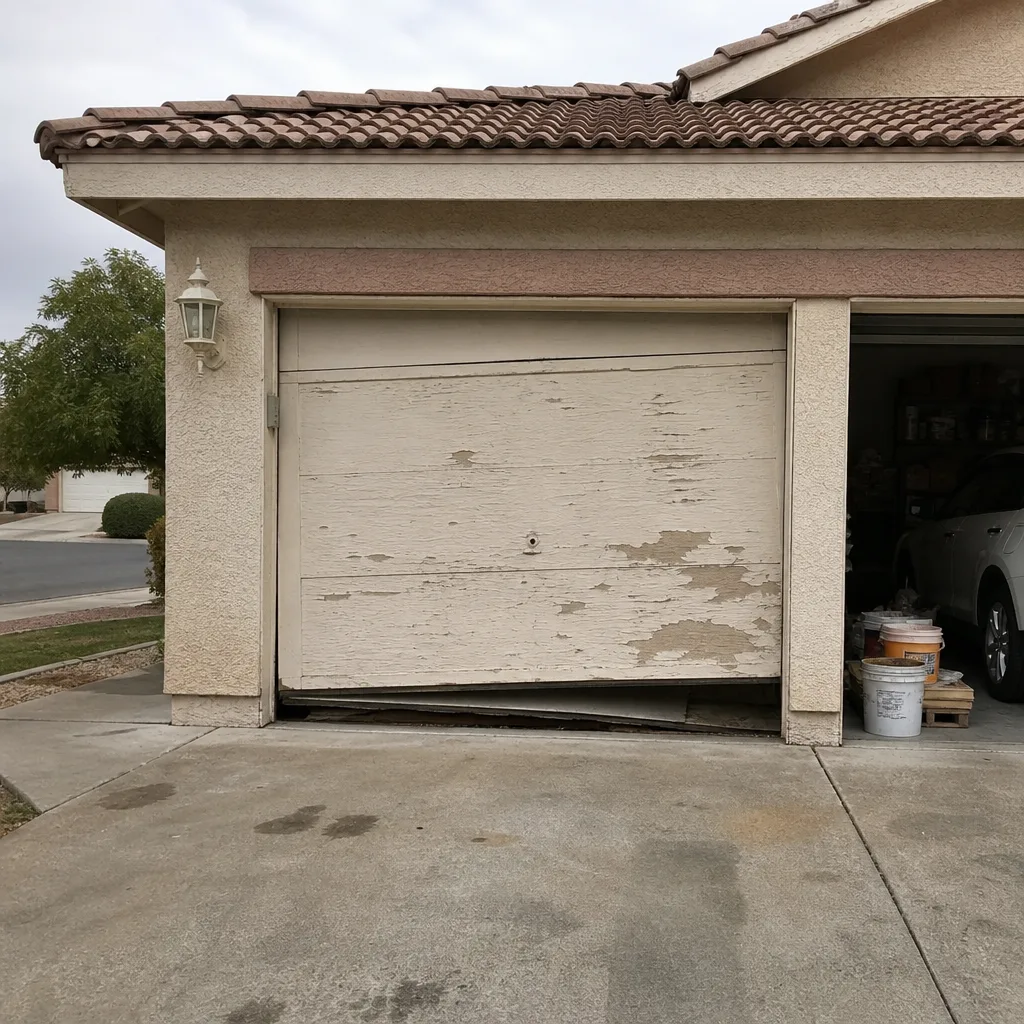 Before
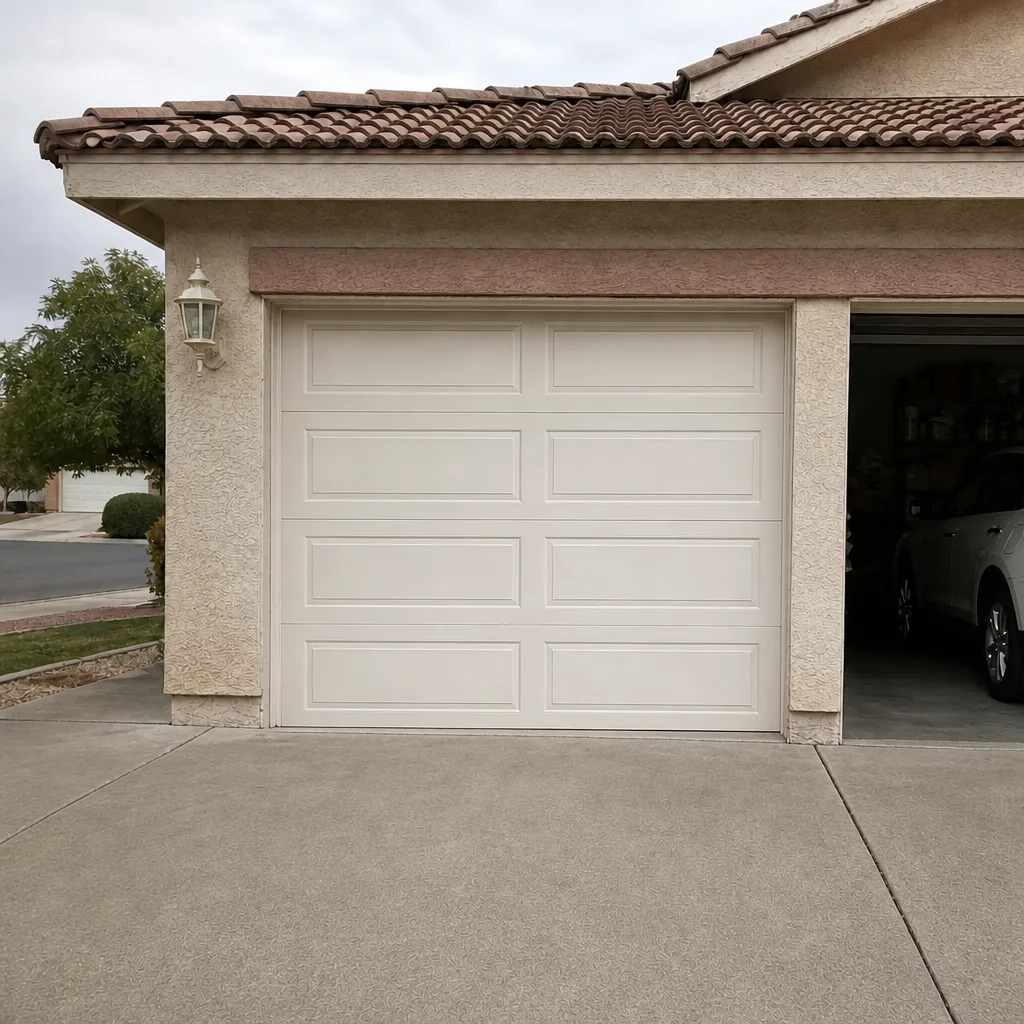 After
When to Call a Professional
Some garage door issues wait. Some don’t. Call a professional immediately if:
- The door is stuck open and your home is exposed.
- A vehicle is trapped inside.
- A cable has snapped or come off the drum.
- The door is hanging off track or has dropped on one side.
- The door won’t stay up on its own, or slams down when released.
- You hear a sharp snap followed by the door not responding.
For everything else – a slow opener, a grinding roller, a balky photo-eye – a scheduled repair is right. Mainspring Garage Door Co. Summerlin offers free estimates in Summerlin, and our phones are answered by a live person around the clock. Call (855) 608-8802 and we’ll tell you honestly whether the door can wait until tomorrow or needs someone today.
Frequently Asked Questions
Most emergency garage door repairs are finished within 2 to 4 hours of your call in Summerlin, with arrival windows typically running 45 minutes to 2 hours for true emergencies and 4 to 8 hours for same-day service. The labor itself is usually 45 to 90 minutes once a technician is on site. Call (855) 608-8802 for an exact arrival estimate for your address.
Yes, for genuine emergencies, most weekdays. Two-hour response is achievable in Summerlin because the valley’s service density is high and technicians are frequently nearby. True emergencies for us mean a door stuck open, a vehicle trapped inside, or a cable snapped with the door hanging. A door that’s closed and locked but won’t open is usually a same-day window, not a two-hour one. Call (855) 608-8802 and we’ll give you a straight answer on the window.
Because emergency failures are usually single-point. A snapped spring or a failed opener gear is one problem with one fix, so labor runs 45 to 90 minutes. Scheduled repairs often uncover several compounding issues – worn rollers, stretched cables, an aging opener – that add up to 2 to 3 hours. The emergency feels bigger, but the work is smaller.
The door is secured safely, you’re told exactly what part is needed, the price is quoted and agreed before ordering, and the return visit is scheduled. Total turnaround in that case is usually 1 to 3 days. Nonstandard springs, proprietary opener boards, and specialty door panels are the usual culprits. A shop that promises same-day on every part is guessing. Call (855) 608-8802 for an honest answer on your specific door.
No. With Mainspring Garage Door Co. Summerlin, the flat price is quoted before any work begins. If the technician finds an additional issue on site, you’re told about it and asked before it’s added. You can also take advantage of our $50 Off Any Repair Over $250 standing offer, or request a free second opinion on any written estimate. If the work isn’t right, our 90-Day Done Right Promise covers a return visit at no charge.
Our technicians are background-checked, uniformed, and trained as journeymen under the K.E.Y.S. values code. They have up to 10 years of experience and are factory-familiar with all major brands including LiftMaster, Chamberlain, Genie, Clopay, Amarr, Wayne Dalton, Craftsman, and Raynor. The company is fully licensed and insured. Call (855) 608-8802 with your brand and model and we’ll route the right technician.
The Bottom Line
Emergency garage door repair is faster than most homeowners expect, not slower. The labor on the actual fix usually runs 45 to 90 minutes because the failure is typically one part, and one part is a known quantity. The variable is arrival, and that’s where an honest window matters more than a fast promise. Summerlin’s heat, HOA rules, and mix of older and newer homes all shape how the timeline runs, and a shop that knows the area gives you a truer estimate than one reading from a script. When you call, describe the failure clearly, ask for the flat price upfront, and confirm what “fully operational” means before the technician leaves. That’s the whole timeline, from the homeowner’s side.
For a free estimate anywhere in Summerlin, or to talk through whether your door is a true emergency or can wait for a scheduled visit, call Mainspring Garage Door Co. Summerlin at (855) 608-8802. A live person answers every call, 24 hours a day. We quote the price before any work begins, arrive with the right parts on the truck so most jobs finish in a single visit, and back every job with our 90-Day Done Right Promise in writing. If it isn’t done right, we come back at no charge. That’s the square deal, and it’s the standard we hold on every call.
Related reads from our Summerlin garage door guides:
- Mainspring Garage Door Co. Summerlin home
- Garage Door Installation in Summerlin
- Garage Door Opener in Summerlin
Written by the team at Mainspring Garage Door Co. Summerlin.