
Last updated November 18, 2026
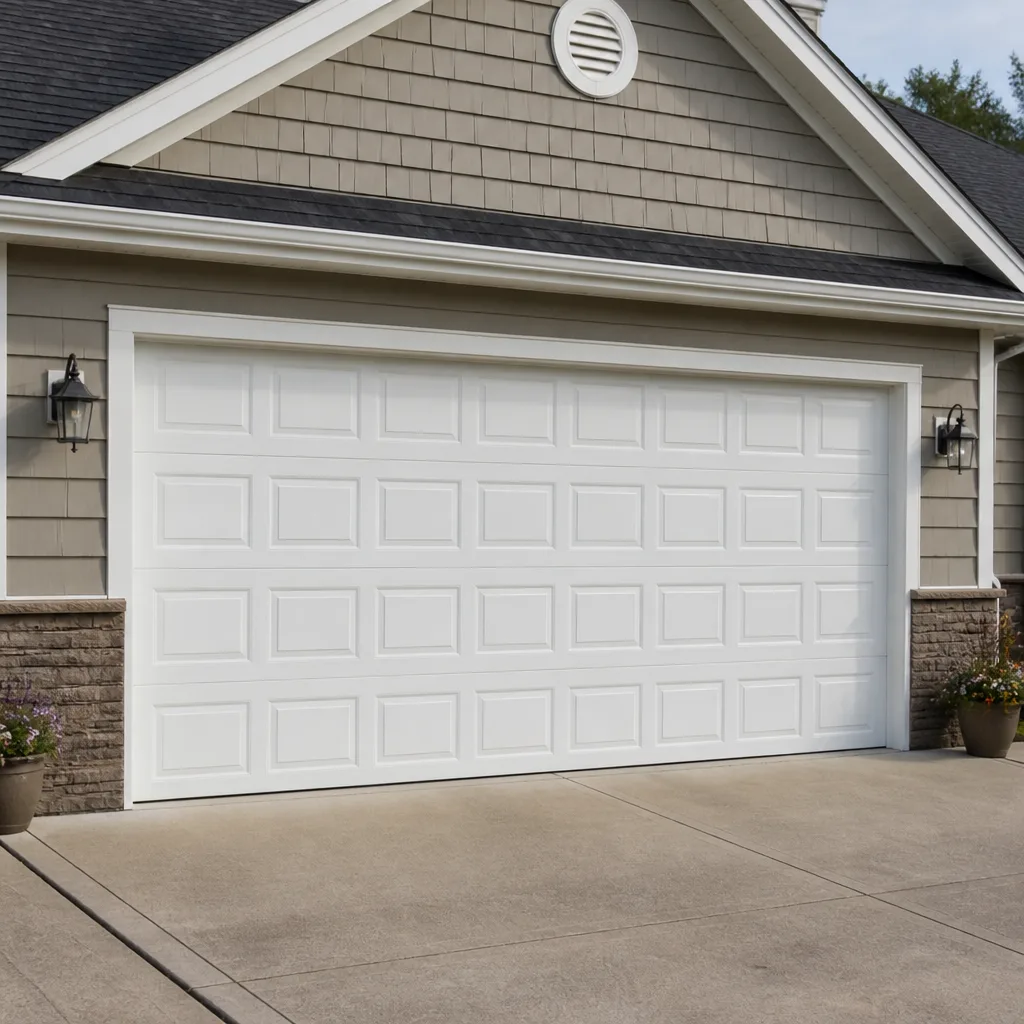 Raised-panel steel
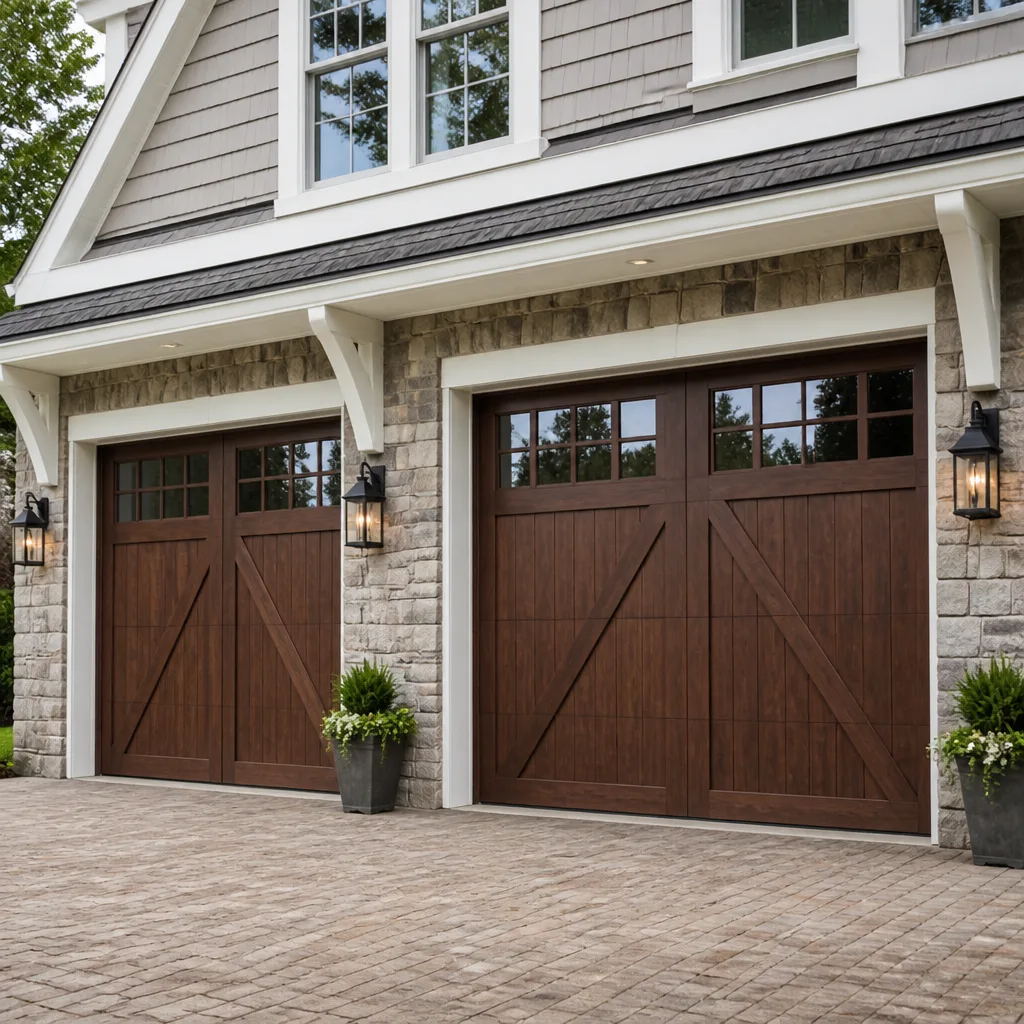 Carriage house
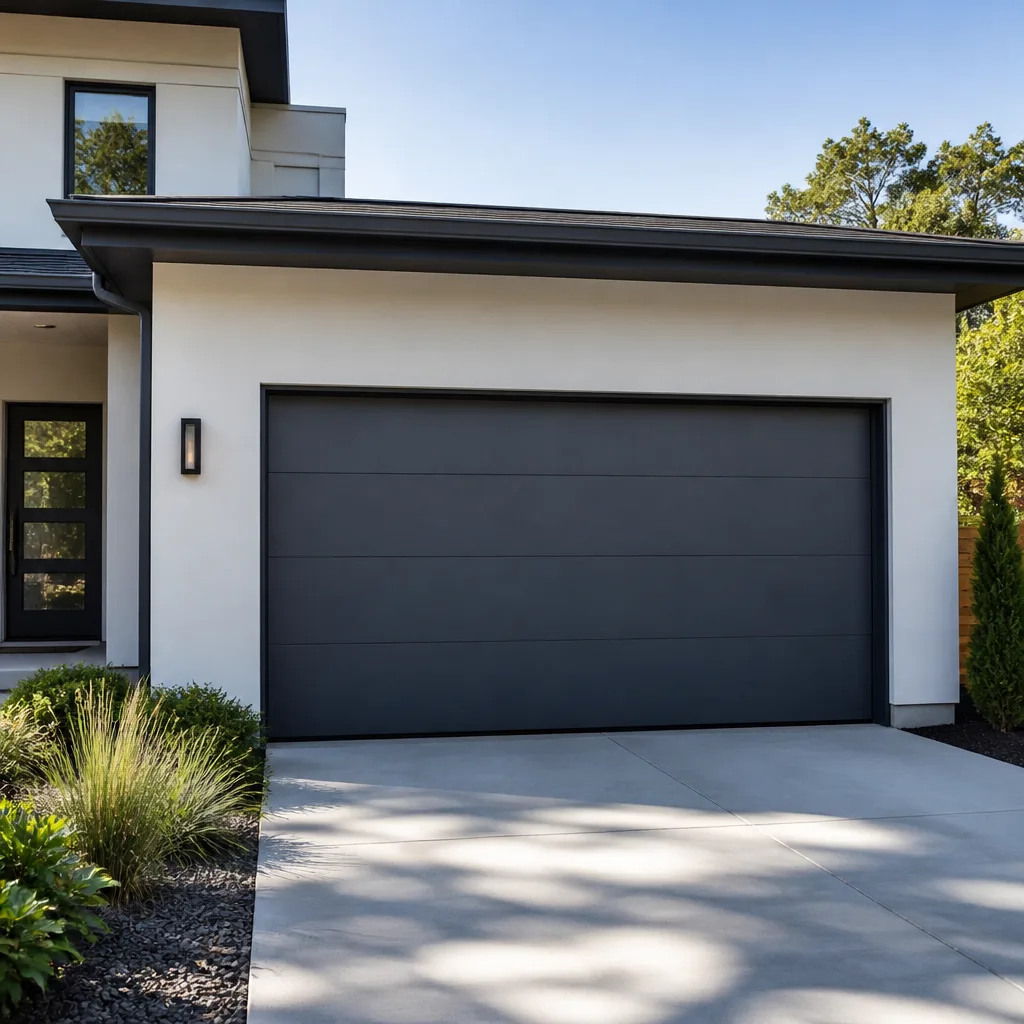 Modern flush
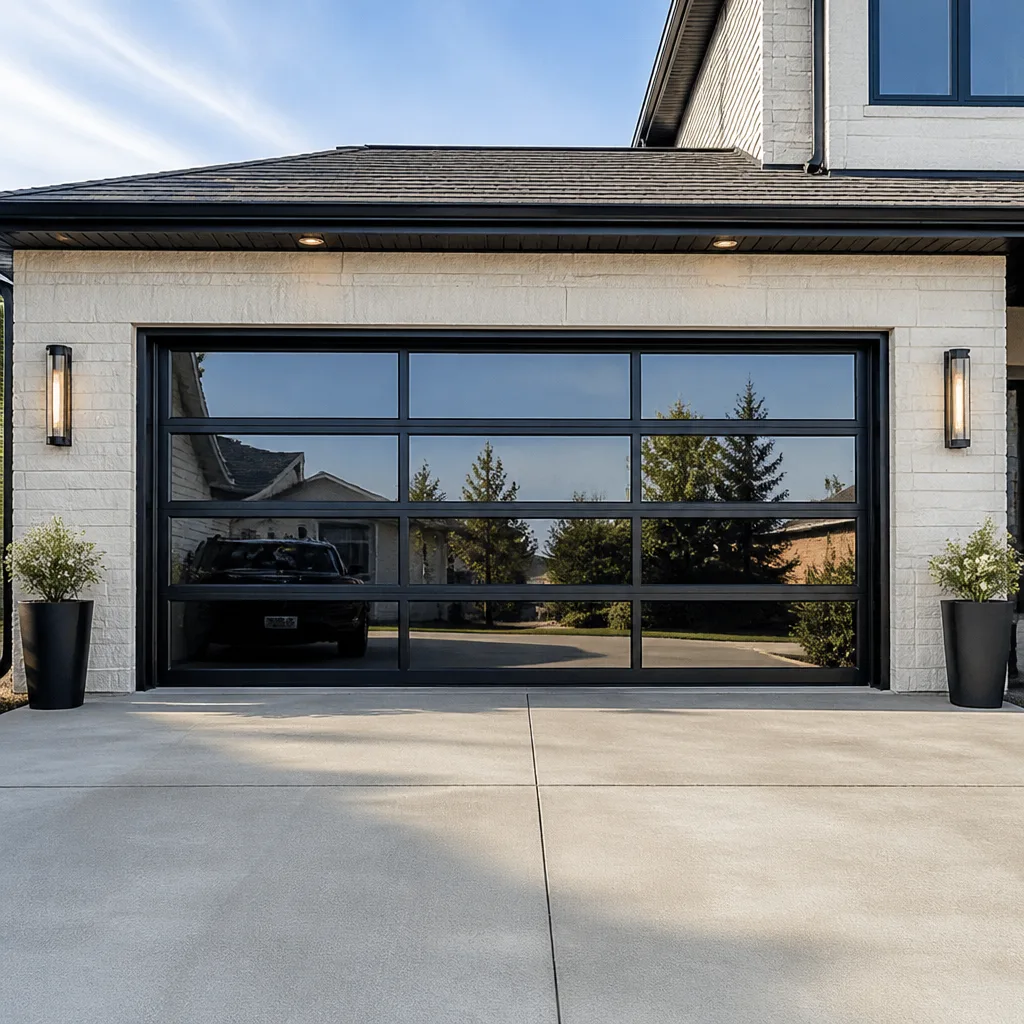 Full-view glass
 LiftMaster openers
 Chamberlain openers
Full 25-point door and opener safety check with every visit - springs, cables, rollers, tracks, and your LiftMaster or Chamberlain opener included
You get a price before we start. It does not change when the pro arrives.
Get your free estimateThe Complete Garage Door Parts Guide for Summerlin Homeowners
When a technician says “you need a new cable drum,” most homeowners have no idea whether that’s a $30 fix or a $300 fix. Knowing the parts changes that conversation.
Your garage door isn’t one object. It’s twelve distinct systems bolted together, and each one wears at its own pace depending on how often you open the door, how heavy it is, and what the desert sun does to it over a Summerlin summer. A panel can be fine while a roller is grinding the track to scrap. A spring can be three years old while the seal underneath it crumbled to dust a decade ago. Once you can name each part and know its job, you’ll know when a quote is square and when it isn’t. Here’s the full anatomy, the wear patterns we see across Summerlin, and the parts you should expect to replace first.
Quick Answer
A residential garage door has about a dozen main components: panels, tracks, rollers, hinges, cables, cable drums, springs (torsion or extension), a bottom seal, weather stripping, and the small hardware that ties it together. Each part has its own lifespan, from 3 to 20 years, and Summerlin’s UV exposure and heat wear out rubber seals, nylon rollers, and painted finishes faster than most of the country.
If you’d rather have a trained set of eyes on it, garage door repair in Summerlin is a phone call away, and the estimate is free.
Styles & brands we work with
- Raised-panel steel
- Carriage house
- Modern flush
- Full-view glass
- LiftMaster openers
- Chamberlain openers
Table of Contents
- The Twelve Parts of a Garage Door, Named and Explained
- Torsion Springs vs. Extension Springs: What’s Actually Lifting Your Door
- How Parts Wear Each Other: Rollers, Tracks, and Cable Drums
- What Summerlin’s Climate Wears Out First
- How Long Each Part Lasts, and the Signs It’s Going
- Standardized vs. Proprietary Parts: What You Can Actually Source
- A Homeowner’s Walk-Around Checklist
- Common Mistakes to Avoid
- When to Call a Professional
- Frequently Asked Questions
The Twelve Parts of a Garage Door, Named and Explained
Read a parts diagram and you’d think a garage door is simple. It isn’t. Every part does a specific job, and when one drifts out of tolerance, the whole assembly feels it. Here’s the plain-language map.
- Panels – The visible door itself. Steel, aluminum, or wood, built from two to five horizontal panels. They carry weight, block weather, and take the street-facing abuse. Dents and rust are cosmetic until they throw a panel out of alignment.
- Tracks – The vertical rails and horizontal overhead rails the door travels on. Bend a track and the door follows it into the frame.
- Rollers – Two to three inches across, ten to twelve per door, seated in the hinges. They roll inside the track. Nylon is quiet; steel is durable but loud.
- Hinges – Numbered 1 through 4, they connect panels and hold the rollers. Above-door hinges and end hinges are separate parts.
- Cables – Two steel cables under tension on either side. They lift the door and provide the counter-balance the springs can’t do alone. A frayed cable is a serious hazard.
- Cable drums – Wound onto the torsion shaft, each drum winds the cable as the door moves. Two drums, one per side. They must match the door’s height and cable size.
- Springs – Torsion springs (mounted on the shaft above the door) or extension springs (mounted on the sides). They carry the weight so your opener doesn’t have to. This is the most dangerous part on the door.
- Bottom seal – A rubber or vinyl U-shape that seals the door to the driveway. The single fastest-wearing part in Southern Nevada.
- Weather stripping – Side and top trim that keeps wind-driven dust and heat out. Different material than the bottom seal.
- Center bearing plates and end plates – Metal brackets that anchor the torsion shaft. Rarely fail, but when they wear out, the door gets noisy.
- Cables and pulleys (extension doors) – A separate set on older doors; different geometry, similar job.
- Stops and brackets – The small guides and anchors that hold everything together. Grab a screwdriver and you’ll find them everywhere.
That’s twelve headline parts, but a complete parts diagram runs past a hundred individual pieces. The dozen above account for nearly all the wear and cost you’ll ever face.
Torsion Springs vs. Extension Springs: What’s Actually Lifting Your Door
Springs carry the entire weight of the door. Your opener pushes it, but the spring is what makes the door feel light enough for a hand to lift. There are two designs, and the difference matters when you’re replacing them.
Torsion springs
Mounted horizontally on a steel shaft above the door, torsion springs wind up and store energy across the shaft. Each spring is coiled around a steel rod, usually two on a modern Summerlin door. You’ll see them if you look straight up above the door opening. They run quieter, last 10,000 to 15,000 cycles (or roughly 7 to 10 years in typical home use), and feature a safety containment bar that catches a broken spring.
Extension springs
Mounted vertically on either side of the door, extension springs stretch rather than twist. Common on doors built before the early 2000s, and still found throughout the older Summerlin neighborhoods. They typically last 10,000 cycles. Older extension springs without a safety cable are a genuine risk: when one fails, it fails hard, and the resulting snap can tear through a garage wall.
Either way, this is the part we warn about most. A loaded torsion spring holds hundreds of pounds of stored energy. We’ve seen plenty of do-it-yourself attempts and they never go well. Call a trained professional for spring work; the cost of the repair is a fraction of an ER visit.
How Parts Wear Each Other: Rollers, Tracks, and Cable Drums
Parts don’t fail in isolation. The most common cascade we see starts with a $4 roller and ends with a $200 track.
A worn roller develops a flat spot, a wobble, or a seized bearing. Instead of rolling cleanly through the track, it drags. Every time the door cycles, that dragging roller scrapes the inside of the track, and its wobble nudges the track out of alignment. After a few hundred cycles, the track’s smooth curve has a dent in it, and now every other roller running through that section is bouncing off it. By the time the homeowner hears the grinding noise, the cheap part has taken the expensive one with it. We see this constantly across Summerlin, where a roller that should last five years wears out in three.
Cable drums have a similar story. The drum’s groove is cut to match the diameter of the cable it winds. If a mismatched drum gets installed with a cable of a different size, the cable won’t seat right. It wraps unevenly. The door lifts at a slight angle, so one side reaches the top before the other. That twist puts a bound on the torsion shaft and unbalanced load on the hinges. Over months the door operates heavier, the opener works harder, and eventually the bottom seal tears. We’ve seen a mis-sized drum cause three other failures in a single door.
The lesson is simple: when a technician quotes a repair, ask what caused the failure. If the answer is only the failed part, ask what wore it out.
What Summerlin’s Climate Wears Out First
A summer in Summerlin is not a normal summer. Highs hit 110, and a garage that faces west absorbs the day’s heat from mid-afternoon until sundown. UV exposure runs high all year. Painted steel might look fine in April and start chalking by July. Three parts feel the sun first.
Rubber bottom seals
The most aggressive failure in Summerlin. A rubber U-shaped seal is in permanent contact with a concrete driveway radiating heat and blasting UV light. In milder climates it lasts five years; in Summerlin it’s often cracking and curling by year three, sometimes faster on a west-facing door. A failed seal lets in dust, insects, and monsoon rain, and it can throw the door’s closing tolerance off enough to trigger the safety reverse. We replace more bottom seals in Summerlin than any other part.
Nylon rollers
Nylon rollers run quieter than steel, but UV exposure makes the plastic brittle over time. A roller that’s cracked through the race is a flat-spot waiting to happen. We’ve walked up driveways in Summerlin and sighted along a track to see six out of twelve rollers already showing stress whitening on the plastic.
Painted panel finishes
Sun bakes the paint film and the steel underneath it. A Summerlin house that was painted white in 2010 usually needs a repaint or a panel replacement by 2020. Rust starts at the bottom of the panel where the seal overlap holds moisture. Light-colored doors reflect more heat; dark colors absorb it and fail sooner. If you’re choosing a door in Summerlin, lighter is easier on the door over the long haul.
How Long Each Part Lasts, and the Signs It’s Going
Here’s a working table of lifespans, adjusted for Summerlin conditions. Every door is different, but these ranges are honest.
- Bottom seal: 3 to 5 years in Summerlin. Signs: cracking, curling edges, water intrusion, daylight visible under a closed door.
- Nylon rollers: 5 to 7 years. Signs: noise, wobble, flat spots, visible cracking in the roller body.
- Steel rollers: 8 to 10 years. Signs: rumbling, seized bearings, track marks.
- Torsion springs: 7 to 10 years. Signs: door feels heavier than usual, opener strains, loud snap. Both springs should always be replaced together.
- Extension springs: 7 to 9 years. Signs: visible stretching, sagging, hanging lower than the rest of the system.
- Cables: 8 to 12 years. Signs: fraying, kinks, slack in a lifted door, doors lifting unevenly.
- Cable drums: 12 to 15 years. Signs: cable wrapping unevenly, groove wear visible on the drum.
- Hinges: 10 to 15 years. Signs: squeak at panel joints, looseness, cracked hinge body.
- Tracks: 15 to 20 years. Signs: visible dents, misaligned sections, door binding when raised.
- Panels: 15 to 25 years. Signs: dings that break the paint seal, rust at the bottom edge, panel sag.
- Weather stripping: 5 to 10 years. Signs: peeling, gaps at the sides, daylight visible when the door is closed.
- Center bearing plates: 15 to 20 years. Signs: grinding noise above the door, shaft wobble.
If you’re reading this and wondering whether your own door’s parts are on borrowed time, the answer is a free estimate and 20 minutes of a technician’s attention. Details on garage door openers in Summerlin are in our opener guide, and openers work in close step with the door’s spring and cable system.
Standardized vs. Proprietary Parts: What You Can Actually Source
Some garage door parts are commodity hardware that fits almost any door. Others are locked to a manufacturer. Knowing which is which saves you money and phone calls.
Standardized parts
Rollers, hinges, bottom seals, and most brackets are standardized across the industry. A 2-inch roller is a 2-inch roller whether it’s on a Clopay door or a Wayne Dalton. Bottom seals come in standard widths and can be cut to length by any parts supplier. This is good news; you or a technician can source these parts on almost any working day.
Proprietary parts
Panels, springs with a specific wire gauge and length, torsion shafts, cable drums matched to a particular door height, and any part built into an opener are usually manufacturer-specific. A Clopay panel won’t drop into a Wayne Dalton door, and a spring spec’d for a 7-foot door won’t safely lift an 8-foot door of the same weight. Some newer doors and openers even use proprietary brackets that lock in a specific brand.
This is where a parts specialist earns their keep. We’re factory-familiar with Clopay, Amarr, Genie, Wayne Dalton, and the other major brands, so we can tell you inside a phone call whether your part is on a shelf or needs to be ordered. Our Summerlin garage door installation team keeps notes on which models the local builders used over the years.
How to find out what you have
- Look for a manufacturer’s label inside the door panel. Most newer doors carry a model number and serial number plate on the top or side panel.
- Measure the door height and width, and note the door’s material.
- Photograph the springs, cable drums, and hinges. A clear photo lets a technician identify the spec without a site visit.
- Note the opener’s brand and model from the label on the motor head.
- Call with those five facts. You’ll get a straight answer on sourcing, timing, and price.
A Homeowner’s Walk-Around Checklist
Ten minutes, once a season, catches most wear before it becomes a repair bill.
- Look under a closed door from inside. Any daylight means the bottom seal or the concrete has shifted. A bright thin line across the whole bottom almost always means the seal is dead.
- Sight along each track. Bends in the vertical or horizontal rails are easy to spot once you’re looking for straight.
- Wiggle each roller. A roller that moves freely in its hinge with no wobble is fine. A roller that wobbles or shows cracks in the plastic body is done.
- Eyeball the springs. Look for a visible gap in the coil. Torsion springs with any gap should be replaced immediately and the door should not be operated. Extension springs should be examined for stretch; a spring hanging lower than its opposite partner is a warning.
- Run the door and listen. A smooth door makes steady noise. Grinding, popping, or a snap means stop and call.
- Test the safety reverse. Place a piece of 2×4 on the floor under the door and close it. The door should reverse within a couple of seconds. If it doesn’t, the opener’s safety system needs service.
- Pull the manual release on the opener arm. With the door disconnected, lift it by hand. It should lift smoothly and hold at half-height with a modest push. If it drops, the springs are worn or the balance is off.
For a full company overview, see our Mainspring Garage Door Co. Summerlin home page.
Common Mistakes to Avoid
- Replacing a single torsion spring when the other is dying. Two springs installed on the same day age on the same curve. Replacing only one puts a fresh spring alongside a worn one and doubles the chance of a second failure within a year or two. Replace both.
- Buying cut-rate rollers to “save money.” A $2 roller that fails in two years scrapes the track, and the track costs ten times more than the roller you skipped. Nylon rollers rated for a standard door are the right middle ground for Summerlin.
- Ignoring a bottom seal that “still works.” A dried-out Summerlin bottom seal lets in dust, insects, and summer monsoon rain. It also throws off the door’s balance and can cause the opener’s safety reverse to misfire.
- Lubricating with WD-40 or motor oil. Neither is right for a garage door. Use a silicone or lithium-based lubricant on rollers, hinges, and springs. WD-40 attracts dust and dries out nylon.
- Swapping in a mismatched cable drum. A drum that doesn’t match the cable diameter lifts the door unevenly and stresses the whole system. This is one of the parts where “close enough” fails safely, then expensively.
- Letting a painted panel go without touching up. In Summerlin, a chip in the paint on a steel panel starts rusting in a matter of weeks. A $7 can of touch-up paint on a chip today saves a $400 panel later.
- Doing spring or cable work yourself. This is the one rule we won’t budge on. Loaded springs and cables can cause serious injury. A trained professional has the winding bars, the correct tools, and the safety setup. Call.
Every job we complete comes with our 90-Day Done Right Promise in writing. If something isn’t right, we come back. No arguing, no paperwork.
When to Call a Professional
Some parts are homeowner-friendly. Others are not. Rollers, hinges, bottom seals, and weather stripping are all reasonable to source and replace with basic tools and a healthy respect for the door’s weight. Torsion springs, extension springs, cables, and cable drums are not. The stored energy in a loaded spring is enough to break a wrist or worse, and more than one homeowner a year in Southern Nevada ends up in the emergency room after trying to save a repair cost.
Call a professional whenever you see a broken torsion spring, a frayed or kinked cable, a door that lifts unevenly, a snap or loud pop from the overhead assembly, or a lifted door that won’t hold at half-height. Call when a track is bent badly enough to bind the door. Call when the door feels distinctly heavier than it did last year. A ten-minute look identifies the failed part and the cause.
Mainspring Garage Door Co. Summerlin offers free estimates in Summerlin. Call (855) 608-8802. We’re available 24/7, and a live person answers every call, including nights and weekends. Our technicians have up to 10 years of experience on average and every job is background-checked and uniformed. First-time customers also get $50 off any repair over $250, a free second opinion on any written estimate, and a permanent 5% discount for seniors and veterans.
Frequently Asked Questions
Most Summerlin garage door parts fall in these ranges: bottom seals $60 to $130 installed, rollers $10 to $30 each installed, torsion spring replacement $180 to $340 for both springs, cable replacement $90 to $180, cable drums $120 to $200 installed, and hinge replacement $5 to $15 per hinge installed. Full system tune-ups typically come in under $100 for the base service. Every price is quoted and agreed before any work starts, so there are no surprises on the bill. Call (855) 608-8802 for an exact quote – estimates are free.
Rubber bottom seals, nylon rollers, and painted panel finishes wear fastest in Summerlin. UV exposure and sustained 110-degree heat crack rubber and embrittle nylon well before their national expected lifespans. A bottom seal that lasts five years in a mild climate often goes in three in Summerlin. Call (855) 608-8802 if you want a technician to look at yours – estimates are free.
Yes, replacing a roller is a reasonable homeowner job with basic tools. Lift the door partway, secure it so it can’t drop, release the roller from its hinge, and swap in the new one. Skip the spring work on the same day, and never try to release or adjust a loaded torsion spring. If you’d rather have it done in a single visit with the right part, we can help. Call (855) 608-8802 for a free estimate.
Torsion springs last 7 to 10 years in Summerlin and extension springs 7 to 9 years, measured in cycles rather than years. A door that opens and closes four times a day will wear out its springs sooner than one that’s used twice a week. Replace both springs on the same visit; replacing only one leaves a fresh spring next to a dying one. Call (855) 608-8802 for a same-day spring quote.
Rollers, hinges, bottom seals, and most brackets are standardized across brands, so a Genie roller fits a Wayne Dalton door. Panels, springs with a specific wire gauge, torsion shafts, and cable drums matched to a specific door are usually manufacturer-specific. This is why a technician who’s factory-familiar with Clopay, Amarr, Genie, and Wayne Dalton will save you a lot of calls. Call (855) 608-8802 and we’ll tell you what’s in stock and what needs to be ordered.
Torsion springs are mounted horizontally on a shaft above the door and twist to store energy; they last longer and run quieter. Extension springs hang on the sides and stretch to store energy; they’re common on older doors. Summerlin homes built before 2000 more often have extension springs, and any older extension spring without a safety cable should be inspected. Call (855) 608-8802 if you’re not sure which kind you have.
No. The price you’re quoted is the price you pay for the work you agreed to. We quote before we start, agree the number with you, and don’t change it afterward. If we find something new while we’re in the door, we stop and tell you before we do anything else. Call (855) 608-8802 for a free estimate you can count on.
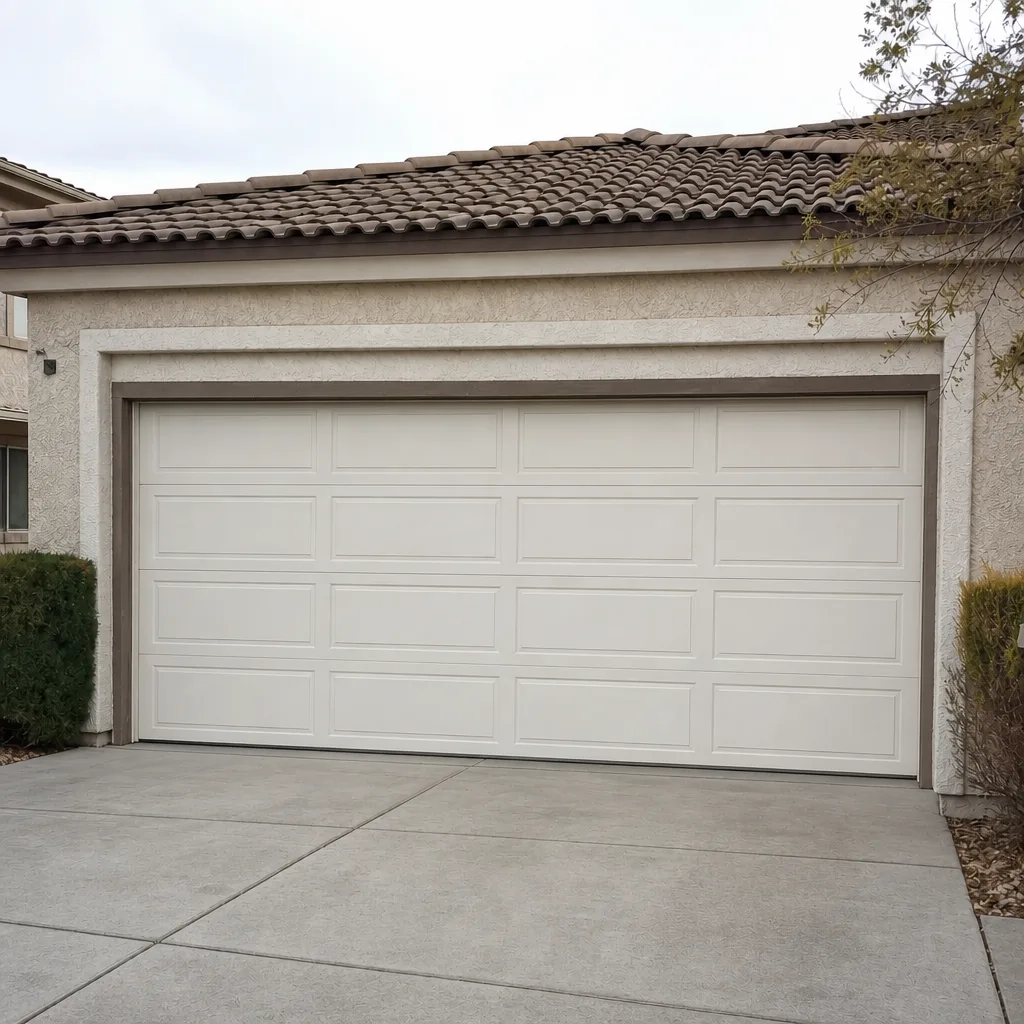
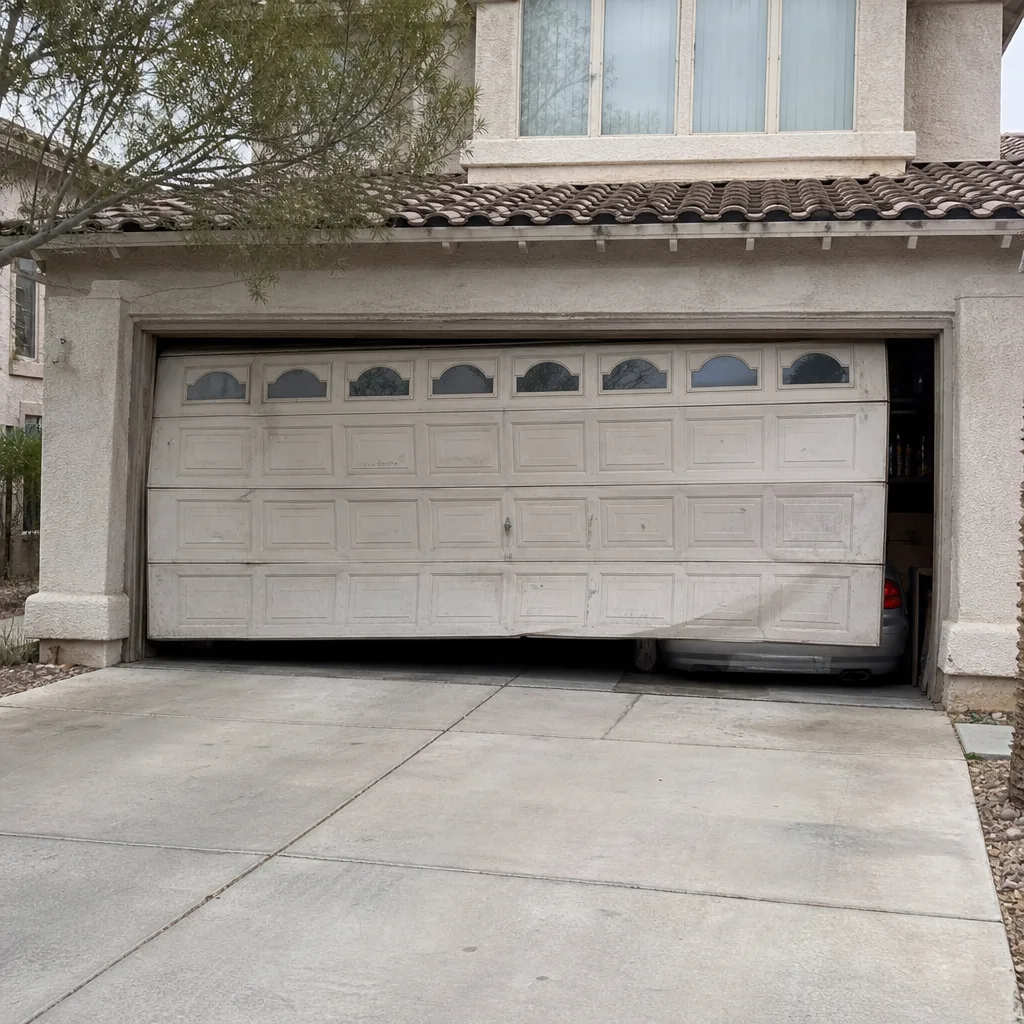
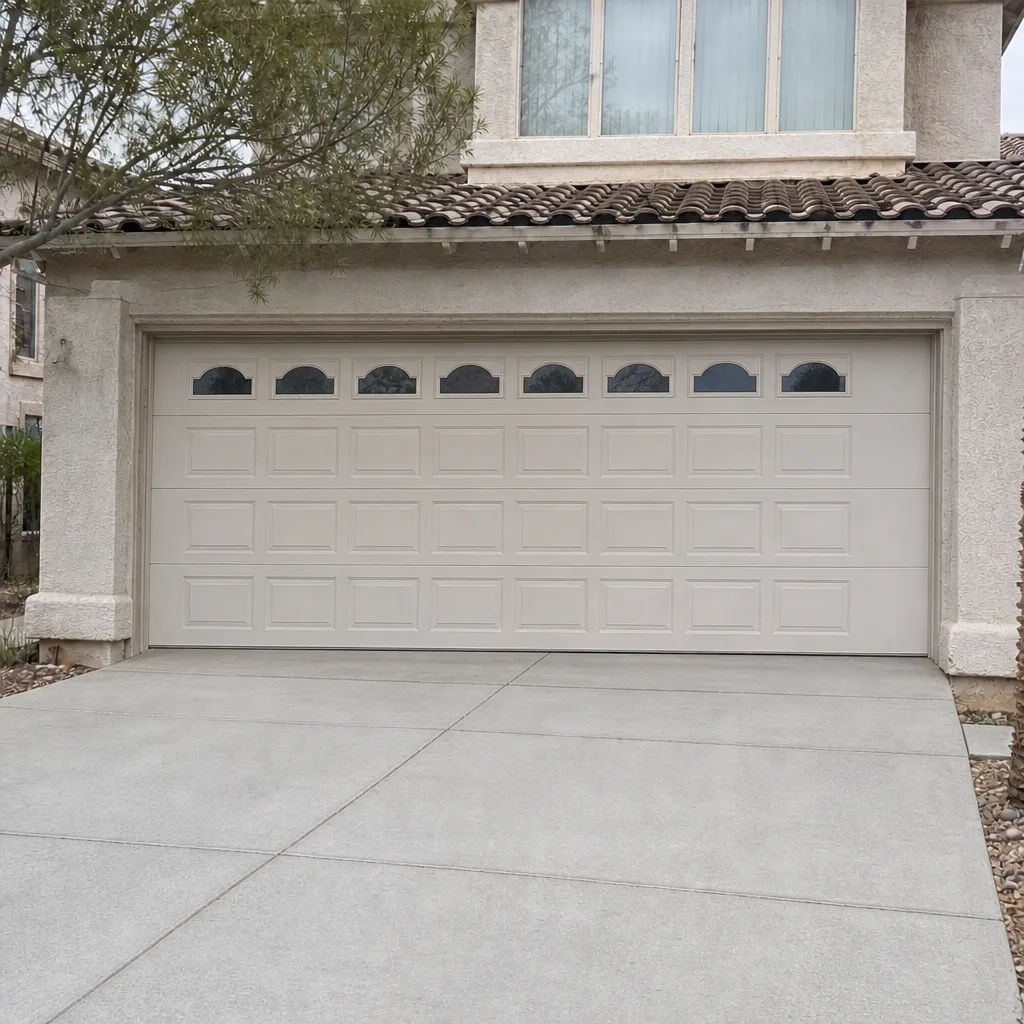
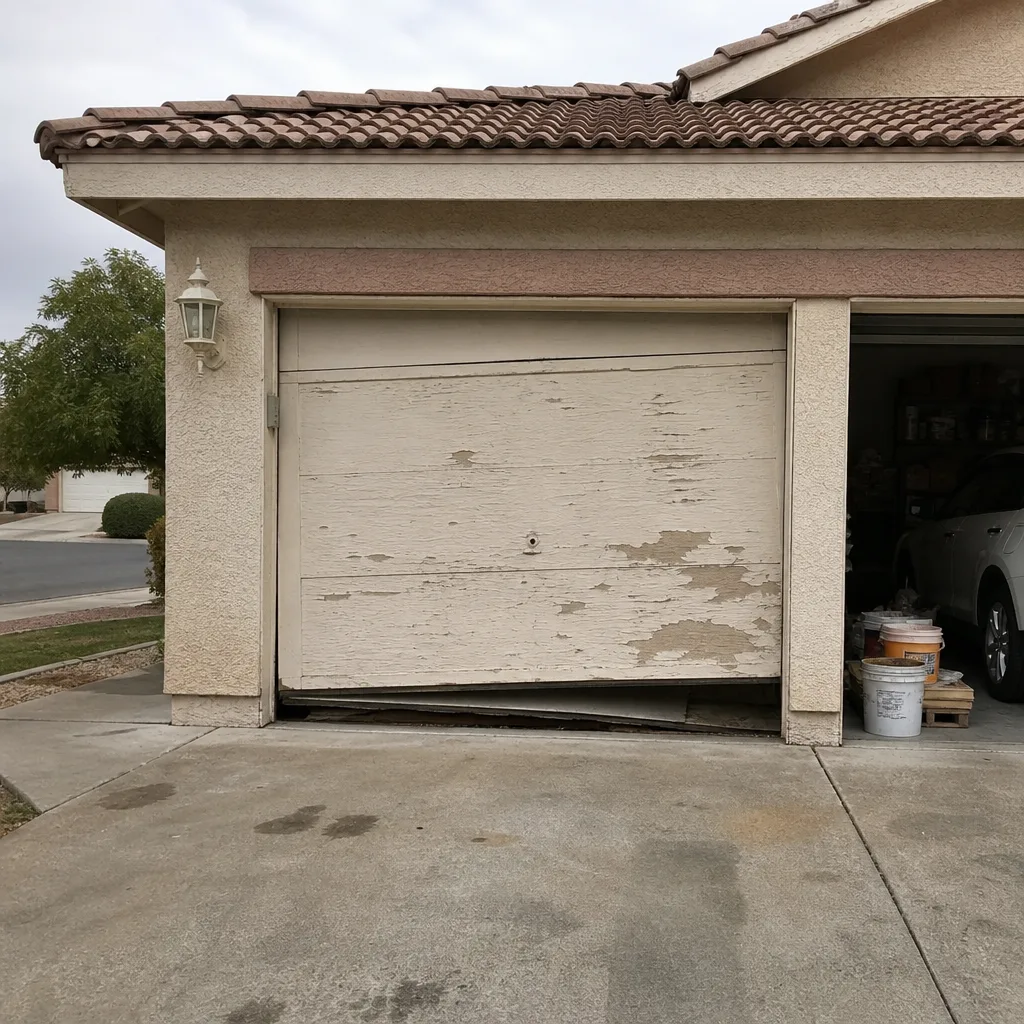
See the difference
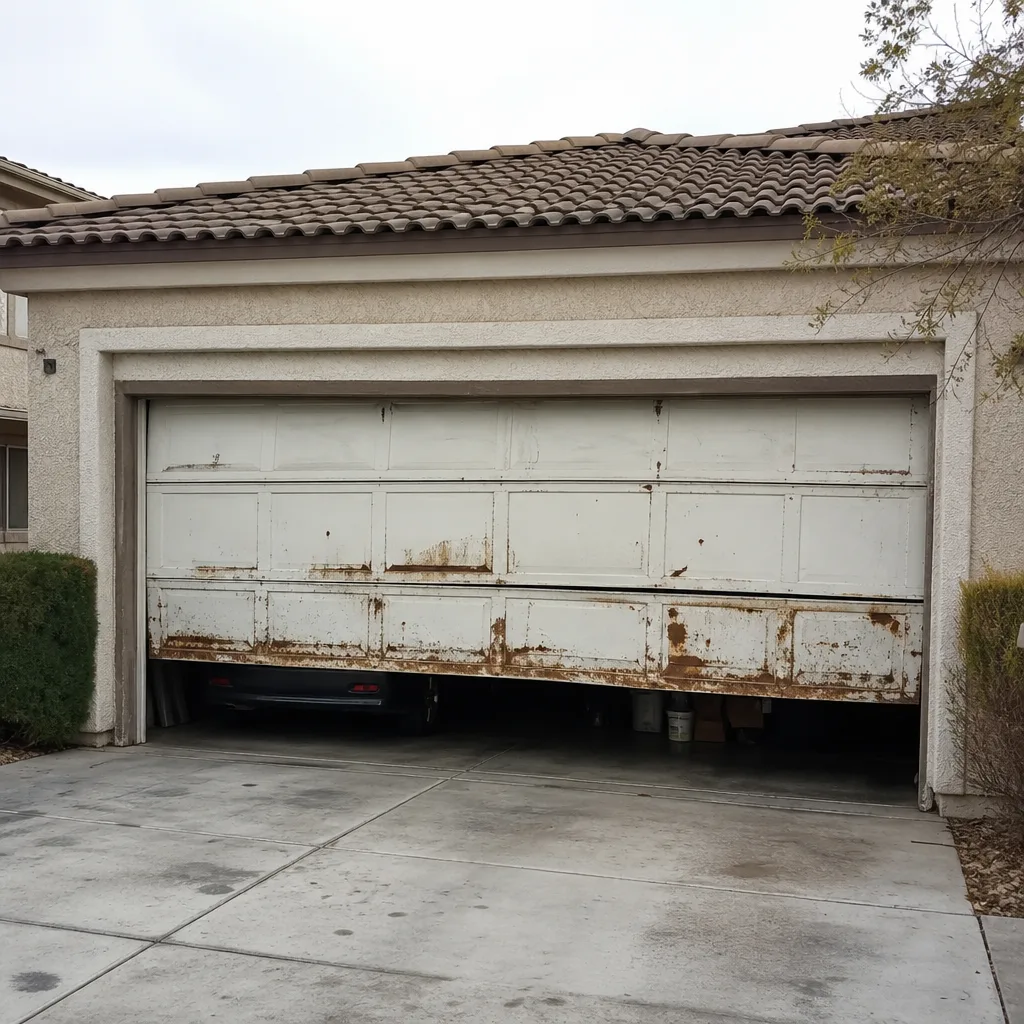 Before
 After
 Before
 After
 Before
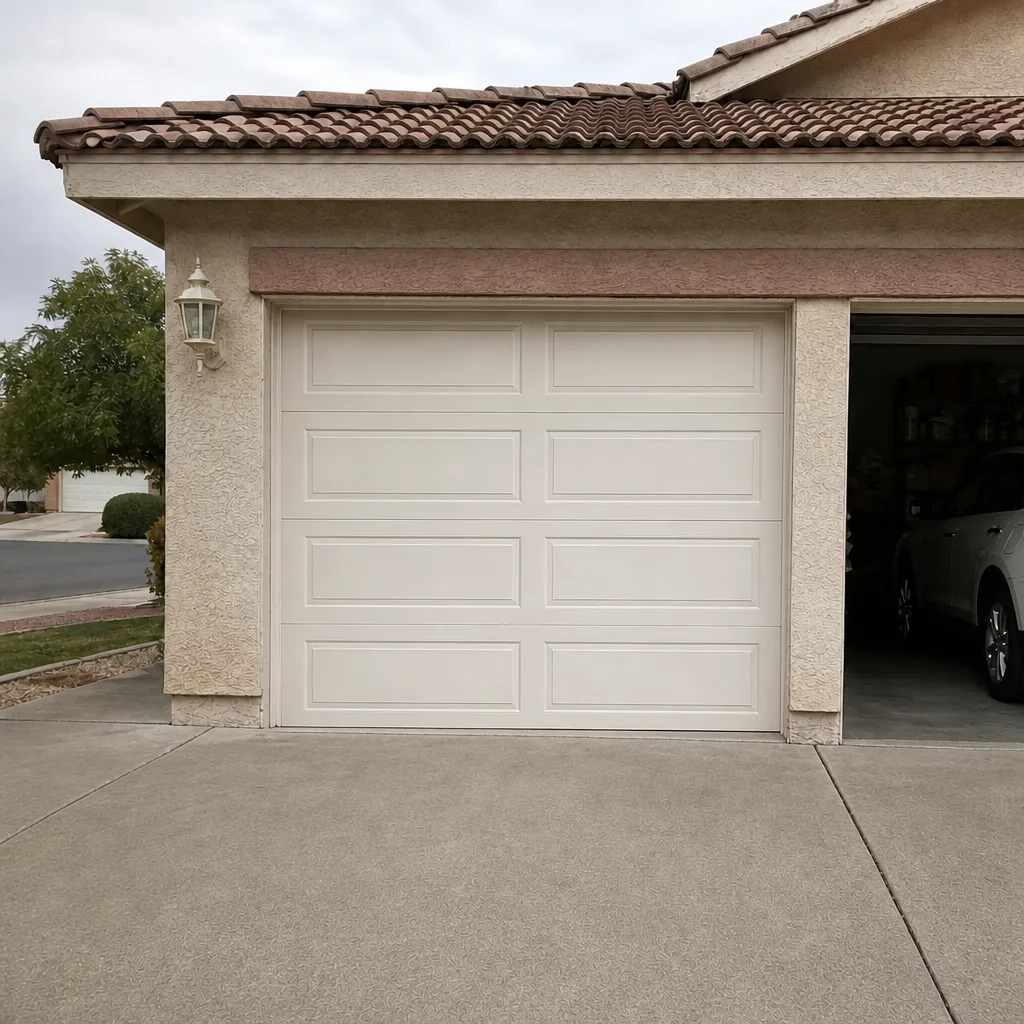 After
The Bottom Line
Your garage door is a system, not a slab. Every part has a specific job and a specific lifespan, and in Summerlin, three of them take the brunt of the heat and sun: the bottom seal, the nylon rollers, and the painted finish. Learn to spot those three failing and you’ll stay ahead of most repair bills. Know which parts are standardized and which are proprietary and you’ll avoid overpaying for a hard-to-source piece. Call a professional for anything spring, cable, or drum related, and put the checklist above to work twice a year. Small checks now save large invoices later.
Contact Us
If a part on your garage door is giving you trouble, or you’d like a trained eye to walk your door top to bottom, call Mainspring Garage Door Co. Summerlin at (855) 608-8802 for a free estimate. We answer the phone 24/7 with a live person, we quote upfront before any work begins, and we back every job with our 90-Day Done Right Promise in writing. Summerlin homeowners have counted on a square deal and no surprises on the bill for a long time, and we plan to keep it that way.
Written by the team at Mainspring Garage Door Co. Summerlin.