
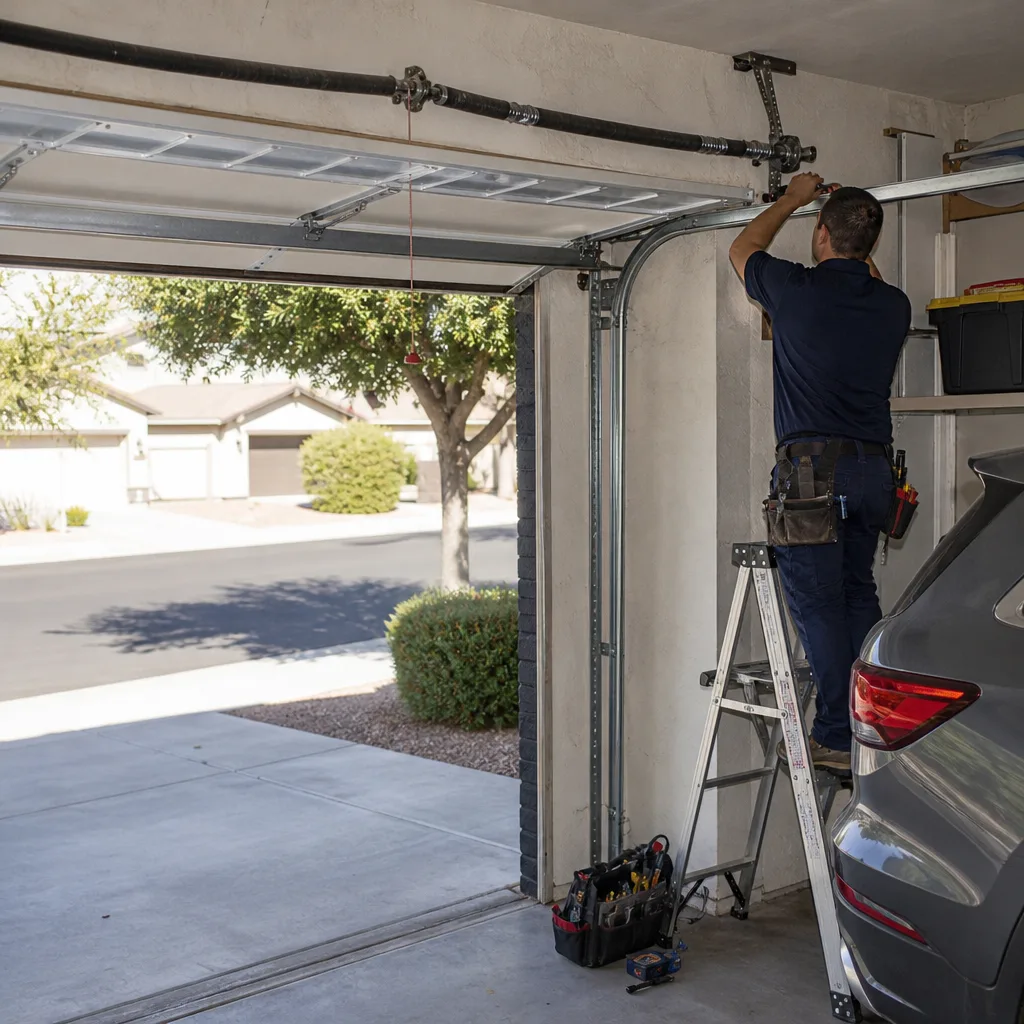
Last updated November 18, 2026
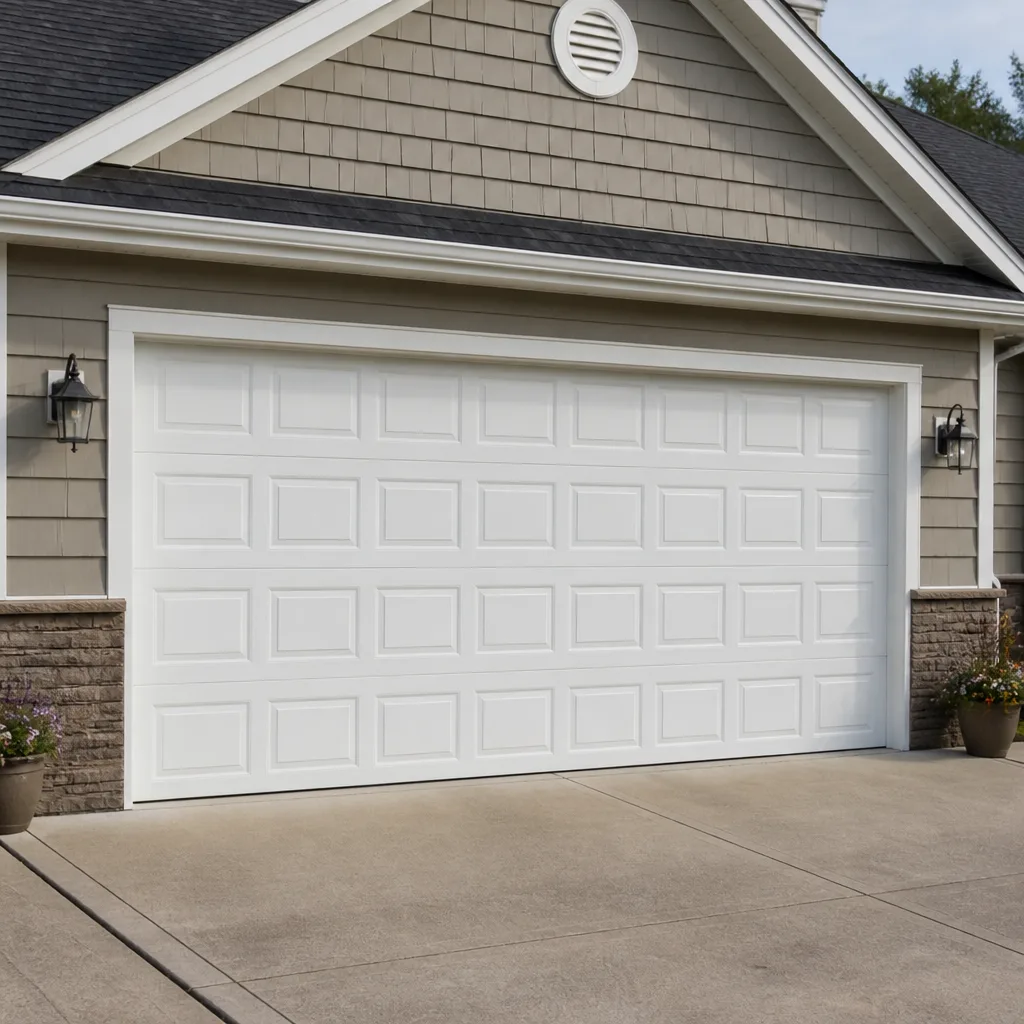 Raised-panel steel
 Carriage house
 Modern flush
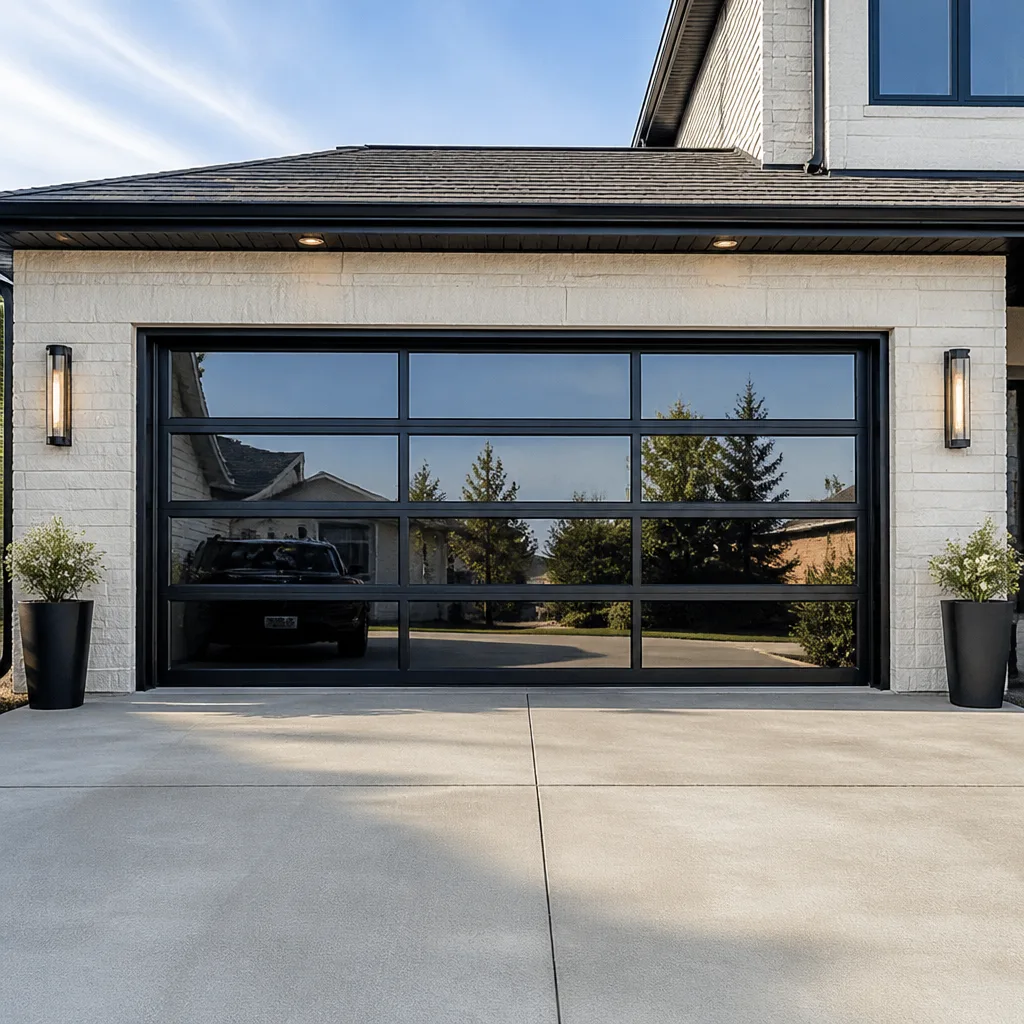 Full-view glass
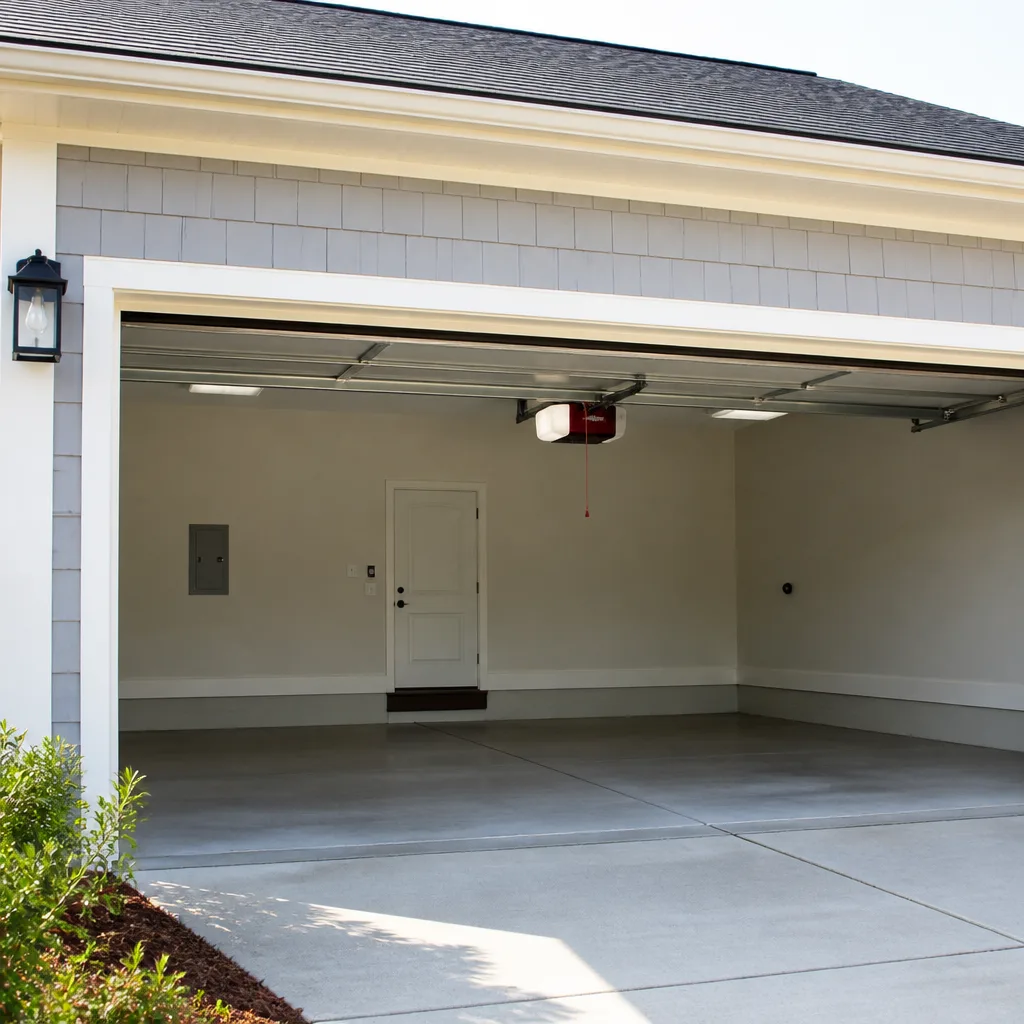 LiftMaster openers
 Chamberlain openers
Full 25-point door and opener safety check with every visit - springs, cables, rollers, tracks, and your LiftMaster or Chamberlain opener included
You get a price before we start. It does not change when the pro arrives.
Get your free estimateSeasonal Garage Door Care for Summerlin: Year-Round Homeowner’s Guide
Most garage door care calendars are written for places that have four seasons. Summerlin doesn’t. What we have is a brutal heat cycle from May through September, a brief but filthy monsoon window that peaks in July and August, mild shoulder months when the work is easy, and cool winter mornings cold enough to tighten torsion spring tension and make a healthy door sound like a sick one. The standard spring/summer/fall/winter checklist misses almost all of this. What follows is the schedule we actually use with Summerlin homeowners, built around the climate events that damage doors here rather than the calendar on a corporate brochure. You’ll learn the tasks, the timing, and the one inspection almost no consumer guide mentions.
Quick Answer
Garage door care in Summerlin should follow the climate, not the seasons: prep and lubricate in April and May before panel surface temperatures climb past 130°F, check the bottom seal and clean tracks in June before monsoon dust arrives, do a full post-monsoon reset in September to clear compacted alkaline dust from rollers and hinges, and watch spring tension in December through February when cold-morning contraction can mimic a failing spring. Cable drum inspection belongs in every one of those checkpoints.
Styles & brands we work with
- Raised-panel steel
- Carriage house
- Modern flush
- Full-view glass
- LiftMaster openers
- Chamberlain openers
Table of Contents
- Why Summerlin’s Climate Breaks the Standard Seasonal Schedule
- April – May: Pre-Summer Prep Before the Heat Peaks
- June: Monsoon Readiness for Dust, Wind, and Brief Heavy Rain
- September: The Post-Monsoon Reset
- December – February: Winter Contraction and Spring Tension
- The One Task Most Guides Skip: Cable Drum Inspection
- The Five-Minute Monthly Check for Summerlin Homeowners
- Common Mistakes to Avoid
- When to Call a Professional
Why Summerlin’s Climate Breaks the Standard Seasonal Schedule
The Las Vegas Valley sits in the Mojave, and Summerlin’s position on the western edge means it takes the full force of afternoon sun on west-facing garage doors. A dark-painted steel door in Red Rock or The Ridges can hit surface temperatures well above 130°F on a July afternoon. That heat does two things: it softens the lubricant in your rollers and hinges so it runs out rather than staying put, and it expands metal panels against a torsion system that was adjusted at 70°F in spring.
Then July arrives, and with it the monsoon. The season typically runs from late June into September, peaking in July and August, and it delivers more airborne dust to the valley in eight weeks than most American cities see in a year. That dust is not inert. Desert silt in this region runs alkaline, which matters because it settles into roller bearings, hinge pivots, and the channel of your bottom seal and grinds there for months if nobody clears it.
Winter is mild by national standards, but a 40°F swing between a December afternoon and a 6 a.m. cold start is enough to shrink the steel torsion shaft just slightly and make a properly tensioned spring feel firm. Homeowners in The Trails and Sun City Summerlin call us every January convinced their spring is failing when it is simply physics.
So the useful schedule here has four checkpoints, not four seasons: pre-summer, monsoon-ready, post-monsoon, and winter contraction. The rest of this guide walks through each one.
April – May: Pre-Summer Prep Before the Heat Peaks
This is the highest-value window on the calendar. Everything you lubricate and tighten in April is something that won’t squeal or seize in August. Once panel surface temperatures climb past 130°F, work on a door in direct sun becomes unpleasant and, on some surfaces, unsafe to handle with bare hands. Get it done before the heat arrives.
Here is the pre-summer routine we recommend:
- Lubricate rollers, hinges, and the torsion shaft bearings with a lithium- or silicone-based garage door lubricant. Not WD-40, not motor oil. A proper lubricant stays in place through the heat; the wrong product runs out within weeks.
- Clean and inspect the tracks with a damp cloth. Don’t oil the tracks themselves. They’re meant to stay dry so the rollers can roll rather than slide.
- Test the balance of the door. Disconnect the opener, lift the door to roughly waist height, and let go. A balanced door should hold position. If it drops or rises on its own, the springs need attention from a technician.
- Check the weather seal along the bottom and sides for cracking or hardening. Heat destroys rubber faster than cold does, and a hard seal lets in both dust and the occasional summer scorpion.
- Test the auto-reverse safety feature by placing a roll of paper towels in the door’s path and closing it. The door should reverse on contact.
- Look at the panel paint and finish. Sun-baked paint on the west-facing door of a Clopay or Amarr in Summerlin can chalk and fade. A light coat of car wax in April slows that considerably.
If you’d rather have a trained eye do the inspection, our Garage Door Repair in Summerlin team handles spring checks and balance testing as part of a standard service call. The $89 seasonal tune-up covers this list and catches problems before they become August emergencies.
June: Monsoon Readiness for Dust, Wind, and Brief Heavy Rain
The monsoon arrives with wind first. Gusts that hit 40 to 60 mph in the valley pick up loose desert soil and drive it sideways into every gap on your house, and a garage door has more gaps than almost any other opening. The bottom seal is the front line. If it’s cracked, hardened, or pulling away from the door, that dust goes straight into the seal channel and the roller tracks, where it sits and grinds.
June is the month to check it properly:
- Run your hand along the full length of the bottom seal. You’re feeling for softness and a continuous seal to the floor. Any brittleness or gap means the seal should be replaced before the dust comes.
- Inspect the side and top seals for the same signs. Wind-driven dust finds the top corners of a door especially.
- Clear the track channels of grit with a shop vacuum and a dry cloth. Do this in June, before the season starts, so there’s less material for the monsoon to compact.
- Check the threshold. The concrete lip on the garage floor should meet the door seal cleanly. If a Summerlin home has settled slightly, which many original builds from the 1990s have, that gap becomes a dust intake.
- Test the door under load. After a monsoon wind event, run the door up and down once and listen. New grinding is a signal the tracks or rollers took a hit.
The brief heavy rain that comes with the monsoon is worth a mention too. It rarely floods a Summerlin garage, but water that pools against the door and works under a worn seal will discolor the threshold and accelerate corrosion on the bottom section. A tight seal in June saves that damage in August.
September: The Post-Monsoon Reset
The dust that blew in over July and August doesn’t leave on its own. It compacts into the roller bearings and hinge pivots and becomes a grinding paste that wears metal every time the door cycles. Left alone through the fall and winter, that’s how a five-year-old door starts sounding like a fifteen-year-old one.
September is the reset month. Here’s the sequence:
- Brush out the tracks and seal channels first, before you add any lubricant. If you lubricate over dust, you trap it.
- Wipe each roller bearing and hinge pivot with a dry cloth. You’ll be surprised how much material comes off.
- Reapply a light coat of garage door lubricant to rollers, hinges, and the torsion shaft bearings. Not the tracks.
- Recheck the bottom seal after the season. A seal that was fine in June may have taken a beating from windblown grit.
- Listen to the door cycle two or three times. New noises after a monsoon season are a signal something needs attention.
- Look for rust spots on the bottom section, particularly near the threshold. Desert dust plus a little moisture plus steel equals rust, and the bottom panel of most doors takes it first.
This is also the month we start seeing a specific pattern: the alkaline dust residue in rolling tracks is a real abrasive. Doors we service in September after a full monsoon often show visible wear on roller bearings that weren’t there in the spring. Cleaning it out in early September, not October, is what makes the difference. Our Garage Door Opener in Summerlin service includes a full track and roller inspection when we work on opener issues, so a post-monsoon service call kills two birds.
December – February: Winter Contraction and Spring Tension
Summerlin winters are mild. Overnight lows in December and January can drop into the thirties, and some mornings in The Ridges or higher areas dip lower. The gap between a cold morning and a warm afternoon can be 30 to 40 degrees, and steel responds to that. The torsion shaft shrinks slightly, tension rises, and your door may open with a firmer pull and a different sound than it made in October.
This is normal physics. It is not a problem. But it isn’t always just physics either, and that’s where homeowners get tripped up.
Here’s the practical distinction:
- Normal cold-morning behavior: the door feels slightly tighter when you first open it, then settles within a few cycles. Sound is consistent. No change in how the door balances.
- A real spring problem: the door feels heavy or jerky on every opening, makes a sharp popping or snapping sound, won’t open fully, or won’t stay up when you disconnect the opener and lift it to waist height. Any of these is a call, not a wait-and-see.
Do not adjust your own torsion spring. That mechanism carries the full weight of the door and can release violently if the wrong tool is used or the wrong person touches it. This is the single most dangerous component on the entire system, and we see serious injuries from homeowner adjustments every year.
Winter is also a good time for the low-effort check of the garage door’s insulation and weather stripping, especially for anyone using the space as a workshop or extra room through the cooler months. A cracked bottom seal lets the cold in behind the door in ways that show up on the utility bill.
The One Task Most Guides Skip: Cable Drum Inspection
Every spring-and-summer care guide in America tells you to lubricate rollers and test the auto-reverse. Almost none of them mention the cable drums, and that’s a real gap. The cable drums are the grooved aluminum or steel spools at each end of the torsion shaft. The lift cables wind onto them, and every time your door opens or closes, those cables rewind and unwind under load.
Over years of cycles and weather, three things go wrong with cable drums:
- The cable can jump the groove, especially after a hard cycle in extreme heat or a cold-weather contraction. A jumped cable means the door lifts unevenly and strains the other side.
- The drum can wear where the cable seats. Cables that have worn grooves eventually slip, and a slipped cable lets the door drop on one side.
- The cable itself can fray at the attachment point, and a frayed cable is one good yank from snapping.
We cannot say often enough: do not inspect this yourself by poking around while the door is under tension. Cable drums and springs are under the full mechanical load of the door at all times. What a homeowner can do is look at the drums from a safe distance, with the door down and the opener disconnected, and check for obvious cable slack or visible fraying. Anything more is a call to a technician. This is a specific reason we recommend a professional seasonal tune-up at least once a year; a trained technician knows exactly what to look at and how to do it safely.
When we do a seasonal tune-up, cable drum inspection is one of the checks. So is the balance test, the spring cycle assessment, and a full look at the hinges and rollers. If any part of the system is due for replacement, we carry the replacement on the truck. That’s why most of our service calls are finished in a single visit.
The Five-Minute Monthly Check for Summerlin Homeowners
Between the seasonal checkpoints, a quick monthly check catches most developing problems before they become emergency calls. This is the list we hand to homeowners who want to stay proactive:
- Run the door and listen. Any new grinding, squealing, or popping sound is worth noting.
- Watch the door as it moves. It should travel smoothly and evenly. Any wobble or hesitation is a signal.
- Test the auto-reverse with a paper towel roll. Every month. This is a safety function and it should never be assumed working.
- Look at the bottom seal. Glance at it for cracking or gap.
- Look at the tracks. Any obvious dents or debris?
- Glance at the opener. If it has a light, is it on? Does it sound normal? Is the wall button responding properly?
- Look at the cable drums from a safe distance with the door down. Any visible slack or frayed cable is a call.
That’s it. Five minutes. This is what keeps a Summerlin garage door healthy between the deeper checkpoints.
Common Mistakes to Avoid
- Oiling the tracks. Tracks are meant to stay dry. Oil attracts dust, and in Summerlin dust is the enemy. Lubricate rollers and hinges, never the tracks themselves.
- Using WD-40 on the rollers and hinges. It’s a solvent, not a lubricant. It drives out the proper grease and leaves metal dry. Use a garage door specific lubricant.
- Adjusting your own torsion spring. We’ll say it again because it matters: this is the single most dangerous part of the door and it carries the full weight of the mechanism. Don’t touch it.
- Skipping the September cleanup. Monsoon dust doesn’t leave on its own. If you don’t clear it in September, it grinds through the fall and winter.
- Ignoring a worn bottom seal through the summer. A seal replaced in June costs less than a threshold and bottom panel repair in October.
- Assuming a cold-morning tight door means a broken spring. In Winterlin’s mild winters, cold contraction is normal. Test the balance and listen carefully before calling.
- Waiting until the door won’t open to schedule service. The cheapest repair is the one caught during a tune-up. Once the door is stuck, you’re looking at emergency response rates.
When to Call a Professional
Bring in a technician when you hear popping or snapping sounds, when the door won’t stay up on a balance test, when a cable is visibly frayed or slack, when the door operates unevenly from side to side, or when anything about the spring mechanism looks wrong. Do not handle any of these yourself. Also call when the bottom seal is worn through and you want it replaced before summer heat or monsoon dust makes it worse, and when you simply haven’t had the door serviced in over a year. A seasonal tune-up catches most developing issues for far less than an emergency repair.
Mainspring Garage Door Co. Summerlin is proud to be a locally rooted shop. You can see our full range of services on our Mainspring Garage Door Co. Summerlin home page, or read more about Garage Door Installation in Summerlin if you’re weighing a replacement. Estimates are free, pricing is stated upfront before any work begins, and every job is covered by our 90-Day Done Right Promise: if the work isn’t right, we come back at no charge. Call (855) 608-8802 to schedule a seasonal tune-up or any garage door service in Summerlin.
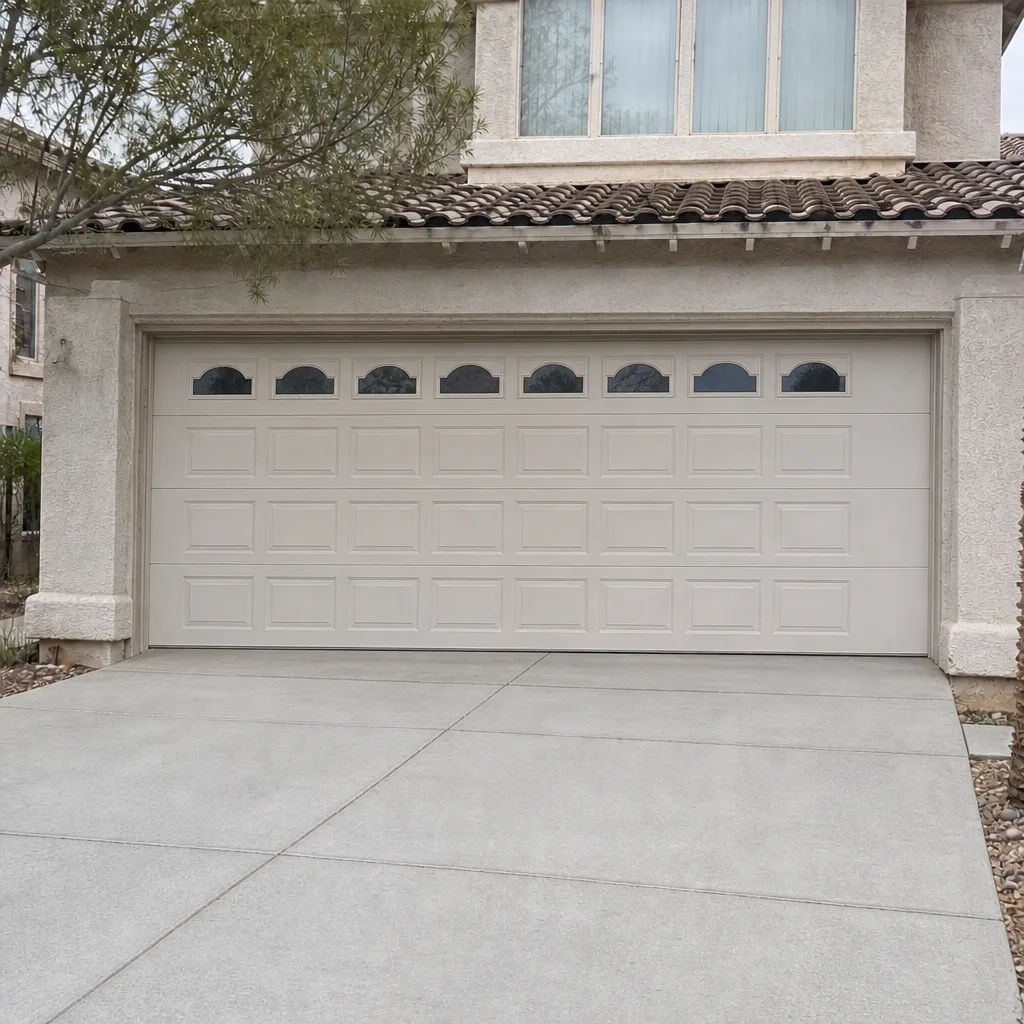
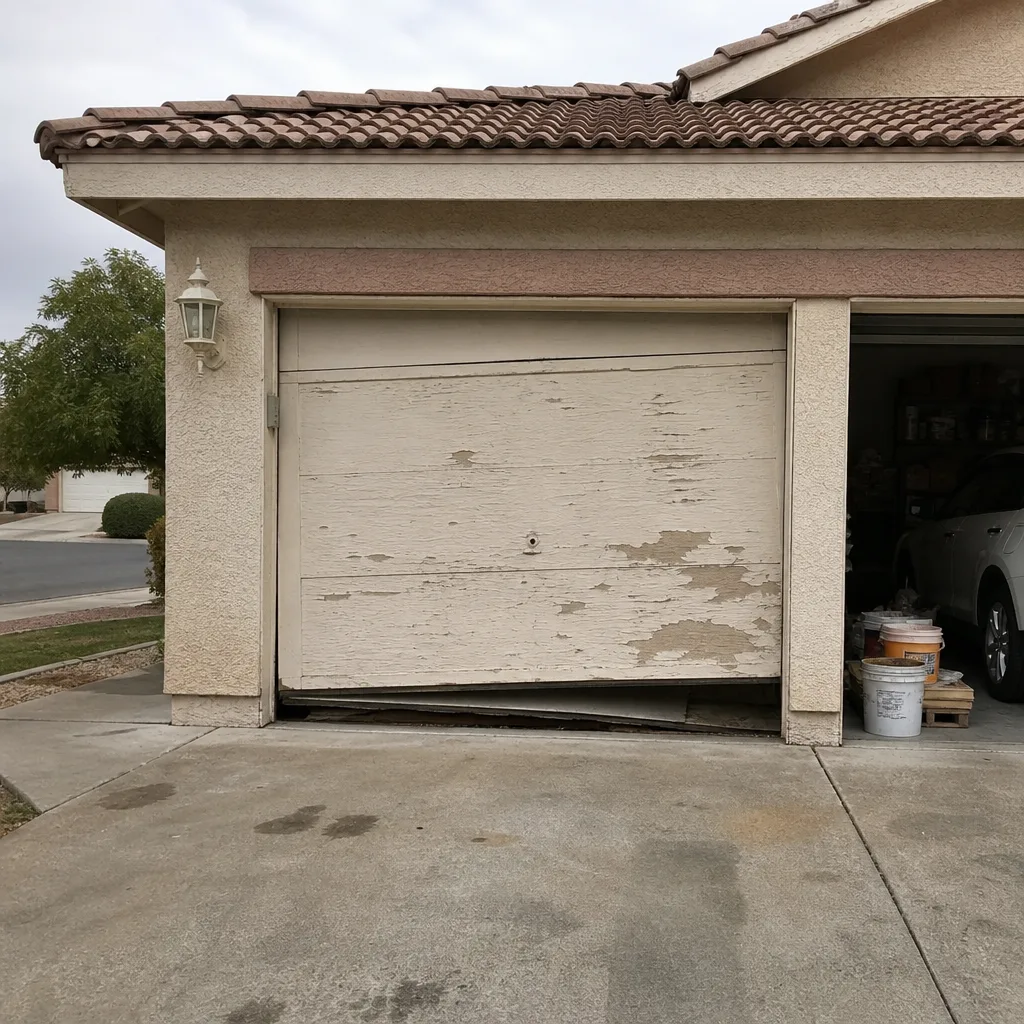
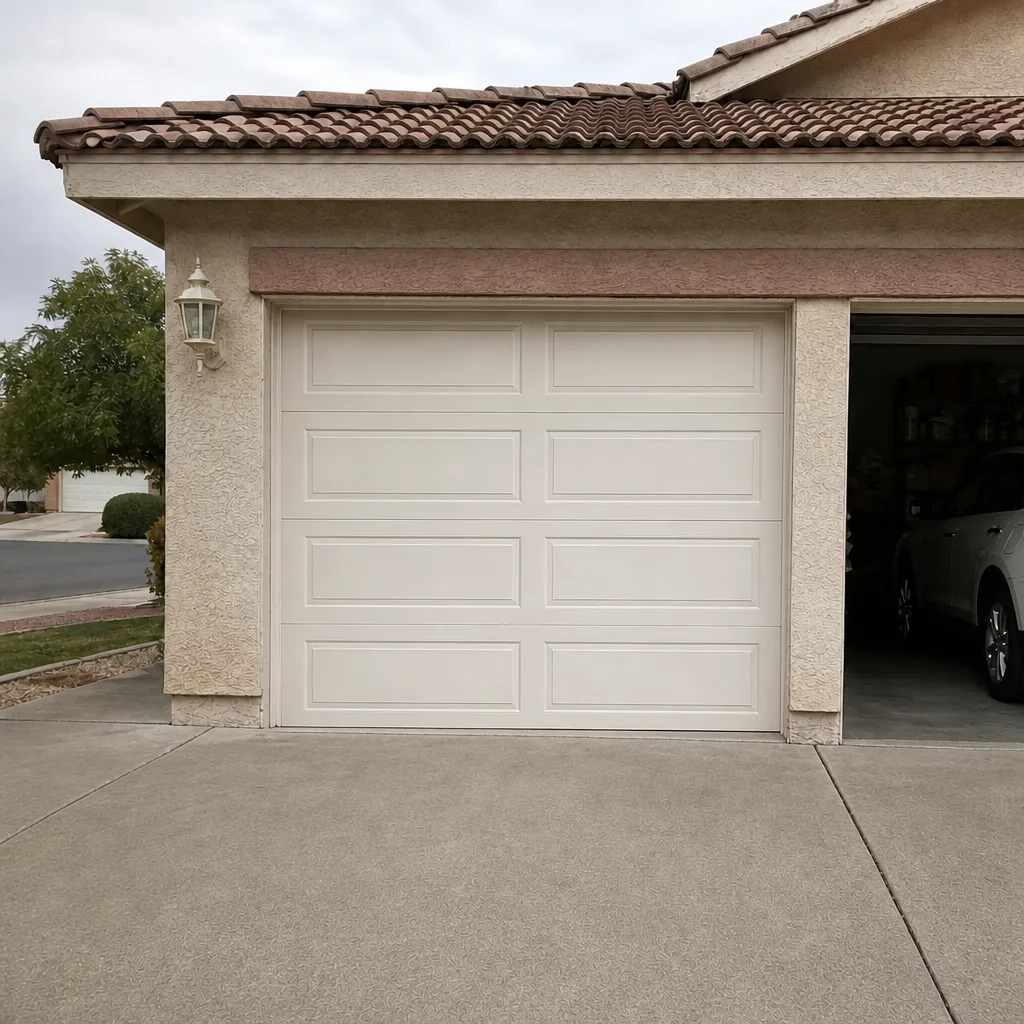
See the difference
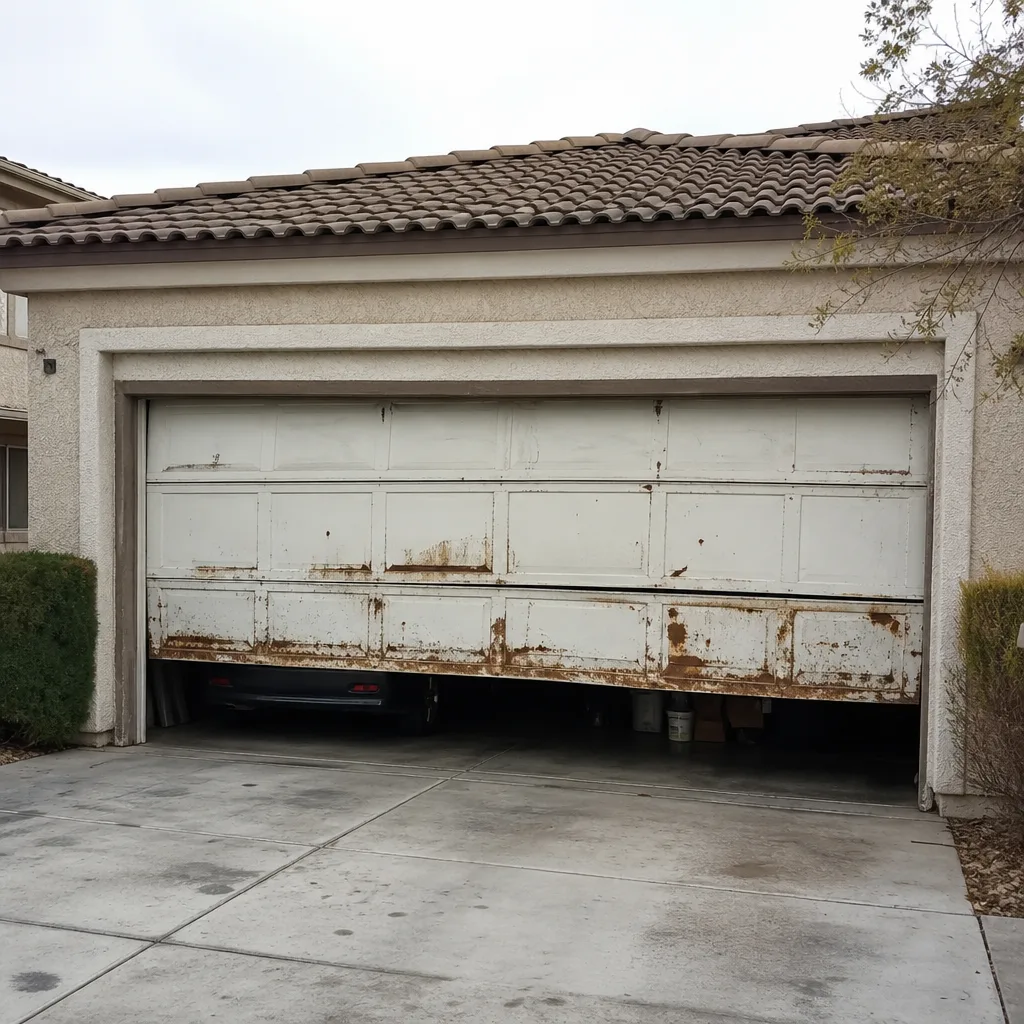 Before
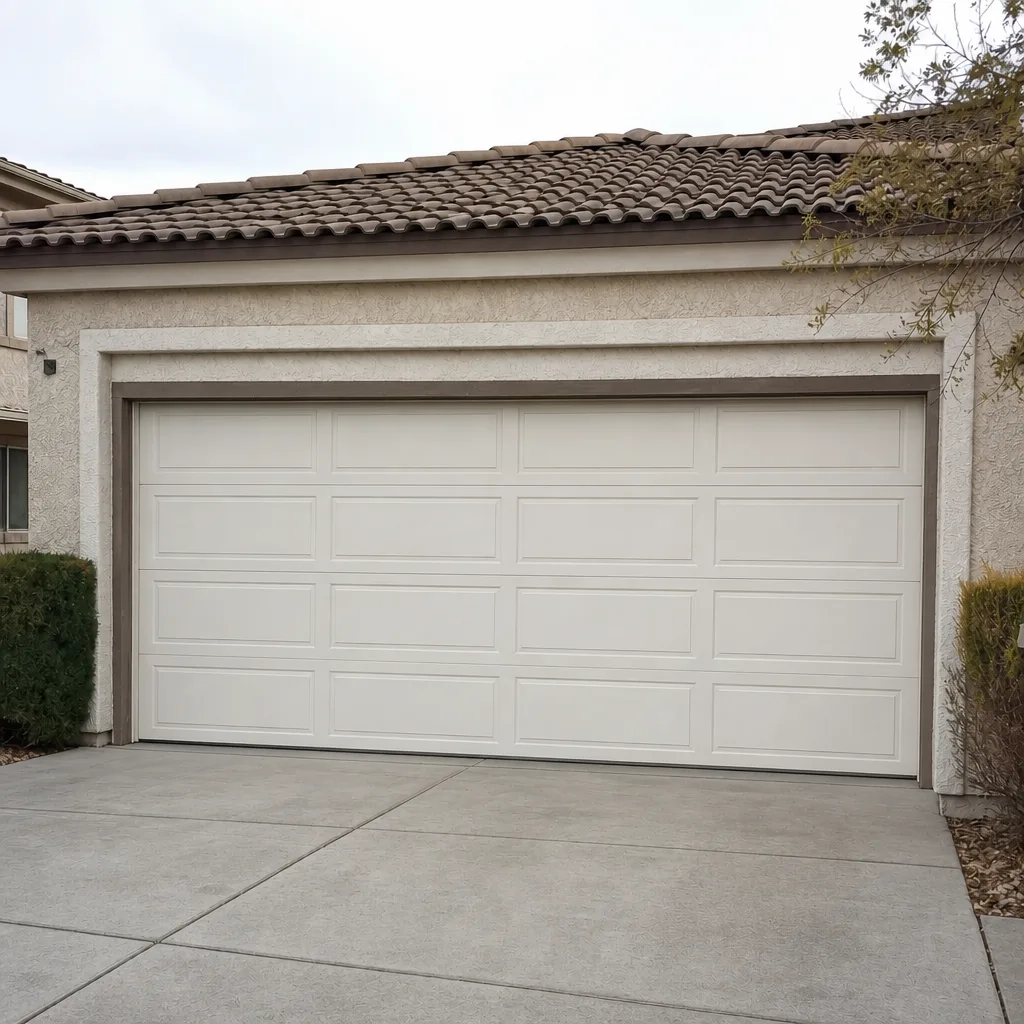 After
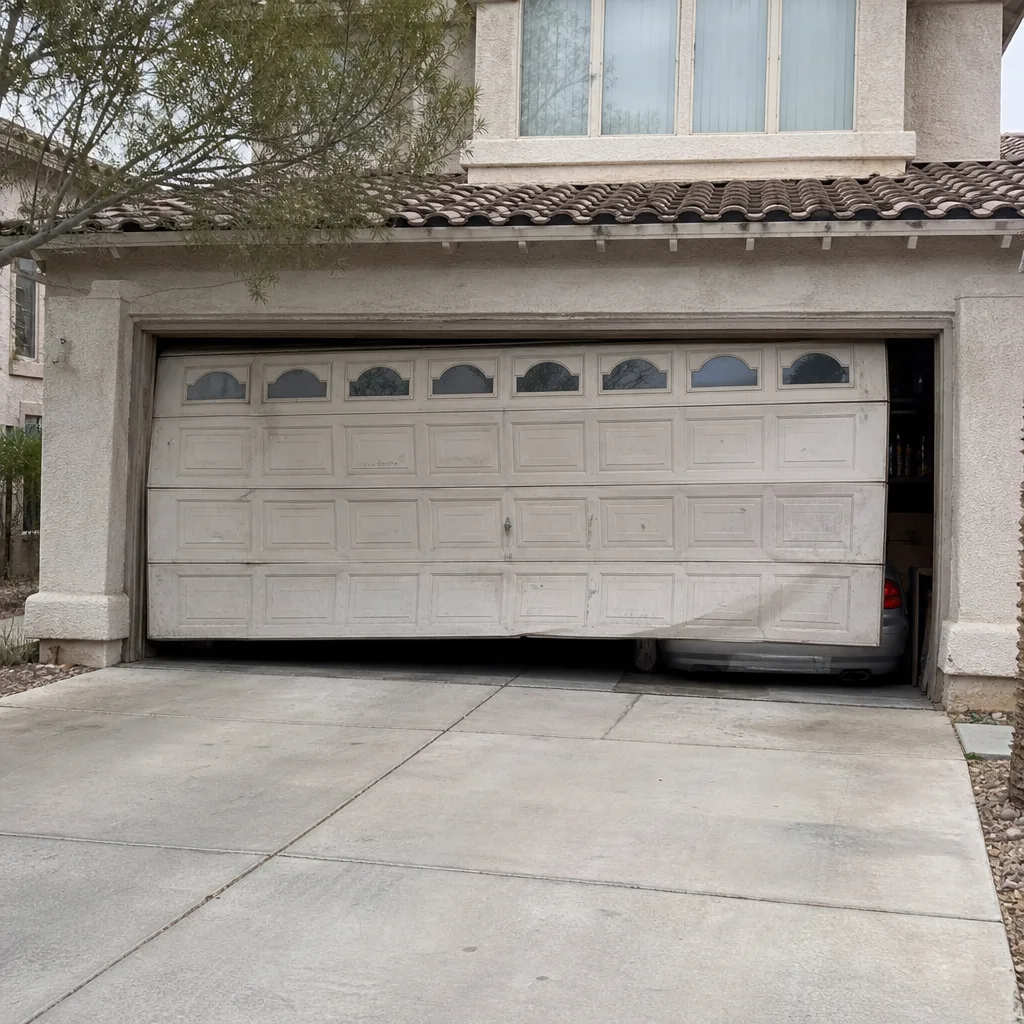 Before
 After
 Before
 After
Frequently Asked Questions
Once a year at minimum, ideally in April or May before the summer heat cycle begins. If your door is older, has a heavy cycle count, or you’ve noticed any noise or hesitation, twice a year – once in spring and once in September after monsoon season – is the better rhythm.
It can. The late-summer monsoon delivers more windblown dust than almost any other U.S. climate, and that dust settles into rollers, hinges, and seal channels where it grinds at metal. Summerlin doors serviced in September often show visible wear on roller bearings that wasn’t there in June. Cleaning the tracks and seal channels after the season and before reapplying lubricant prevents most of this.
Yes, within limits. Cold-morning contraction makes steel slightly tighter and a healthy door may feel firmer on the first cycle. If the door feels heavy or jerky every time, makes a popping or snapping sound, or won’t stay up on a balance test, that’s a real problem and needs a technician, not physics.
No. The torsion spring carries the entire weight of the door and can release violently if handled incorrectly. Every year we see serious injuries from homeowner spring adjustments. Spring work is one of the few garage door tasks that belongs to a trained professional, without exception.
Cable drums are the grooved spools at each end of the torsion shaft that hold the lift cables. Cables can jump their grooves, wear into the drum, or fray at the attachment point. Most consumer guides don’t mention them. Our technicians inspect cable drums on every seasonal tune-up because a worn cable drum is one of the more common causes of sudden door failure.
Our $89 Seasonal Tune-Up covers lubrication of rollers, hinges, and bearings, balance testing, auto-reverse safety testing, cable drum inspection, spring assessment, and a full visual check of the door, tracks, and operator. It’s the single best-value service we offer and it catches most developing problems before they become emergency calls. Call (855) 608-8802 to schedule – estimates are free.
The Bottom Line
Summerlin’s climate doesn’t give us four equal seasons, so the standard garage door care schedule doesn’t work here. Prep and lubricate in April and May before the heat peaks. Check the bottom seal and clean tracks in June before monsoon dust arrives. Reset rollers and hinges in September by clearing the compacted dust first and then re-lubricating. Watch spring tension in December and February, and know that cold-morning tightness is normal, but popping or jerky operation is not. Add cable drum inspection to every seasonal checkpoint even though most guides skip it. If you want the whole routine handled properly and safely by a trained technician, our Mainspring Garage Door Co. Summerlin home page has the details. Call Mainspring Garage Door Co. Summerlin at (855) 608-8802 for a free estimate on a seasonal tune-up or any repair.
Written by the team at Mainspring Garage Door Co. Summerlin.